
Parts of a Circle: Center, Radius, and Diameter
The Center Point
The heart of the circle
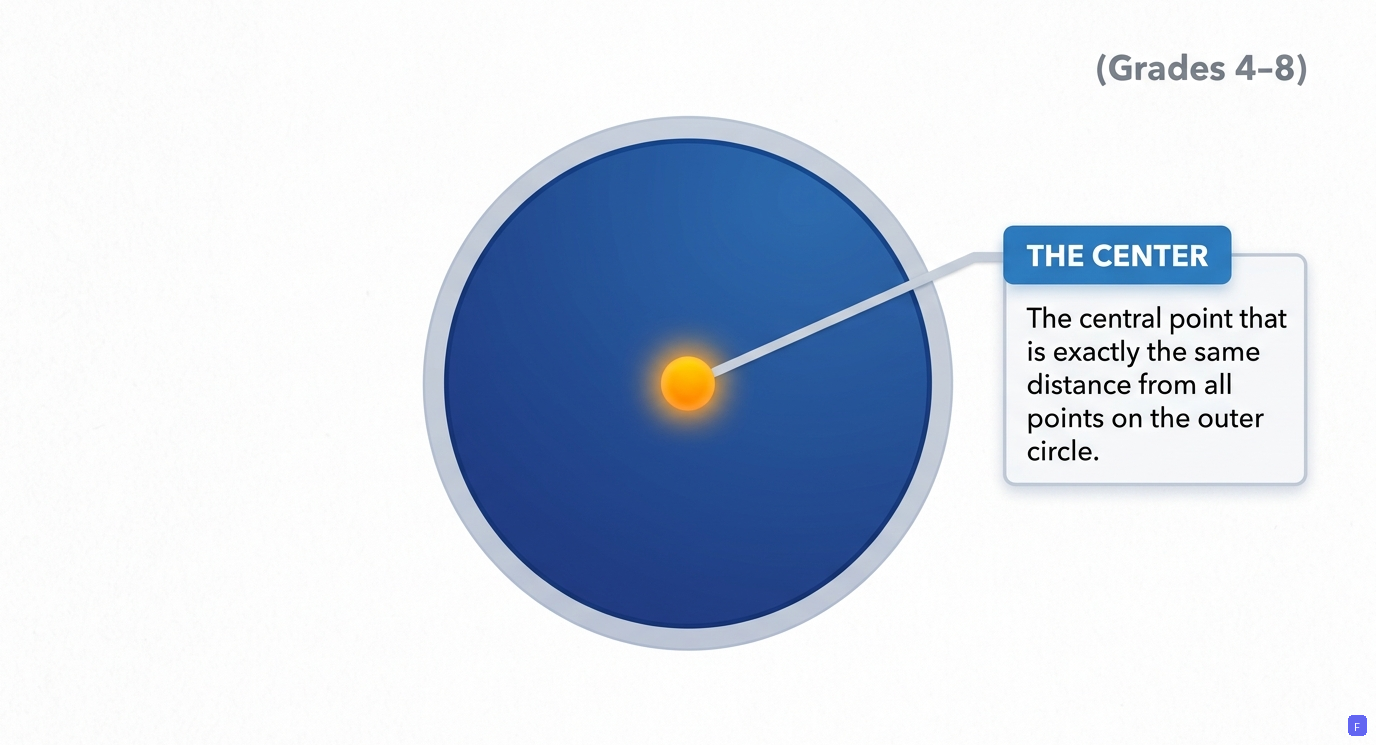
Every circle starts with a center point. This point is perfectly balanced in the exact middle of the shape, completely equal in distance from all edges.
Key Points
- It is the exact middle dot of the circle.
- A compass uses the center point as its anchor.
- Every point on the circle's edge curves around this center.
- We usually name a circle by its center point.
Olympiad Fact
Concentric circles are a group of multiple circles that are different sizes but all share the exact same center point, like a bullseye target!
The Radius
Reaching for the edge
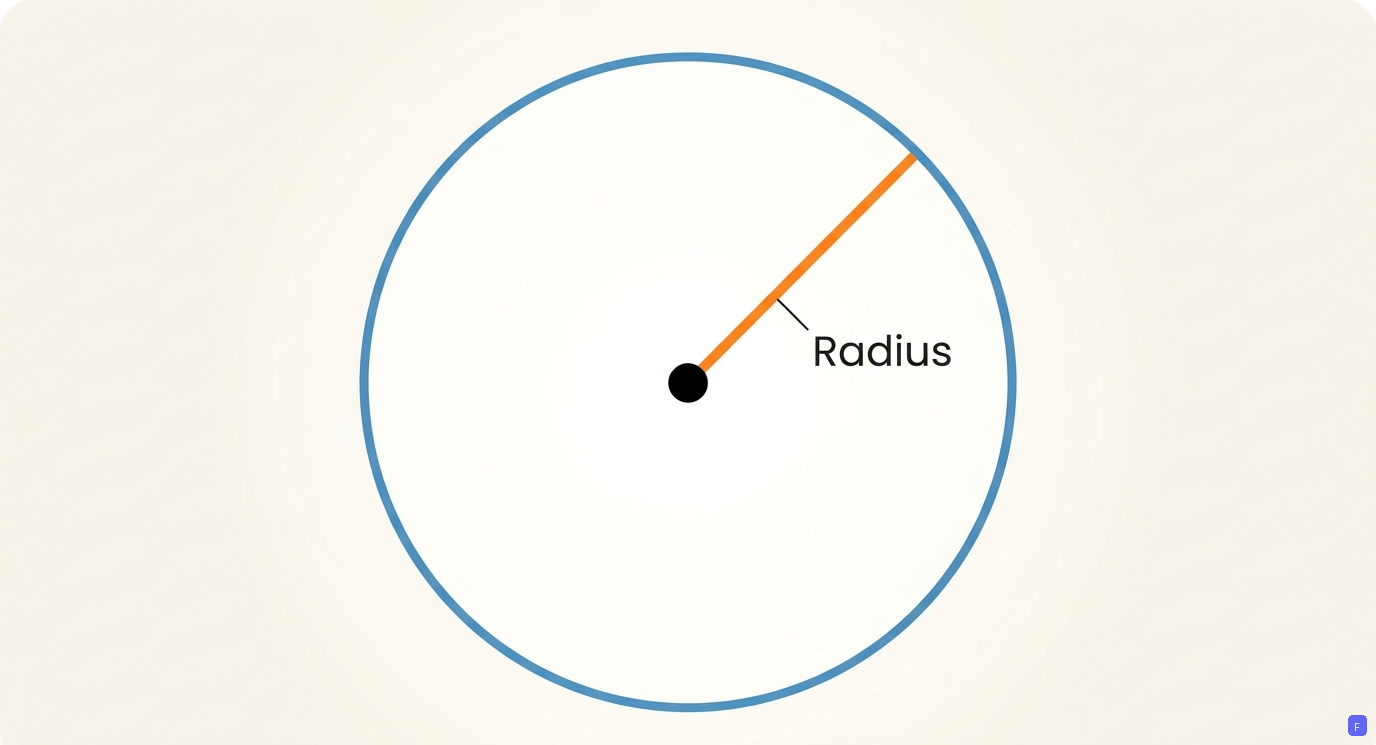
The radius is a straight line segment that starts at the center dot and reaches out to touch the outer edge. It measures how 'wide' the circle is from the middle.
Key Points
- It connects the center to the boundary.
- The plural of radius is radii.
- Every radius inside the same circle is the exact same length.
- If a circle gets bigger, its radius gets longer.
Olympiad Fact
A circle is the only 2D shape that has a constant radius no matter which direction you point it!
The Diameter
Crossing from side to side
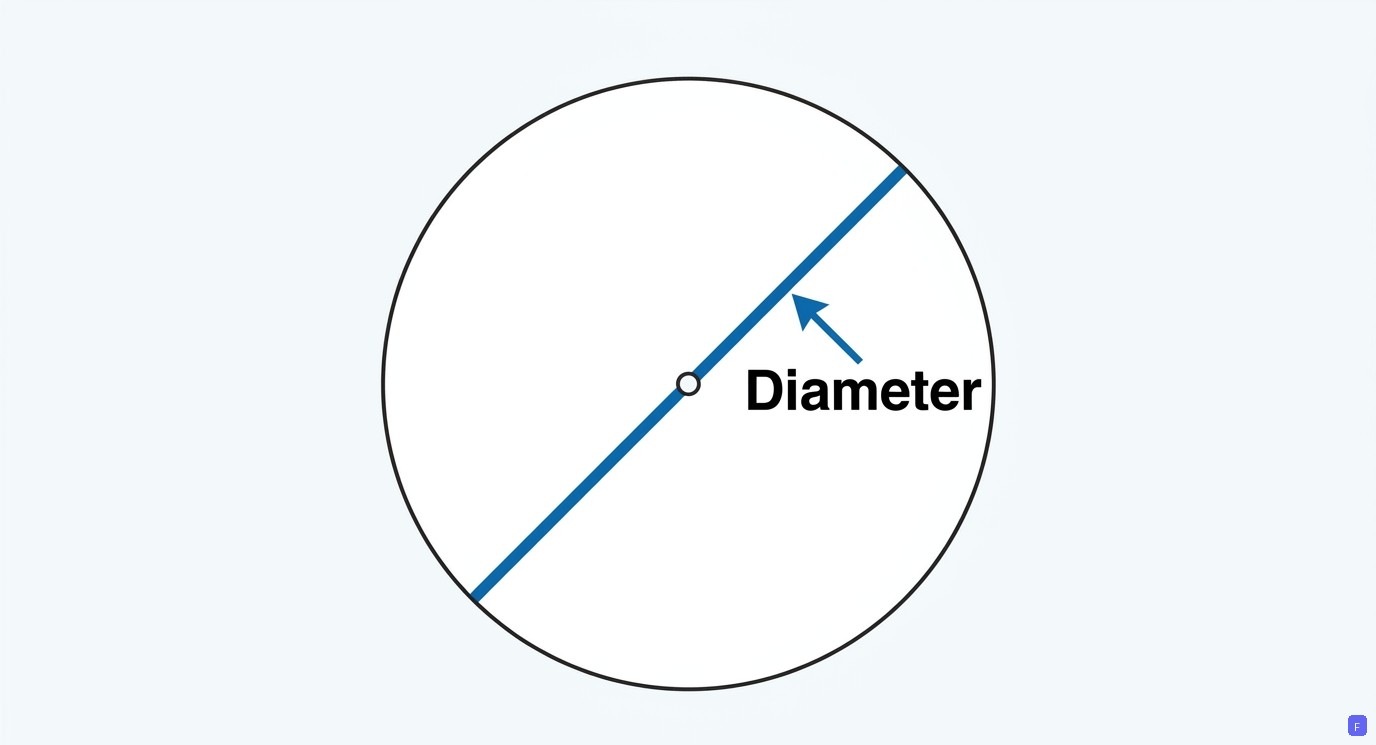
The diameter is a straight line that goes from one edge of the circle, straight through the center point, to the opposite edge. It is essentially two radii put together end-to-end.
Key Points
- Diameter MUST pass straight through the center.
- It slices the circle into two perfect equal halves.
- Formula: (Diameter is twice the radius).
- If the radius is cm, the diameter is cm.
Olympiad Fact
A straight line connecting any two points on a circle's edge is called a chord, and the diameter is mathematically the longest possible chord!
The Circumference
The outer boundary
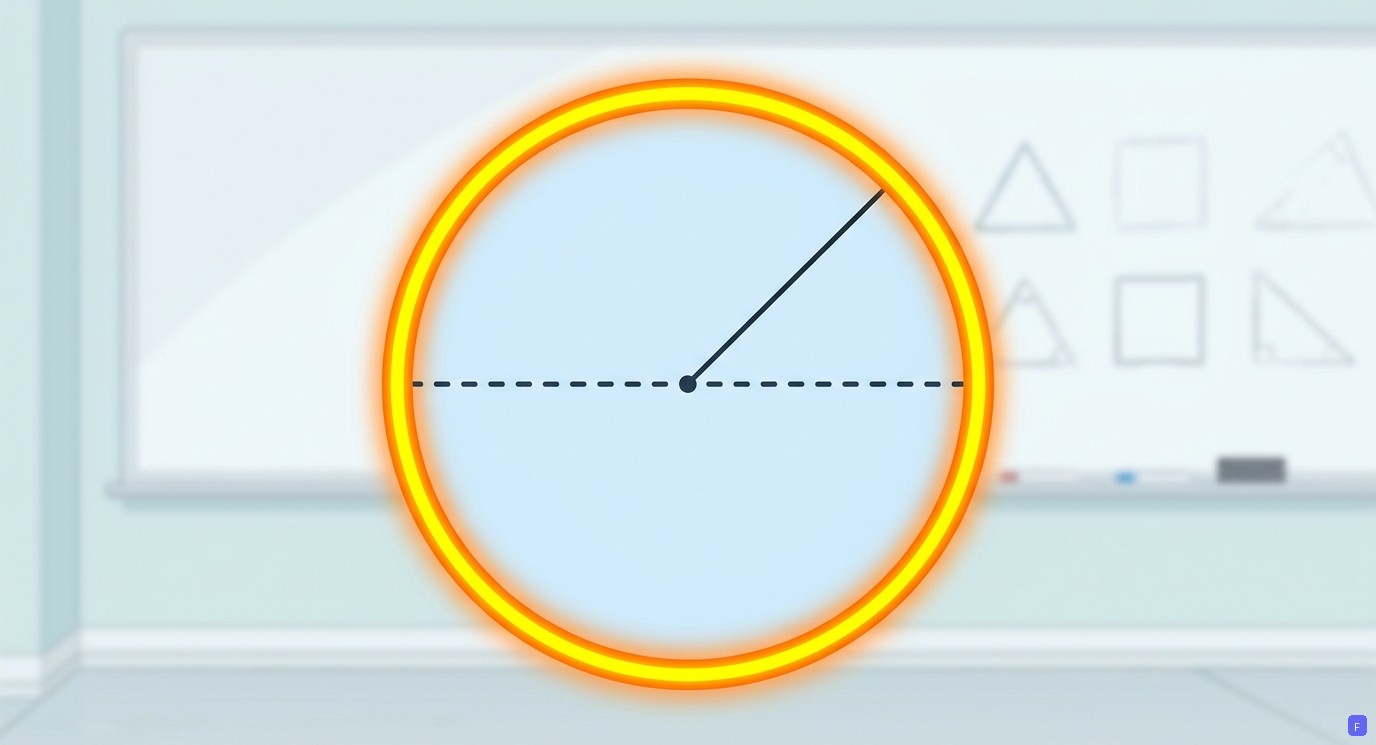
The circumference is the total distance all the way around the outside edge of the circle. It is the circle's version of a perimeter.
Key Points
- It is the curved outline of the shape.
- It is measured in flat units like cm or inches.
- If you unroll a circle, it forms a straight line.
- The bigger the diameter, the longer the circumference.
Olympiad Fact
To calculate the exact circumference, you multiply the diameter by a famous endless math number called Pi ()!
Swipe to skip‹