
Properties of 3D Shapes: Faces, Edges, and Corners
What is a Face?
The smooth surfaces
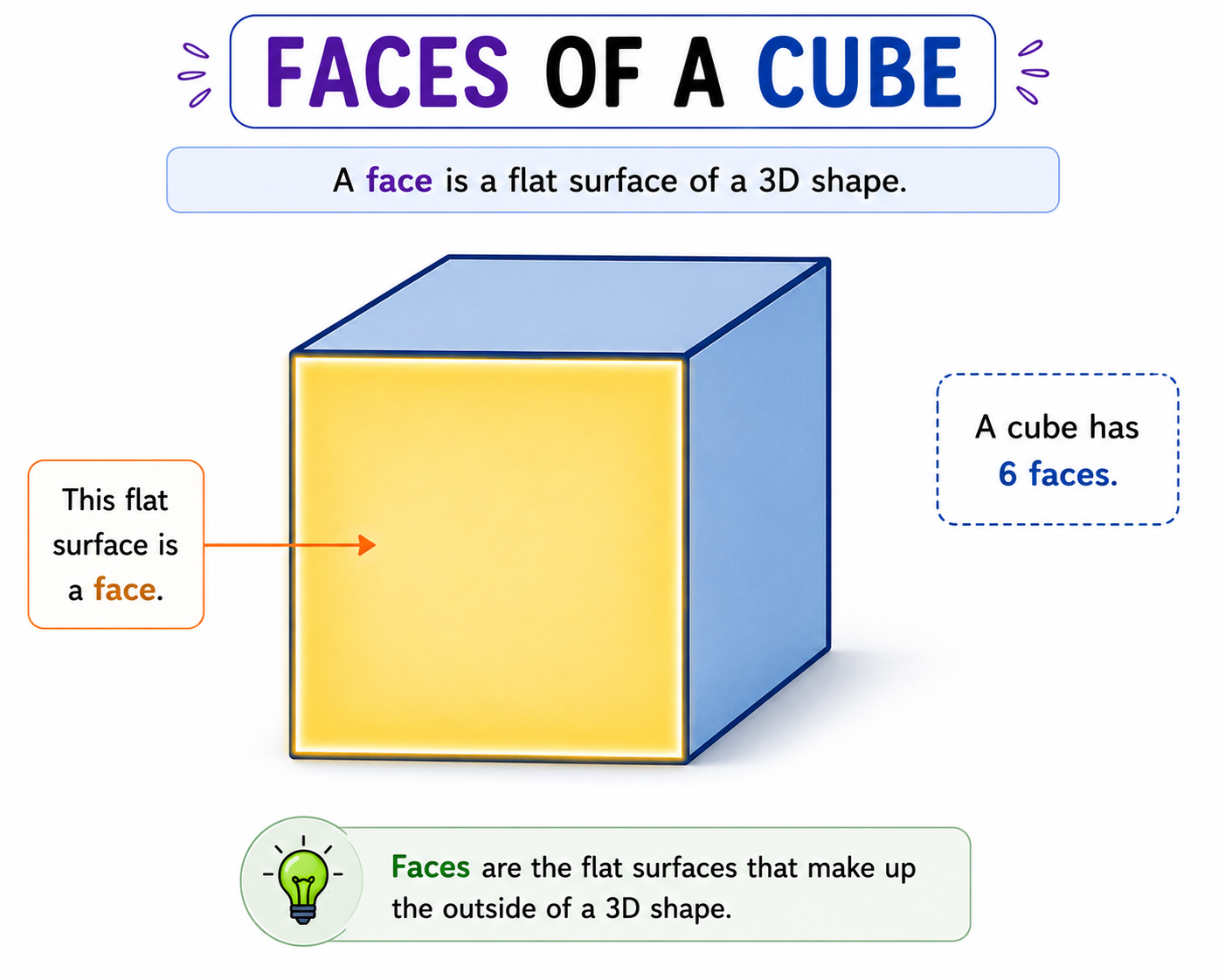
A face is any individual flat or curved surface on a 3D shape. When you rest a shape on a table, it sits on one of its faces.
Key Points
- Faces can be completely flat (like a box).
- Faces can be curved (like a ball).
- A standard cube has exactly 6 flat faces.
- A cylinder has 2 flat faces and 1 curved face.
Olympiad Fact
A shape made entirely of flat polygon faces is mathematically called a polyhedron!
What is an Edge?
Where faces meet
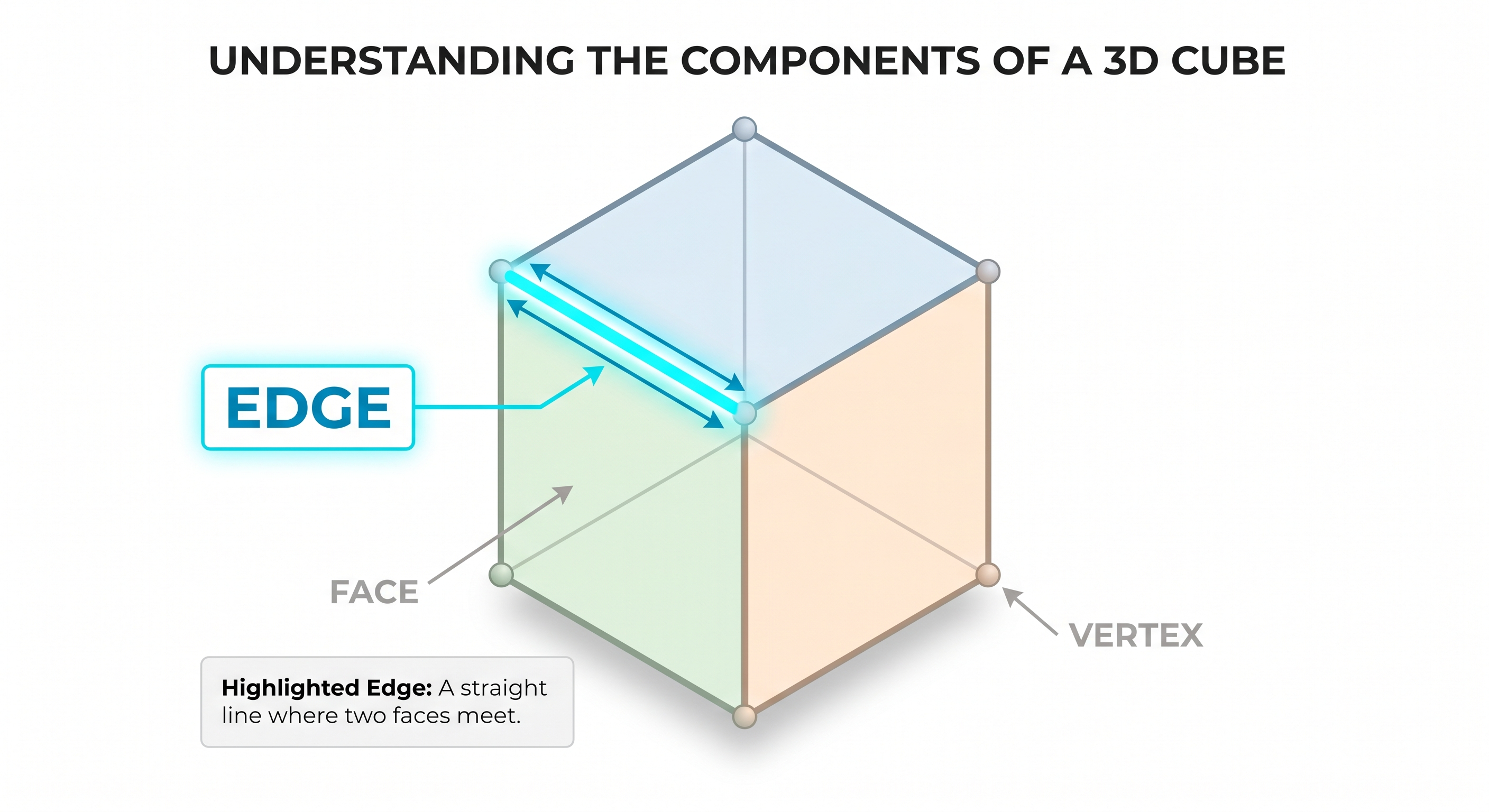
An edge is the straight line segment where two faces connect. It acts as the border or boundary between the flat surfaces.
Key Points
- Edges are formed when two faces intersect.
- You can run your finger along an edge.
- A standard cube has exactly 12 edges.
- A sphere has 0 edges because it has no flat faces.
Olympiad Fact
In a cylinder, the circular boundaries where the flat top meets the curved side are called curved edges!
What is a Vertex?
The pointy corners
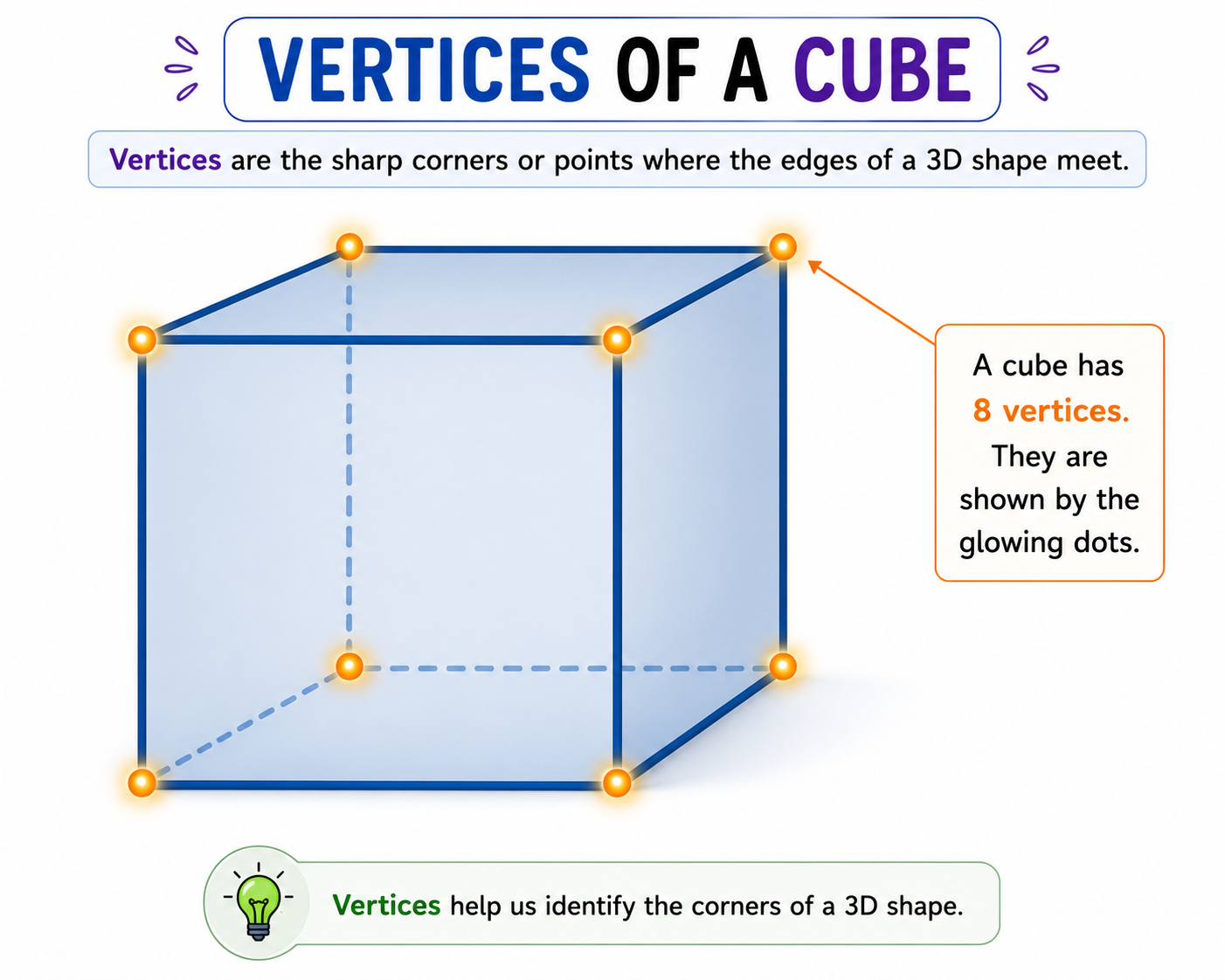
A vertex (or corner) is the sharp point where three or more edges meet. The plural word for more than one vertex is 'vertices'.
Key Points
- Vertices are the pointy tips of a shape.
- They are formed by edges crashing into each other.
- A standard cube has 8 vertices.
- A cone has 1 vertex at its very top.
Olympiad Fact
If you slice off one vertex of a solid cube, you will create a brand new triangular face in its place!
Shapes with Curved Surfaces
Rolling instead of sliding
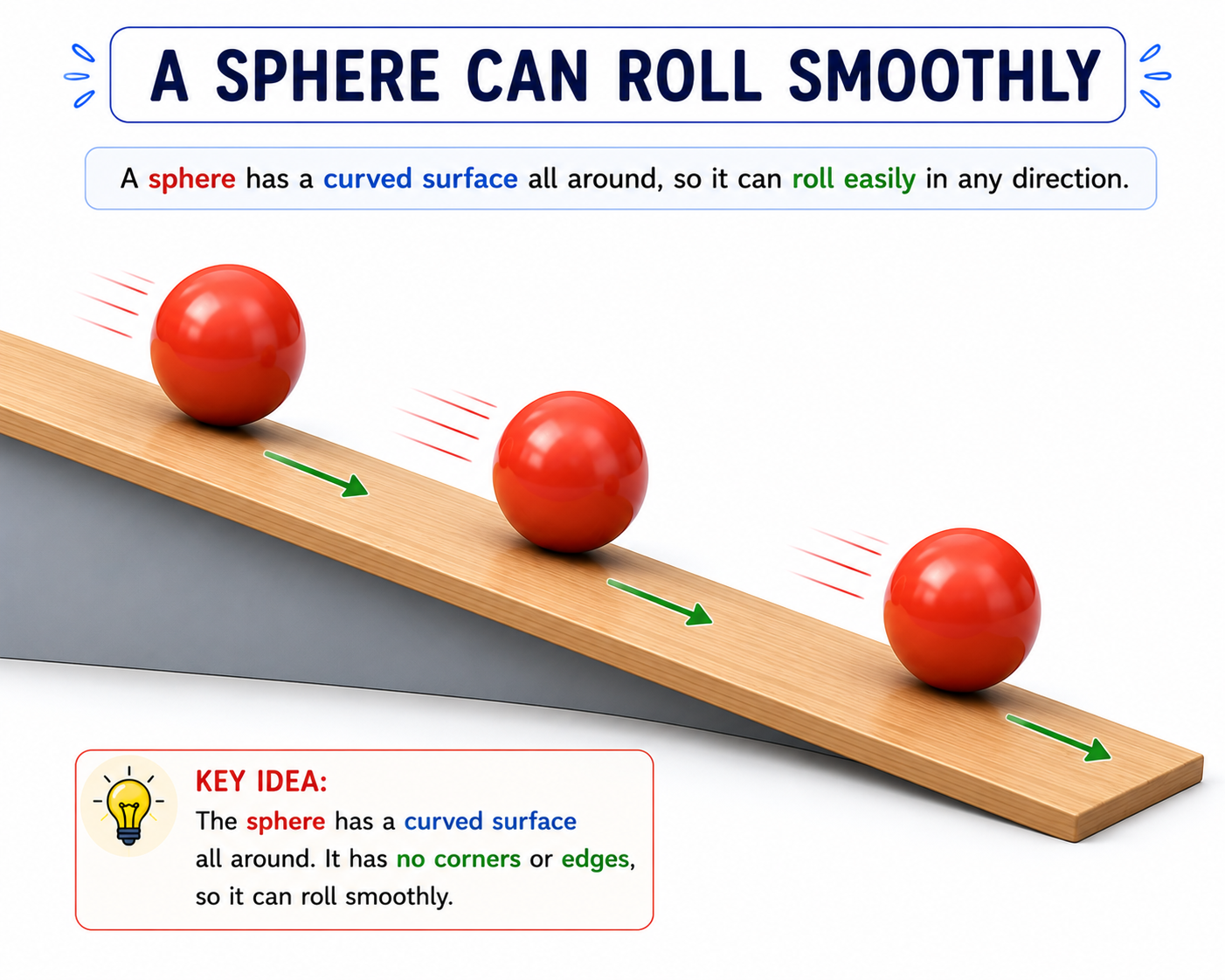
Not all 3D shapes have sharp edges and flat faces! Some shapes have curved surfaces that allow them to roll smoothly.
Key Points
- A sphere is one continuous curved face.
- A cylinder has two flat faces and one curved face.
- A cone has one flat face and one curved face.
- Shapes with only curved faces have 0 edges.
Olympiad Fact
A shape like a football is called a 'prolate spheroid', which means it is a stretched-out sphere!
Swipe to skip‹