
Vertebrates and their Five classes
What are Vertebrates?
The backbone connection
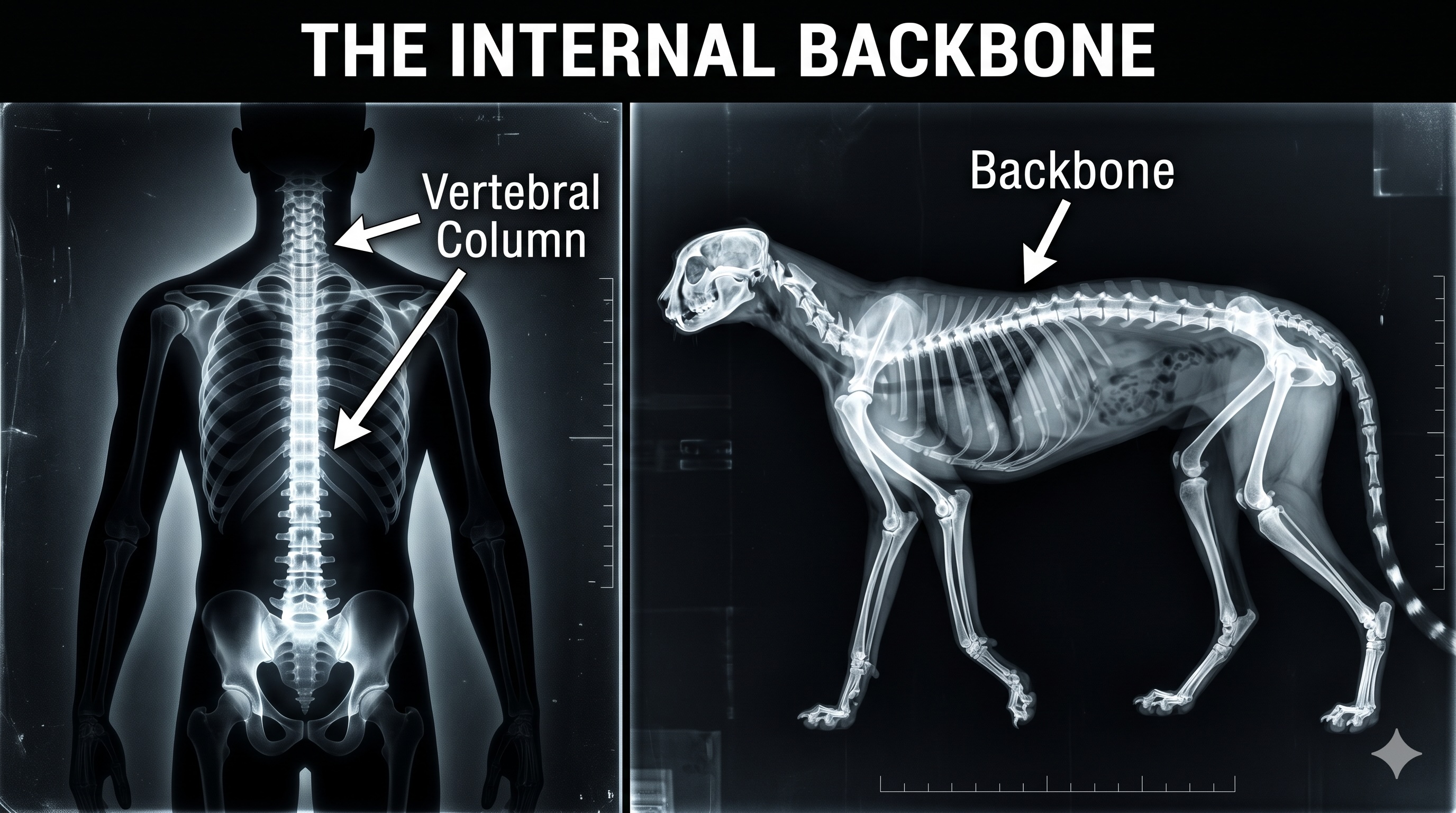
Vertebrates are animals that have a backbone or vertebral column. This internal skeleton supports the body and protects the brain and spinal cord.
Key Points
- The backbone is made of many small bones called vertebrae.
- They have an internal skeleton (endoskeleton) that grows as they do.
- This group includes humans, dogs, fish, birds, and snakes.
- A backbone allows vertebrates to grow much larger than invertebrates.
Olympiad Fact
Humans have vertebrae at birth, but some fuse together as we get older!
Fish: Water Dwellers
The first class
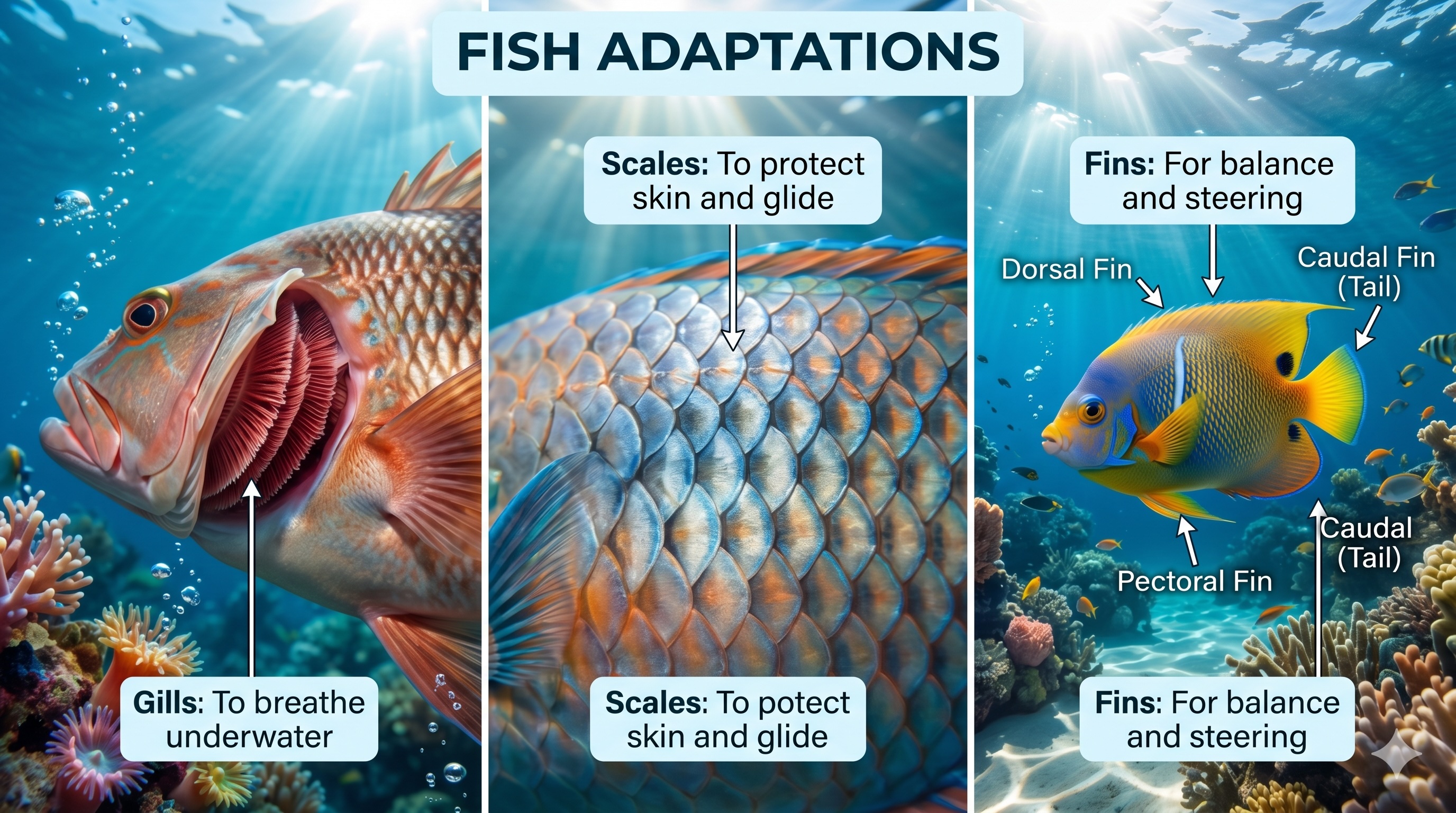
Fish are cold-blooded vertebrates that live in water. They have specialized features to breathe and move in their aquatic environment.
Key Points
- Gills extract oxygen directly from the water as it passes through them.
- Overlapping scales protect their skin and help them glide through water.
- Fins and a strong tail are used for balance and steering.
- Most fish lay thousands of soft eggs in the water.
Olympiad Fact
Sharks are fish, but their 'bones' are actually made of rubbery cartilage!
Amphibians: Dual Life
The second class
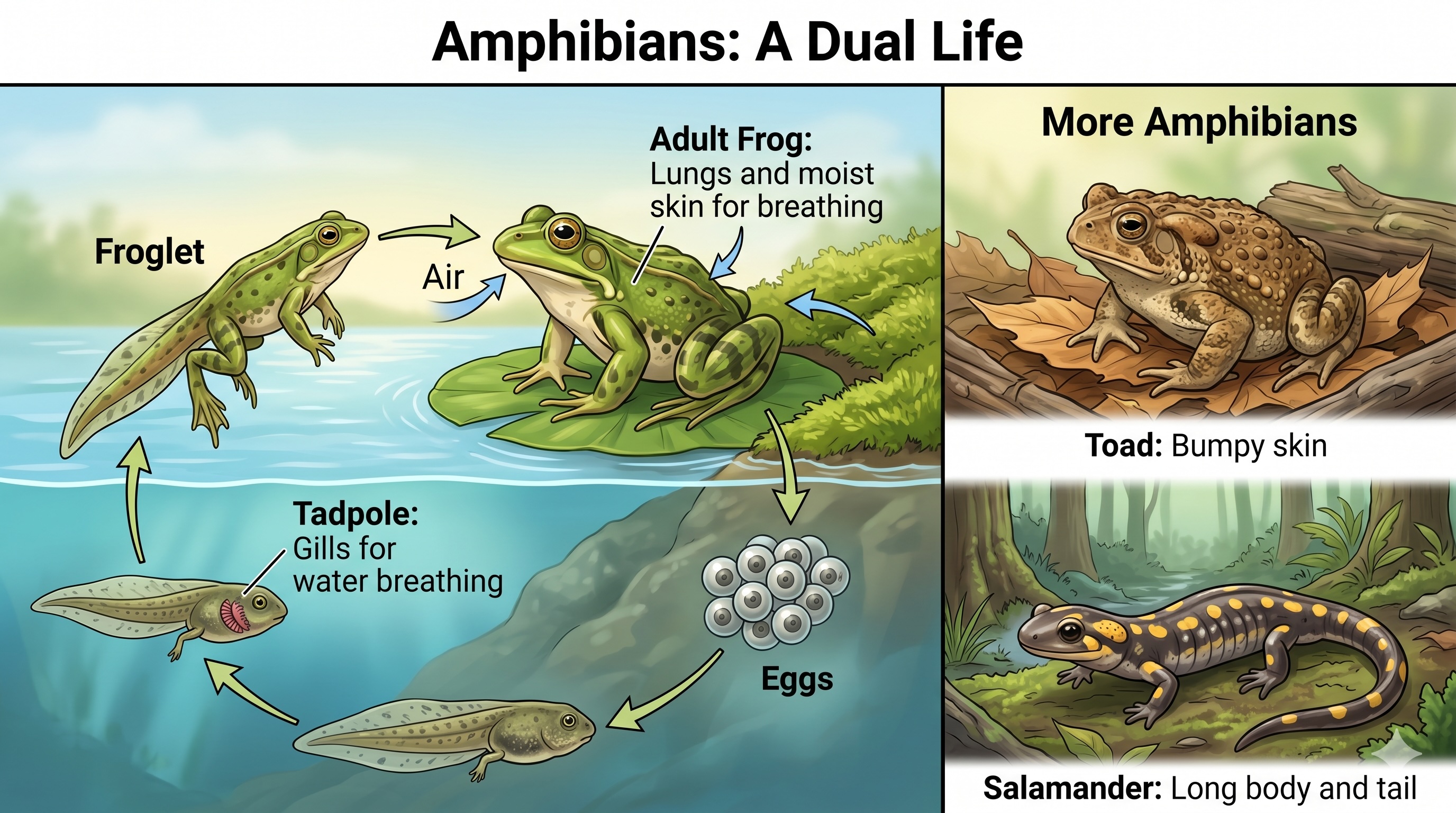
Amphibians like frogs and toads can live both in water and on land. They bridge the gap between two different worlds.
Key Points
- They have moist, smooth skin that helps them breathe underwater.
- Babies (tadpoles) breathe through gills; adults breathe with lungs.
- They are cold-blooded and lay eggs in jelly-like clusters in water.
- They must stay near water to keep their skin from drying out.
Olympiad Fact
Some frogs can actually breathe entirely through their skin!
Reptiles: Dry and Scaly
The third class
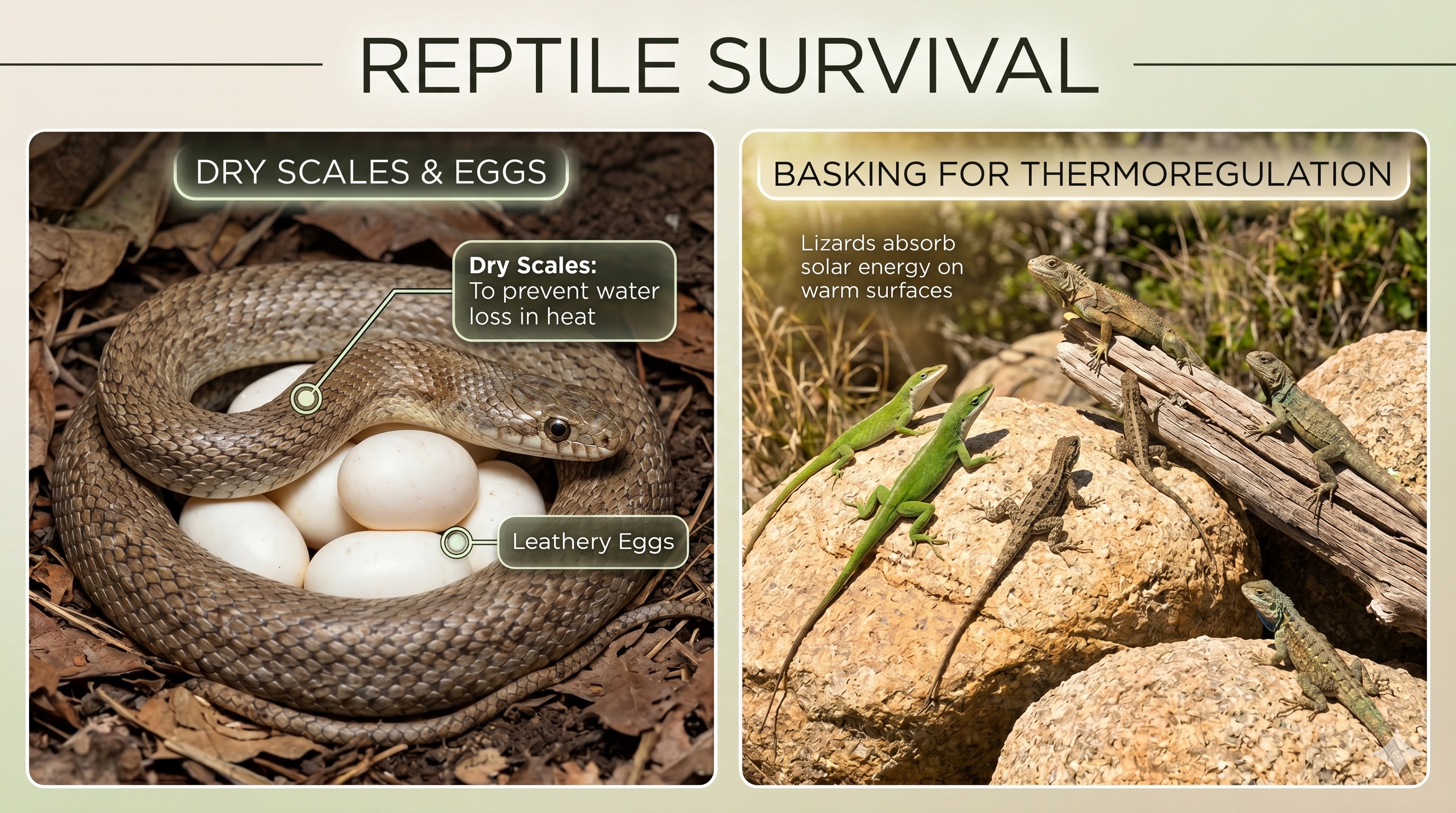
Reptiles are cold-blooded vertebrates that live mostly on land. They have tough, dry skin to survive in sunny places.
Key Points
- Their skin is covered in dry scales that prevent water loss.
- They breathe only through lungs, even if they live in water like turtles.
- Reptiles lay leathery-shelled eggs on land to protect their babies.
- They often bask in the sun to raise their body temperature.
Olympiad Fact
Snakes don't have eyelids; they have a transparent scale that covers their eye!
Birds: Feathered Flyers
The fourth class
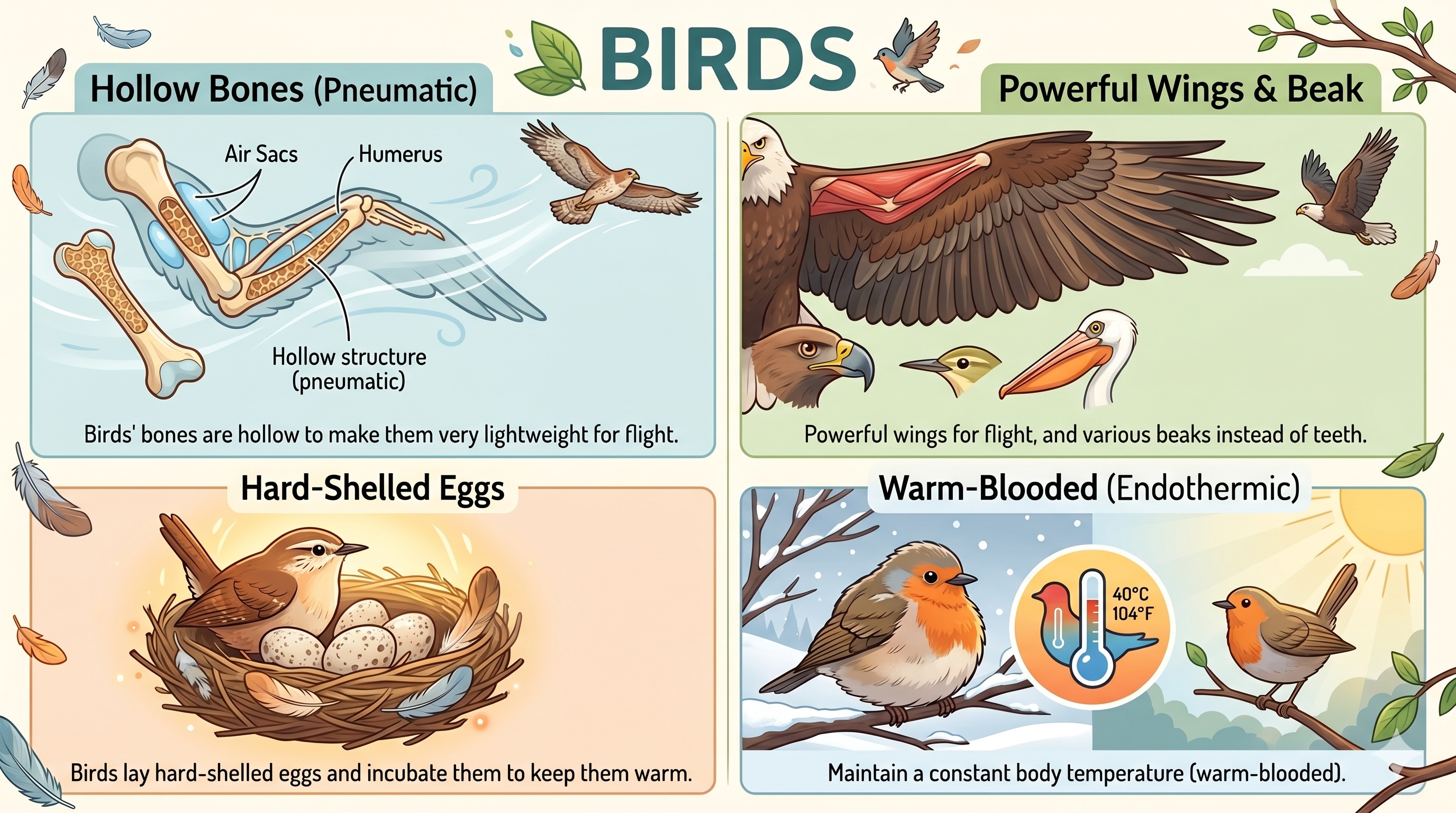
Birds are warm-blooded vertebrates with feathers. Their bodies are perfectly designed to be light enough for flight.
Key Points
- Their bones are hollow (pneumatic) to make them very lightweight.
- They have powerful wings and a beak instead of teeth.
- Birds lay hard-shelled eggs and sit on them to keep them warm.
- Warm-blooded means they maintain a constant body temperature.
Olympiad Fact
The Hummingbird is the only bird that can fly backwards!
Mammals: Fur and Milk
The fifth class
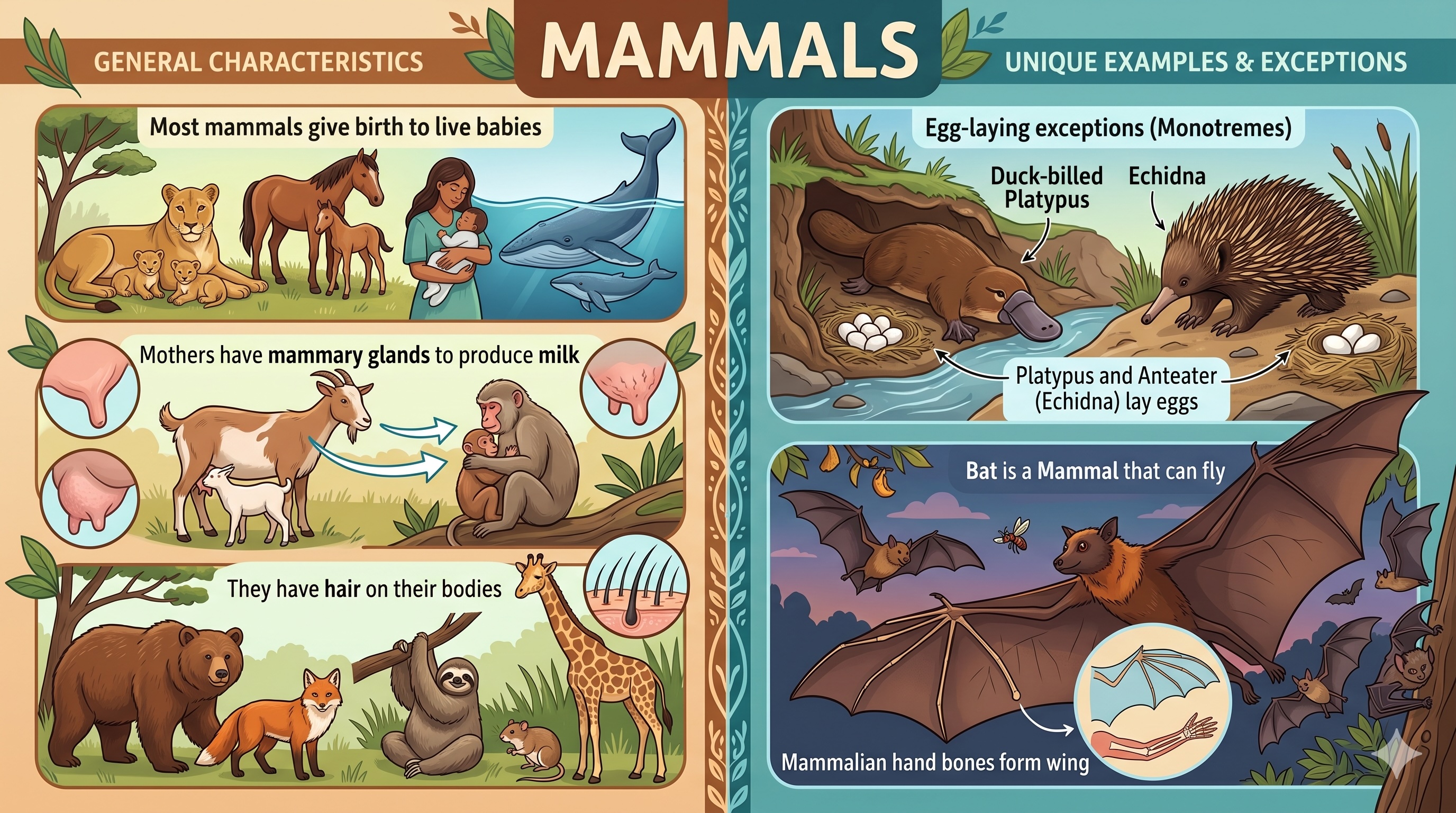
Mammals are the most advanced vertebrates. They are warm-blooded, have hair or fur, and feed their young with milk.
Key Points
- Most mammals give birth to live babies instead of laying eggs.
- Mothers have mammary glands to produce milk for their young.
- Mammals like whales and dolphins have very little hair and live in water.
- Humans, dogs, lions, and even bats are all mammals.
Olympiad Fact
The Blue Whale's heart is as large as a small car!
Swipe to skip‹