
Stars and Constellations
Twinkling Balls of Fire
Distant suns in the sky
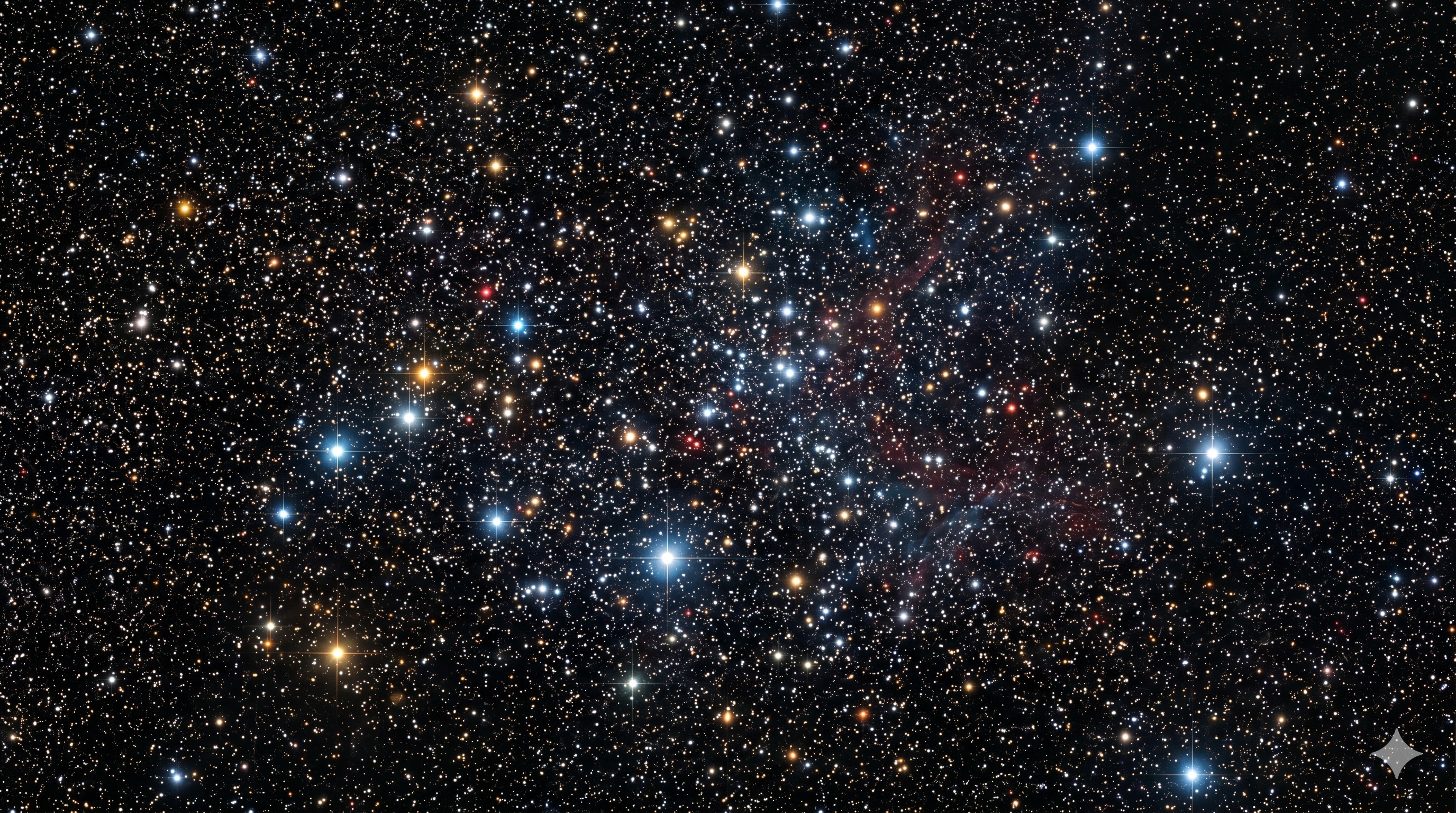
Stars are huge balls of glowing gases that produce their own heat and light. They appear as tiny pinpoints of light because they are millions of kilometres away from us.
Key Points
- Stars are made of hot glowing gases.
- They look small only because of the massive distance from Earth.
- The Sun is actually a star and is the closest one to our planet.
- Stars are visible only at night when the Sun's bright light is gone.
Olympiad Fact
Stars do not actually twinkle; they seem to flicker because their light passes through different layers of Earth's atmosphere!
Patterns in the Sky
Connecting the star dots
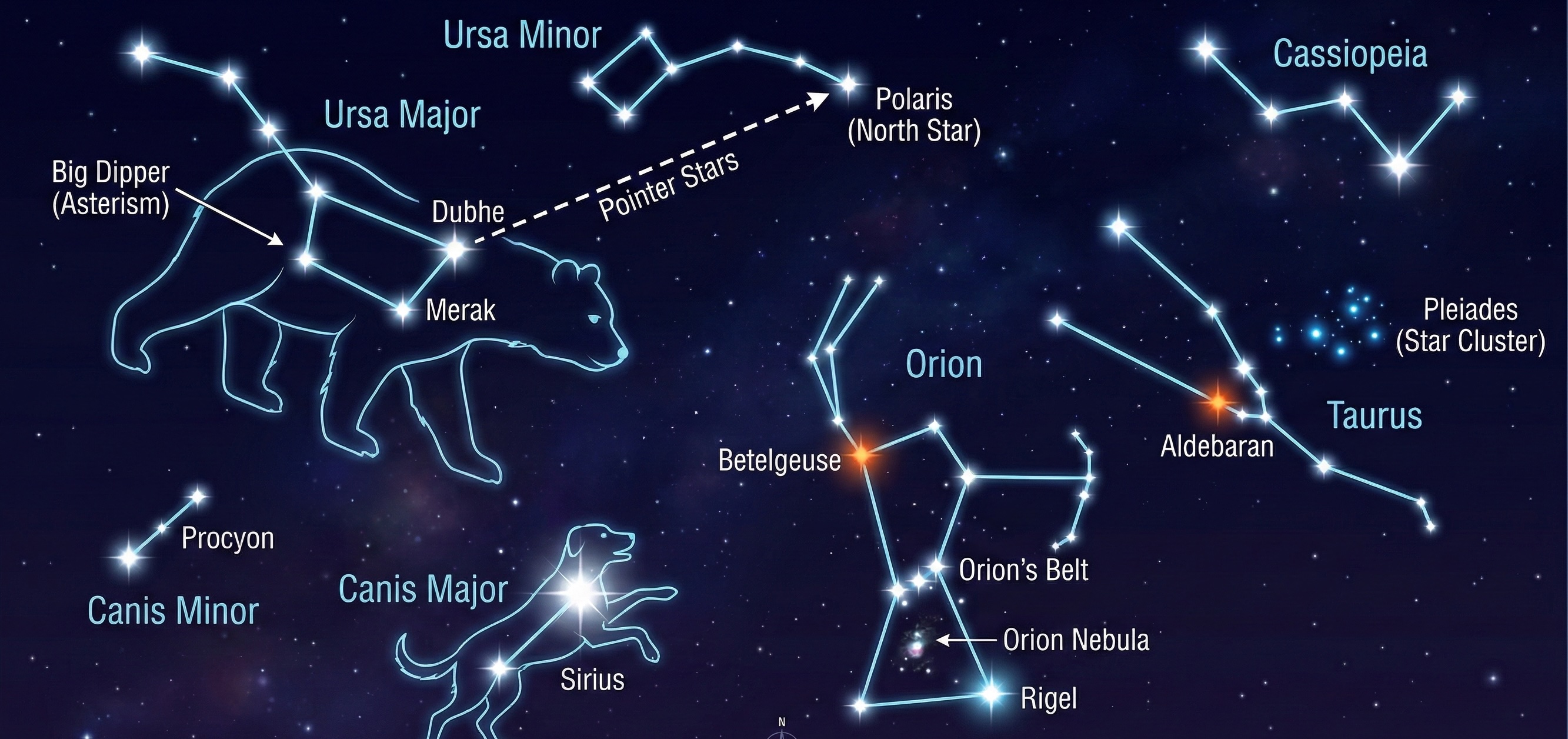
A group of stars that forms a recognizable shape or pattern in the night sky is called a constellation. Ancient people used them to tell stories and navigate.
Key Points
- Patterns represent animals, mythological characters, or objects.
- Orion (The Hunter) and Leo (The Lion) are famous examples.
- The Great Bear is also known as Ursa Major.
- The Little Bear is known as Ursa Minor.
Olympiad Fact
There are officially recognized constellations in our night sky!
The Milky Way Home
Our place in the Galaxy
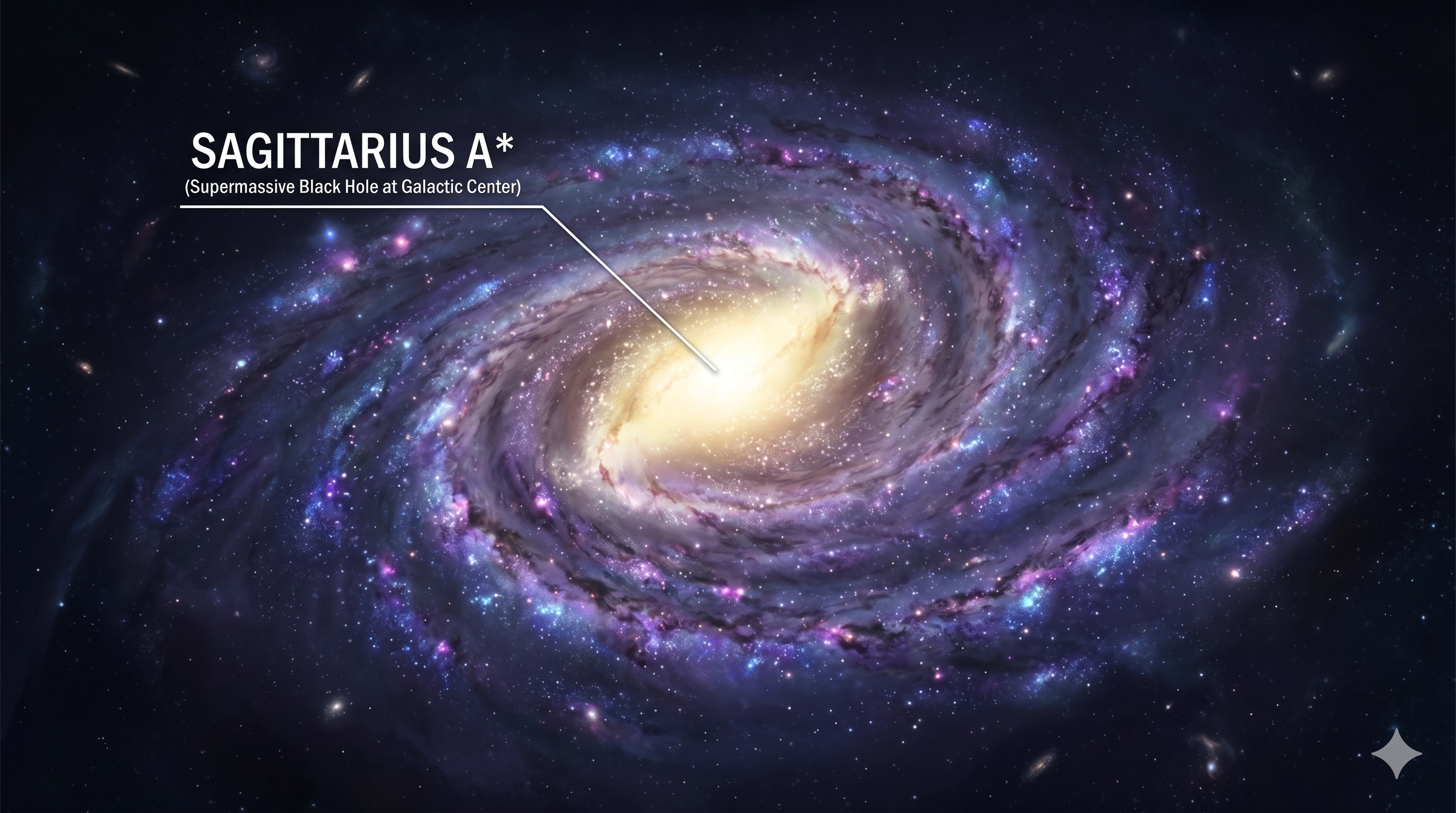
A galaxy is a massive system containing billions of stars, planets, and dust held together by gravity. Our entire solar system is just a small part of one galaxy.
Key Points
- A galaxy is a huge collection of stars and heavenly bodies.
- Our solar system is located in the Milky Way galaxy.
- There are billions of galaxies in the entire universe.
- Gravity is the force that holds all these stars together in a group.
Olympiad Fact
The Milky Way is shaped like a spiral with long 'arms' made of stars!
Swipe to skip‹