
Survival Tricks: Defense and Migration
The Art of Camouflage
Hiding in plain sight
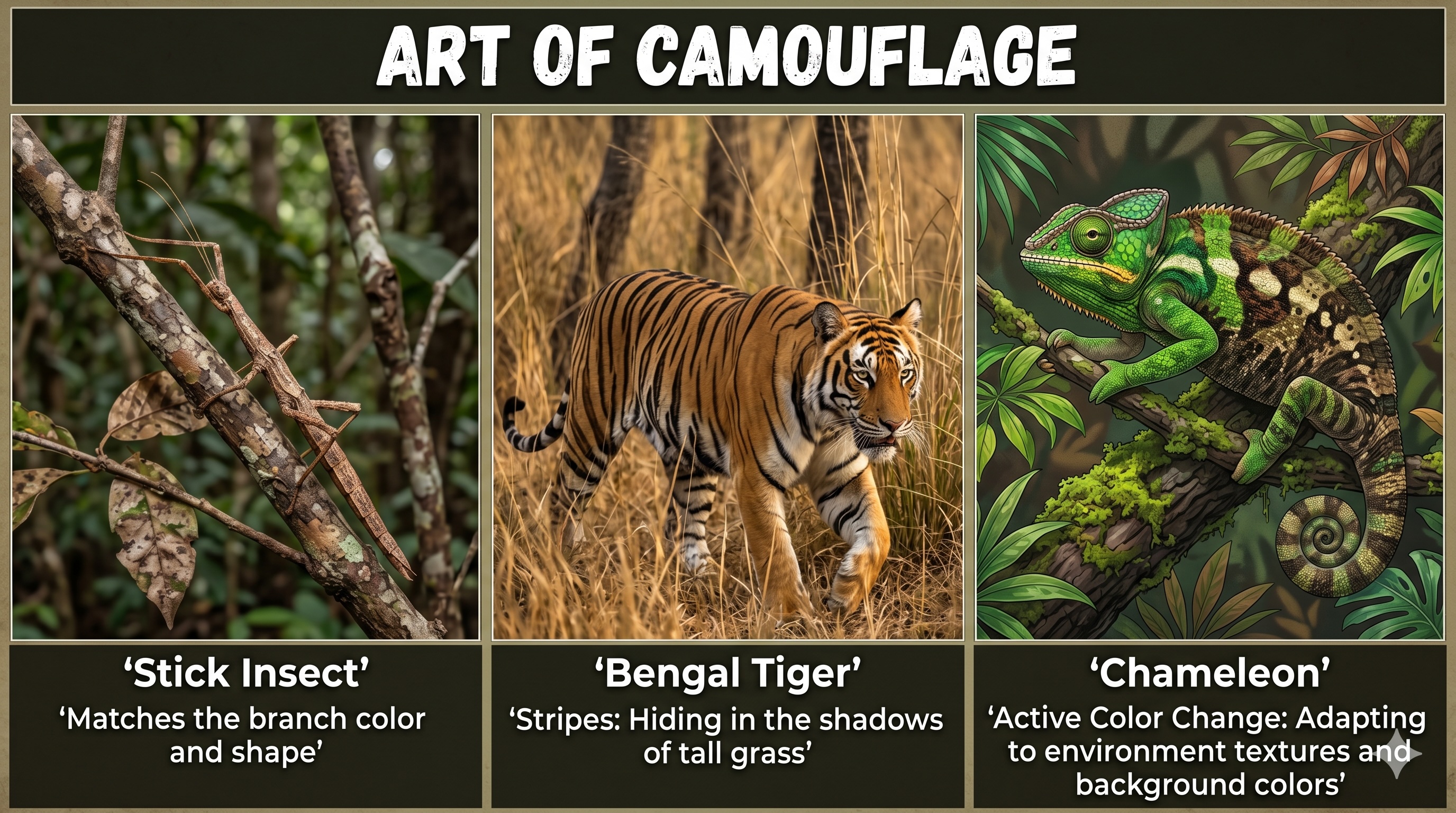
Camouflage allows an animal to blend into its background so that enemies or prey cannot see it.
Key Points
- The stick insect looks exactly like a twig on a tree.
- Tigers have stripes that help them hide in long, dry jungle grass.
- Polar bears have white fur to match the snowy ground.
- Hiding increases the animal's chances of surviving another day.
Olympiad Fact
The 'Stonefish' looks so much like a rock that humans can step on it without knowing!
Spines and Hard Shells
Armor for protection
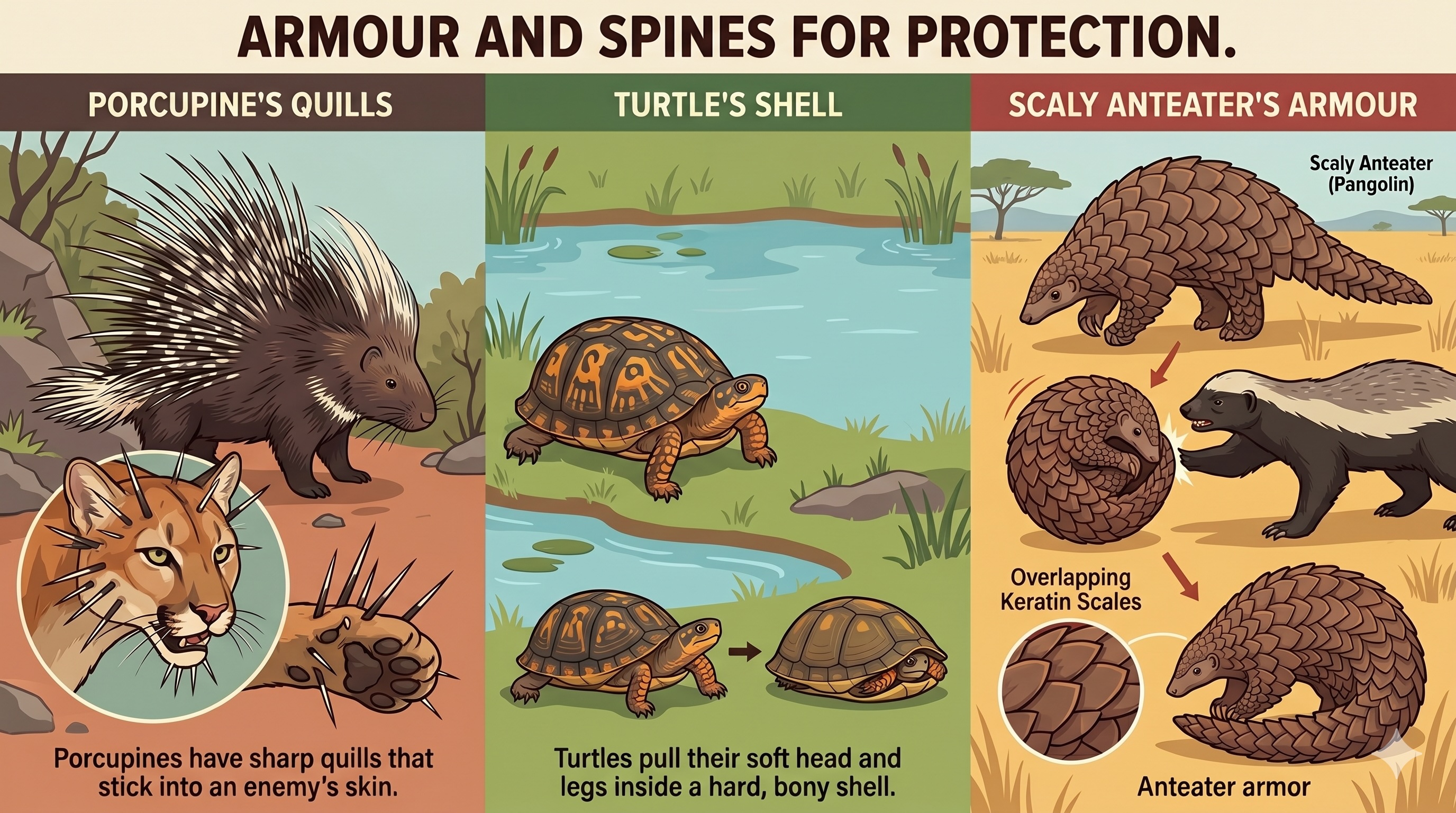
Some animals don't hide; they use physical defenses like armor or spikes to keep predators at a safe distance.
Key Points
- Porcupines have sharp quills that stick into an enemy's skin.
- Turtles pull their soft head and legs inside a hard, bony shell.
- These defenses make the animal a painful meal for a hunter.
- Physical armor is often found in slow-moving animals.
Olympiad Fact
A porcupine has about quills on its body!
The Long Winter Sleep
Hibernation secrets
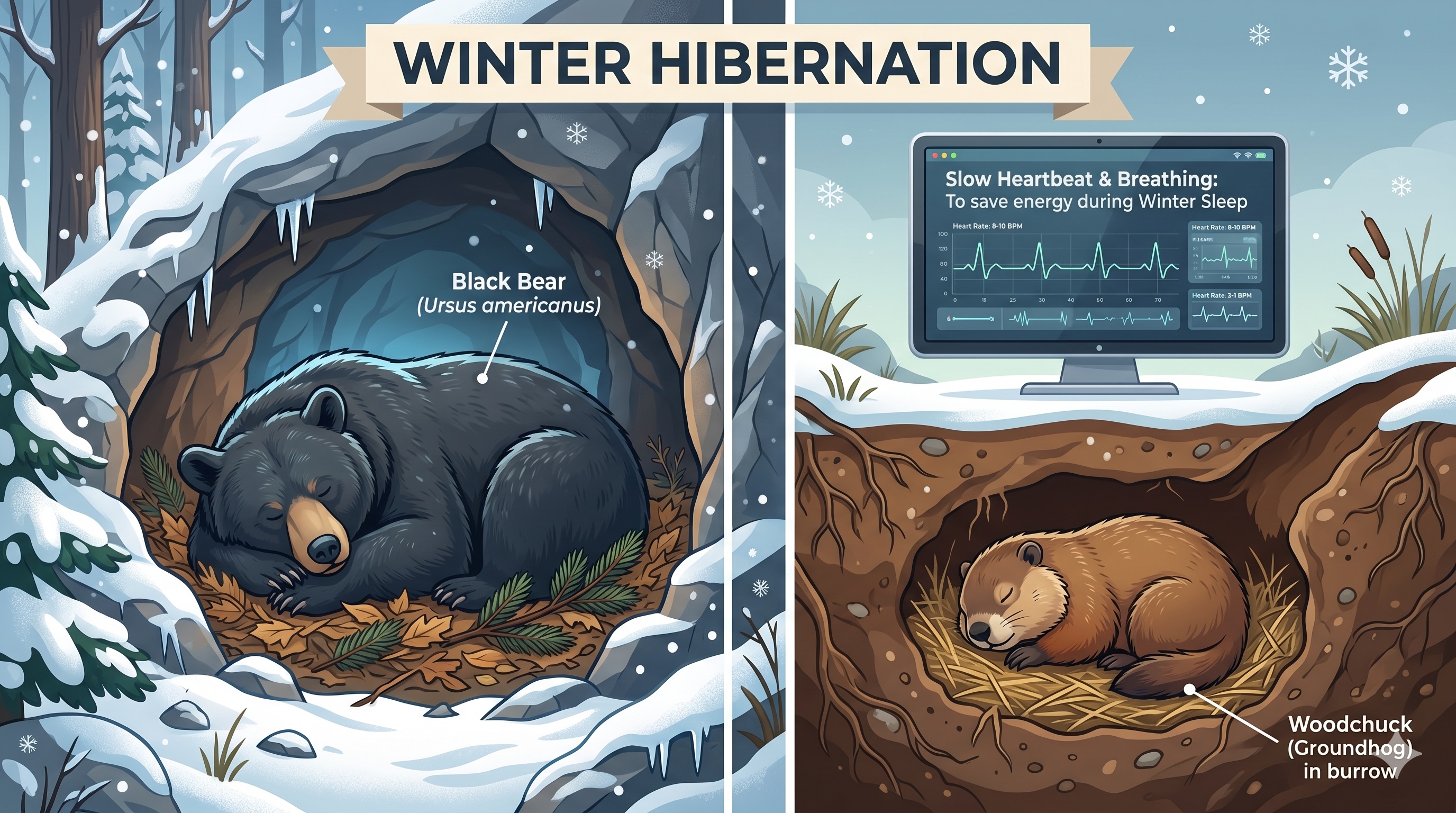
Hibernation is a deep sleep that helps some animals survive winter when there is no food and it is very cold.
Key Points
- The animal's heart rate and breathing slow down to save energy.
- Bears, squirrels, and frogs are common hibernators.
- They use stored body fat to stay alive for months without eating.
- The animal wakes up only when the spring weather warms up.
Olympiad Fact
A hibernating squirrel's heart rate can drop from beats per minute to just !
The Hot Summer Sleep
Aestivation secrets
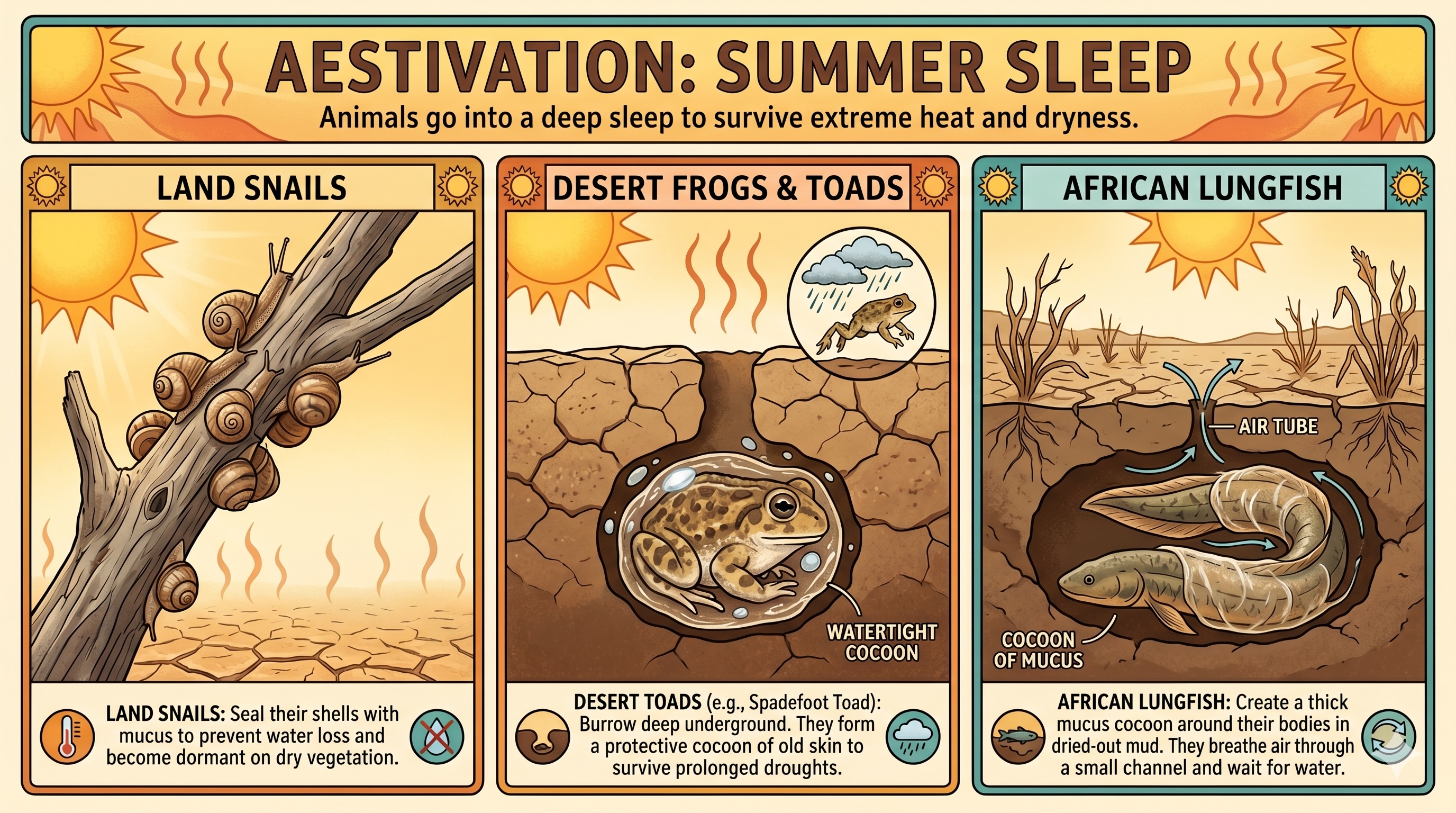
Aestivation is like hibernation but for hot weather. Animals go into a deep sleep to survive extreme heat and dryness.
Key Points
- Snails and some desert frogs use aestivation to stay alive.
- They find a cool, shaded spot and stop moving until it rains.
- This prevents their bodies from drying out in the sun.
- Both types of sleep are ways to survive extreme weather conditions.
Olympiad Fact
Some desert snails can sleep for three years while waiting for rain!
The Great Journey
Migration for survival
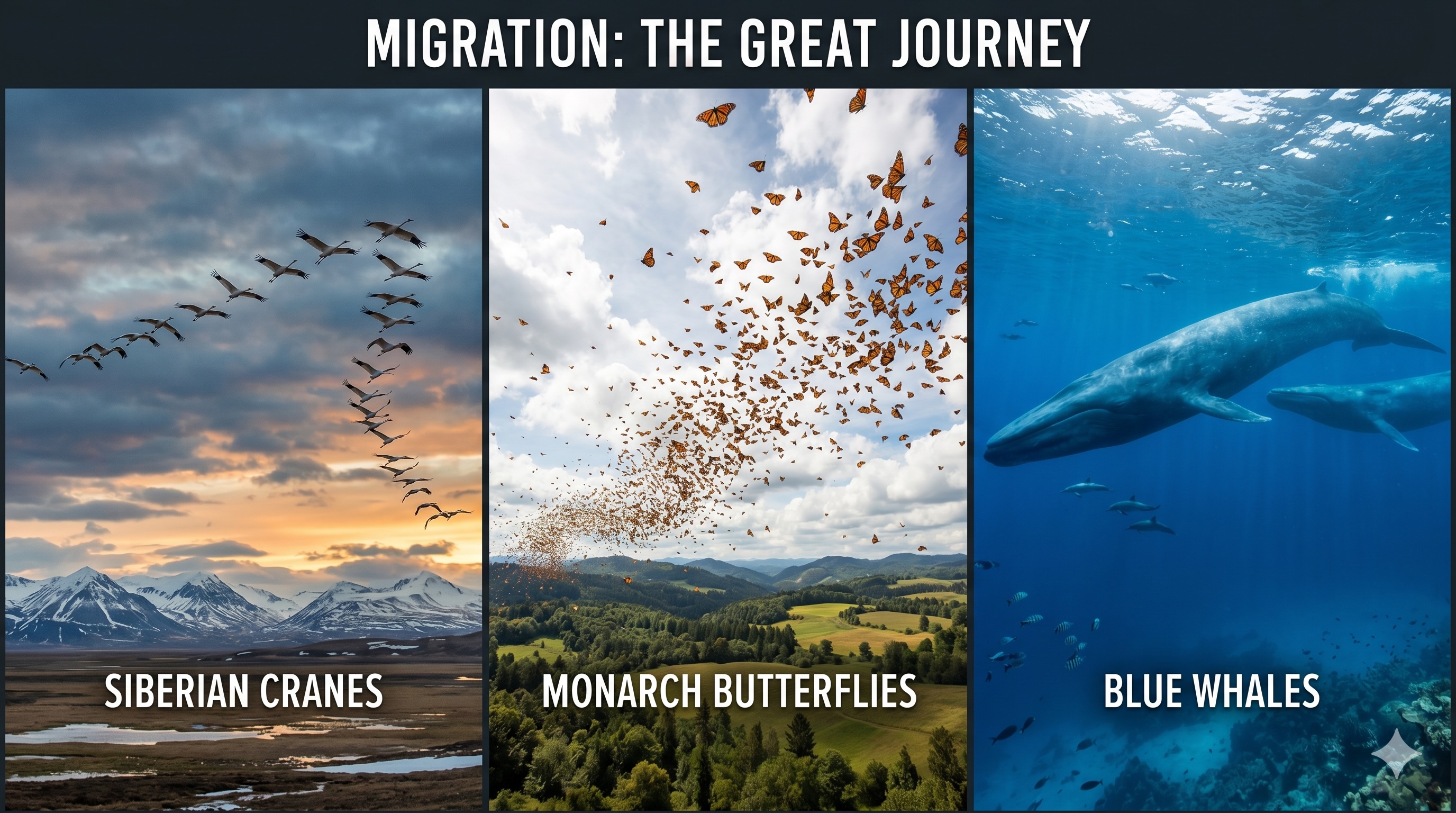
Migration is the regular, seasonal journey animals take to find better food or a safer place to live and breed.
Key Points
- Siberian Cranes fly thousands of miles to India to escape the winter.
- Monarch butterflies travel from Canada to Mexico every year.
- Whales migrate to warmer waters to give birth to their calves.
- Animals use the sun, stars, and even Earth's magnetic field to navigate.
Olympiad Fact
The Arctic Tern flies from the North Pole to the South Pole and back every single year!
Swipe to skip‹