
Adaptations to Different Habitats
The Frozen Arctic and Poles
Surviving the deep freeze
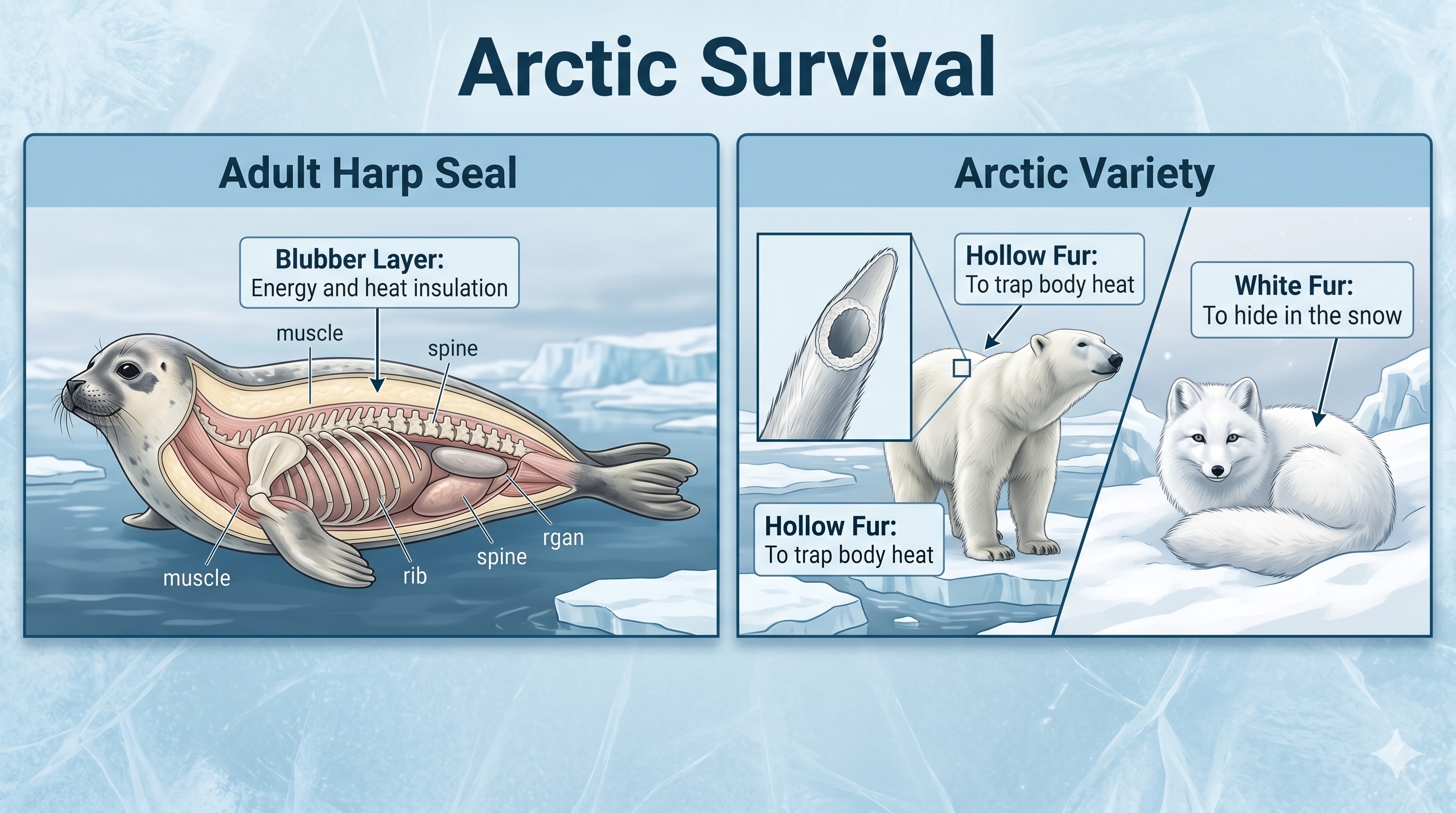
Polar regions are always freezing. Animals here have developed thick layers to prevent their internal heat from escaping into the icy surroundings.
Key Points
- A thick layer of fat called 'blubber' is found under the skin of whales and seals.
- Polar bears have hollow hairs that trap air to act as excellent insulation.
- Penguins have waterproof feathers to stay dry in icy water.
- Blubber also stores energy for when food is hard to find in winter.
Olympiad Fact
Polar bears have black skin! This helps them absorb more heat from the sun.
Hot Desert Survivors
Winning the water war
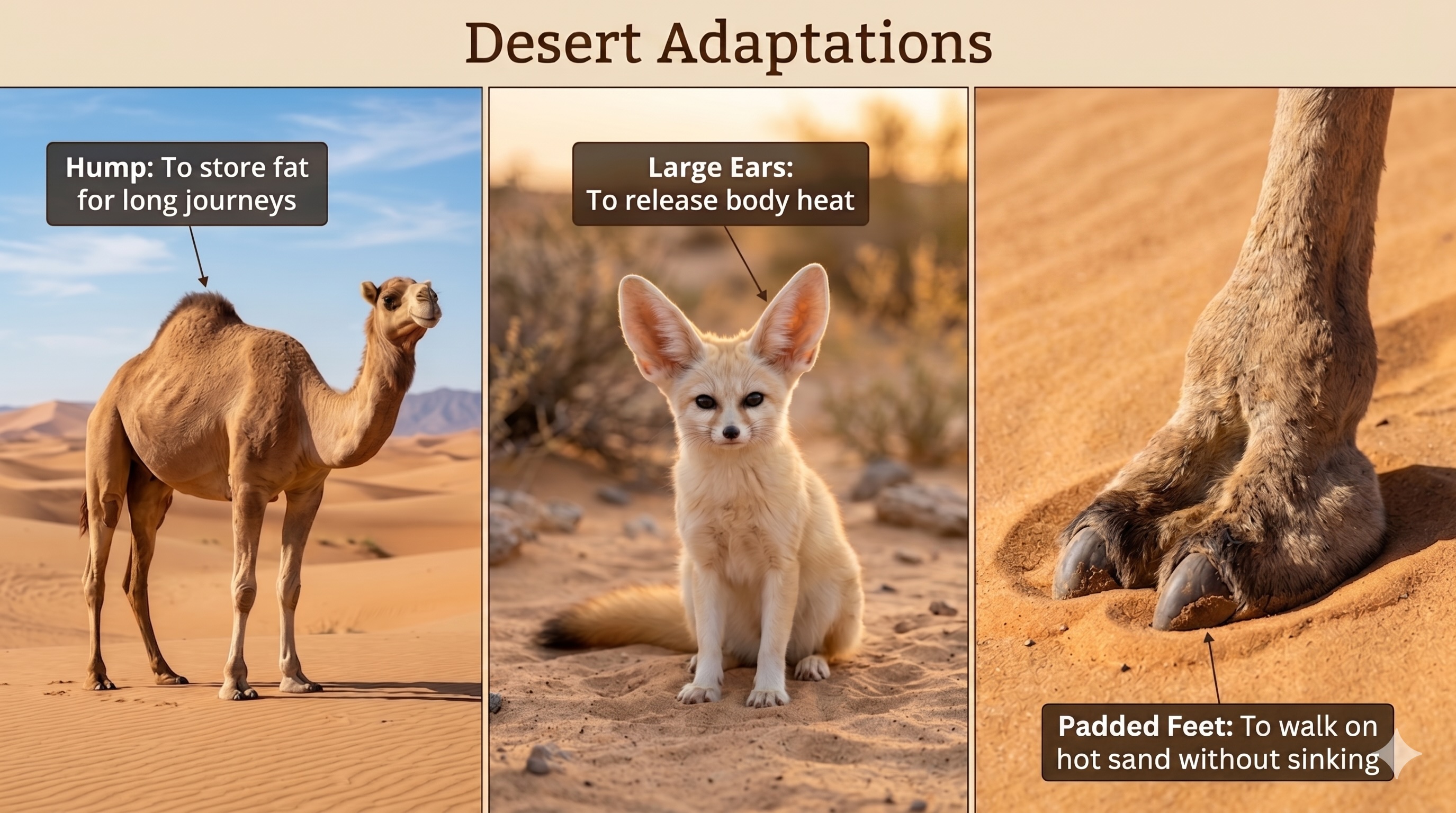
Hot deserts are dry and sandy. Animals here have 'water-saving' bodies and find clever ways to stay cool under the burning sun.
Key Points
- Camels store fat in their humps which can be used for energy during long trips.
- They pass very little urine and sweat only when it is extremely hot.
- Long eyelashes and the ability to close nostrils keep sand out during storms.
- Padded feet help them walk on hot sand without sinking or burning.
Olympiad Fact
A thirsty camel can drink more than of water in just !
High Mountain Life
The master climbers
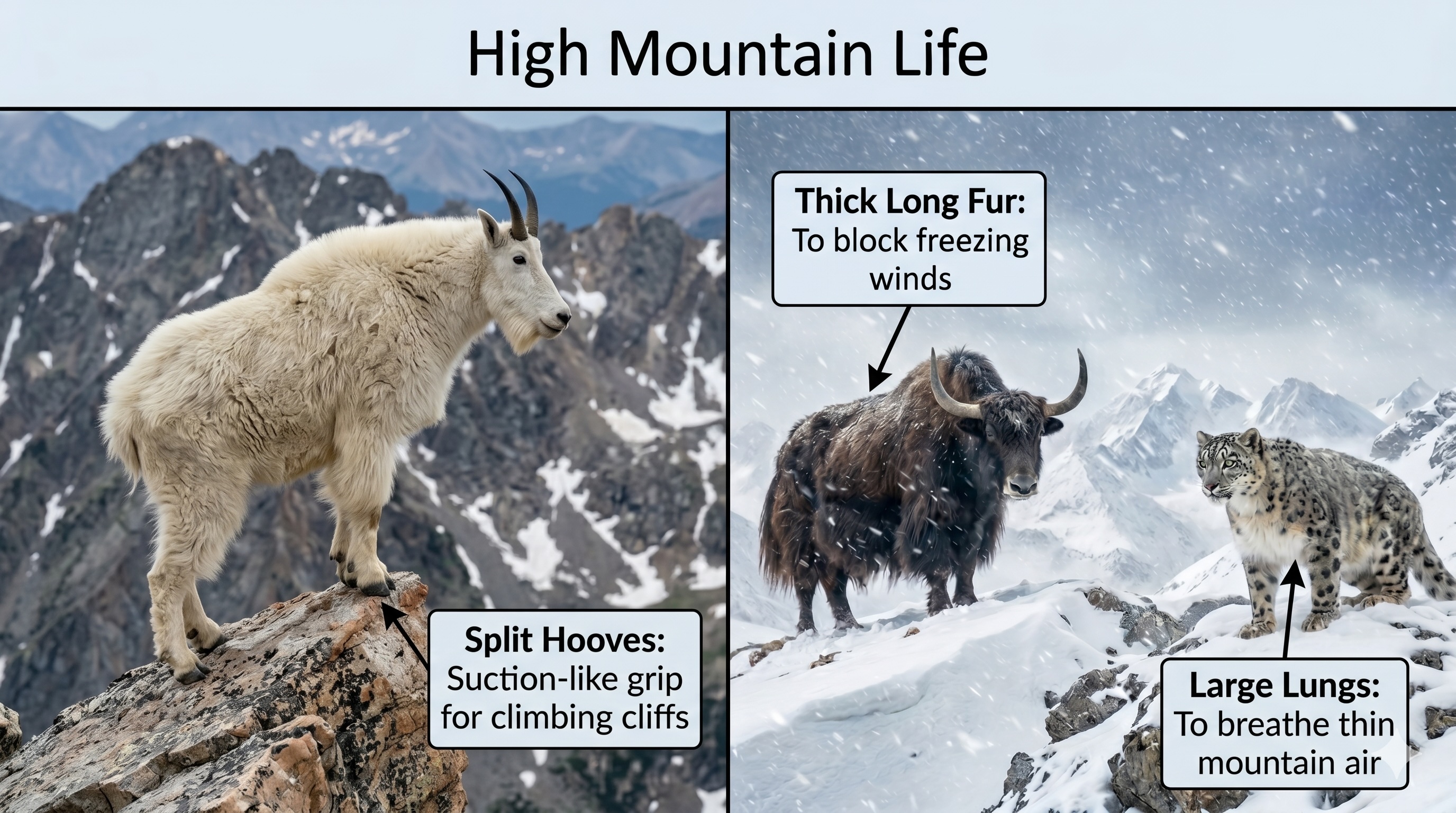
Mountain animals live in thin air and on rocky cliffs. They have developed features for balance and keeping warm.
Key Points
- Mountain goats have split hooves that act like suction cups for grip.
- They have long, thick fur to block the freezing mountain winds.
- Animals like the Yak have large lungs to breathe thin air better.
- Strong limbs allow them to leap across wide rocky gaps safely.
Olympiad Fact
Mountain goats can climb cliffs that are almost completely vertical!
Mastering the Water
Aquatic body shapes
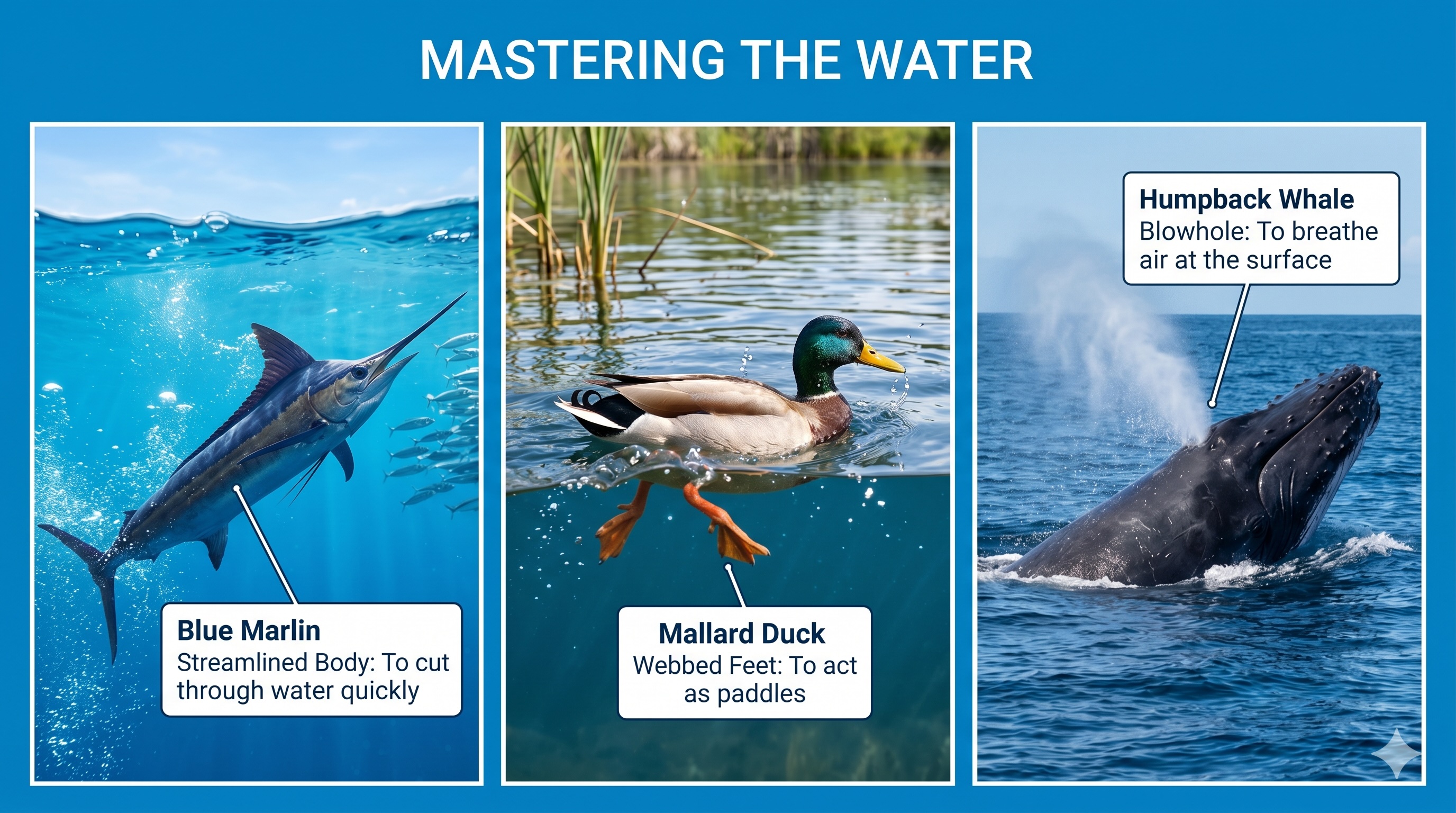
Aquatic animals are built to move through water efficiently. Their bodies are often streamlined to reduce friction while swimming.
Key Points
- Fish use gills to breathe; whales use blowholes to breathe air.
- Many have fins or flippers instead of legs for swimming.
- Ducks and frogs have webbed feet that act like paddles in the water.
- Streamlining means being narrow at the front and back to 'cut' the water.
Olympiad Fact
Dolphins sleep with one eye open and half their brain awake to watch for danger!
Living in the Trees
Arboreal adaptations
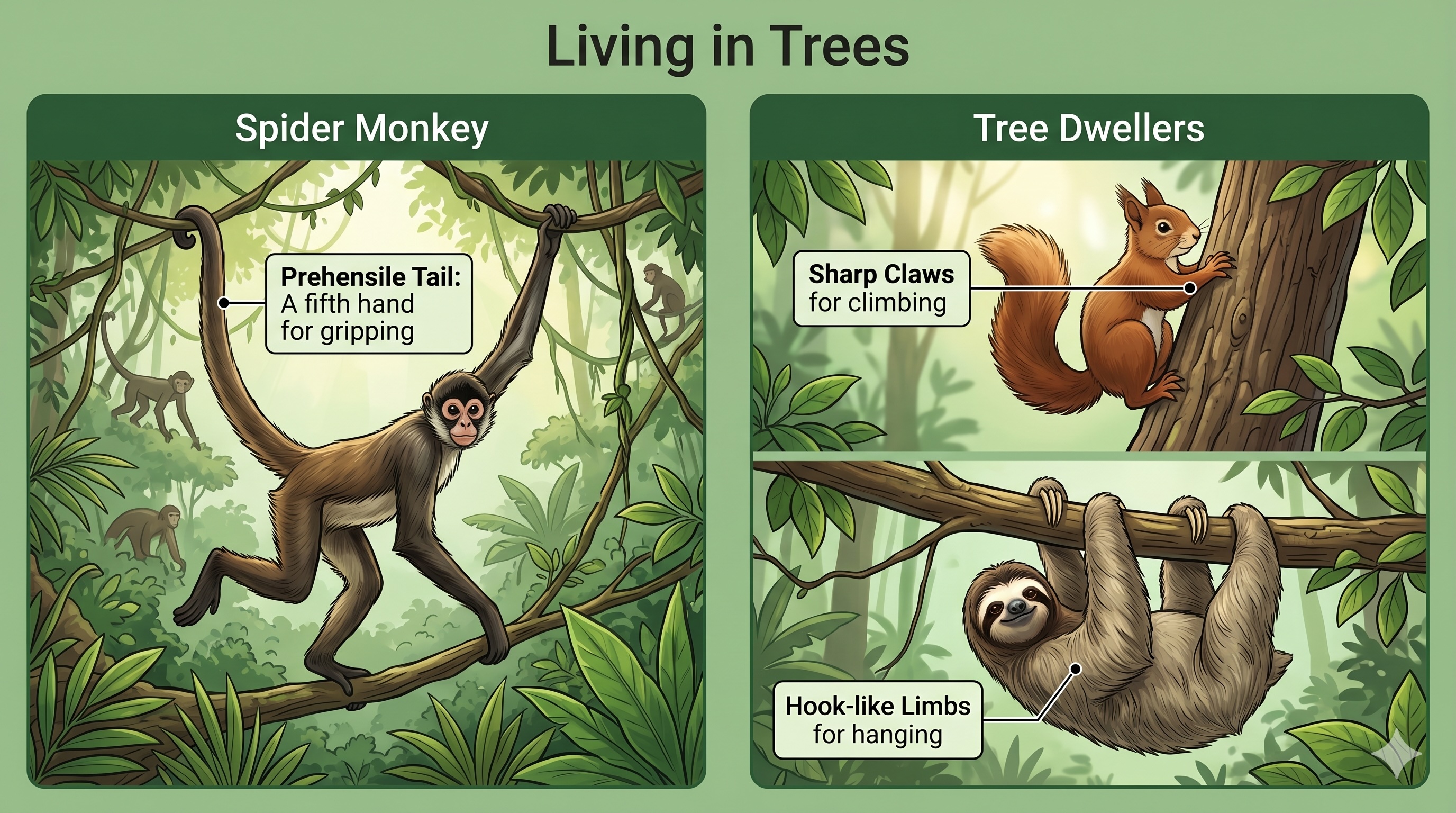
Arboreal animals like monkeys and squirrels spend most of their time in trees. They are designed for climbing and swinging.
Key Points
- Monkeys use 'prehensile' tails like a fifth hand to grip branches.
- Squirrels have sharp claws to scurry up and down tree trunks.
- They have a very strong sense of balance to prevent falling.
- Living high up helps them avoid ground-dwelling predators.
Olympiad Fact
Sloths move so slowly that tiny green plants (algae) grow on their fur!
Swipe to skip‹