
Inside Planet Earth
Layers of the Earth
Crust, Mantle, and Core
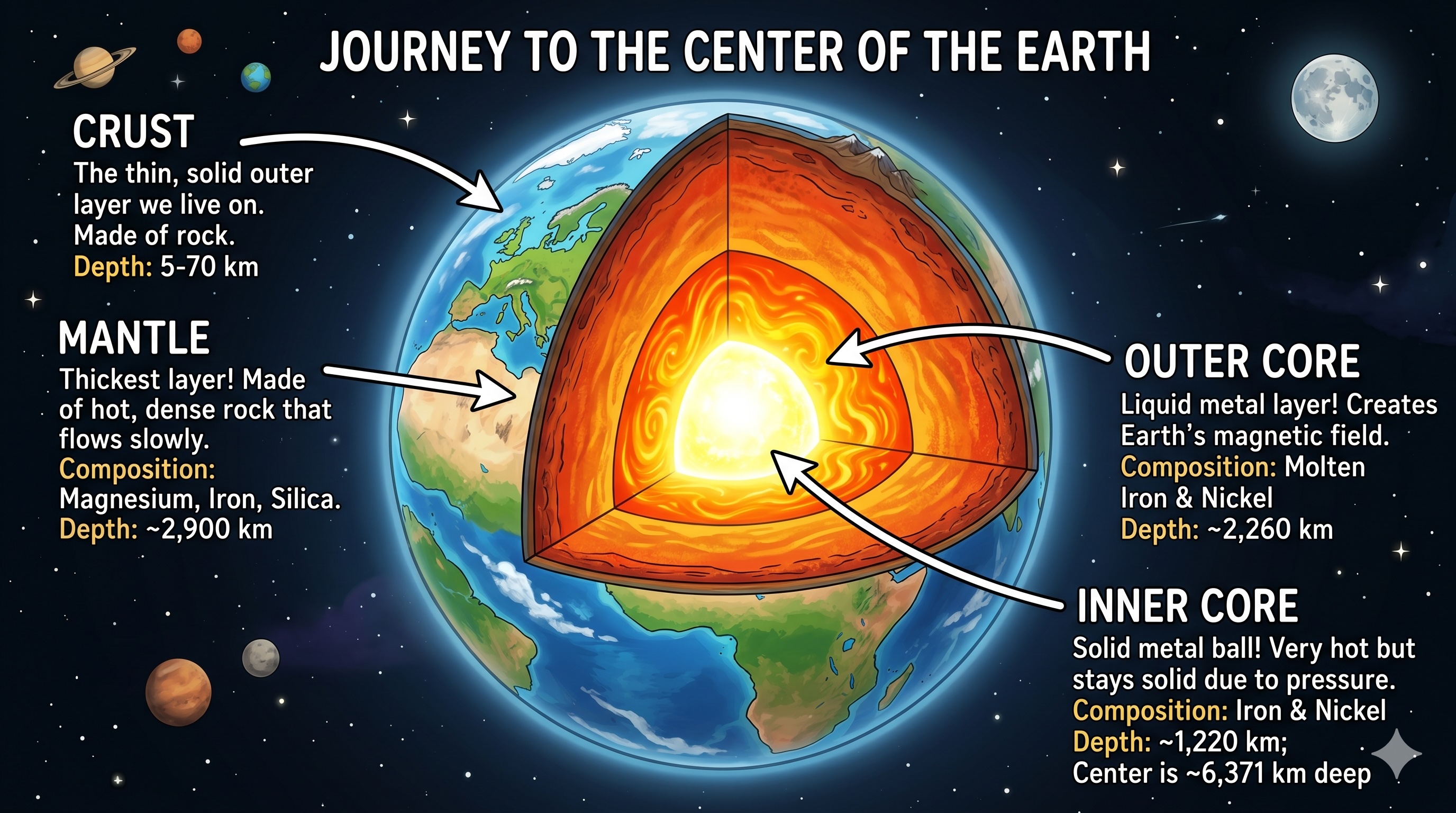
Earth is not solid all the way through; it is made of three distinct layers with different temperatures and materials.
Key Points
- The Crust is the thin, outer layer where we live.
- The Mantle is the thick middle layer made of hot, semi-solid rocks.
- The Core is the innermost part, divided into liquid outer and solid inner core.
- The temperature increases as we go deeper into the Earth.
Olympiad Fact
The Earth's core is almost as hot as the surface of the Sun!
Spinning on the Axis
Understanding Rotation
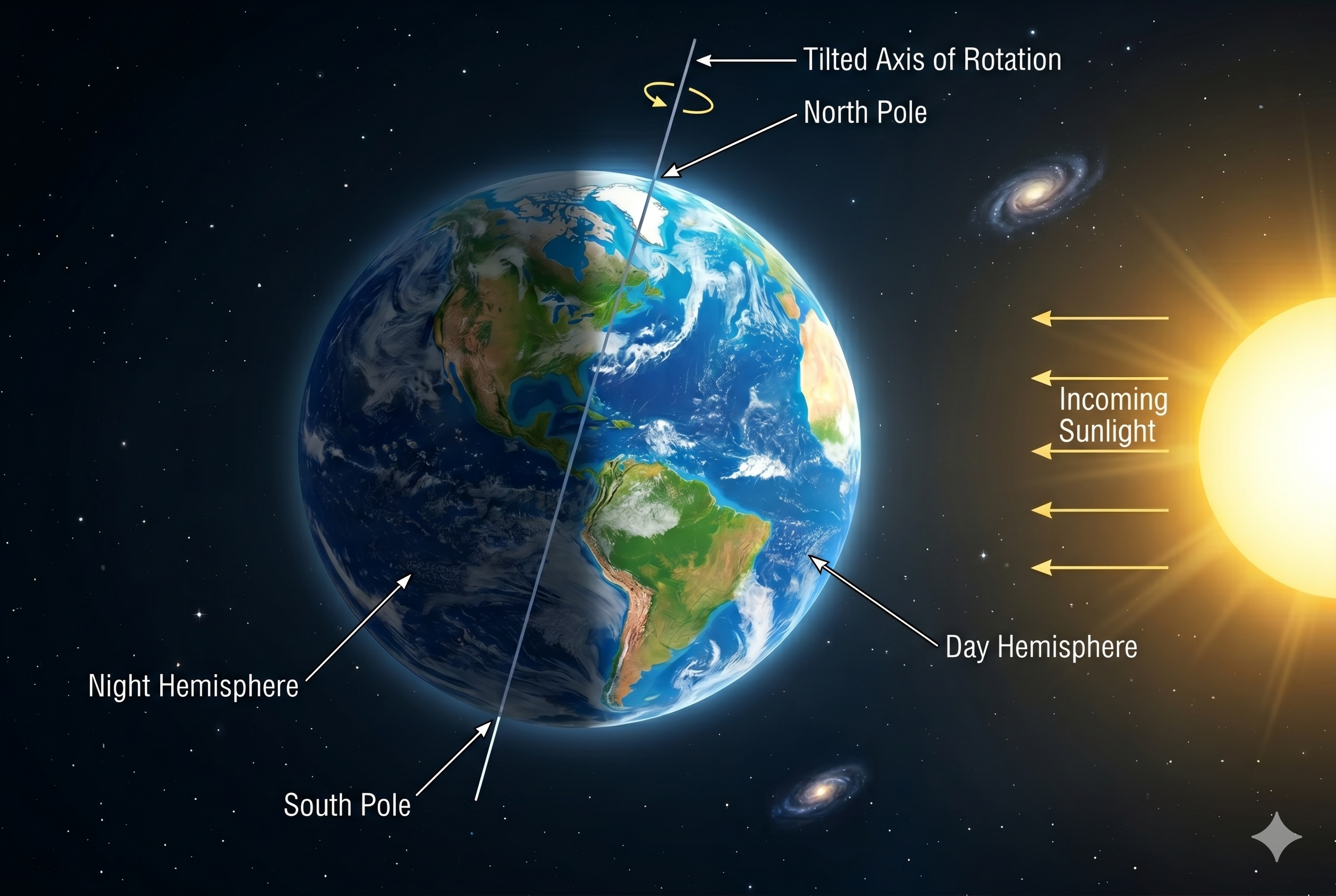
Rotation is the spinning of Earth on its own imaginary line called the axis. This movement is responsible for the cycle of day and night.
Key Points
- Earth takes exactly to complete one rotation.
- The axis is slightly tilted at an angle.
- The side facing the Sun has Day, and the side away has Night.
- Earth rotates from West to East, which is why the Sun rises in the East.
Olympiad Fact
The Earth spins at a speed of about at the equator, but we don't feel it because we move with it!
The Yearly Journey
Understanding Revolution
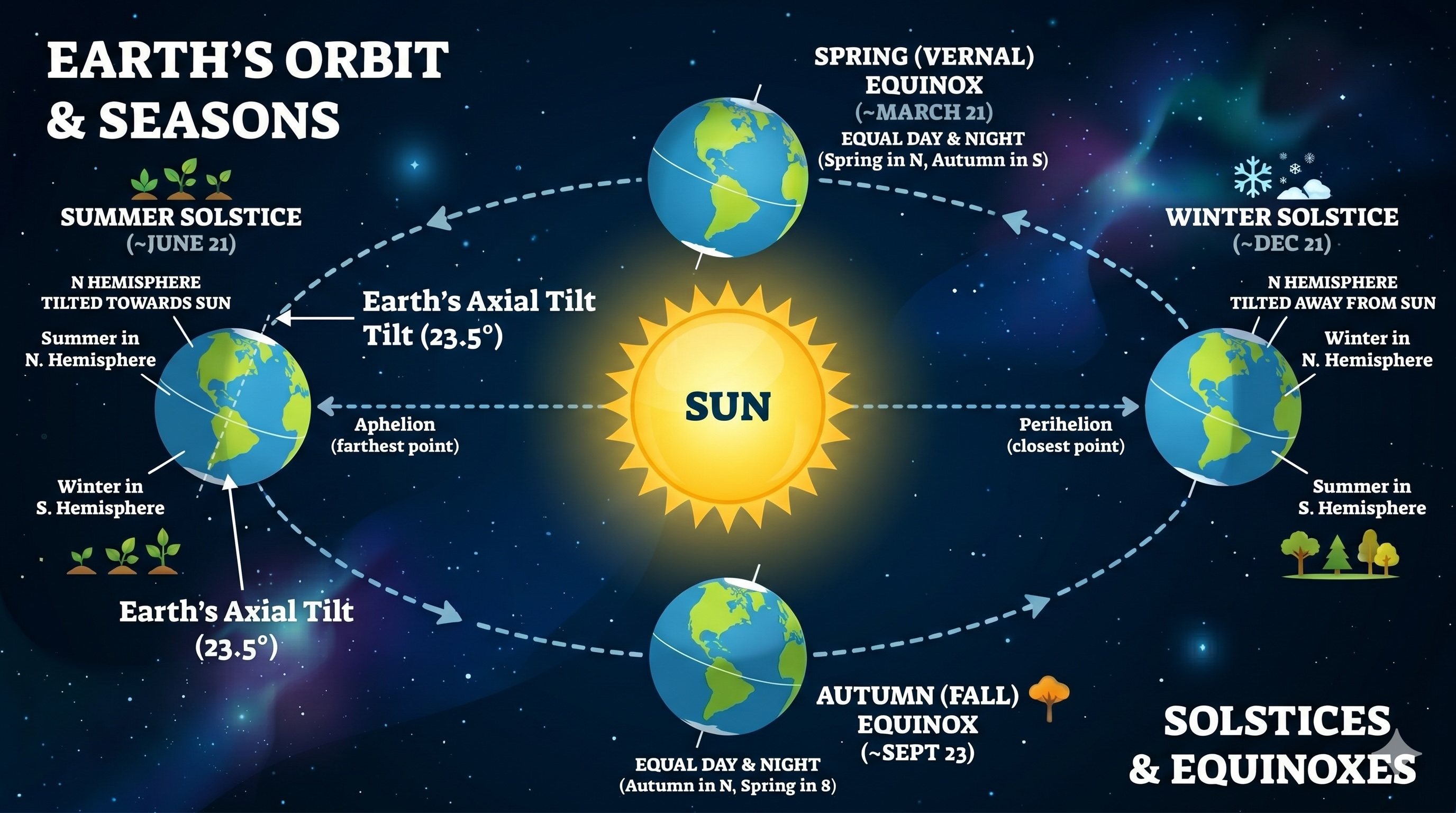
Revolution is the movement of Earth around the Sun in a fixed elliptical path called an orbit. This movement causes the change of seasons.
Key Points
- Earth takes to complete one revolution.
- This period of time is what we call a 'Year'.
- The tilt of the Earth's axis during revolution creates seasons.
- Every four years, the extra days add up to a Leap Year of days.
Olympiad Fact
During a revolution, Earth travels nearly around the Sun!
Swipe to skip‹