
Invertebrates
What are Invertebrates?
Animals without backbones
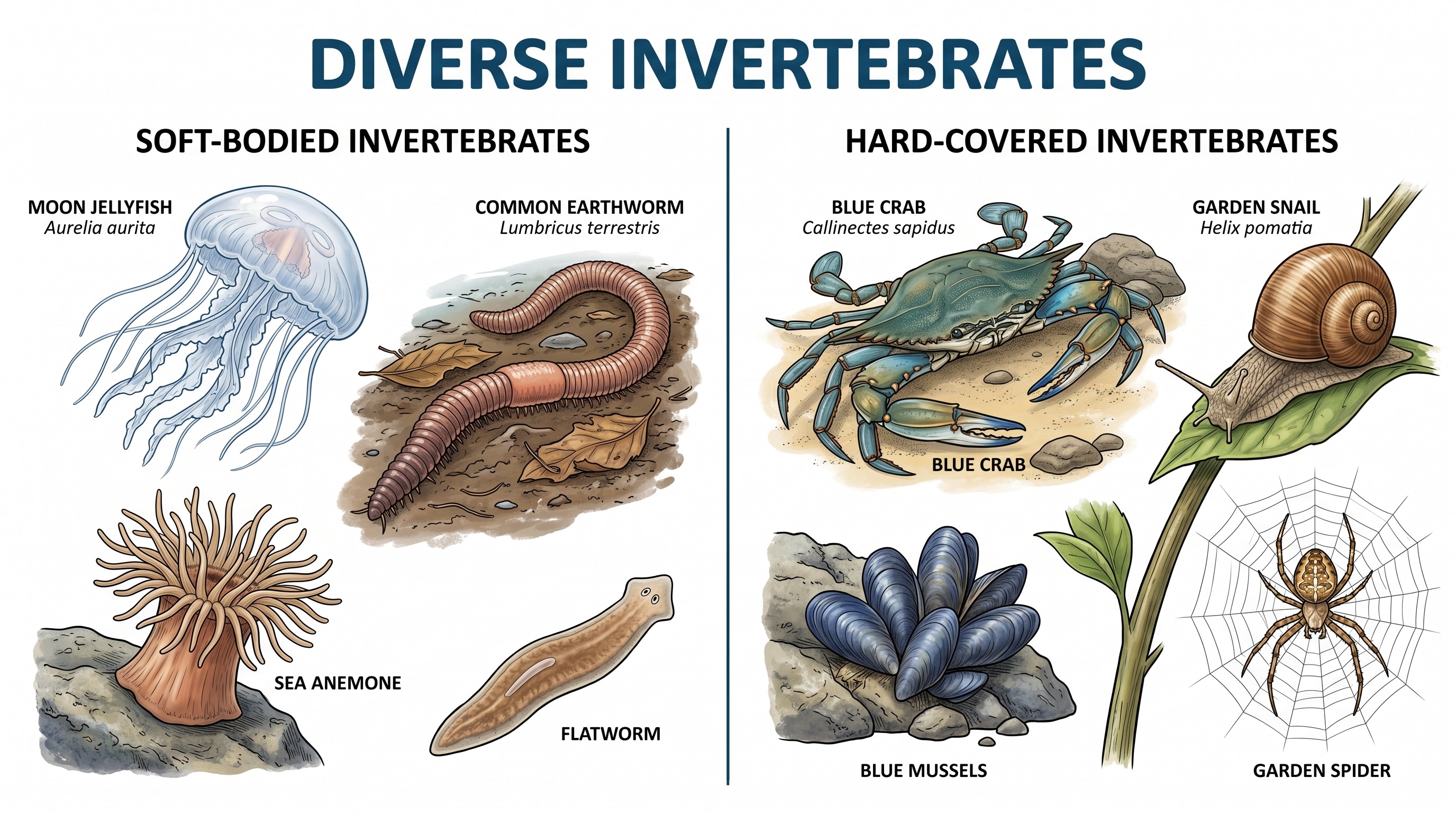
Invertebrates are animals that do not possess a vertebral column or backbone. They represent the largest group of animals in the world and vary greatly in shape.
Key Points
- Classification is based entirely on the absence of a backbone.
- Examples include spiders, scorpions, snails, worms, and crabs.
- Many have soft bodies, while some have hard outer shells or skeletons.
- Without a rigid internal skeleton, most stay small to move easily.
Olympiad Fact
More than of all animal species on Earth are invertebrates!
The World of Insects
The six-legged team
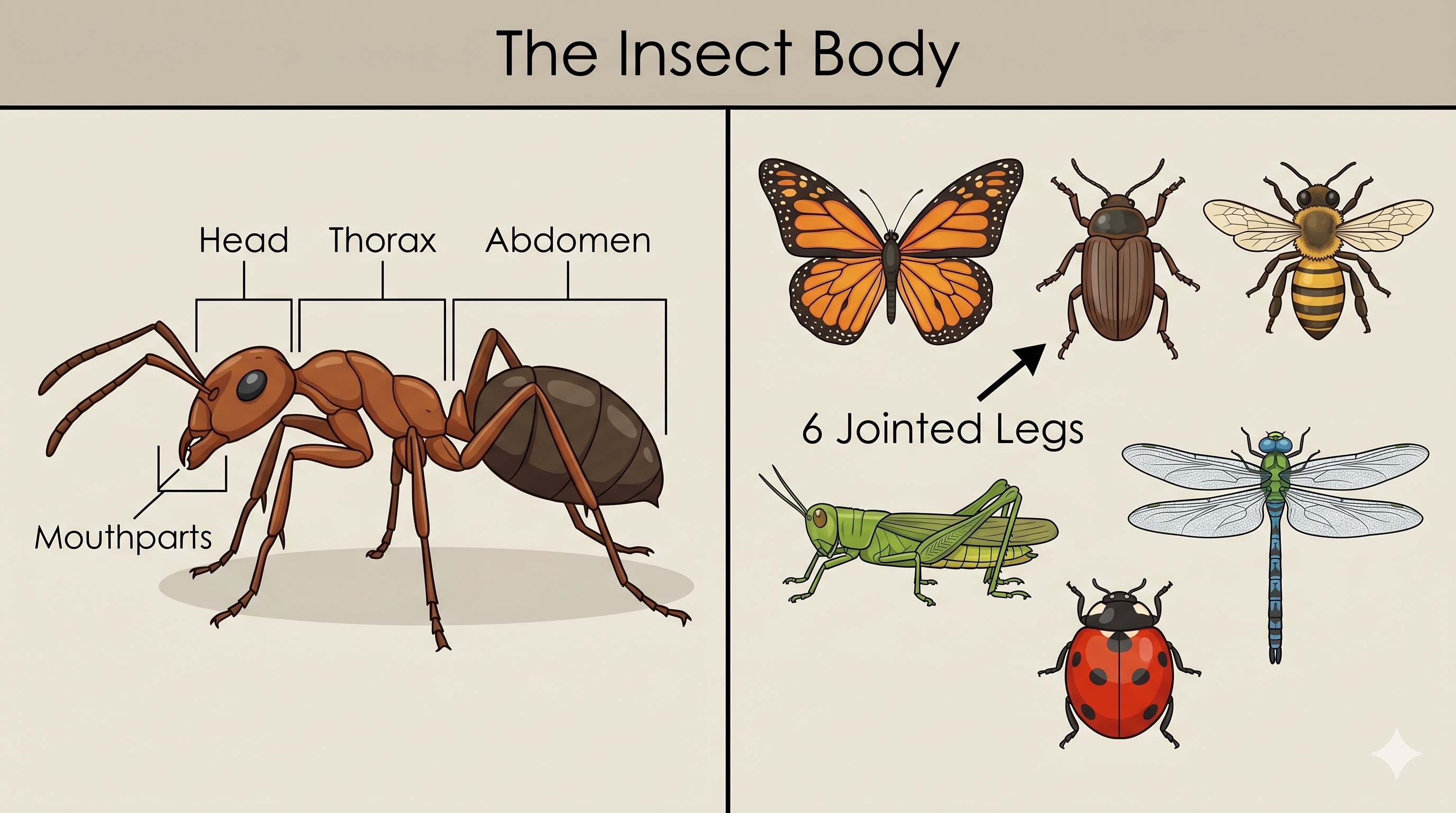
Insects are a specialized group of invertebrates. Their bodies are built to be light and are protected by a tough outer layer.
Key Points
- Their body is strictly divided into three parts: Head, Thorax, and Abdomen.
- Every insect has exactly six jointed legs attached to the thorax.
- Most insects have a hard body covering made of a material called chitin.
- Many insects also have wings to escape predators quickly.
Olympiad Fact
Ants can lift objects up to times their own body weight!
Soft Bodies and Shells
Hidden inside armor
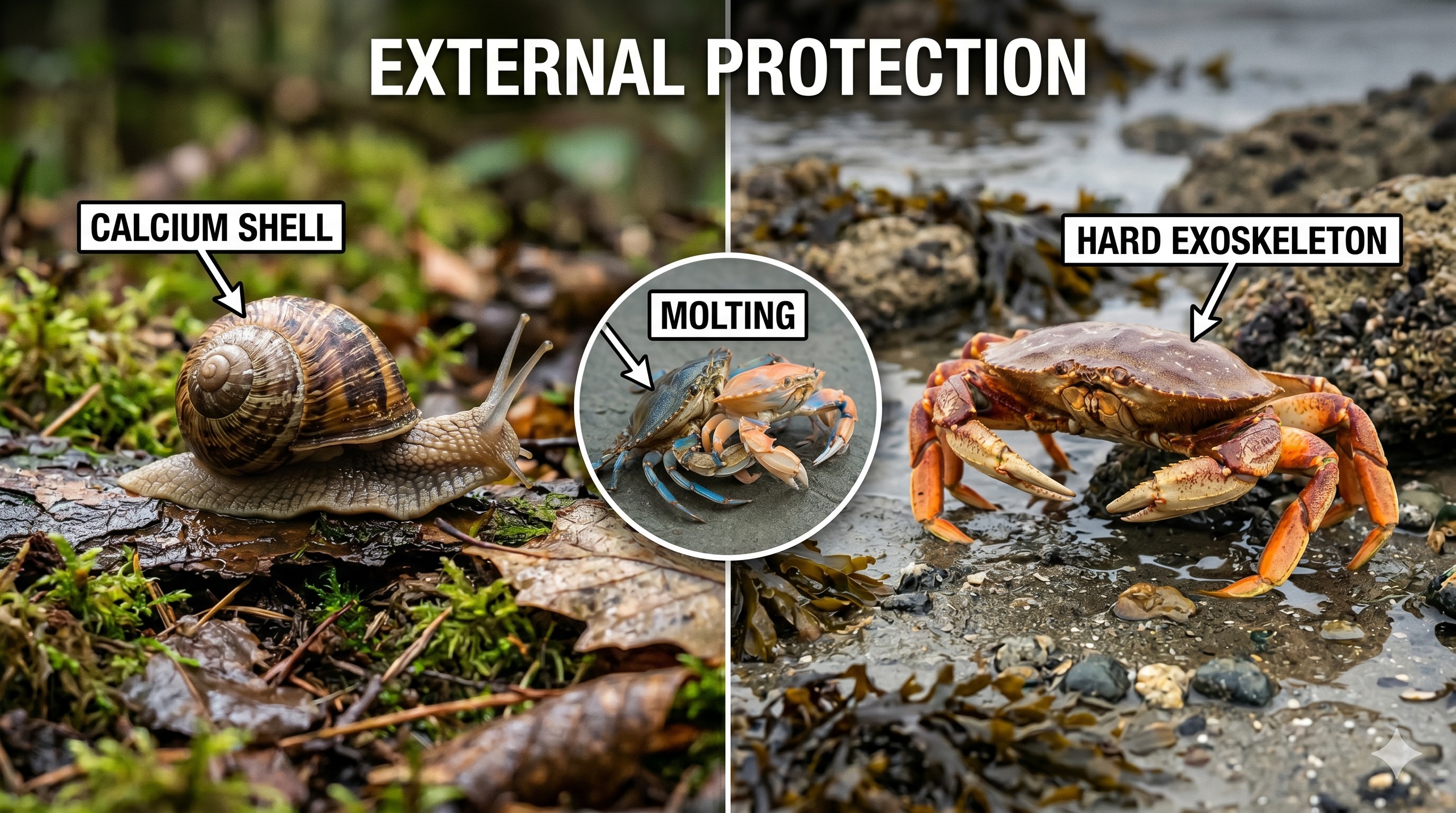
Many invertebrates like snails and crabs have soft bodies inside, so they use hard external structures for protection.
Key Points
- Snails and mussels have calcium-rich shells to hide from enemies.
- Crabs and lobsters have an exoskeleton that acts like a suit of armor.
- These structures protect them from drying out in the sun.
- Some animals must shed their old shell to grow a bigger one.
Olympiad Fact
A snail can repair its own shell using minerals it gets from the food it eats!
Swipe to skip‹