
Energy Flow: Food Chains and Webs
The Path of Energy
The simple food chain
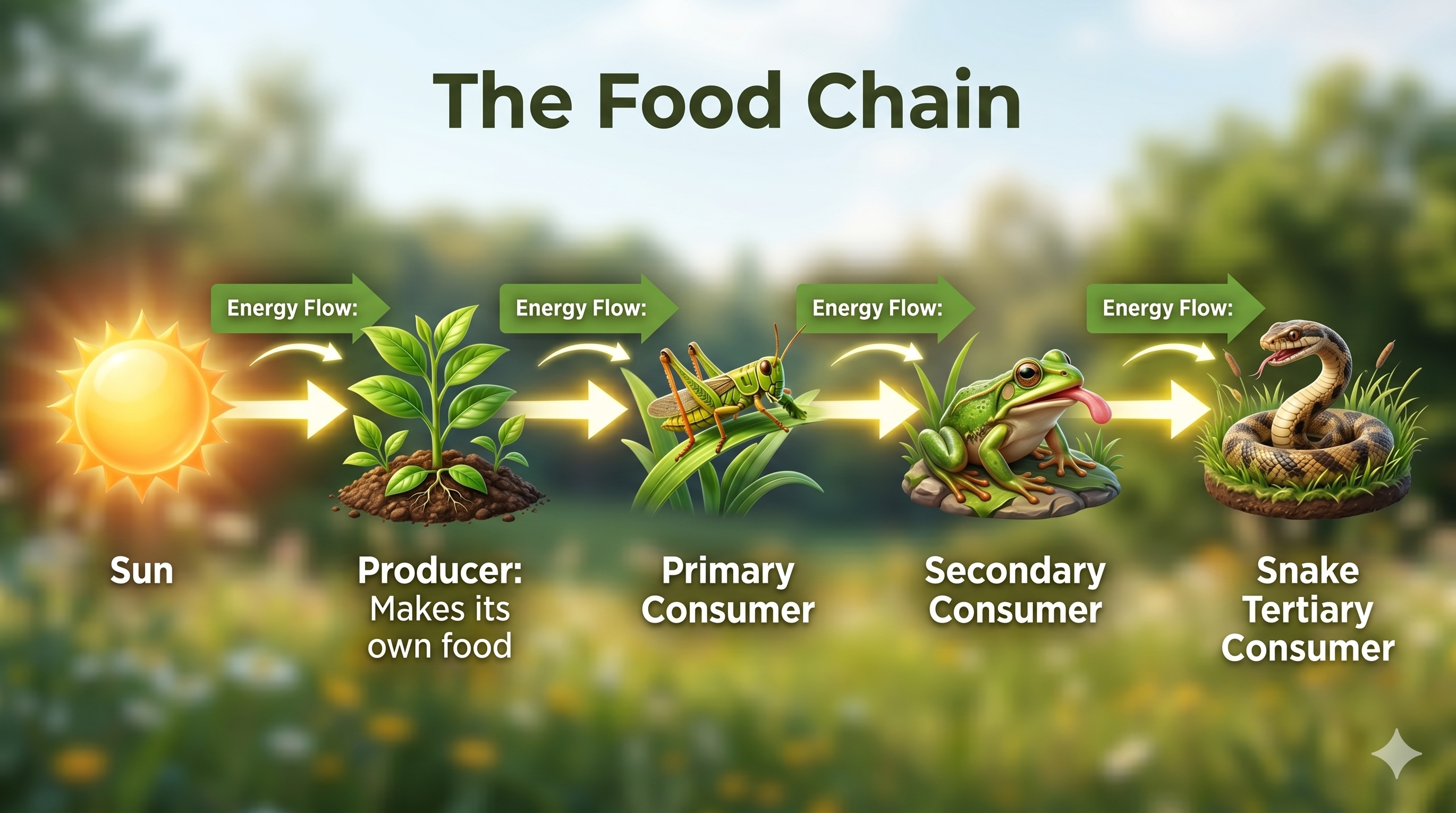
A food chain shows how energy moves from one living thing to another in a straight line.
Key Points
- Producers (Plants) start the chain using sunlight.
- Primary Consumers (Herbivores) are the second link.
- Secondary Consumers (Carnivores) eat the herbivores.
- The arrow always points to the animal that is doing the eating.
Olympiad Fact
Only about of energy is passed to the next level in a food chain!
The Master Web
Interconnected life
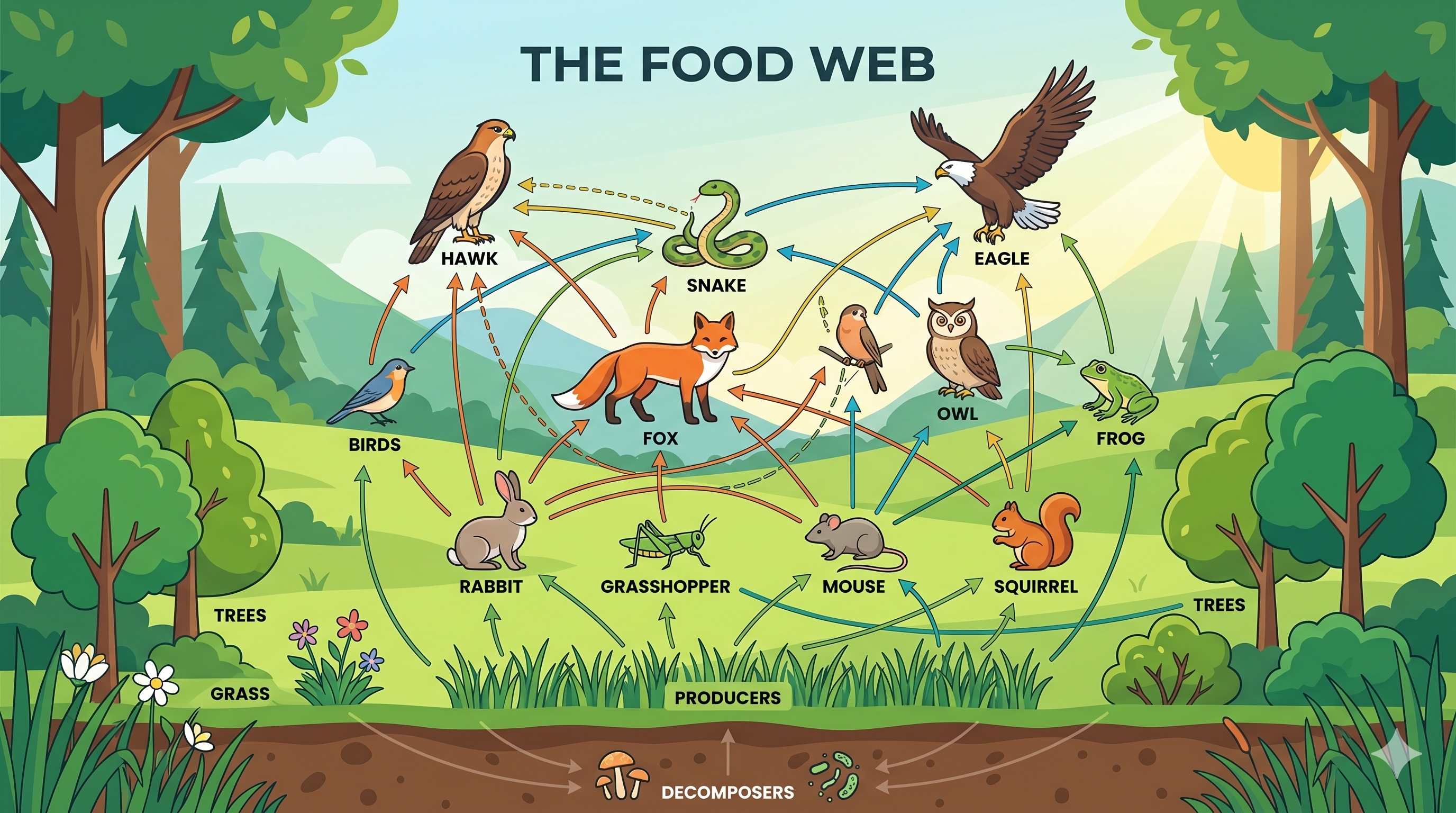
In nature, most animals eat more than one thing. When many food chains cross each other, they form a 'Food Web'.
Key Points
- A food web represents the true complexity of a habitat.
- One plant can be the start of many different food chains.
- Predators can be part of multiple chains at the same time.
- High diversity in a food web makes the habitat more stable.
Olympiad Fact
Humans are often at the very top of complex food webs!
The Balance of Nature
Population changes
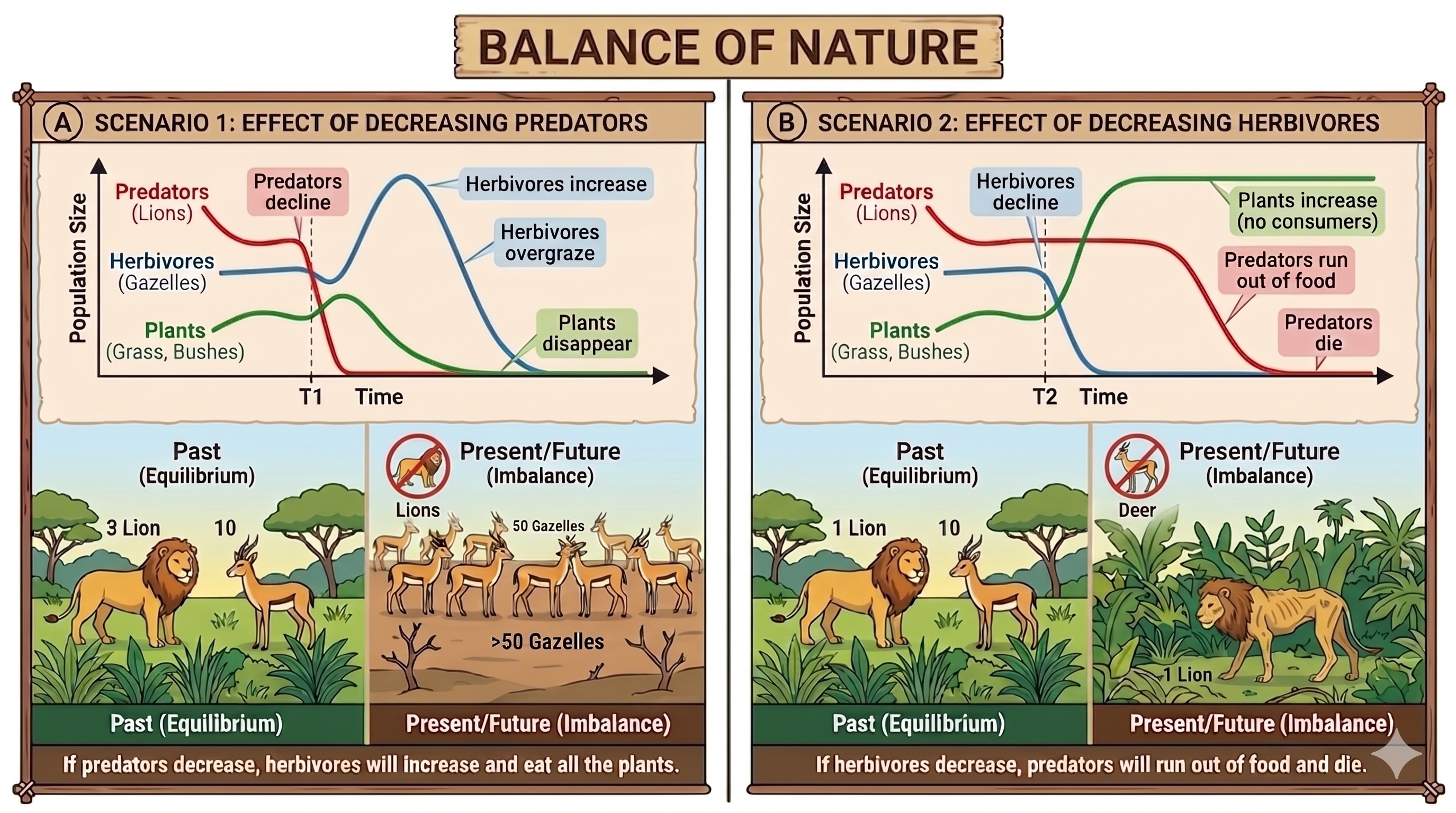
If the number of one type of animal in a food chain changes, it affects every other animal in that chain.
Key Points
- If predators decrease, herbivores will increase and eat all the plants.
- If herbivores decrease, predators will run out of food and die.
- Nature works to keep all these populations in balance.
- Scientists use these models to protect nature and endangered species.
Olympiad Fact
Adding wolves back to a forest can actually help the trees grow taller by controlling deer!
Swipe to skip‹