
The Moon and its Phases
Our Nearest Neighbour
The natural satellite
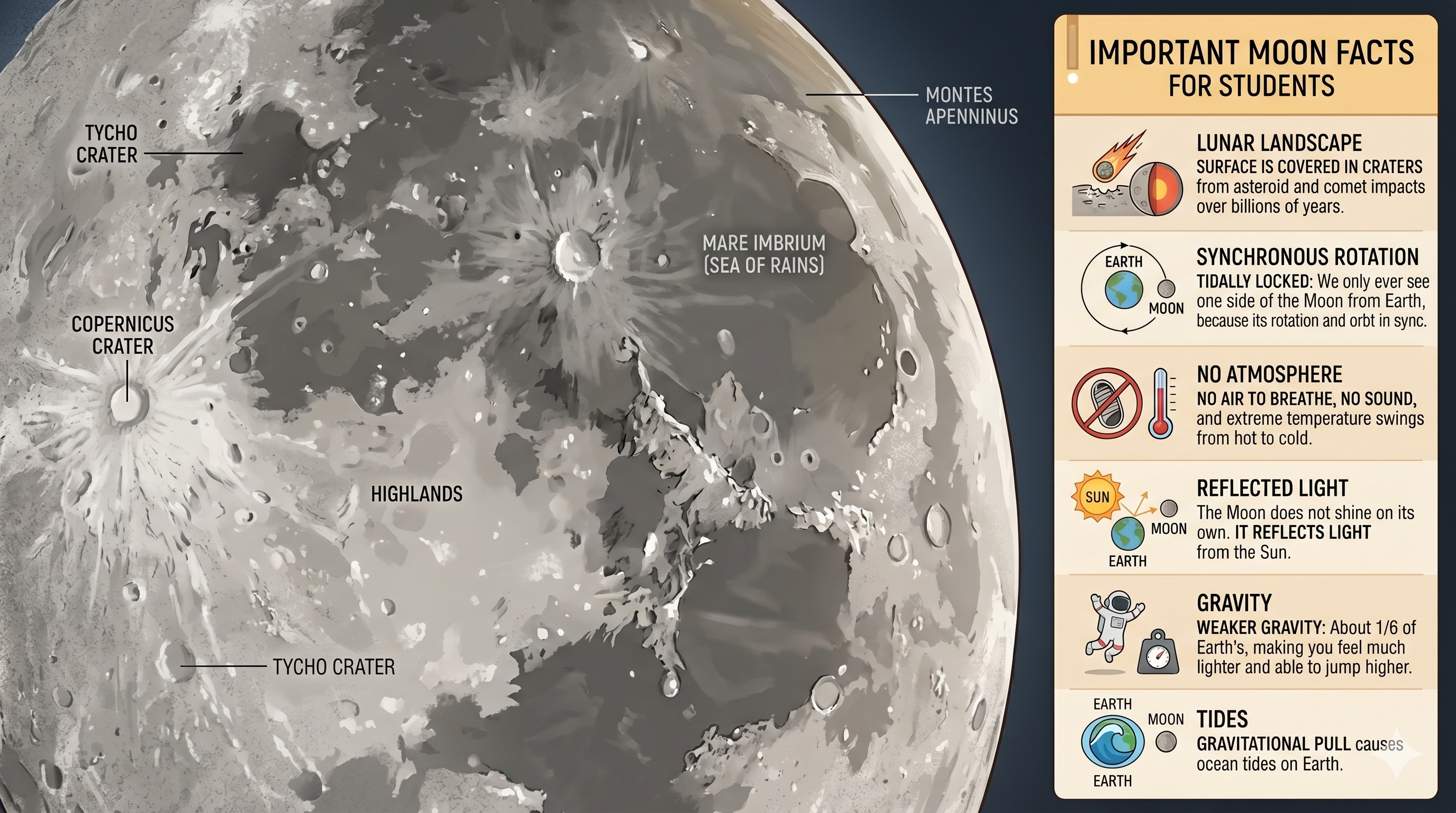
The Moon is Earth's only natural satellite. It is a dry, rocky place with no air, no water, and no life.
Key Points
- The Moon does not have its own light; it reflects sunlight.
- The surface is covered with dust and large holes called craters.
- Gravity on the Moon is only of the gravity on Earth.
- Because there is no air, sounds cannot travel on the Moon.
Olympiad Fact
Neil Armstrong was the first human to step on the Moon in !
Waxing and Waning
Growing and shrinking light
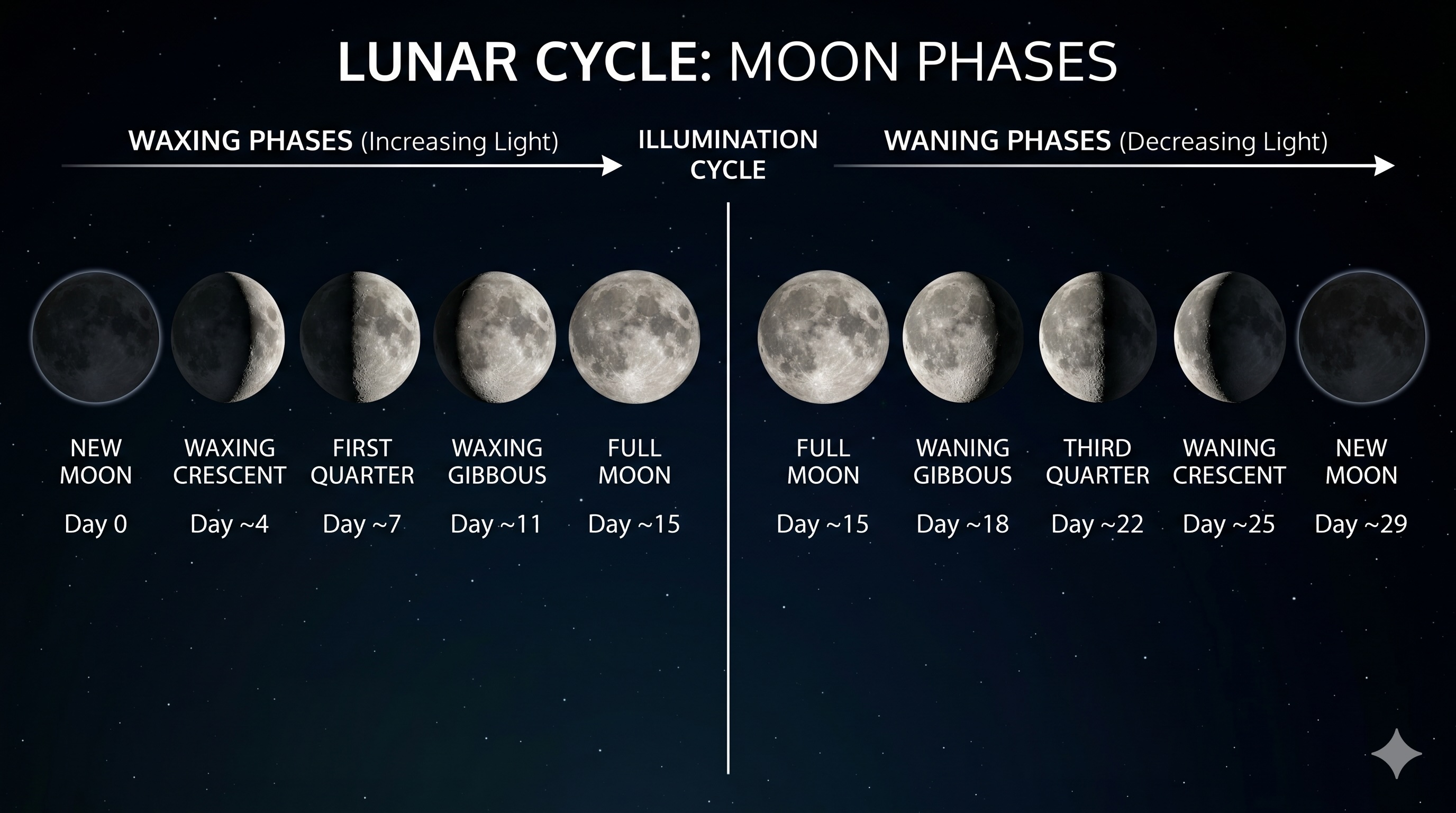
As the Moon revolves around Earth, the lit portion that we see from the ground appears to change its size throughout the month.
Key Points
- Waxing means the lit part of the Moon is growing larger (New Moon to Full Moon).
- Waning means the lit part of the Moon is shrinking smaller (Full Moon to New Moon).
- This cycle happens because the Moon is constantly moving in its orbit.
- The time taken from one New Moon to the next is about .
Olympiad Fact
The 'Dark Side of the Moon' is the side that never faces Earth because the Moon rotates exactly once for every orbit it makes!
Different shapes of moon
The diverse lunar faces
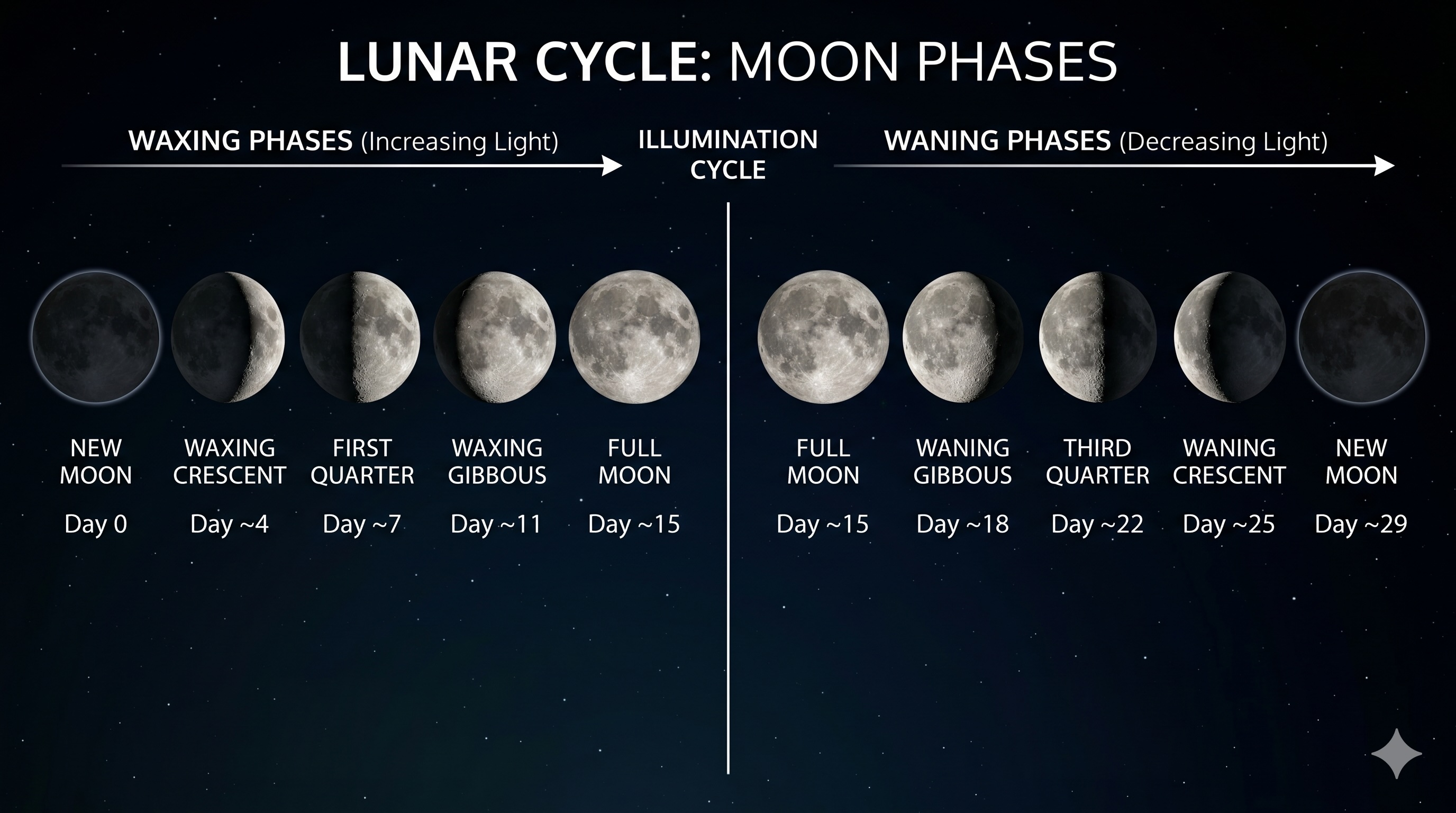
During its monthly orbit, the Moon appears to change its shape as seen from Earth. These shapes depend on how much of the Moon's lit side is visible to us.
Key Points
- New Moon is when the side facing Earth is dark, while Full Moon is when the entire side is bright.
- Crescent Moon is a thin curved shape representing less than half of the visible side lit.
- Quarter Moon or Half Moon is when exactly half of the side facing us is illuminated.
- Gibbous Moon is a bulging shape where more than half but less than the full side is lit.
Olympiad Fact
A 'Blue Moon' is the rare second Full Moon that occasionally happens in a single calendar month!
Artificial Satellites
Man-made moon helpers
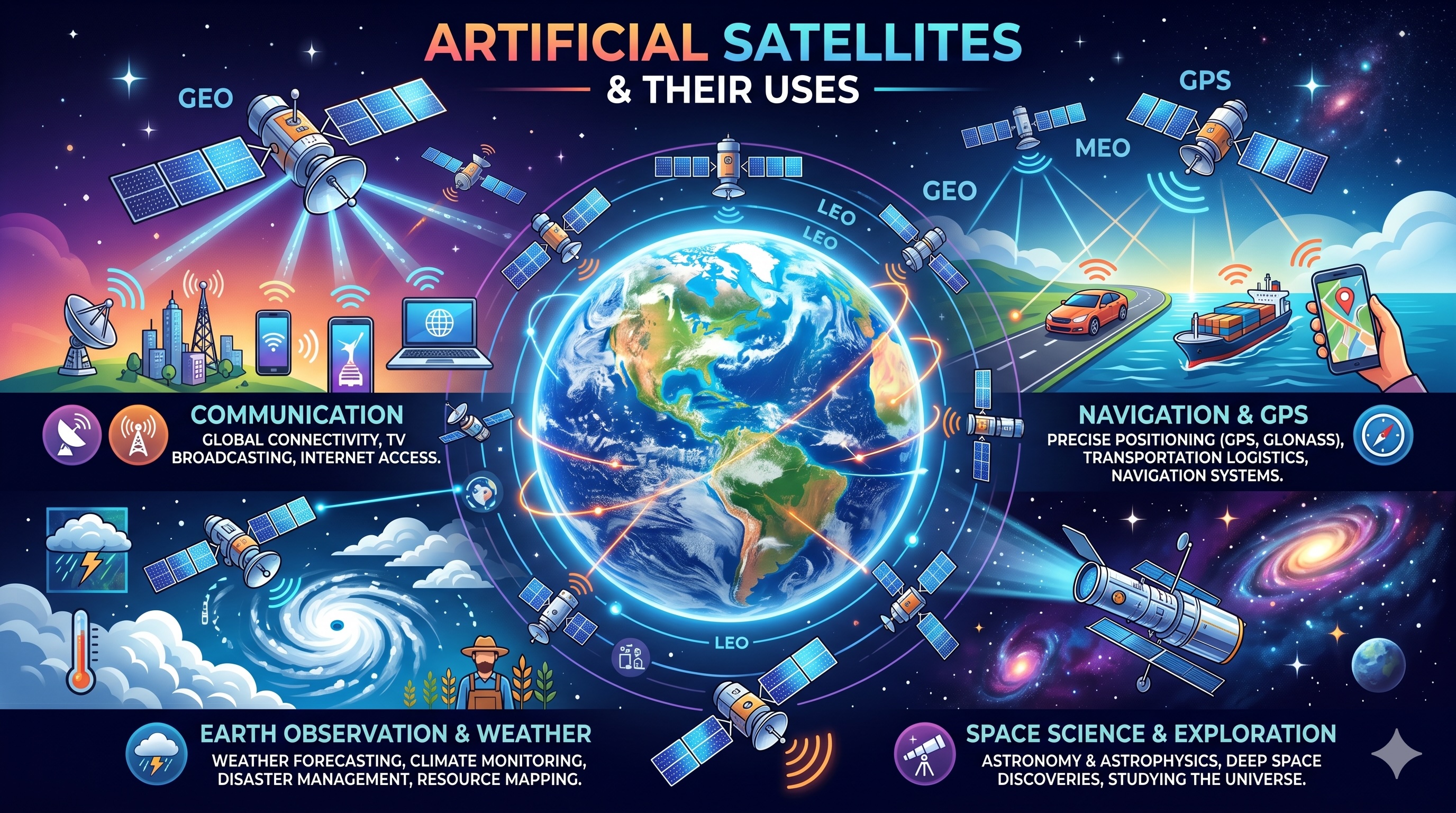
Humans send machines into space that orbit the Earth just like the Moon. These are used for communication, weather, and science.
Key Points
- They are sent into space using powerful rockets.
- Satellites help us see live television and talk on mobile phones.
- Weather satellites help predict rain, storms, and cyclones.
- Aryabhata was India's first artificial satellite.
Olympiad Fact
The first artificial satellite sent into space was Sputnik-1 by the Soviet Union!
Swipe to skip‹