
Reproduction and Life Cycles
The Structure of an Egg
A life support system
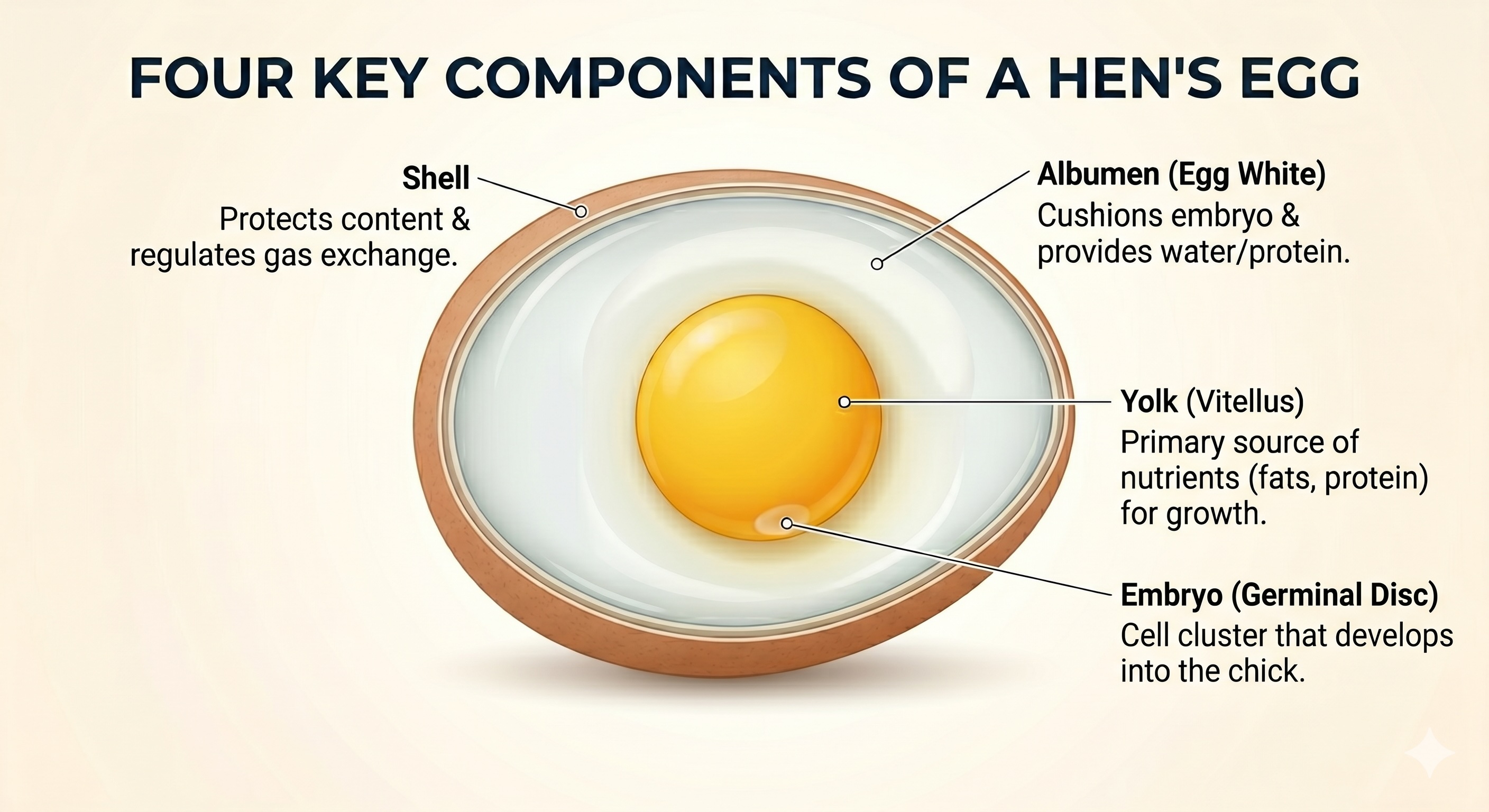
An egg contains everything a baby animal needs to grow safely before it is ready to hatch.
Key Points
- Shell: The hard outer layer that lets air in through tiny holes.
- Yolk: The yellow part which provides food for the growing embryo.
- Albumen: The white part that protects the yolk and provides water.
- Embryo: The tiny living spot that grows into the baby.
Olympiad Fact
The Ostrich egg is the largest in the world and can hold chicken eggs!
Four Stages of Life
Complete metamorphosis
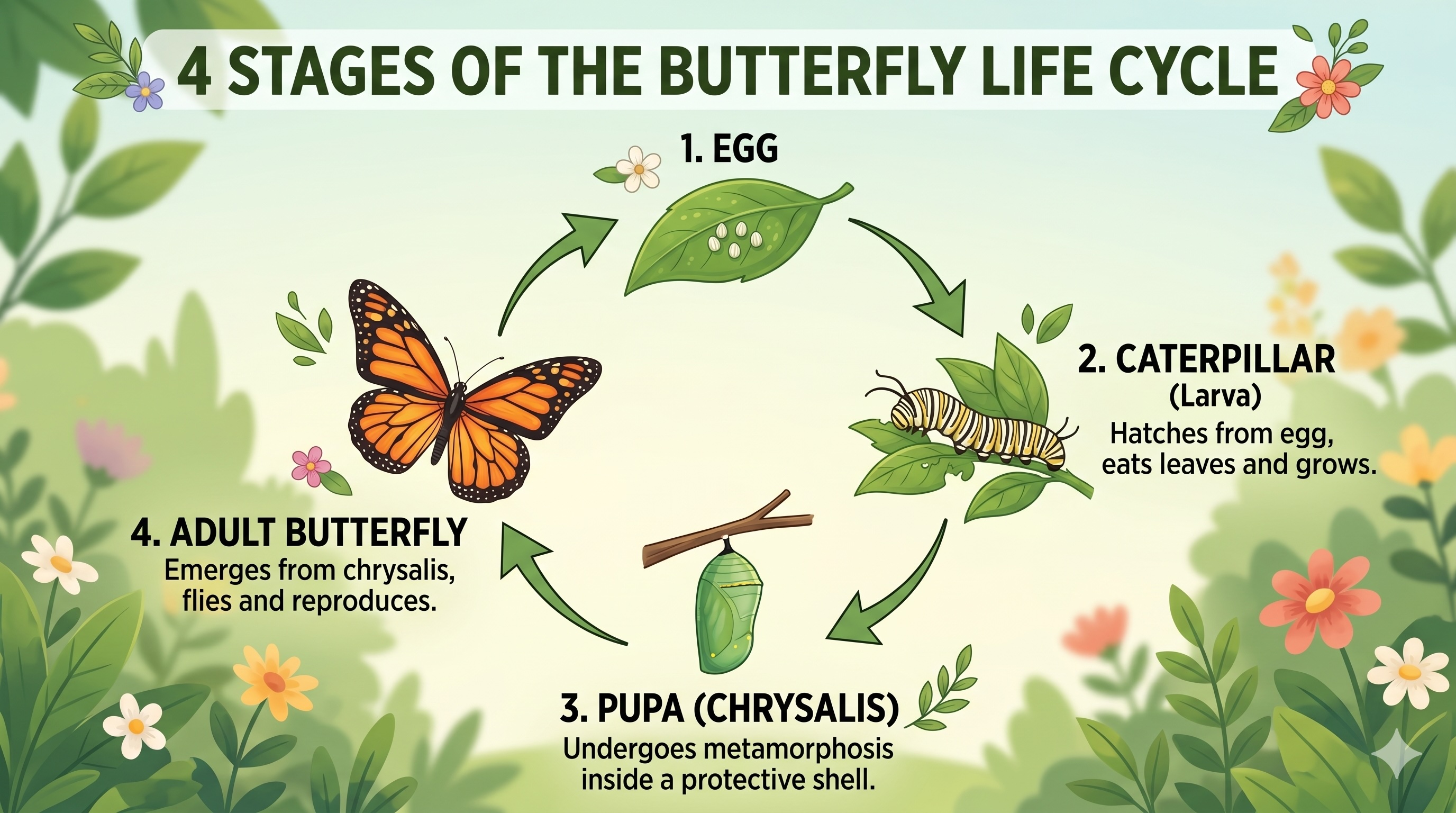
Butterflies and moths go through a total change where the baby looks nothing like the parent. This is a 4-stage cycle.
Key Points
- Stages: Egg Larva (Caterpillar) Pupa (Chrysalis) Adult.
- The Larva stage is for eating; the Pupa stage is for rebuilding the body.
- In the pupa, the caterpillar's body basically turns into liquid before reforming.
- This dramatic change is called 'Complete Metamorphosis'.
Olympiad Fact
A caterpillar can increase its weight by times in just a few weeks!
Three Stages of Life
Incomplete metamorphosis
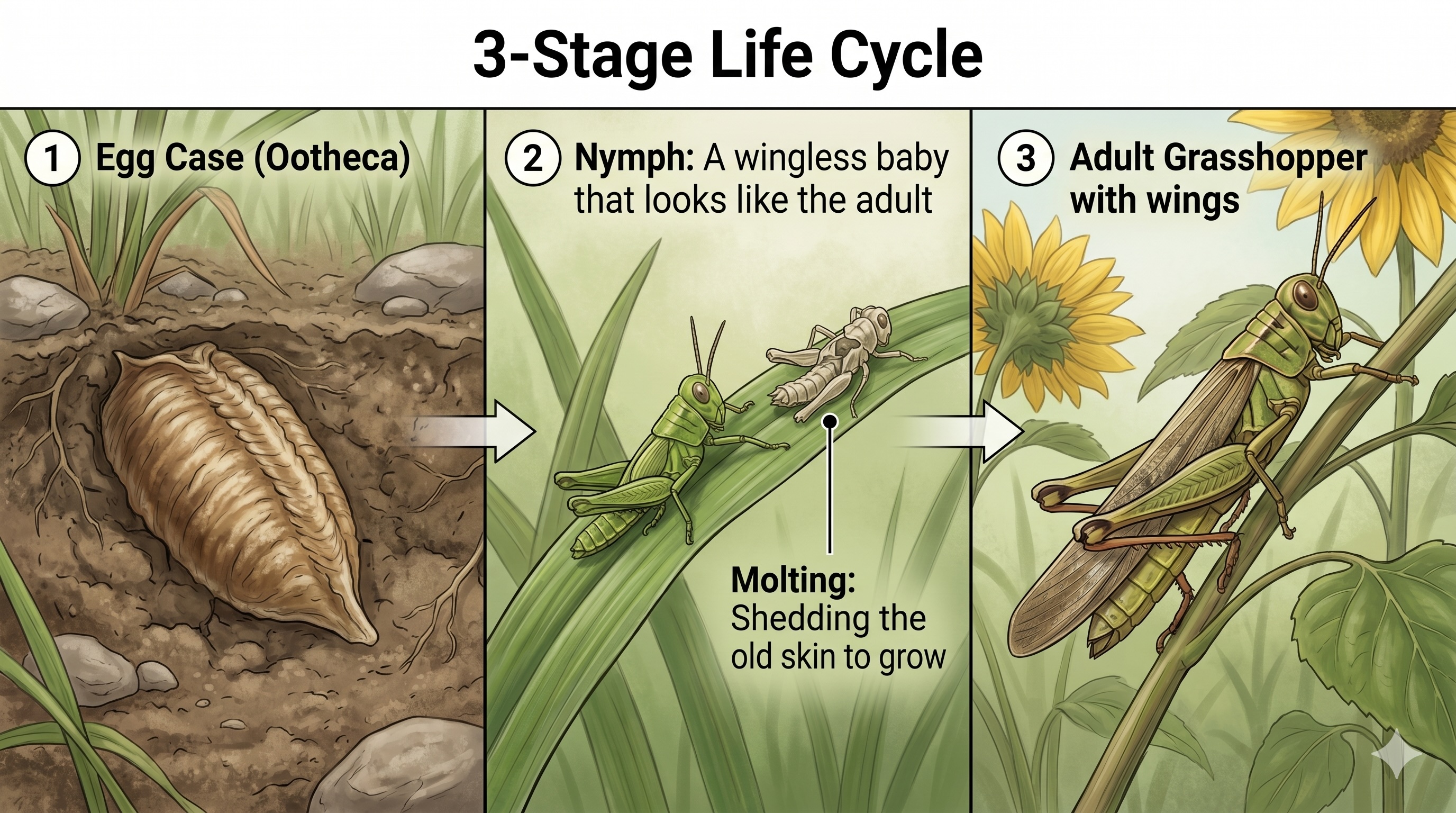
Insects like cockroaches and grasshoppers have a simpler life cycle where the baby looks like a small version of the adult.
Key Points
- Stages: Egg Nymph Adult.
- A nymph looks like a wingless adult and sheds its skin as it grows.
- Shedding the old skin is called 'Molting'.
- This simpler change is called 'Incomplete Metamorphosis'.
Olympiad Fact
A cockroach can live for a week without its head because it breathes through tiny holes in its body!
Swipe to skip‹