
Estimation and Rounding in Operations
Estimating Sums and Differences
Rounding to nearest tens, hundreds, thousands
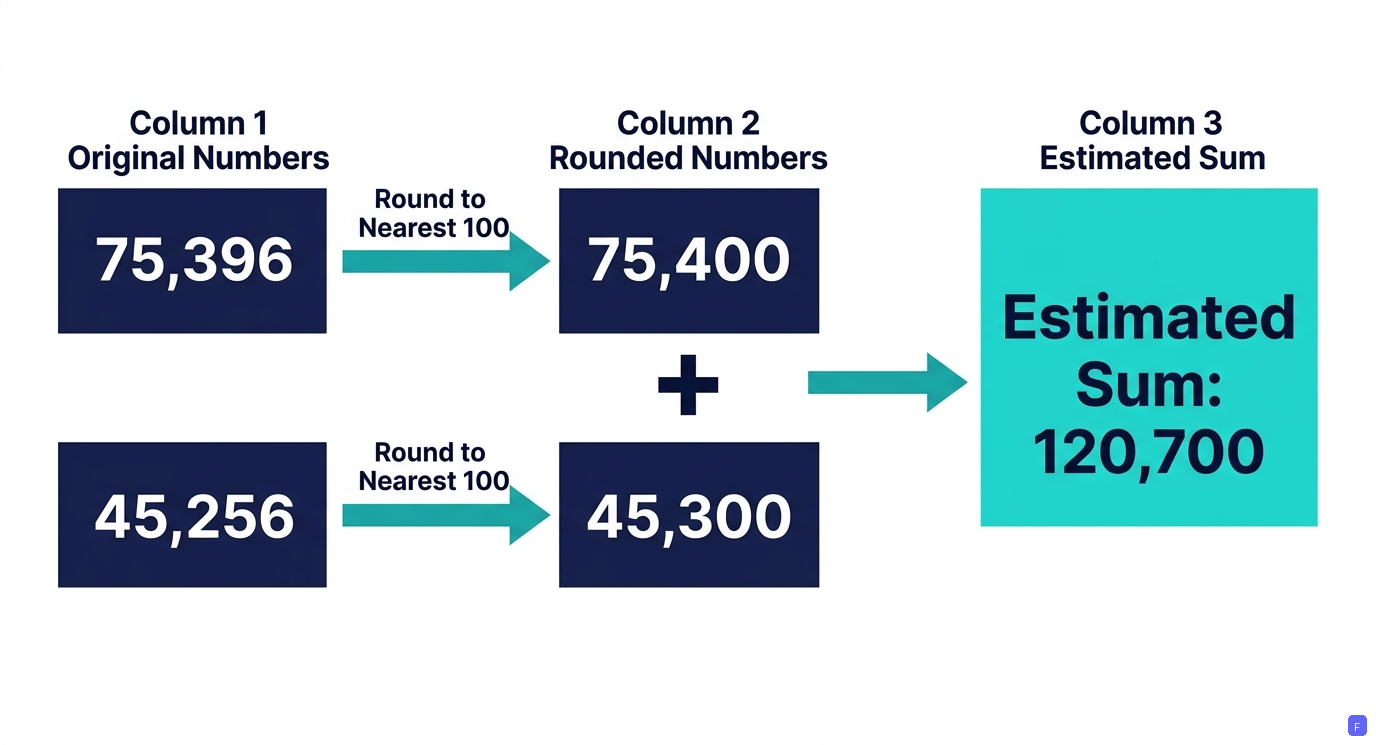
Estimation gives quick approximate answers by rounding numbers to a specified place value before adding or subtracting.
Key Points
- Rounding Rule: Look at the digit immediately to the right of the target place. If it is , round up; if , round down.
- Estimating Sums: To estimate to nearest hundred: .
- Estimating Differences: To estimate to nearest thousand: .
- Consistency: Always round all numbers in the problem to the exact same place value before operating.
Olympiad Fact
In competitive exams, estimation allows you to eliminate 2 to 3 impossible multiple-choice options in seconds without calculating exact multi-digit values!
Estimating Products and Quotients
Compatible numbers and front-end rounding
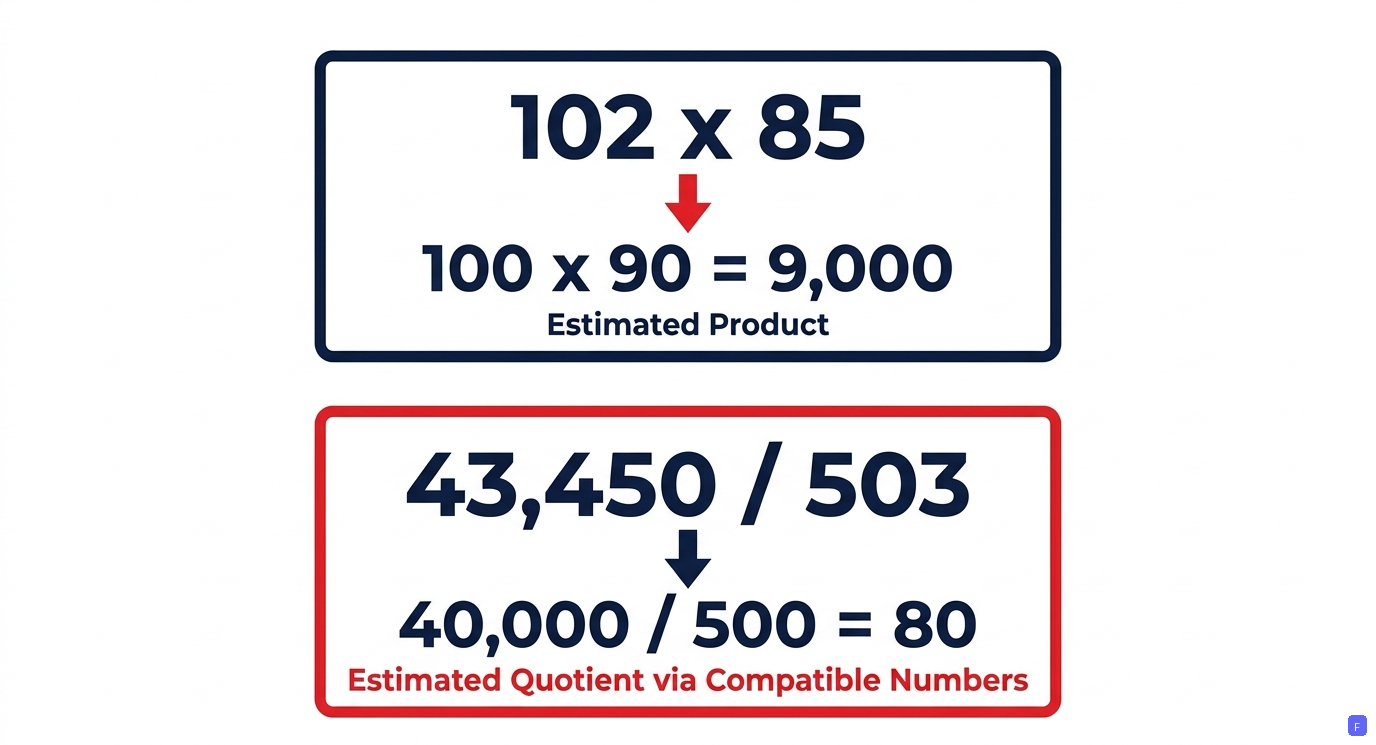
Estimate products and quotients by rounding numbers to their highest place value or choosing compatible numbers that divide evenly.
Key Points
- Estimating Products: To estimate , round factors to leading digits: .
- Estimating Quotients: To estimate , choose friendly compatible numbers: .
- Compatible Numbers: Numbers close to the original values that can be divided mentally with zero remainder.
- Zero Cancellation: In estimated division (), cancel equal trailing zeros from both sides: .
Olympiad Fact
When estimating products (), rounding one number up and the other down balances the estimation error, yielding a much closer approximation.
Swipe to skip‹