
Addition and Its Properties
Understanding Large Number Addition
Addends, sums, and regrouping
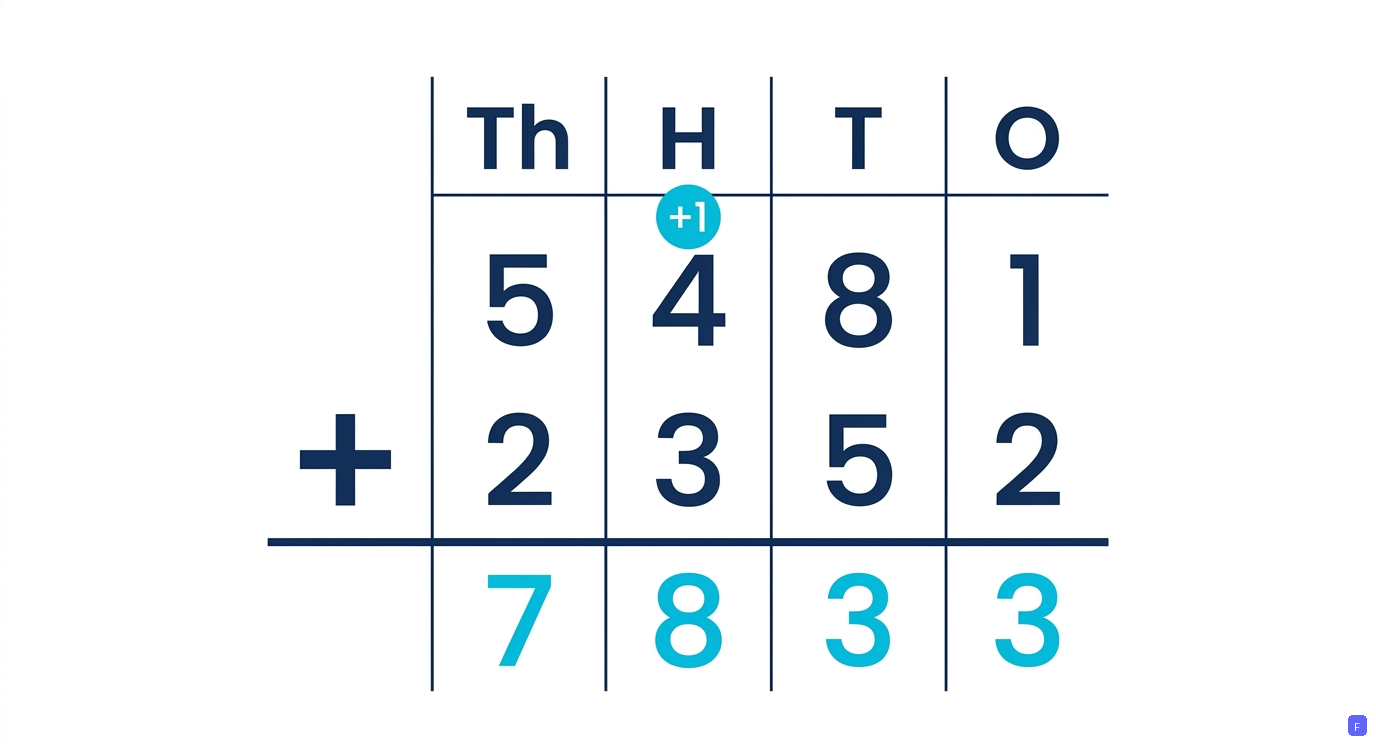
Addition is combining two or more numbers to find their total sum. When adding large 6-digit or 7-digit numbers, place-value alignment is critical.
Key Points
- Addends: The individual numbers being added together.
- Sum: The total amount obtained after adding all addends.
- Place Alignment: Always line up numbers vertically starting from the Ones column on the extreme right.
- Carrying Over: When any column adds up to 10 or more, carry the tens digit over to the next column on the left.
Olympiad Fact
Even + Even = Even, Odd + Odd = Even, and Even + Odd = Odd. You can use parity to spot wrong answers in seconds!
Core Properties of Addition
Commutative, associative, and identity laws
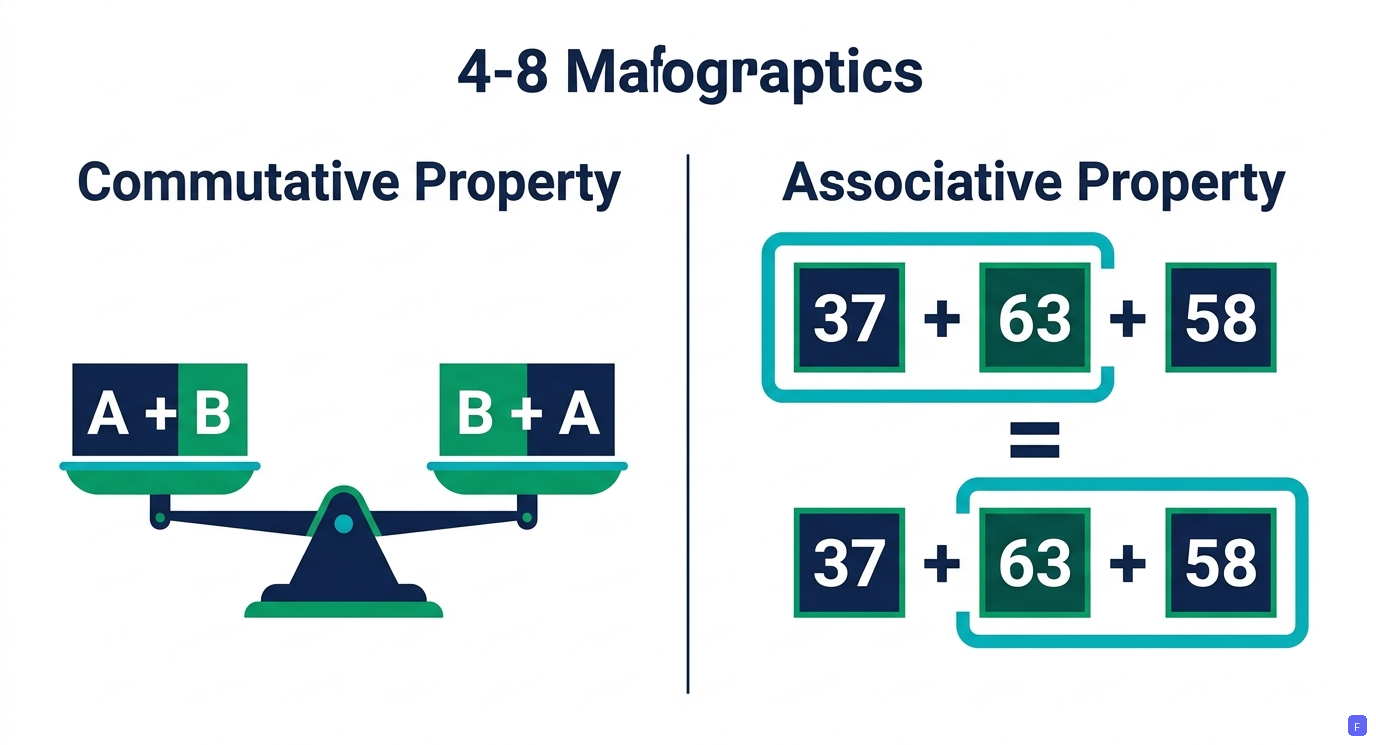
Addition follows universal algebraic laws that allow you to reorder or regroup numbers to make calculations easier.
Key Points
- Order Property (Commutative): Changing the order of addends does not change the sum ().
- Grouping Property (Associative): When adding 3 numbers, grouping them differently gives the same sum ().
- Zero Property (Additive Identity): Adding to any number leaves the number unchanged ().
- Successor Rule: Adding to any whole number gives its immediate successor ().
Olympiad Fact
Make Tens Trick: When adding long chains like , rearrange using associative property to for instant mental math!
Adding 10, 100, and 1000 Mentally
Direct place-value jumping
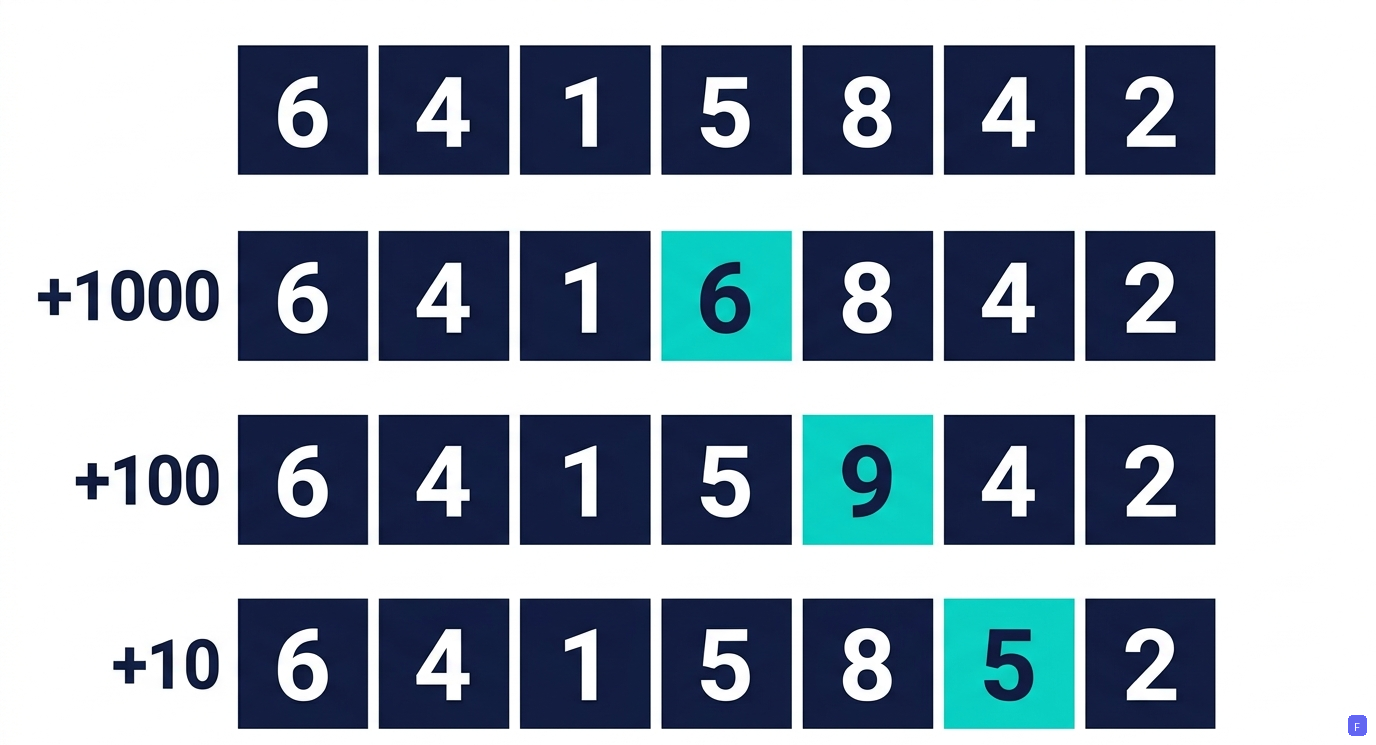
Adding powers of 10 increases only the specific matching place value digit by 1 without requiring column addition.
Key Points
- Adding 10: Increases only the digit at the Tens place by ().
- Adding 100: Increases only the digit at the Hundreds place by ().
- Adding 1000: Increases only the digit at the Thousands place by ().
- Ripple Carry: If the target place-value digit is , adding will turn it to and carry to the next higher place.
Olympiad Fact
To add mentally to any number, add and subtract . To add , add and subtract !
Swipe to skip‹