
Subtraction and Its Properties
Understanding Subtraction
Minuend, subtrahend, and difference
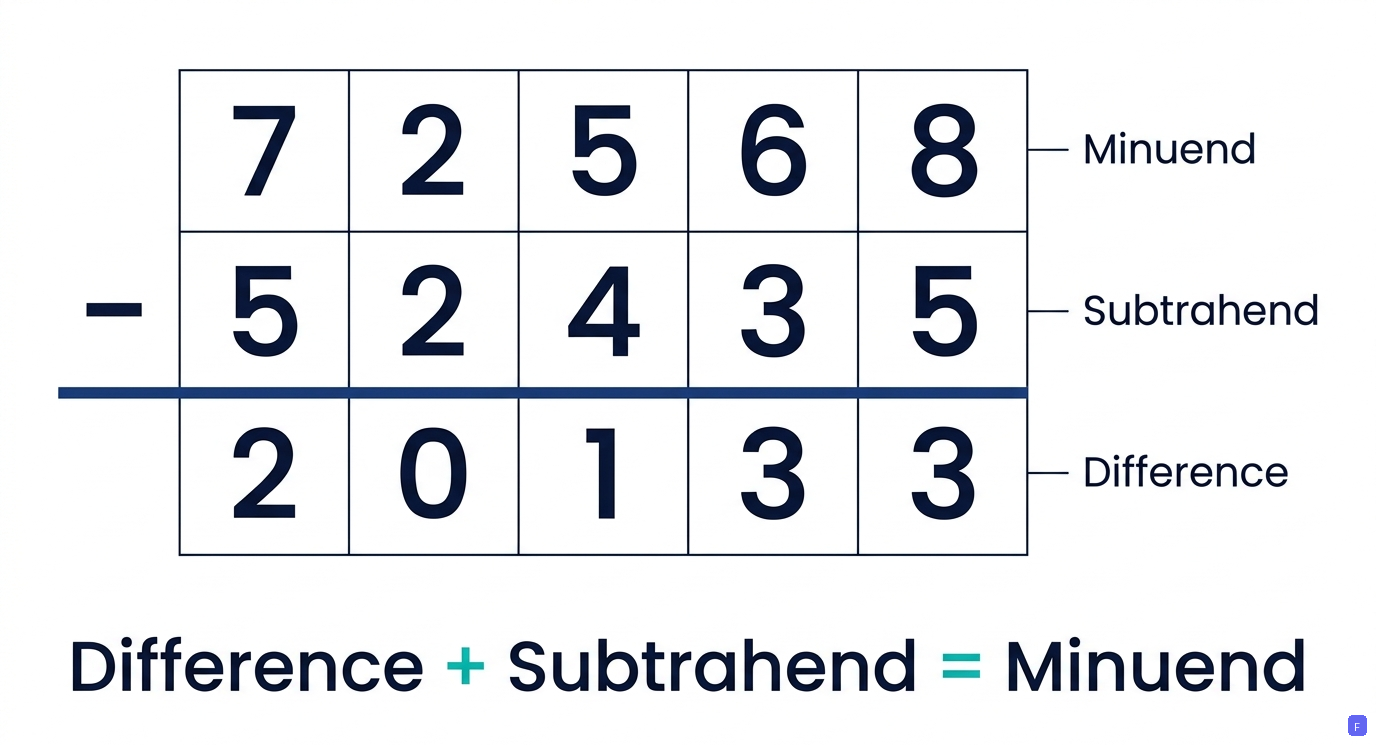
Subtraction is finding the difference between two quantities or determining how much remains after an amount is taken away.
Key Points
- Minuend: The larger starting number from which another number is subtracted.
- Subtrahend: The quantity being subtracted or removed.
- Difference: The final result of the subtraction problem.
- Verification Check: Check your answer using addition: .
Olympiad Fact
Subtraction is NOT commutative (). Swapping positions completely changes the meaning and value.
Core Properties of Subtraction
Zero rules and predecessor reductions
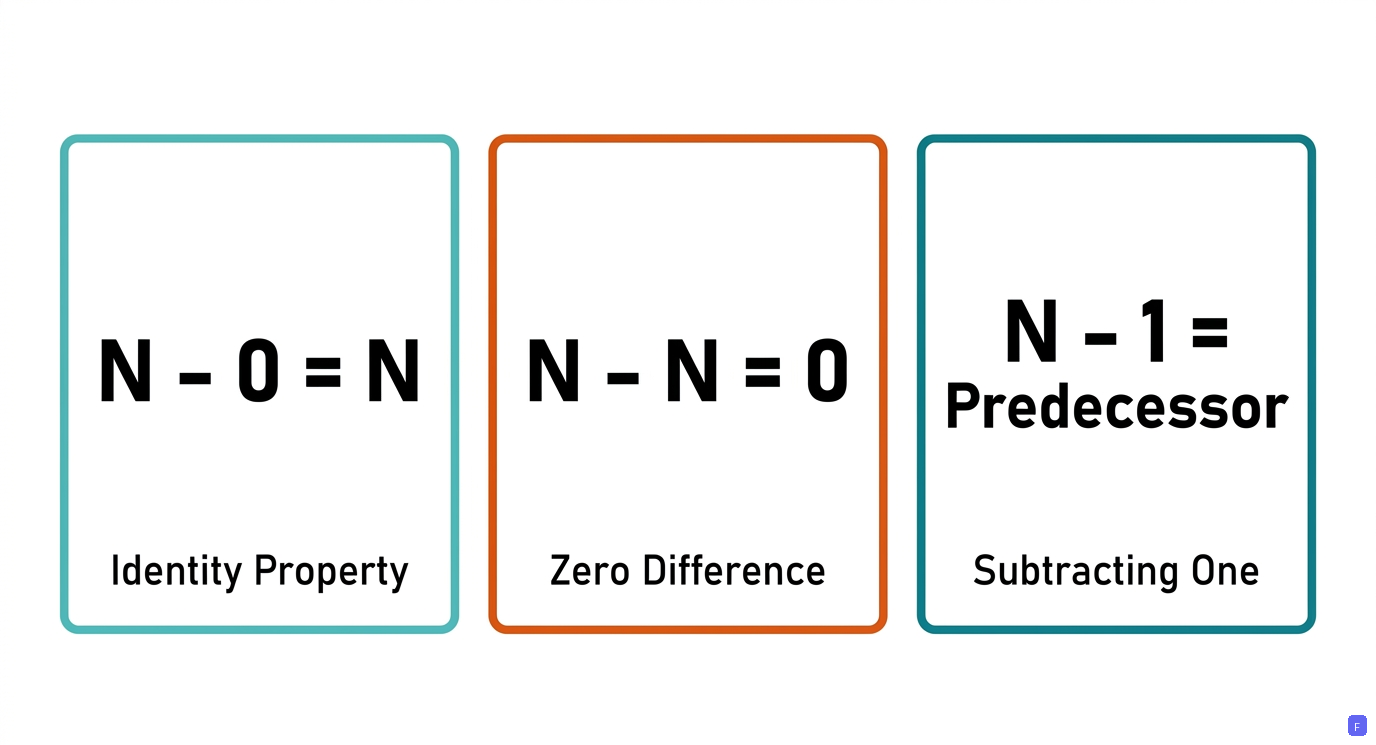
Subtraction operates under strict boundary conditions for zero, identical quantities, and single-unit reductions.
Key Points
- Subtracting Zero: Subtracting from any number leaves the number unchanged ().
- Self Subtraction: When a number is subtracted from itself, the difference is always zero ().
- Predecessor Rule: Subtracting from any number gives its immediate predecessor ().
- Base-10 Reductions: Subtracting or decreases the digit at the tens, hundreds, or thousands place by .
Olympiad Fact
Subtracting across all zeros: To calculate , subtract from () and add back to get instantly without borrowing!
Swipe to skip‹