
Structure of the Earth
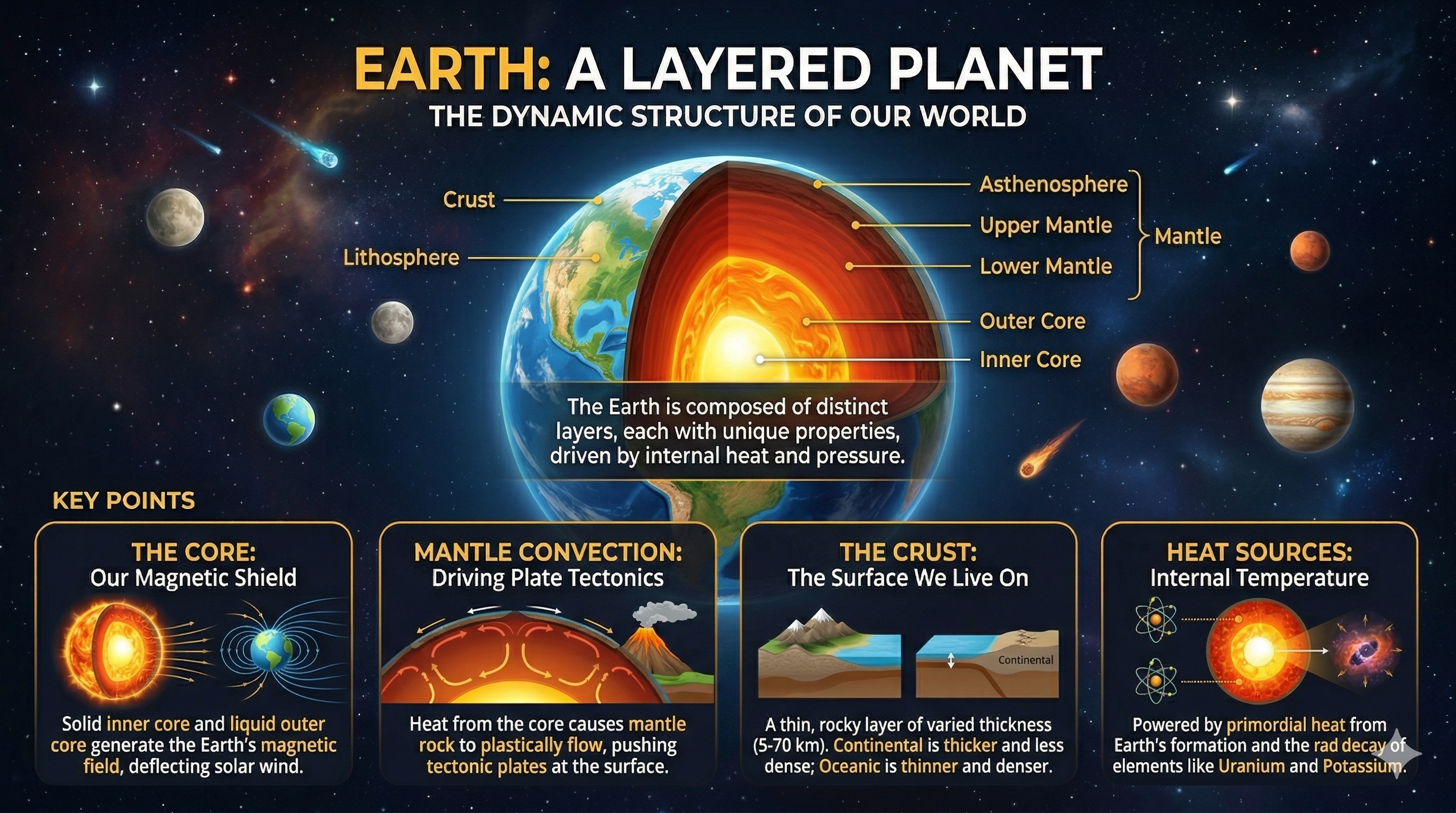
Earth's Internal Layers
Like an Onion
Earth is not a solid ball of uniform rock. It is made of several distinct layers, each with different temperatures, densities, and materials. As you go deeper, it gets hotter and more compressed.
Key Points
- Divided into three main parts: Crust, Mantle, and Core.
- Density increases as you move toward the center.
- Internal heat drives surface changes like mountain building.
- Temperature at the center is estimated to be over .
The Crust
The Outer Shell
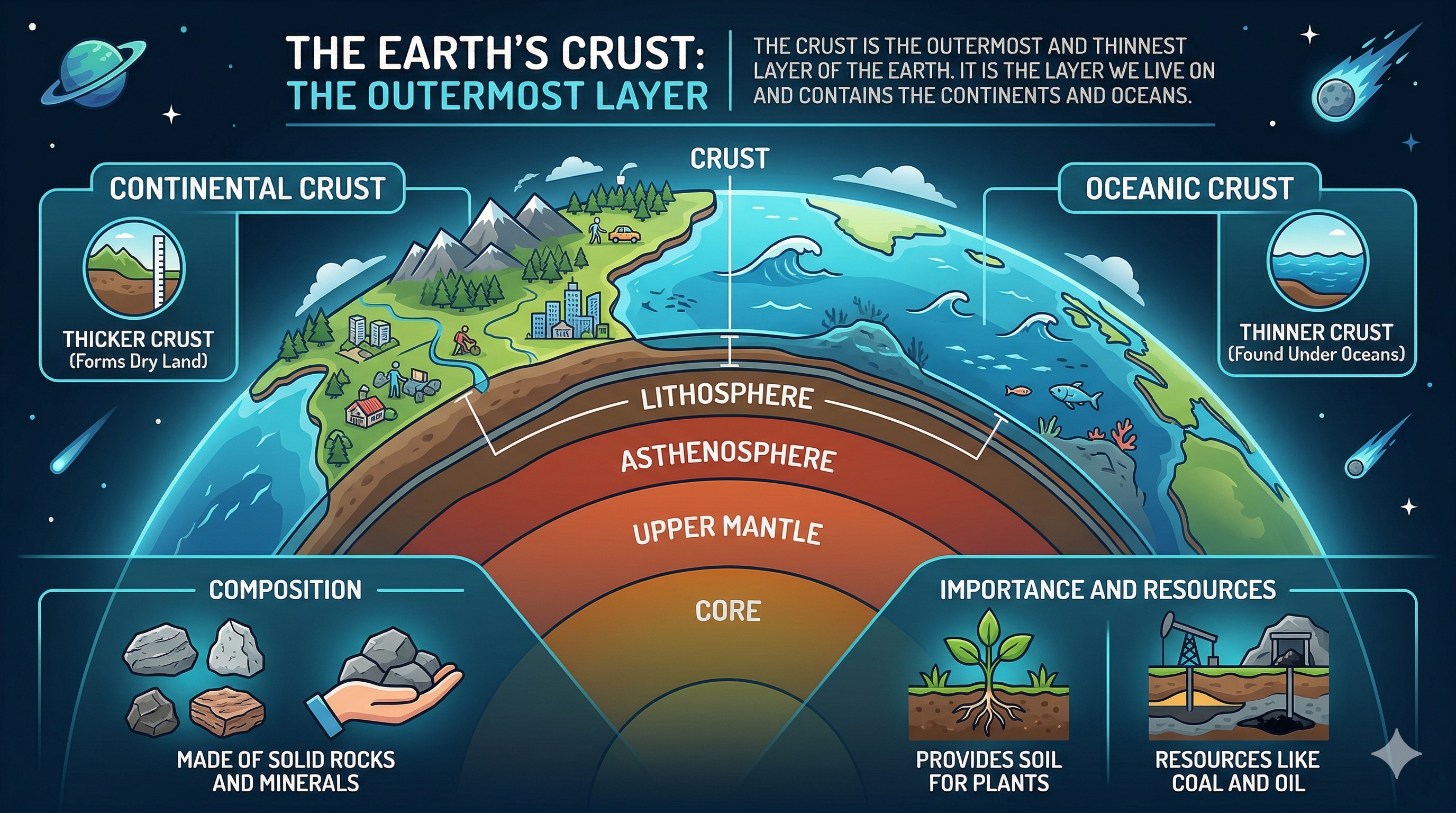
The crust is the outermost and thinnest layer of the Earth. It is the layer we live on and contains the continents and oceans.
Key Points
- Made of solid rocks and minerals.
- Oceanic Crust: Thinner and found under the oceans.
- Continental Crust: Thicker and forms the dry land.
- Provides soil for plants and resources like coal and oil.
The Mantle
The Hot Middle Layer
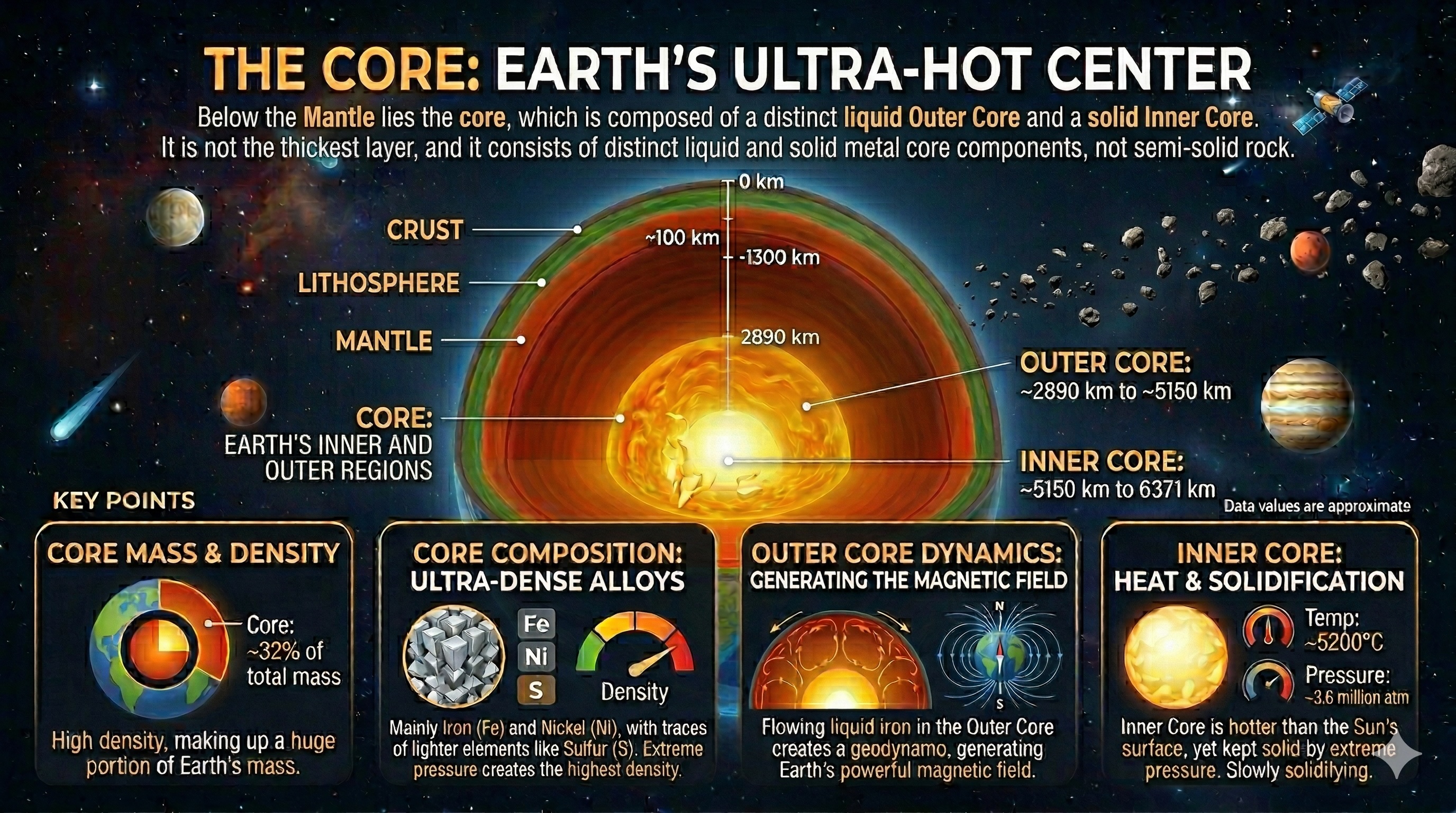
Below the crust lies the mantle, which is the thickest layer of the Earth. It consists of hot, semi-solid rocks.
Key Points
- Makes up about 84% of Earth's total volume.
- Pressure and heat make the rock behave like thick plastic.
- Movement in this layer causes earthquakes and volcanoes.
- Lava from volcanoes comes from the upper mantle.
The Core
The Center of the Earth
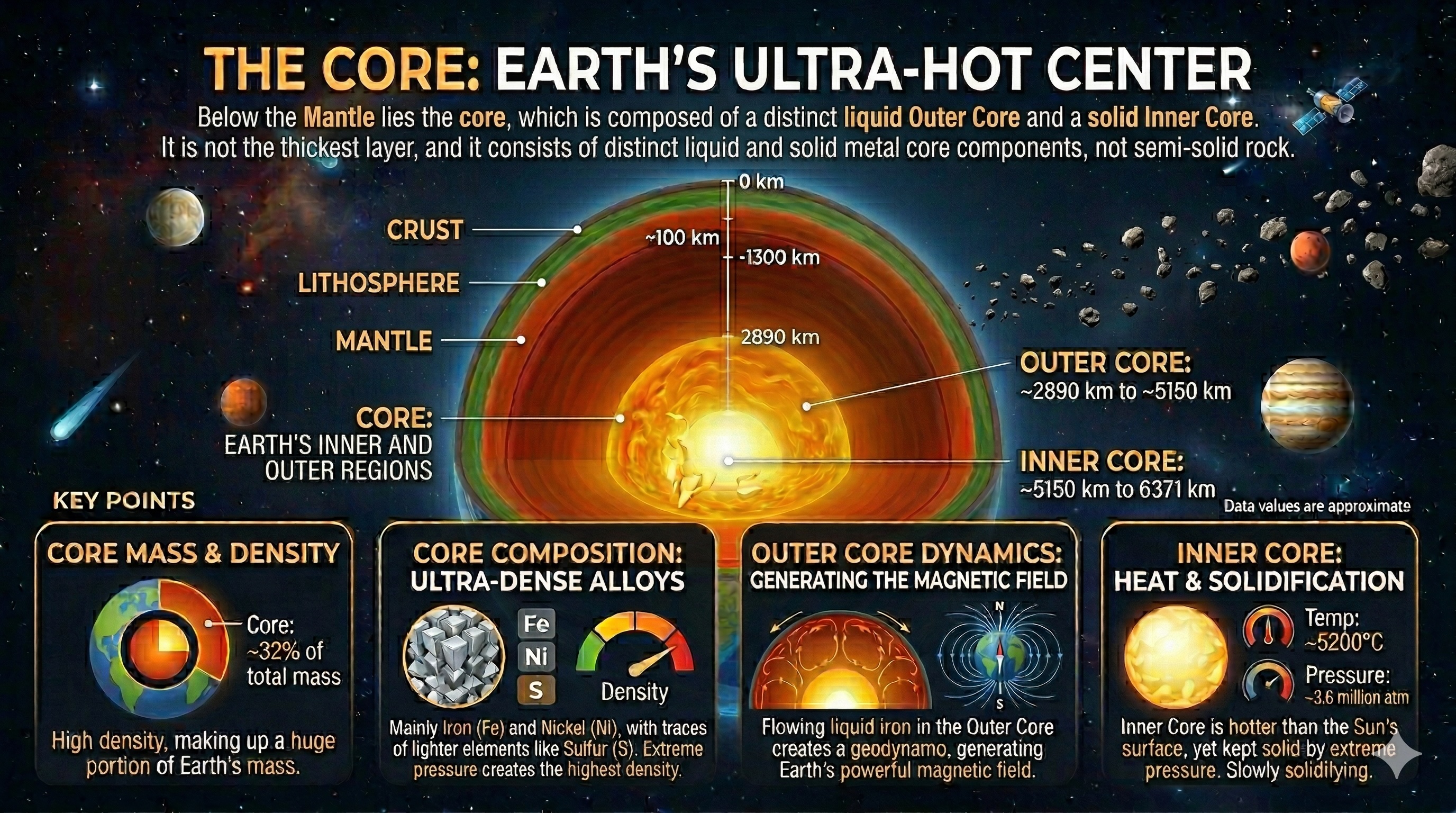
The core is the innermost part of the Earth, divided into an outer liquid core and a solid inner core.
Key Points
- Outer Core: Liquid layer made of molten iron and nickel.
- Inner Core: A solid ball of iron and nickel due to intense pressure.
- Temperatures here are as hot as the surface of the Sun.
- The core creates Earth's magnetic field.
Swipe to skip‹