
Stars and Constellations
The Nature of Stars
Distant Suns
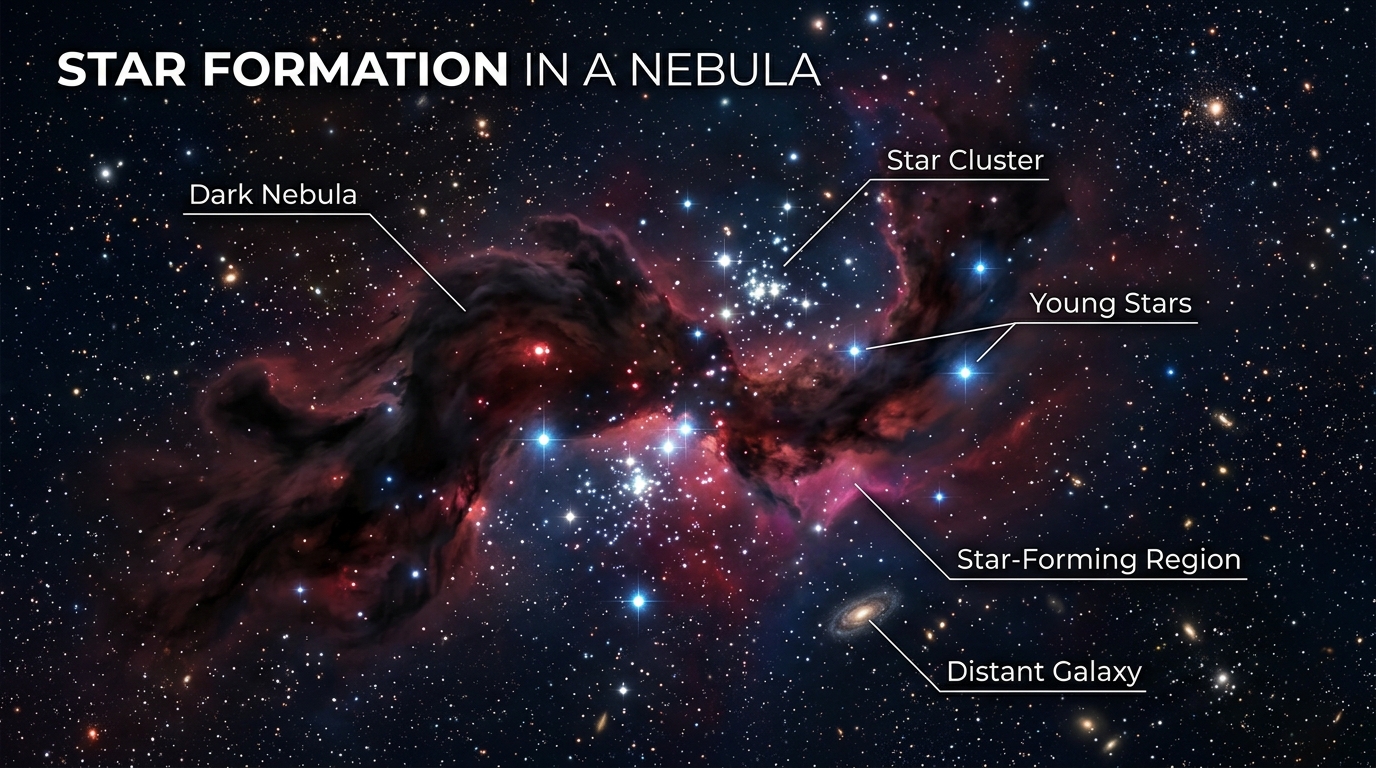
A star is a giant ball of glowing gases that produces its own heat and light. Our Sun is the closest star.
Key Points
- Twinkling is caused by the Earth's atmosphere.
- Trillions of kilometers away from us.
- Colors represent their surface temperature.
- They are the main source of light in the universe.
What is a Constellation?
Sky Pictures
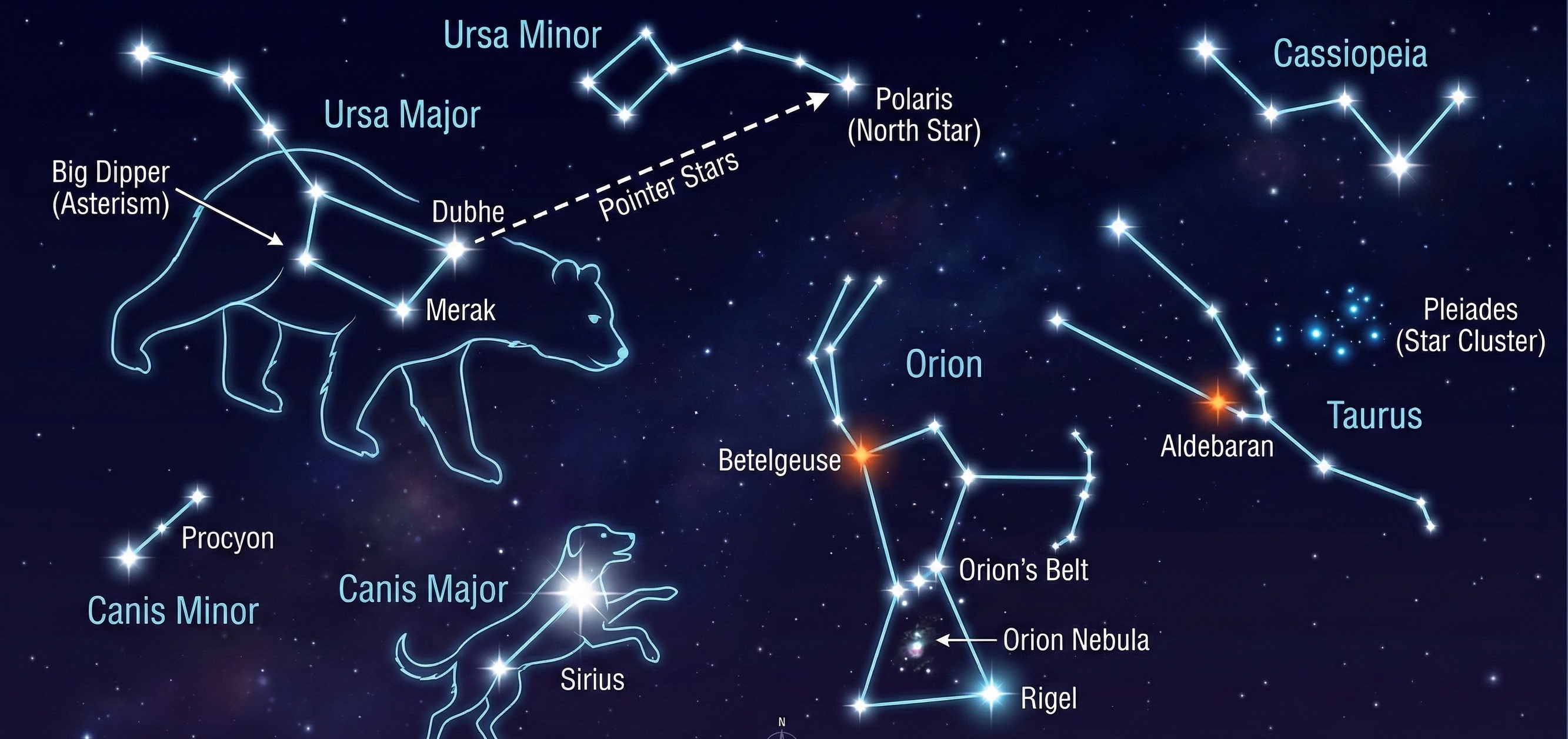
A constellation is a group of stars forming a recognizable pattern, often named after myths or animals.
Key Points
- Used for navigation and calendars in ancient times.
- There are 88 officially recognized constellations.
- Their positions appear to shift with Earth's seasons.
- Each constellation represents a specific area of the sky.
Ursa Major
The Great Bear
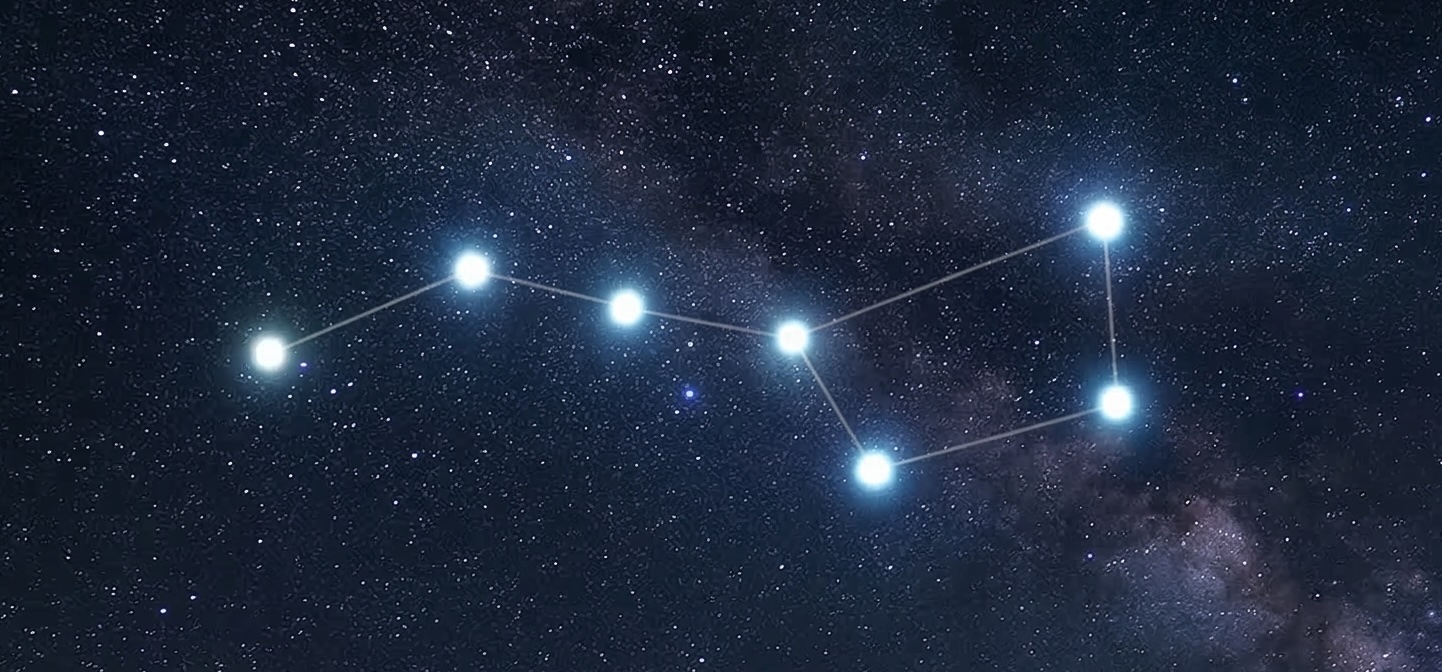
One of the easiest constellations to spot, it contains the famous 'Big Dipper' ladle pattern.
Key Points
- Indian Name: Saptarishi.
- Pointer stars help locate the Pole Star (Polaris).
- Visible all year in the Northern Hemisphere.
- Contains seven bright stars in the dipper pattern.
Ursa Minor
The Little Bear
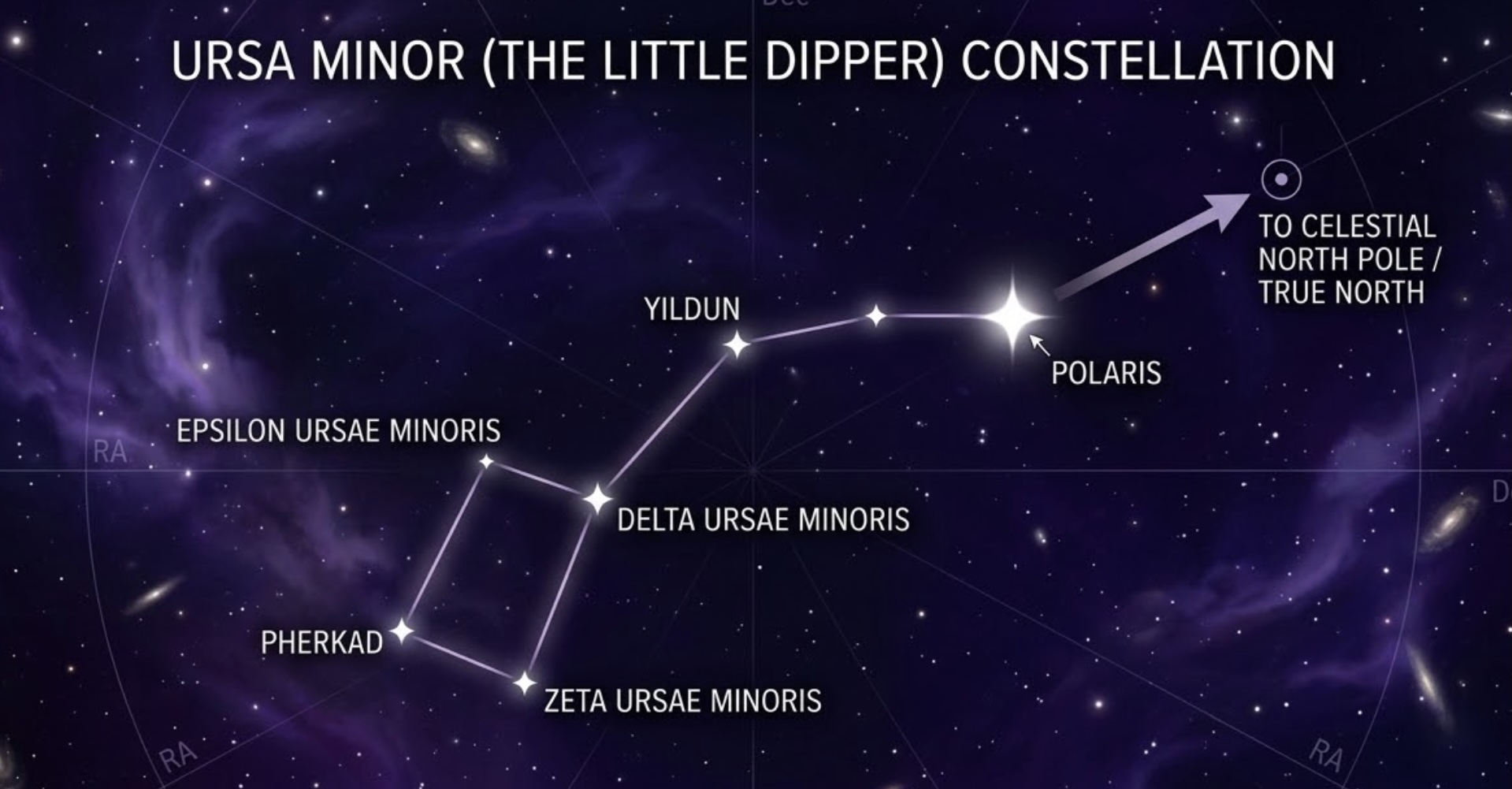
Ursa Minor is known for the 'Little Dipper' pattern. It is very important for navigation because it contains the North Star.
Key Points
- Polaris (The Pole Star) is at the tip of the handle.
- Polaris stays fixed in one spot while other stars move around it.
- Indian Name: Dhruva Matsya.
- Smaller and fainter than Ursa Major.
Orion
The Hunter
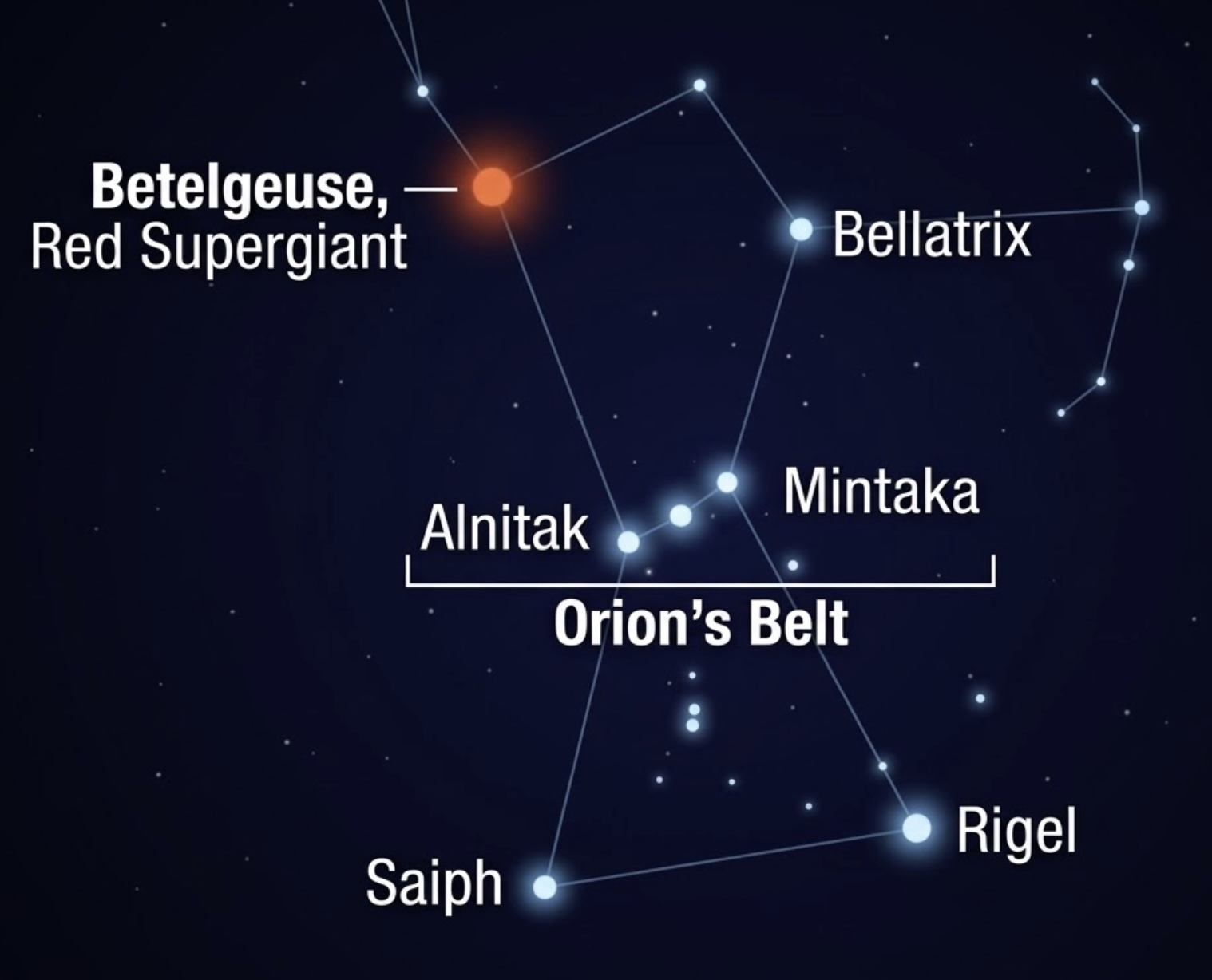
A prominent winter constellation representing a mythological hunter with a belt of three bright stars.
Key Points
- Famous for the 'Belt' stars in a straight row.
- Contains Betelgeuse and Rigel, two giant stars.
- Orion's belt points toward Sirius, the brightest star.
- Visible from both hemispheres.
Leo
The Lion
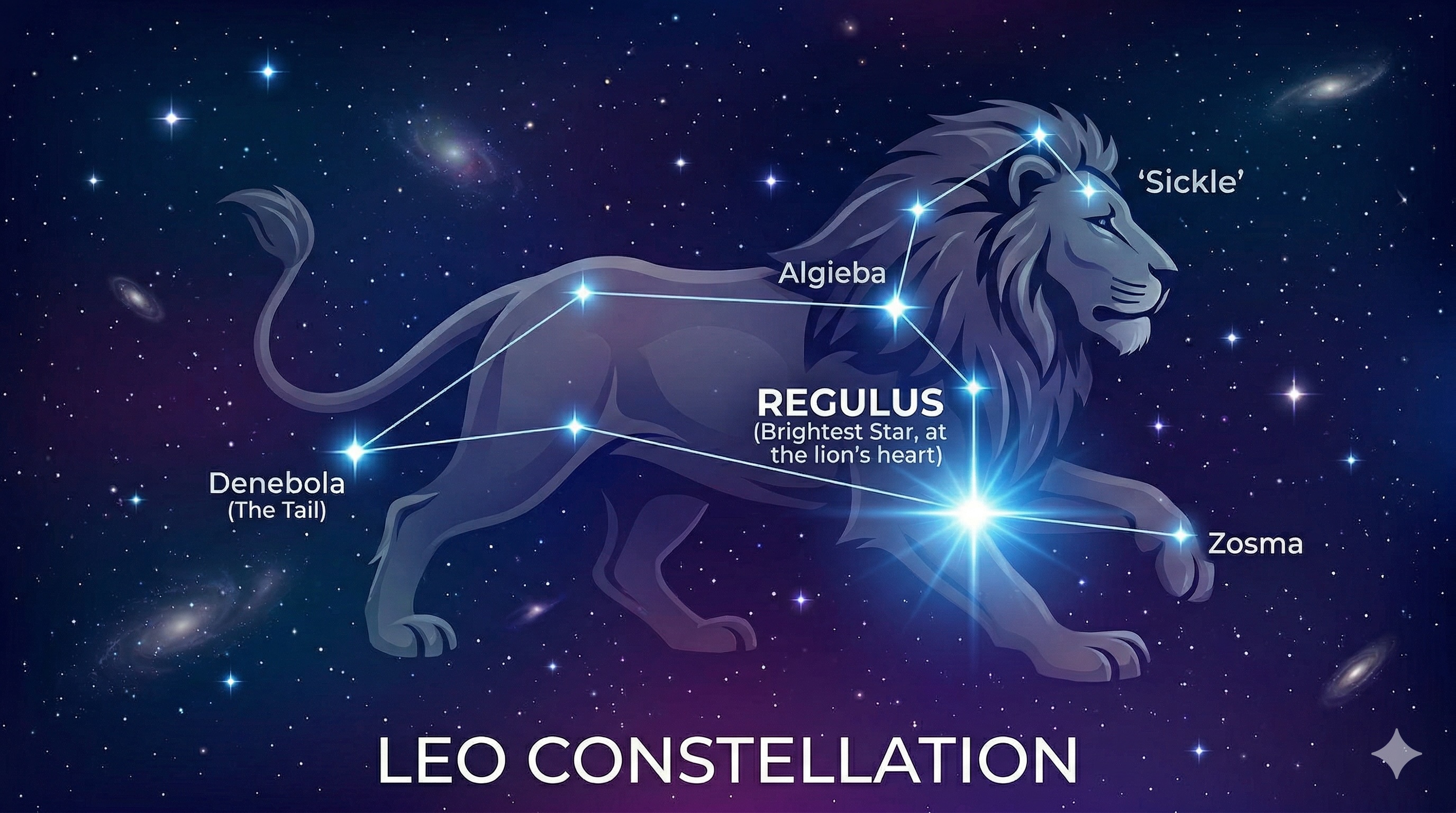
Leo is a spring constellation shaped like a crouching lion, with a head like a question mark.
Key Points
- Brightest Star: Regulus, at the lion's heart.
- Head/Mane: Shaped like a backward question mark.
- One of the 12 zodiac constellations.
- Easily spotted high in the sky in late spring.
Scorpius
The Scorpion
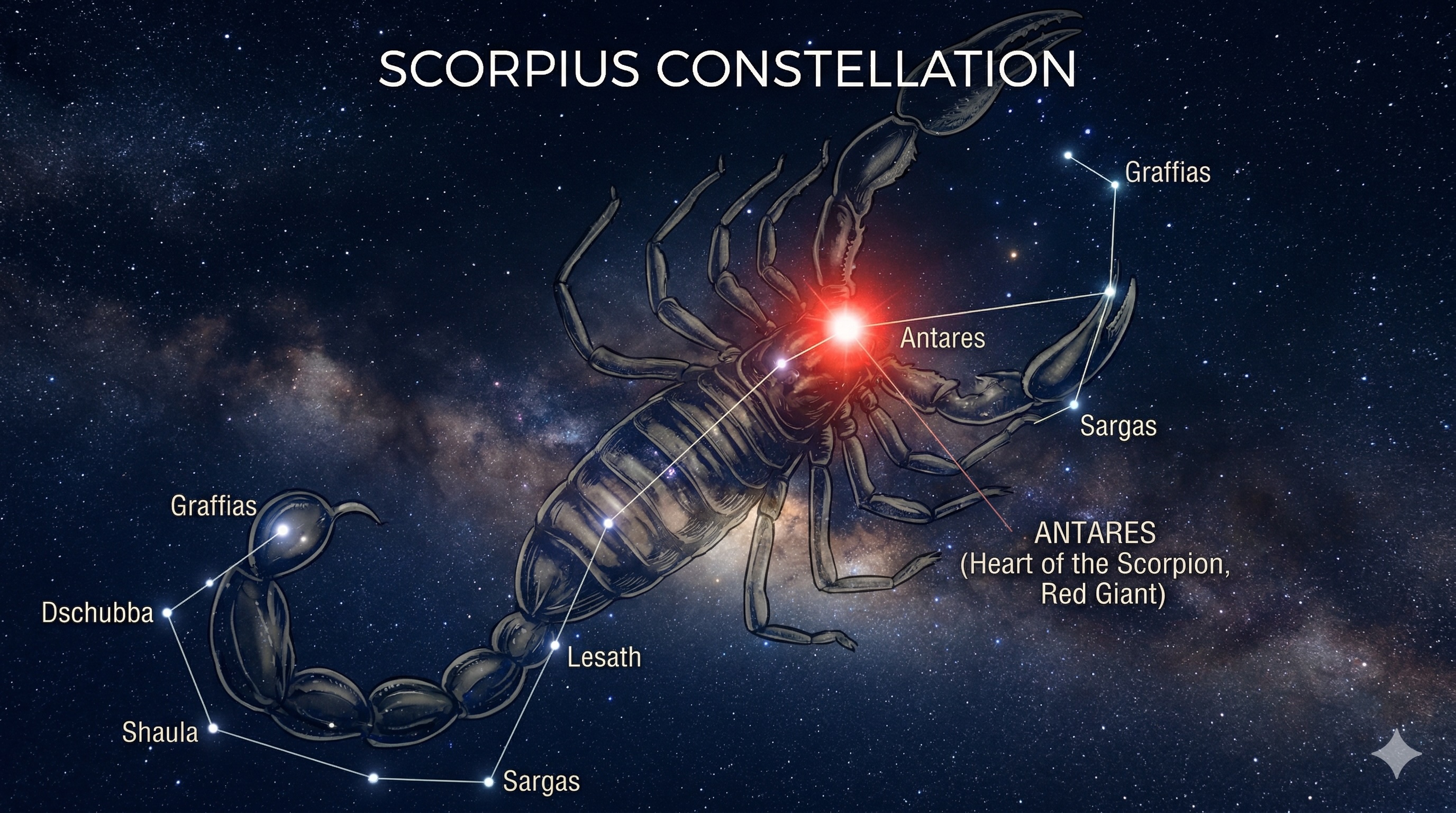
Scorpius is a large constellation in the southern sky that looks remarkably like a scorpion with a long, curving tail.
Key Points
- Contains the bright red giant star, Antares.
- Antares is often called the 'Heart of the Scorpion'.
- Best visible during summer nights in the Northern Hemisphere.
- One of the oldest recorded constellations.
Cassiopeia
The Queen
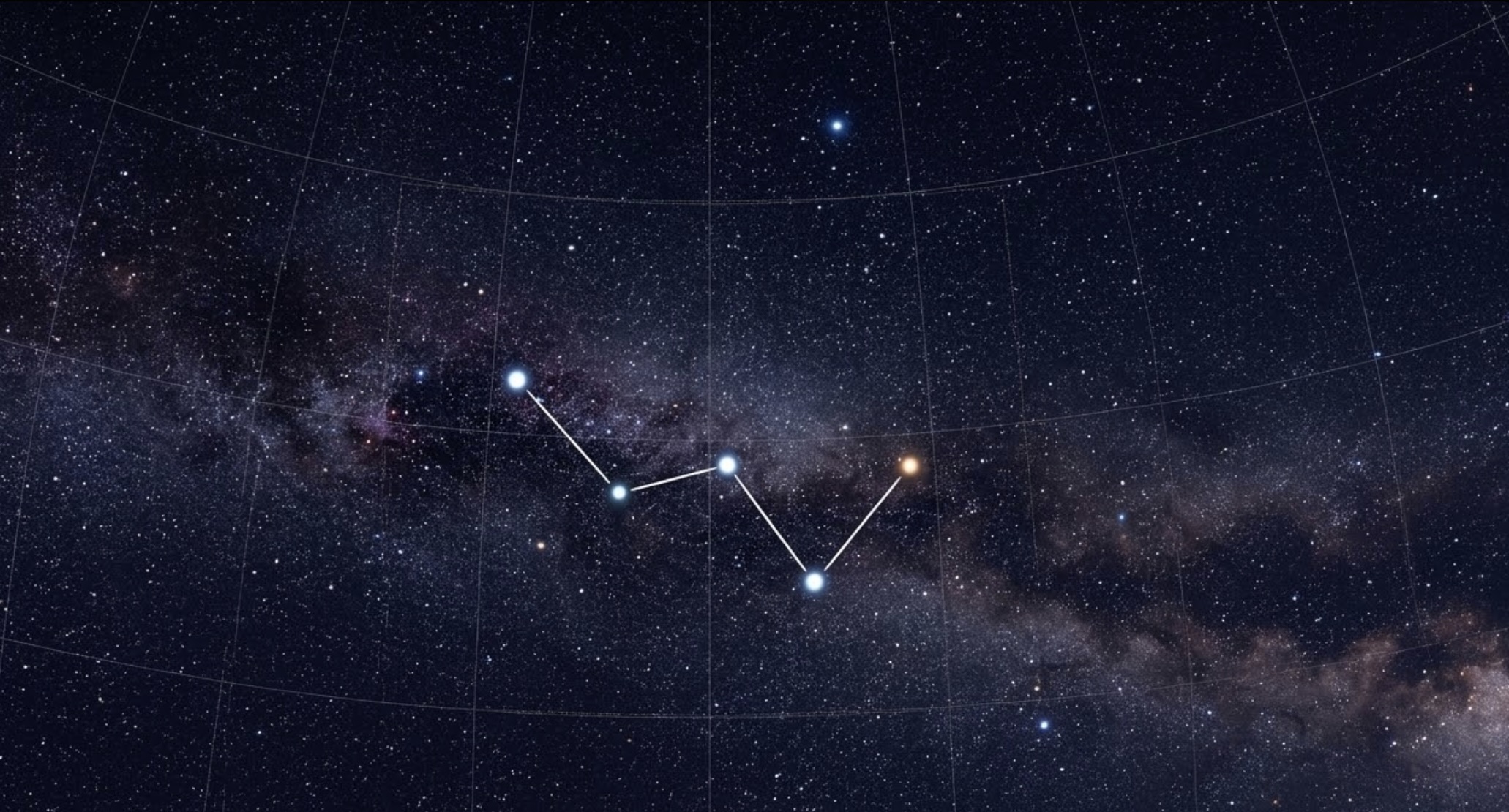
Cassiopeia is an easily recognizable constellation in the northern sky, named after a vain queen from Greek mythology.
Key Points
- Famous for its distinct 'W' or 'M' shape formed by 5 bright stars.
- It is located opposite the Big Dipper around the Pole Star.
- Visible all year round in northern latitudes.
- The shape changes between 'W' and 'M' as the Earth rotates.
Swipe to skip‹