
Breathing Mechanisms in Animals
Breathing through Body Surface
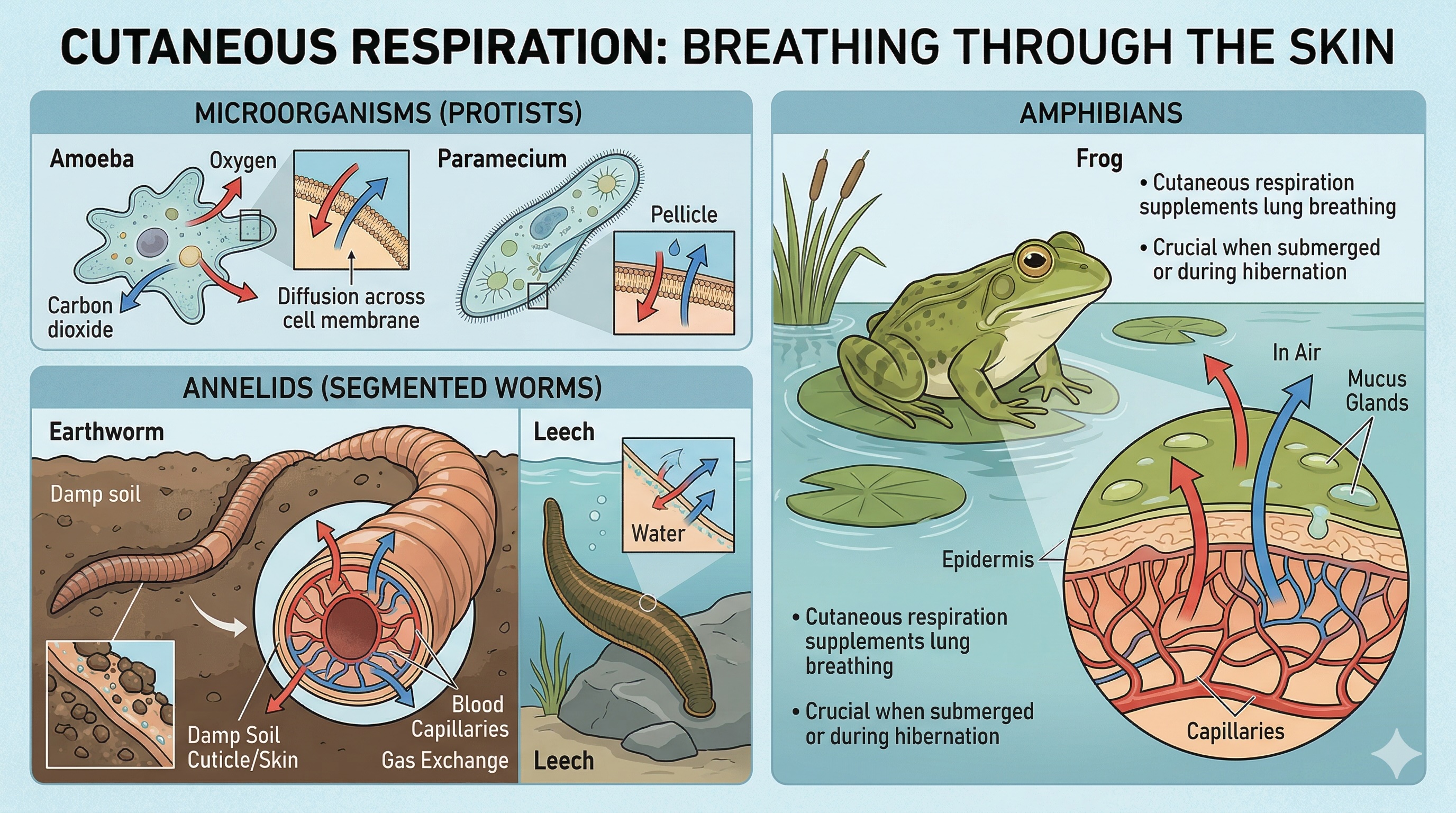
Gas Exchange via Skin
Small animals or those living in moist environments often lack lungs and instead exchange gases directly through their body surface or skin.
Key Points
- Amoeba: A microscopic animal that breathes through its cell membrane.
- Earthworms: Use their thin, moist skin to absorb oxygen from the air.
- The skin must stay wet; if an earthworm's skin dries, it will suffocate.
- Gases move from the air into blood vessels just under the skin surface.
Breathing through Spiracles
The Insect Air Tubes
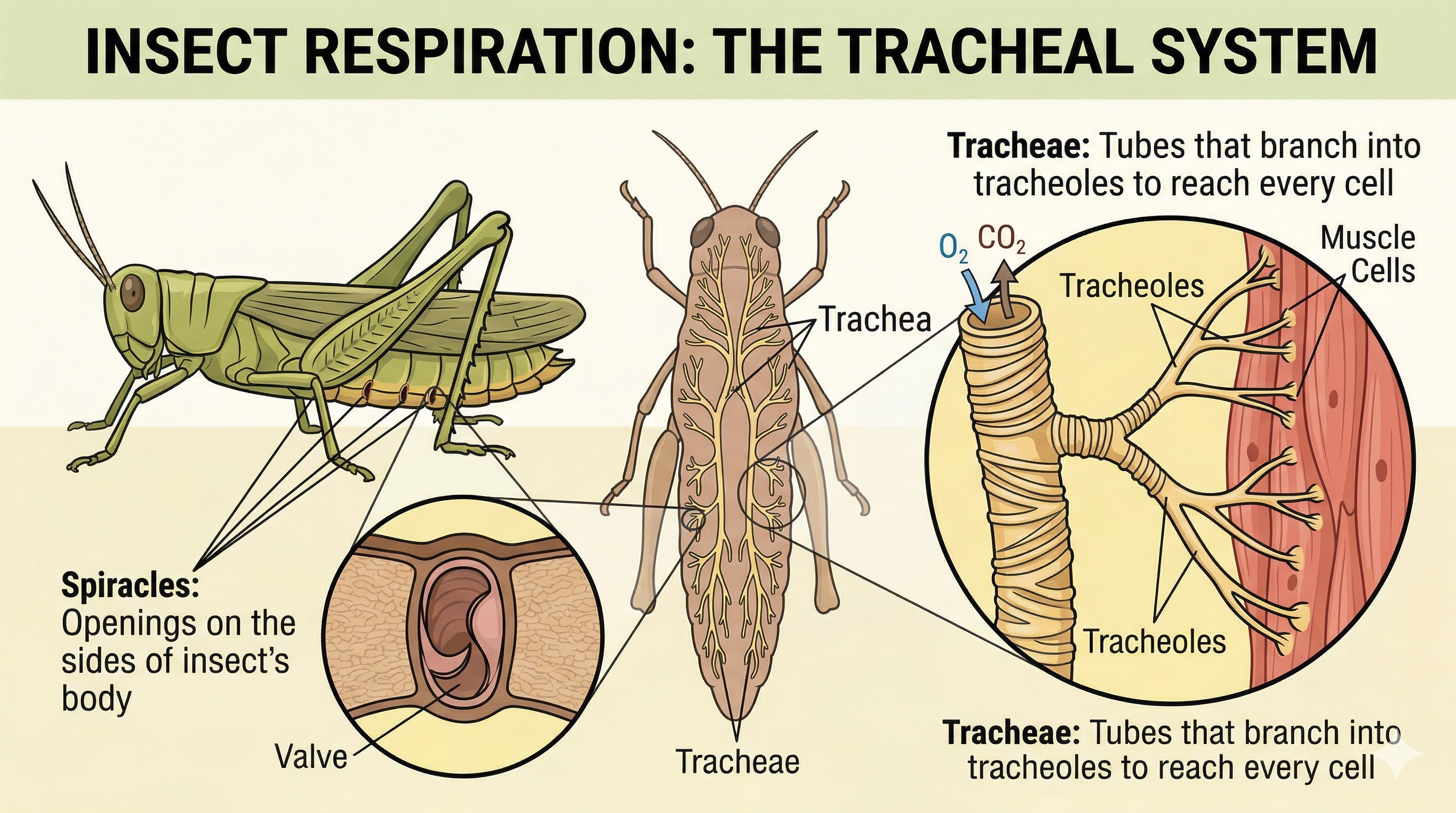
Insects use a network of internal tubes to deliver oxygen directly to their tissues. These tubes connect to the outside through small openings.
Key Points
- Spiracles: Tiny holes on the sides of insects like grasshoppers and cockroaches.
- Tracheae: A network of air tubes connected to the spiracles.
- Air is pumped in and out through the spiracles by body movements.
- This system is highly efficient for small-bodied animals.
Olympiad Fact
The tracheal system bypasses the blood; oxygen is delivered directly to the cells by the air tubes.
Gills: Breathing Underwater
Extracting Oxygen from Water
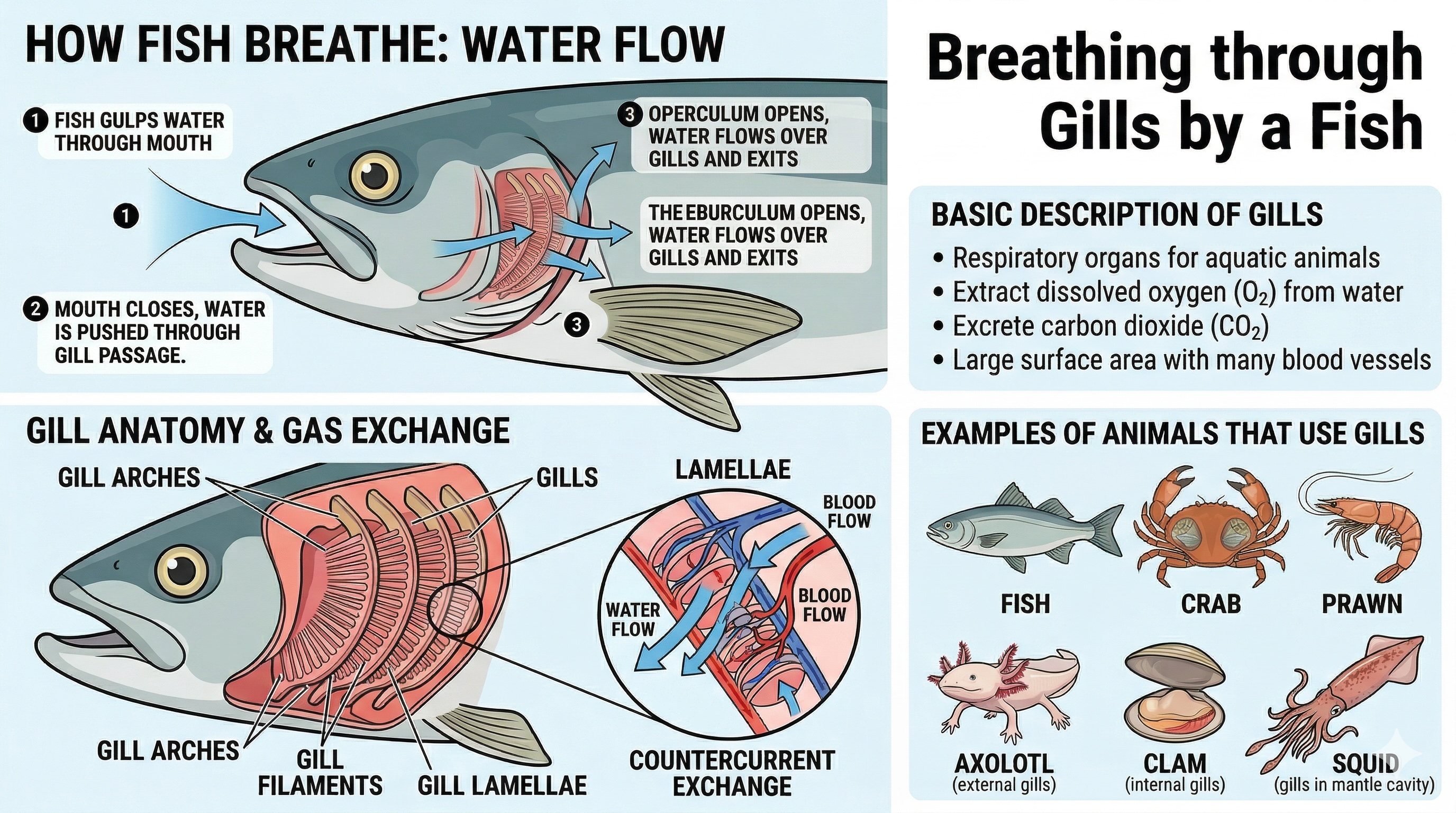
Aquatic animals like fish, crabs, and tadpoles use specialized organs called gills to breathe underwater.
Key Points
- Gills are rich in blood vessels.
- Fish swallow water through the mouth and push it over the gills.
- Oxygen dissolved in water is absorbed, and is released.
- Amphibians use gills in their larval stage (tadpoles).
Lungs: The Air Breathers
The Primary Respiratory Organ
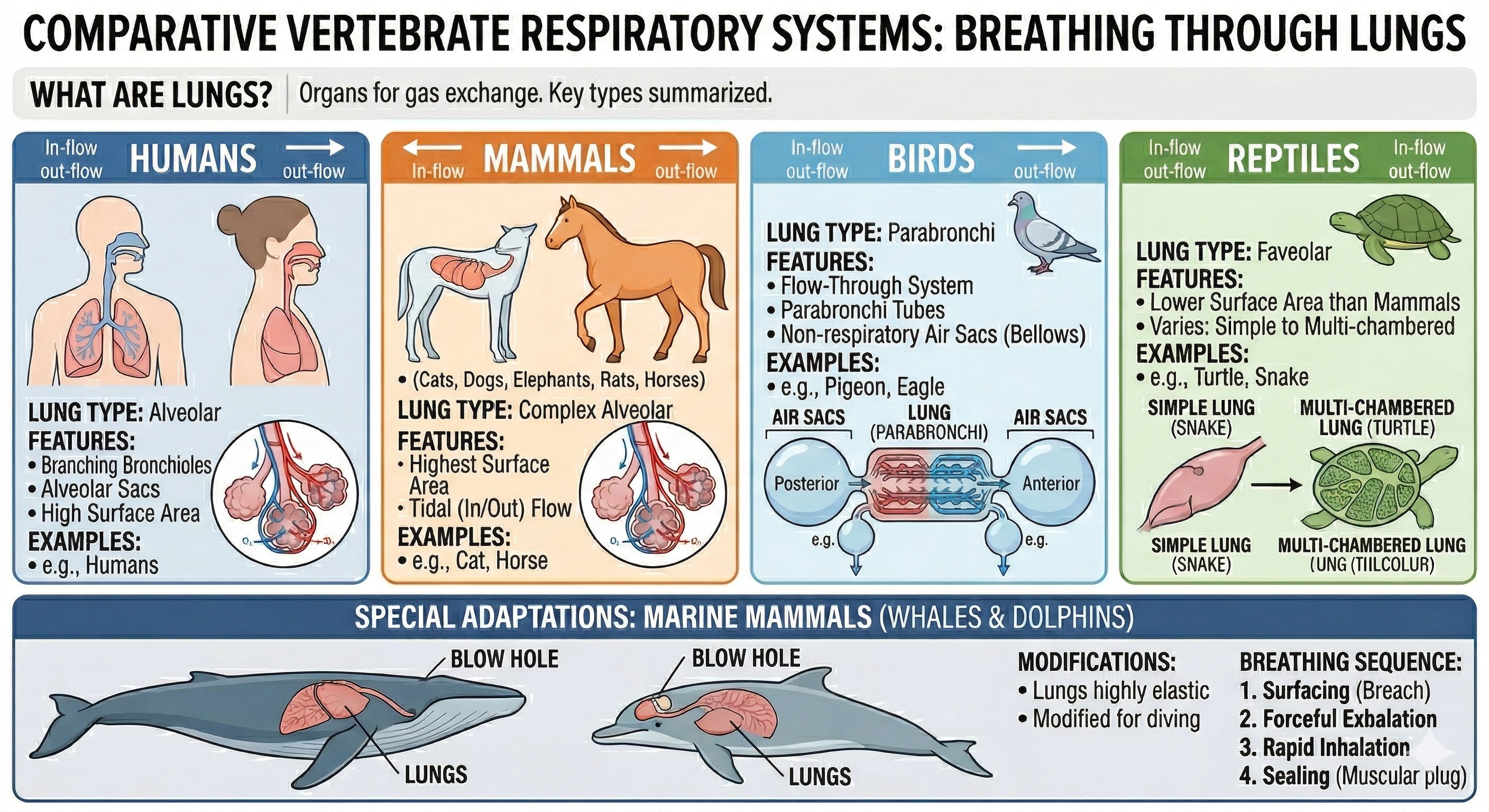
Mammals, birds, reptiles, and adult amphibians use lungs to breathe oxygen from the atmosphere.
Key Points
- Air enters through the nose/nostrils and reaches the lungs via the windpipe.
- Lungs are spongy, bag-like structures located in the chest.
- Whales and Dolphins: Mammals that must come to the surface to breathe through blowholes.
- Adult frogs use both lungs and their moist skin to breathe.
Swipe to skip‹