
Protective Body Coverings
Scales
Overlapping Protection
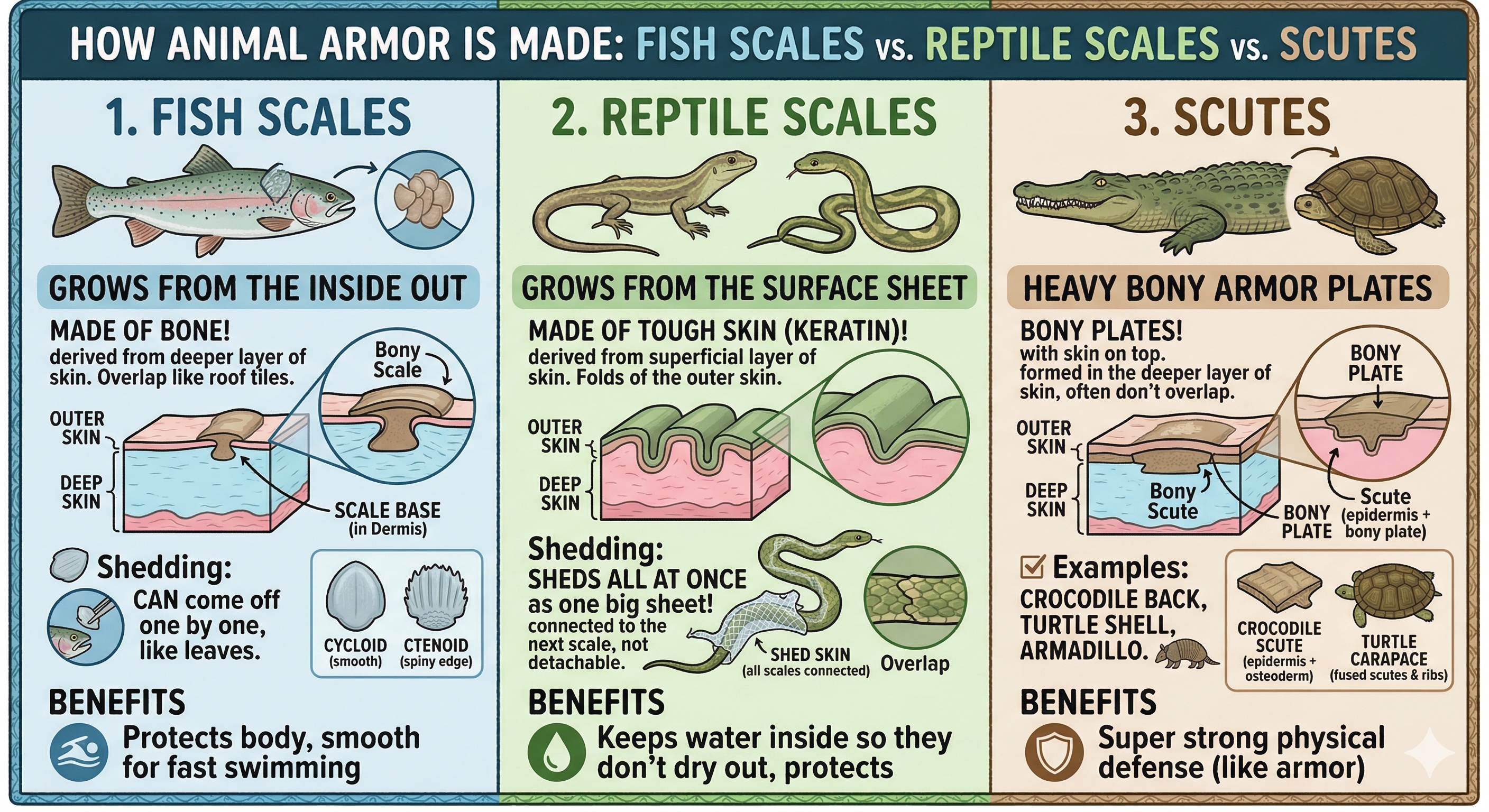
Scales are hard, thin plates that cover the skin of many animals, providing a flexible but tough layer of armor.
Key Points
- Found on fish and reptiles (snakes, lizards, crocodiles).
- In fish, they overlap and provide protection while allowing movement.
- In reptiles, scales are dry and prevent the loss of body water.
- Snakes periodically shed their old scales to grow (molting).
Shells
The Portable Fortress
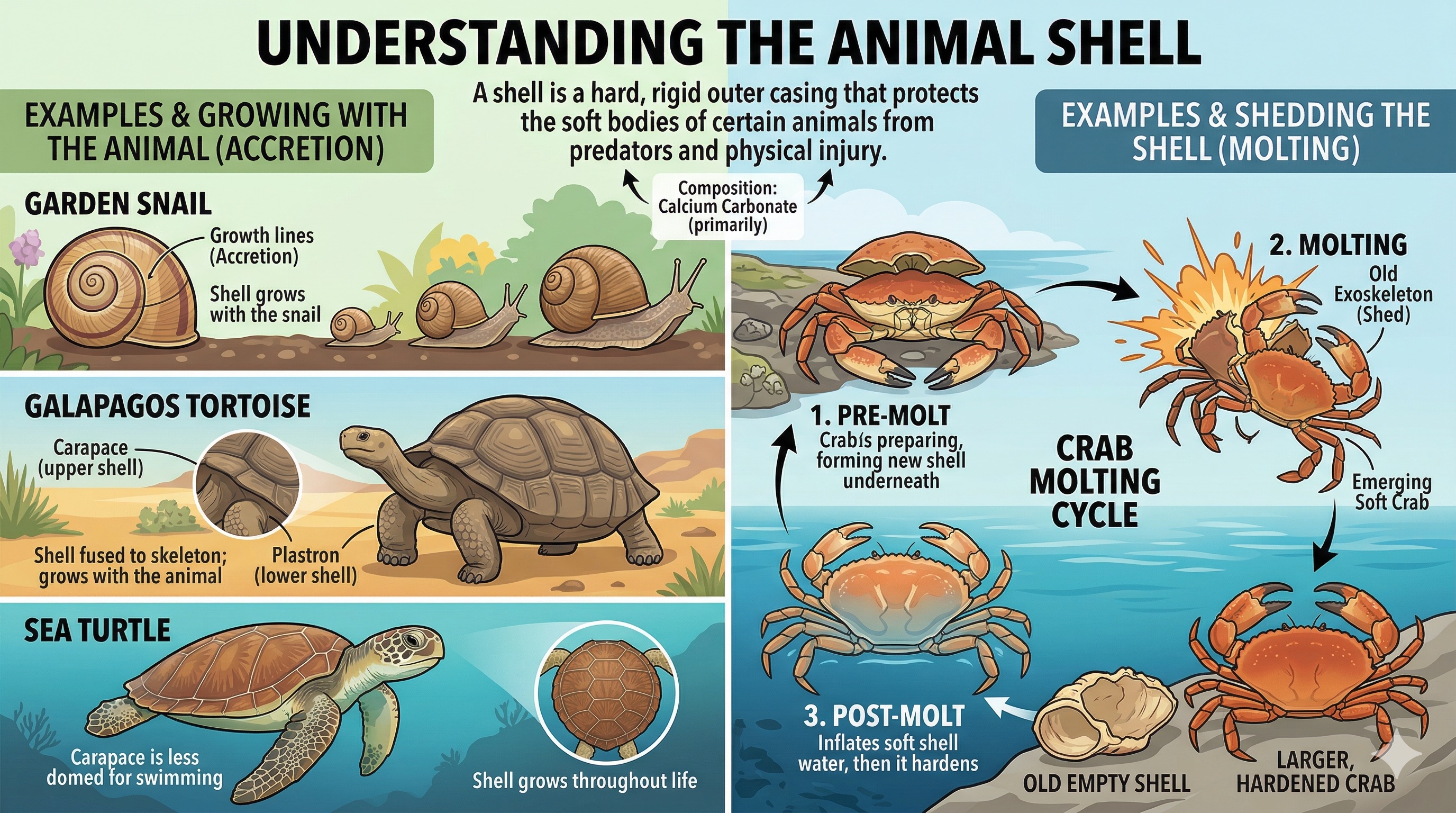
A shell is a hard, rigid outer casing that protects the soft bodies of certain animals from predators and physical injury.
Key Points
- Common in snails, turtles, tortoises, and crabs.
- Turtles and tortoises can pull their head and limbs inside for safety.
- Shells grow along with the animal in most species.
- They are primarily made of calcium carbonate.
Feathers
Insulation and Flight
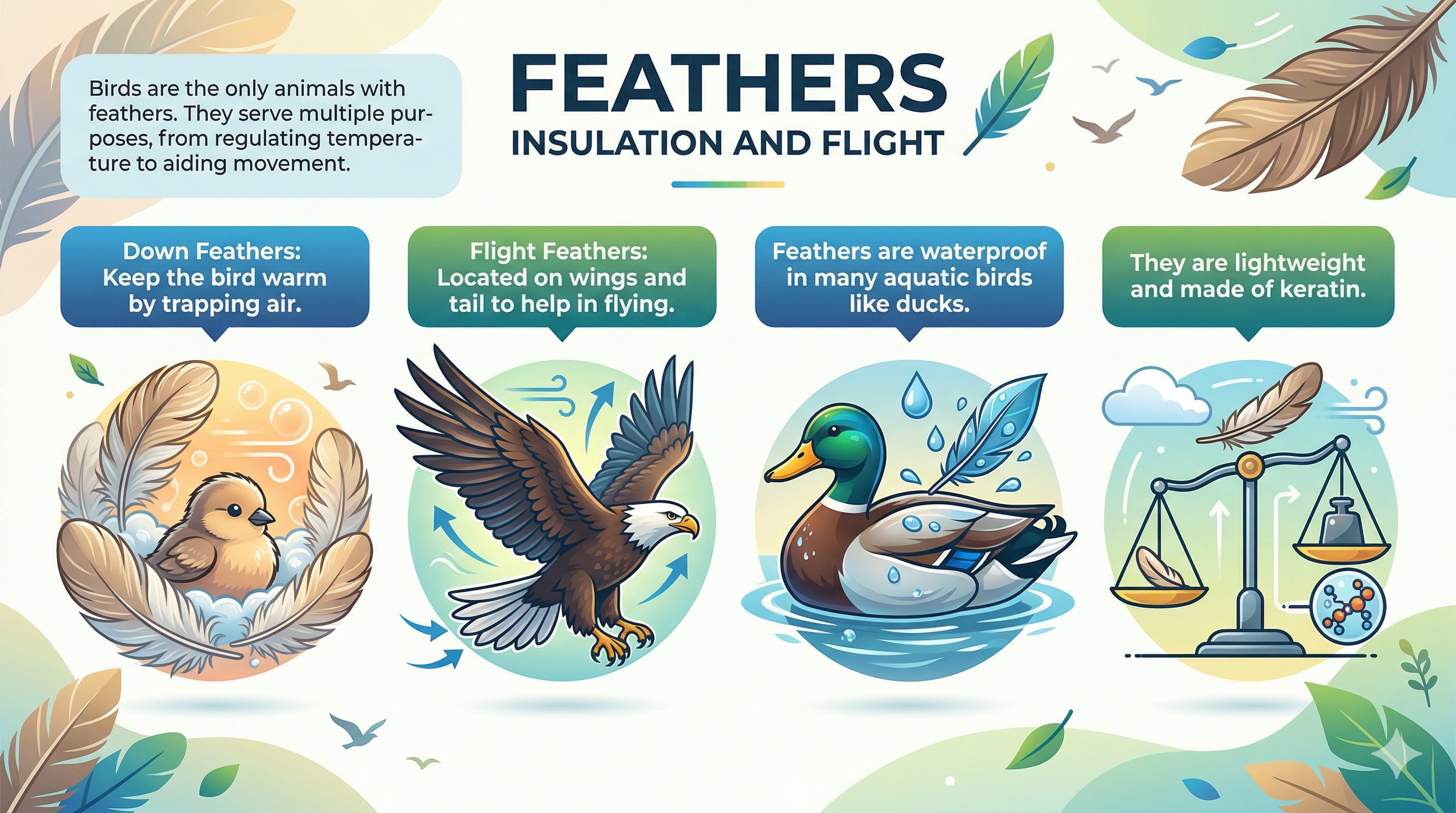
Birds are the only animals with feathers. They serve multiple purposes, from regulating temperature to aiding movement.
Key Points
- Down Feathers: Keep the bird warm by trapping air.
- Flight Feathers: Located on wings and tail to help in flying.
- Feathers are waterproof in many aquatic birds like ducks.
- They are lightweight and made of keratin.
Fur, Hair, and Wool
Mammalian Protection
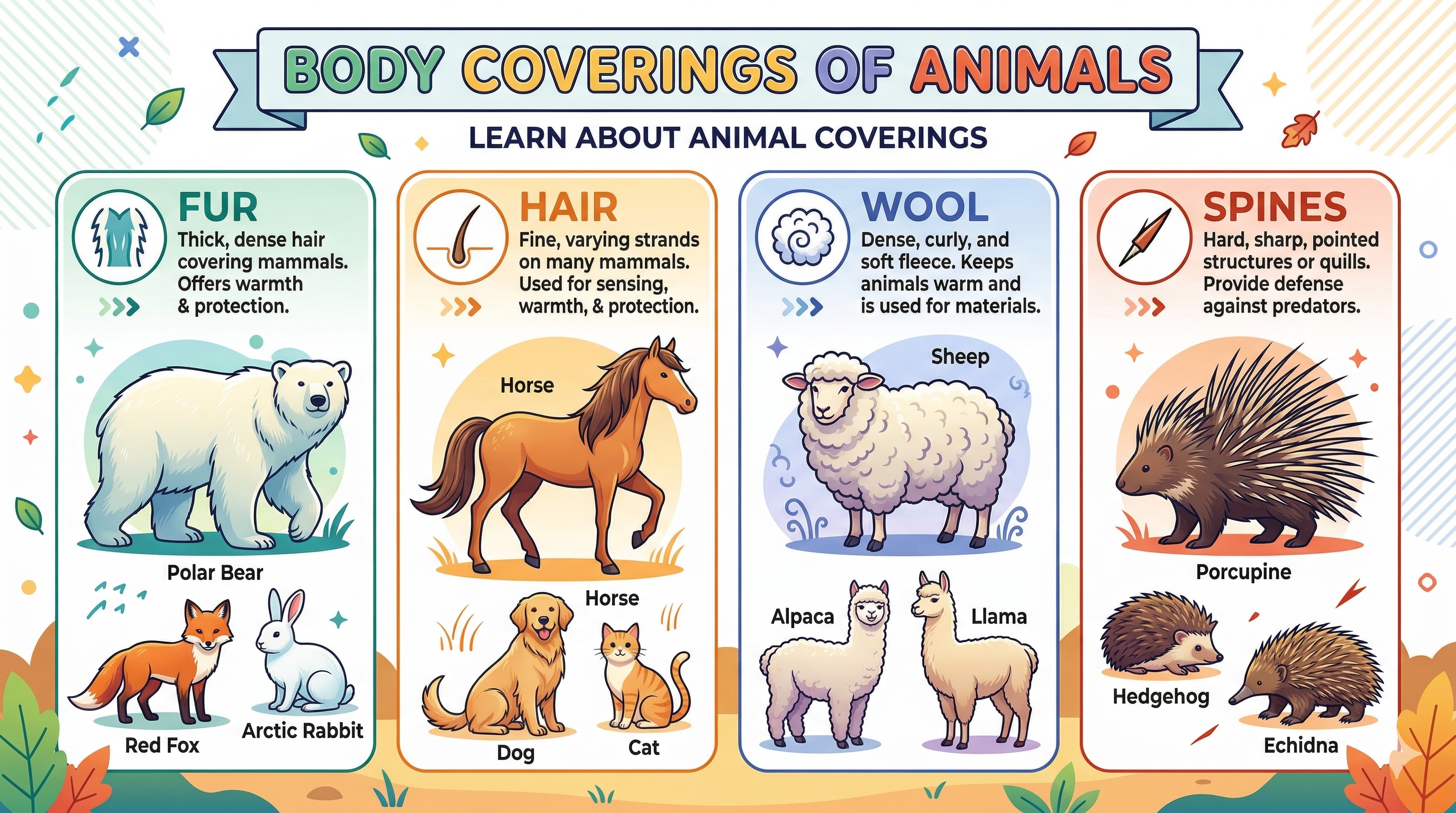
Mammals typically have hair or fur. These coverings protect them from cold and rain.
Key Points
- Polar bears have thick white fur to blend with snow and stay warm.
- Sheep and goats provide wool, a thick curly hair that traps heat.
- Porcupines have hair modified into sharp spines (quills) for protection.
- Hair/Fur also helps in camouflage in various environments.
Swipe to skip‹