
The Solar System
The Sun: Our Star
The Center of the System
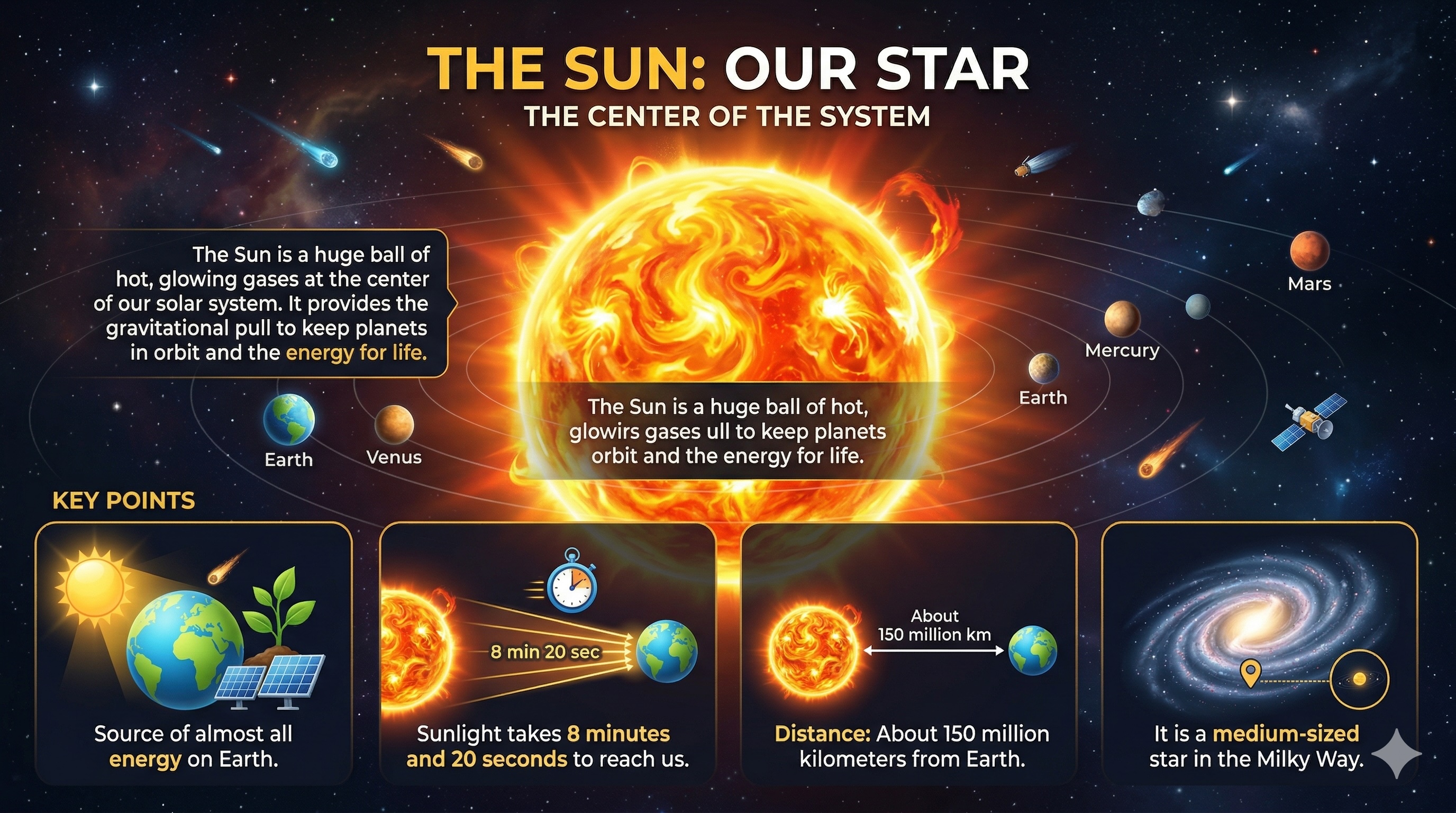
The Sun is a huge ball of hot, glowing gases at the center of our solar system. It provides the gravitational pull to keep planets in orbit and the energy for life.
Key Points
- Source of almost all energy on Earth.
- Sunlight takes 8 minutes and 20 seconds to reach us.
- Distance: About 150 million kilometers from Earth.
- It is a medium-sized star in the Milky Way.
Layers of the Sun
Anatomy of a Star
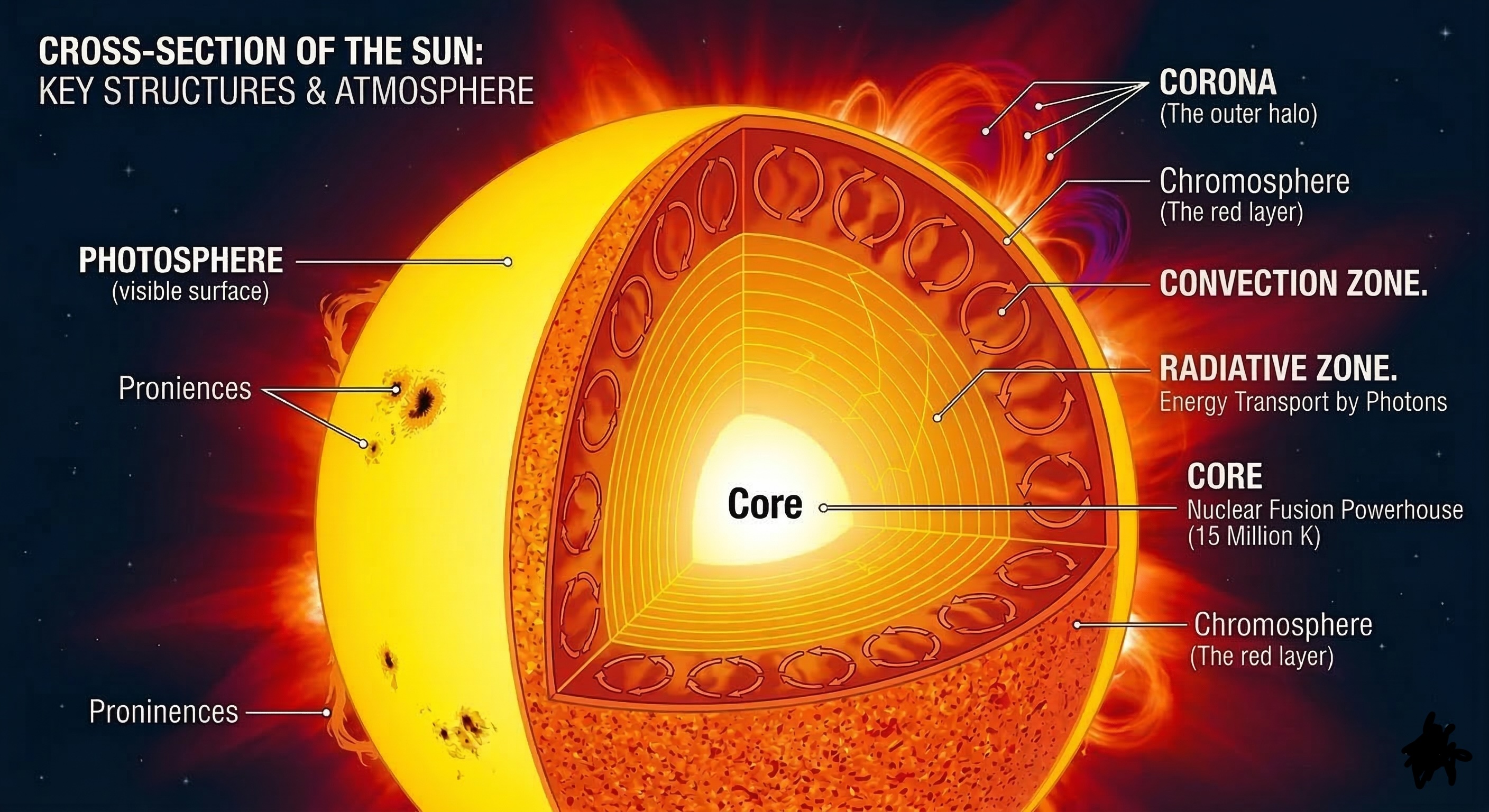
The Sun is structured into several layers, from the extremely hot core to the outer atmosphere visible during eclipses.
Key Points
- Core: The center where energy is produced.
- Photosphere: The visible surface that emits light.
- Chromosphere: The thin layer above the photosphere.
- Corona: The outermost atmosphere, visible as a 'halo'.
Inner Planets
The Terrestrial Worlds
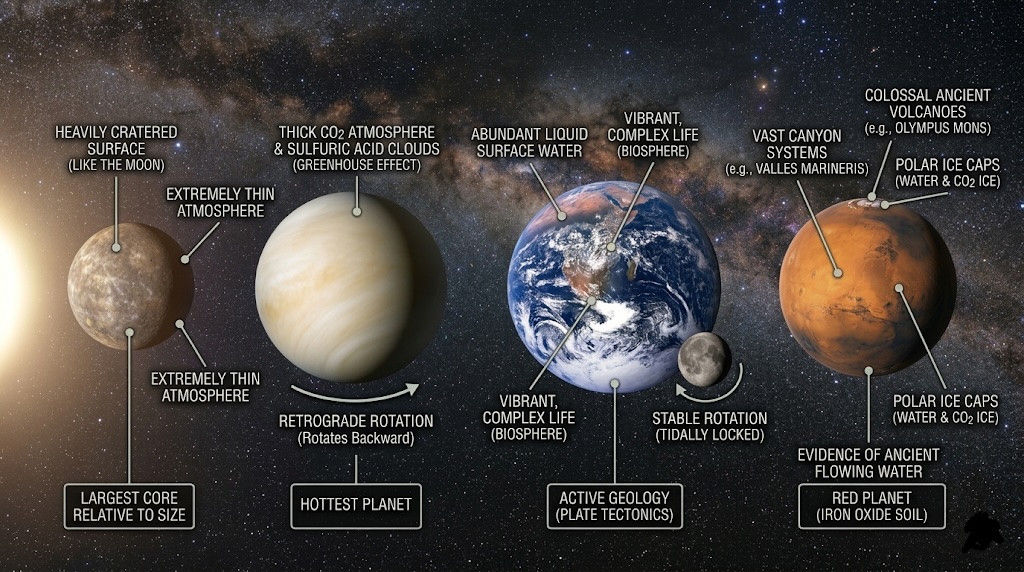
The four planets closest to the Sun are called Inner Planets. They are primarily made of rock and metal.
Key Points
- Includes Mercury, Venus, Earth, and Mars.
- Characteristics: Small size, solid surfaces, and few moons.
- They are located inside the Asteroid Belt.
- They have higher densities than gas giants.
Outer Planets
The Gas Giants
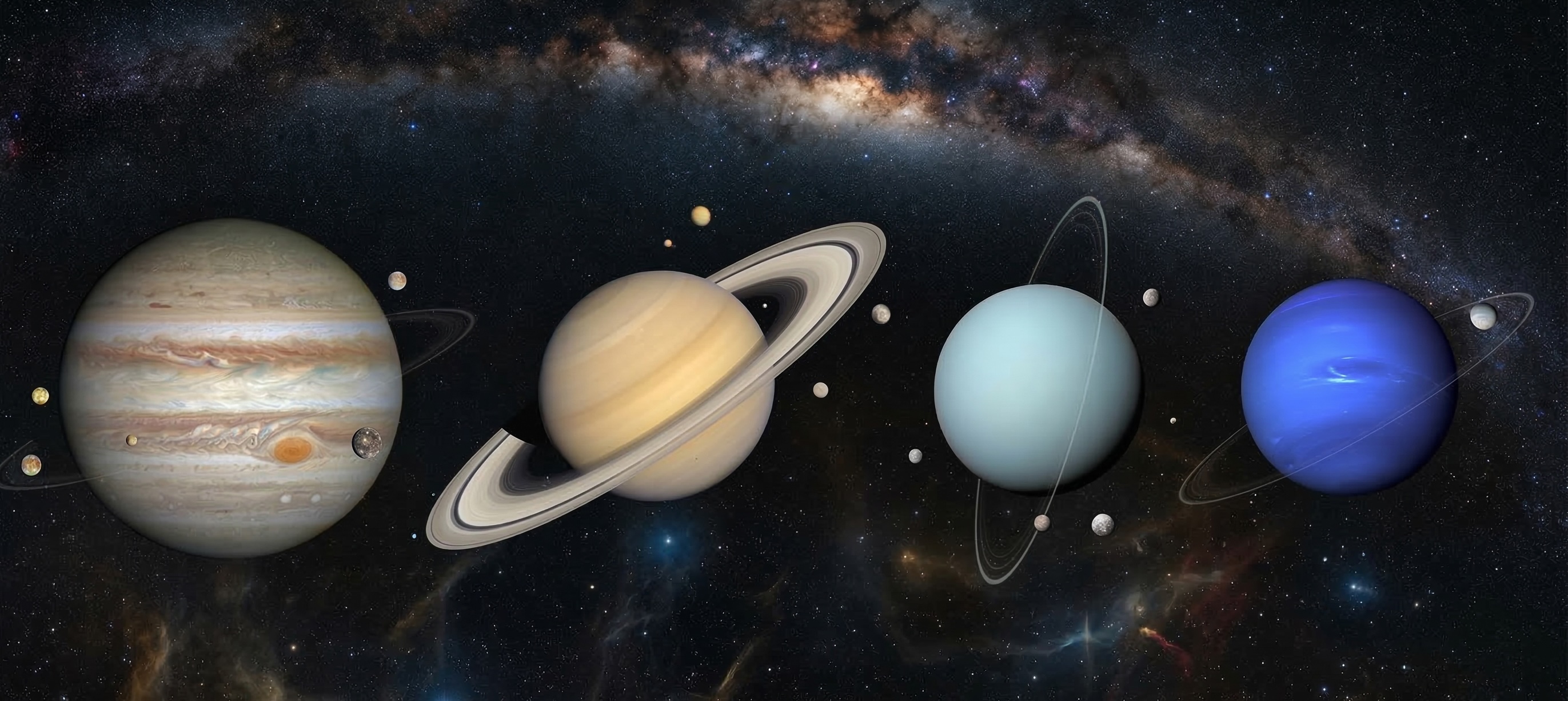
The four planets furthest from the Sun are much larger and composed mostly of gases and ice.
Key Points
- Includes Jupiter, Saturn, Uranus, and Neptune.
- Characteristics: Massive size, no solid surface, and many moons.
- All possess ring systems.
- Located outside the Asteroid Belt.
Asteroids
Rocky Wanderers
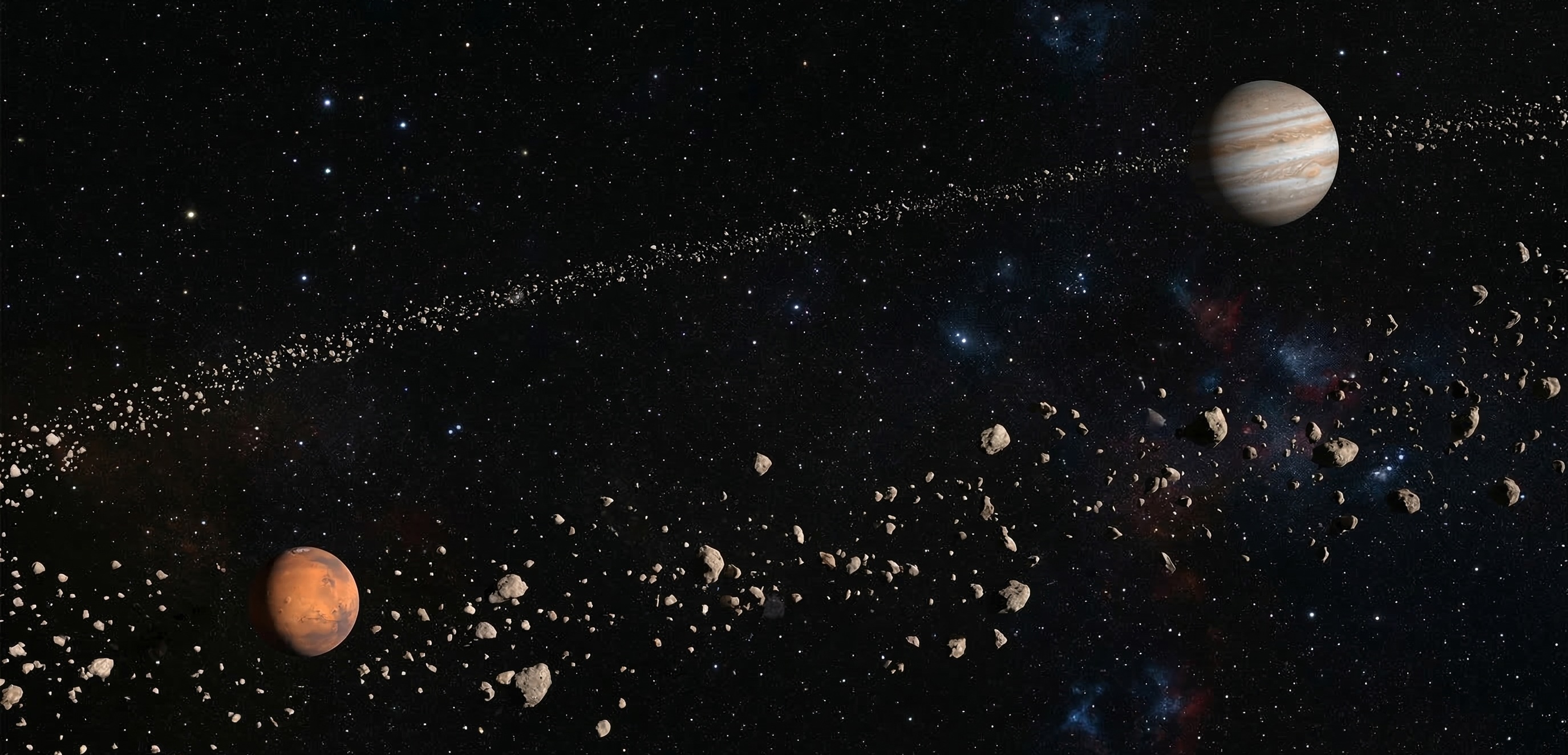
Asteroids are small, rock-like celestial bodies that revolve around the Sun, mostly between Mars and Jupiter.
Key Points
- Found in the 'Asteroid Belt'.
- Irregular shapes and sizes.
- Leftovers from the early solar system.
- Can range from pebble-sized to hundreds of kilometers wide.
Comets
Icy Travelers
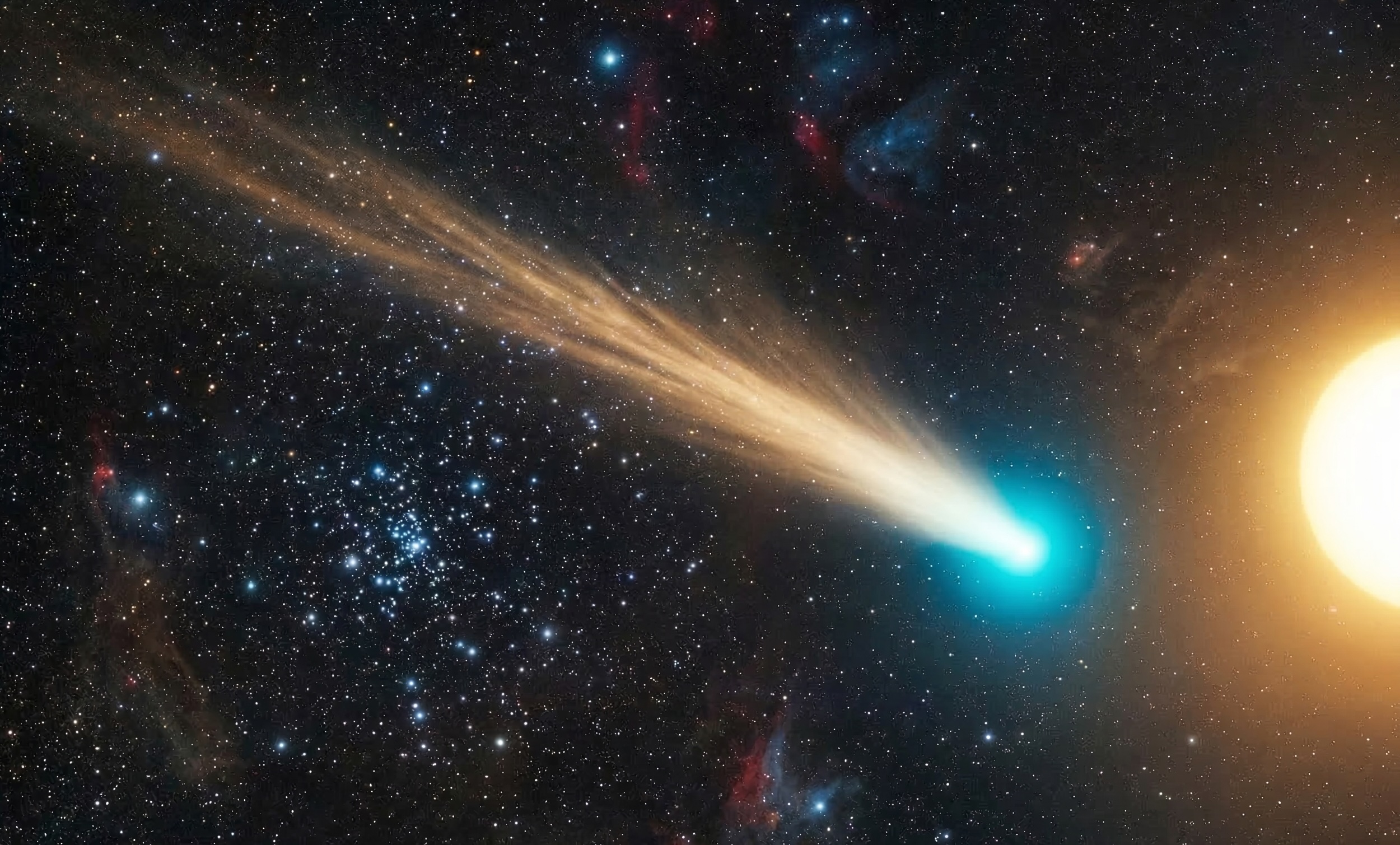
Comets are balls of ice and dust that develop long, glowing tails when they pass near the Sun.
Key Points
- Known as 'dirty snowballs'.
- Tail always points away from the Sun.
- Halley's Comet appears every 76 years.
- Travel in very long, oval-shaped orbits.
Swipe to skip‹