
Animal Habitats and Classification
Defining Habitat
The Natural Home
A habitat is the natural environment where an animal lives, grows, and reproduces. It provides the animal with everything it needs to survive: food, water, air, and shelter.

Key Points
- Habitual features help animals adapt to their specific surroundings.
- Earth has a vast variety of habitats: from scorching deserts to freezing poles.
- The environment dictates the physical features an animal develops.
- An animal cannot survive long if moved to a habitat it isn't adapted for.
Terrestrial Habitats
Life on the Solid Ground
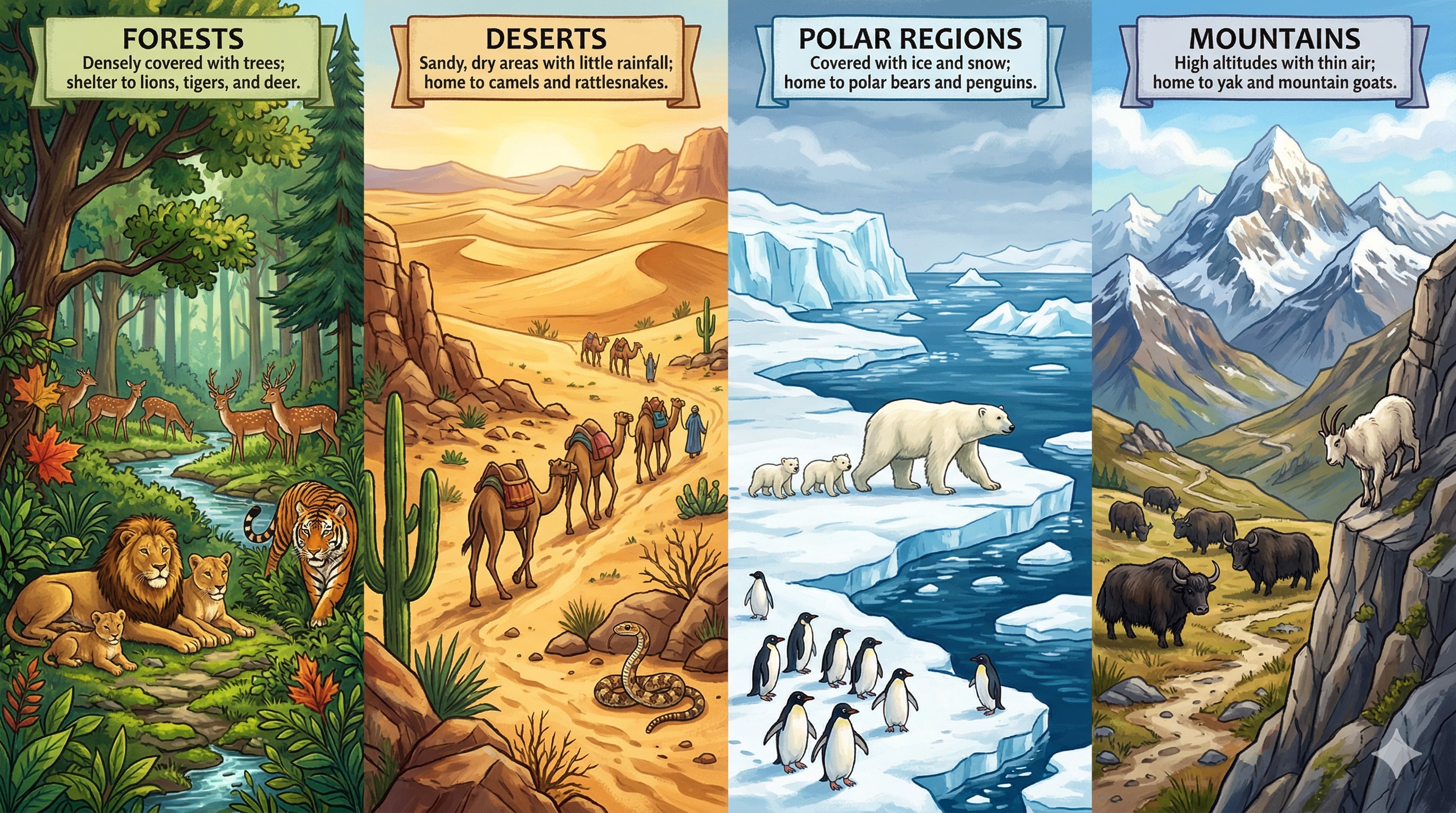
Terrestrial animals live primarily on land. This category is diverse, including forests, deserts, polar regions, and mountains.
Key Points
- Forests: Densely covered with trees; provide shelter to lions, tigers, and deer.
- Deserts: Sandy, dry areas with little rainfall; home to camels and rattlesnakes.
- Polar Regions: Covered with ice and snow; home to polar bears and penguins.
- Mountains: High altitudes with thin air; home to yak and mountain goats.
Olympiad Fact
Desert animals like camels can survive without water for many days by storing fat in their humps.
Aquatic Habitats
Life Underwater
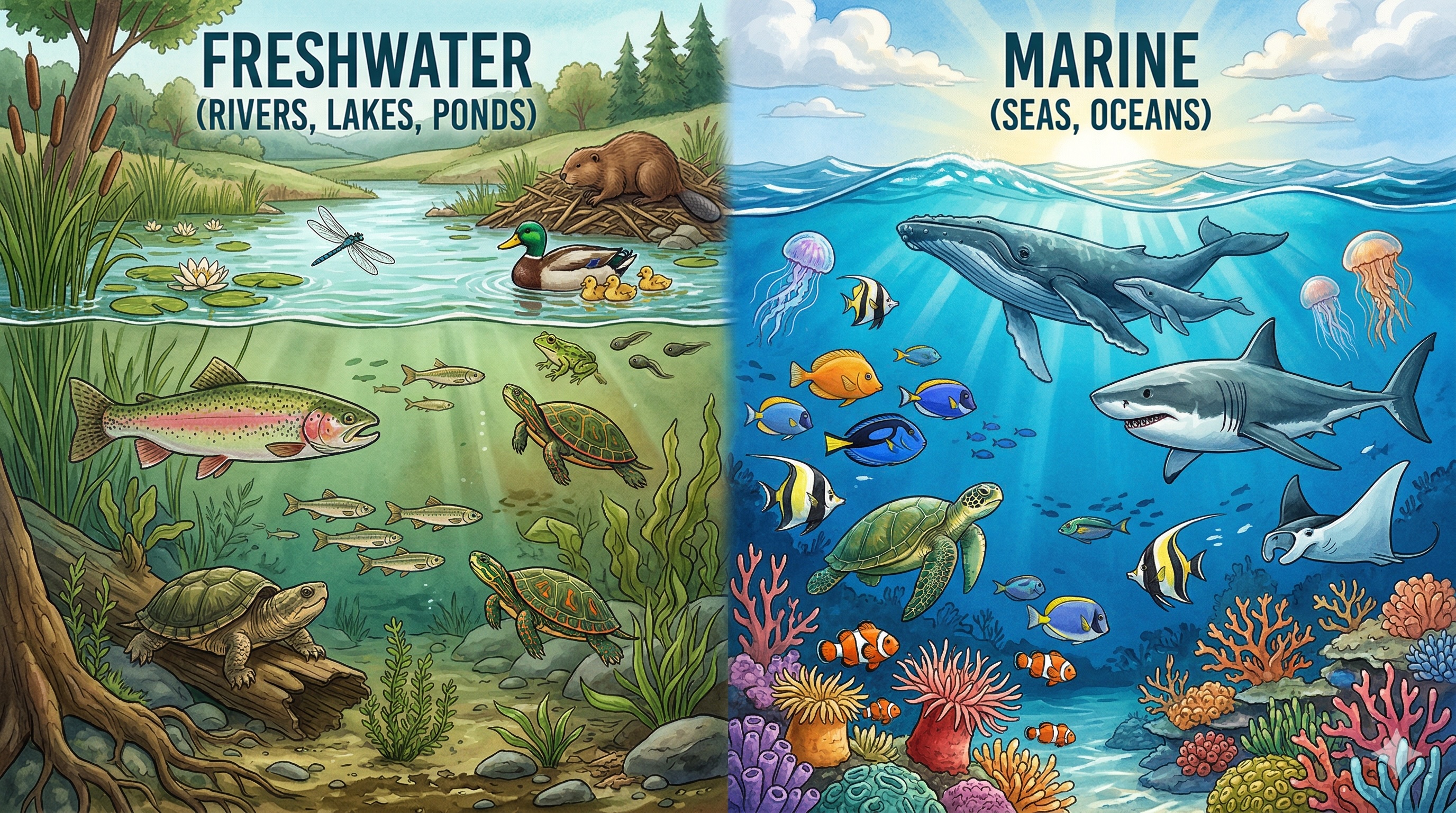
Aquatic animals live in water bodies, ranging from small ponds to vast oceans. They possess specialized features to move and breathe submerged.
Key Points
- Freshwater: Animals in rivers, lakes, and ponds (e.g., Fish, Turtles).
- Marine: Animals in seas and oceans (e.g., Sharks, Whales, Jellyfish).
- Adaptations include fins for swimming and gills for breathing.
- Whales and dolphins are mammals that live in water but breathe through lungs.
Arboreal Habitats
Living in the Trees
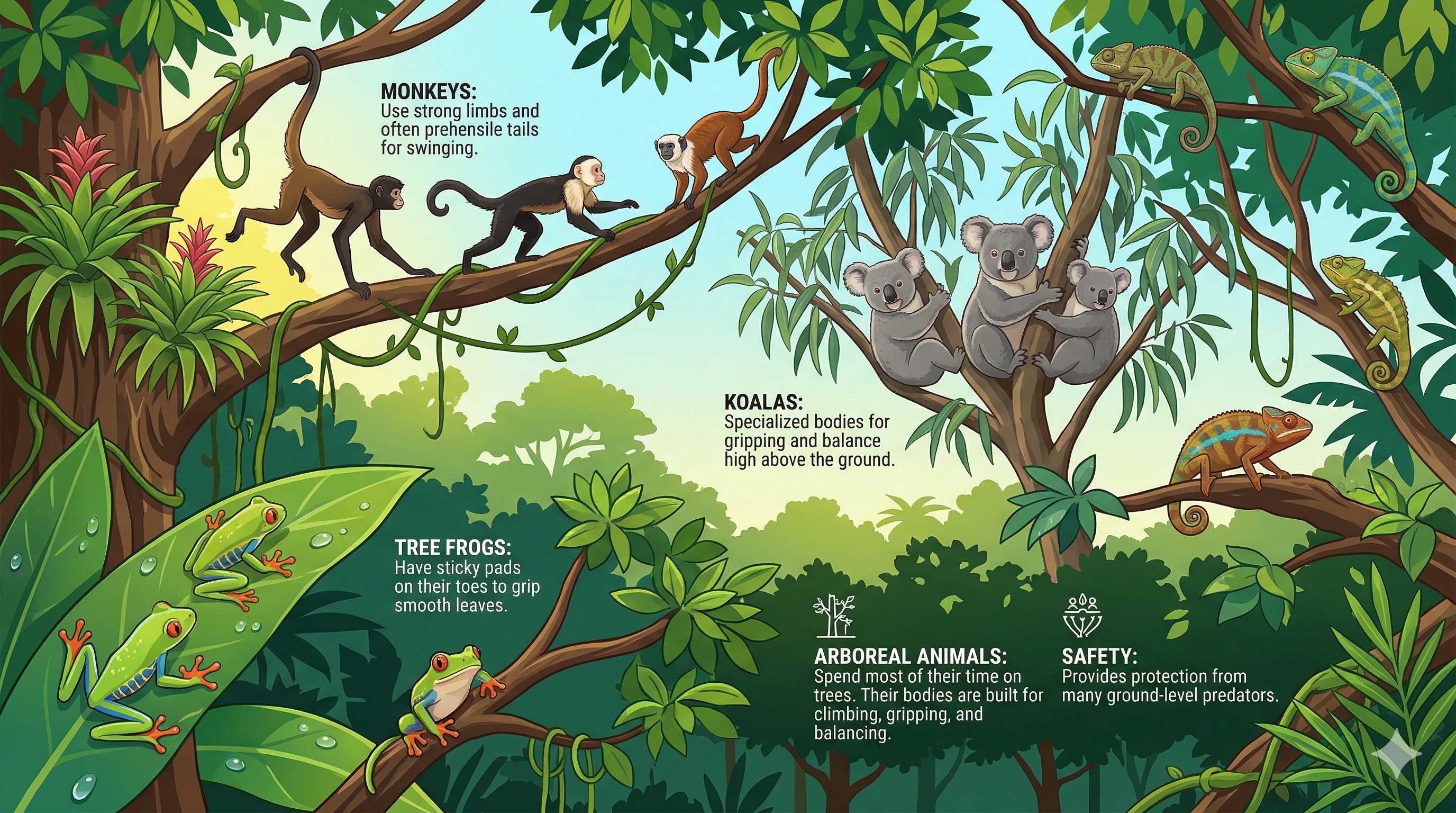
Arboreal animals spend most of their time on trees. Their bodies are built for climbing, gripping, and balancing high above the ground.
Key Points
- Examples: Monkeys, Koalas, Tree-frogs, and Chameleons.
- Monkeys use their strong limbs and often prehensile tails for swinging.
- Tree-frogs have sticky pads on their toes to grip smooth leaves.
- This habitat provides safety from many ground-level predators.
Aerial Animals
Masters of the Sky
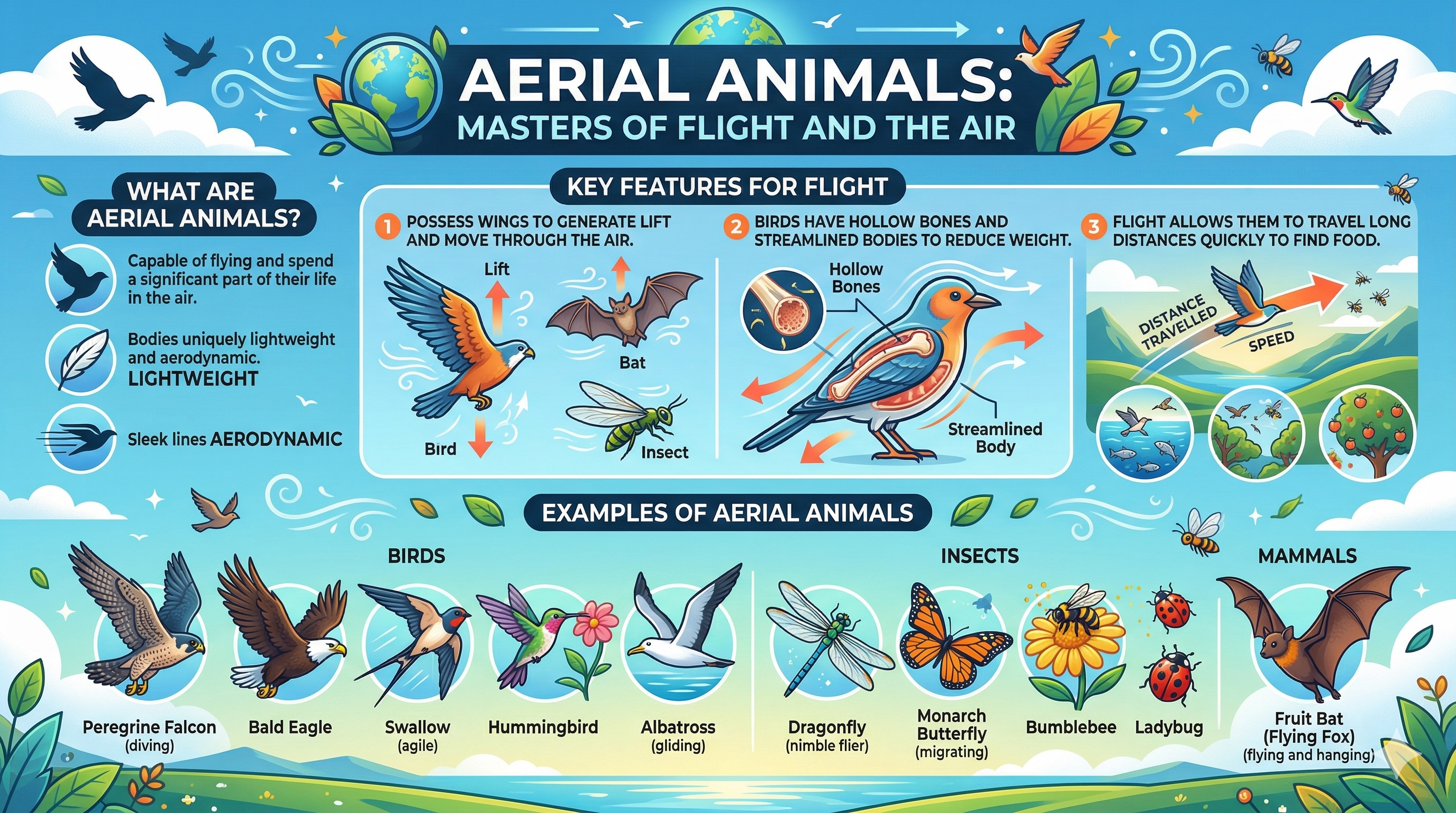
Aerial animals are capable of flying and spend a significant part of their life in the air. Their bodies are uniquely lightweight and aerodynamic.
Key Points
- Examples: Birds, Bats, and most Insects (Butterflies, Bees).
- Possess wings to generate lift and move through the air.
- Birds have hollow bones and streamlined bodies to reduce weight.
- Flight allows them to travel long distances quickly to find food.
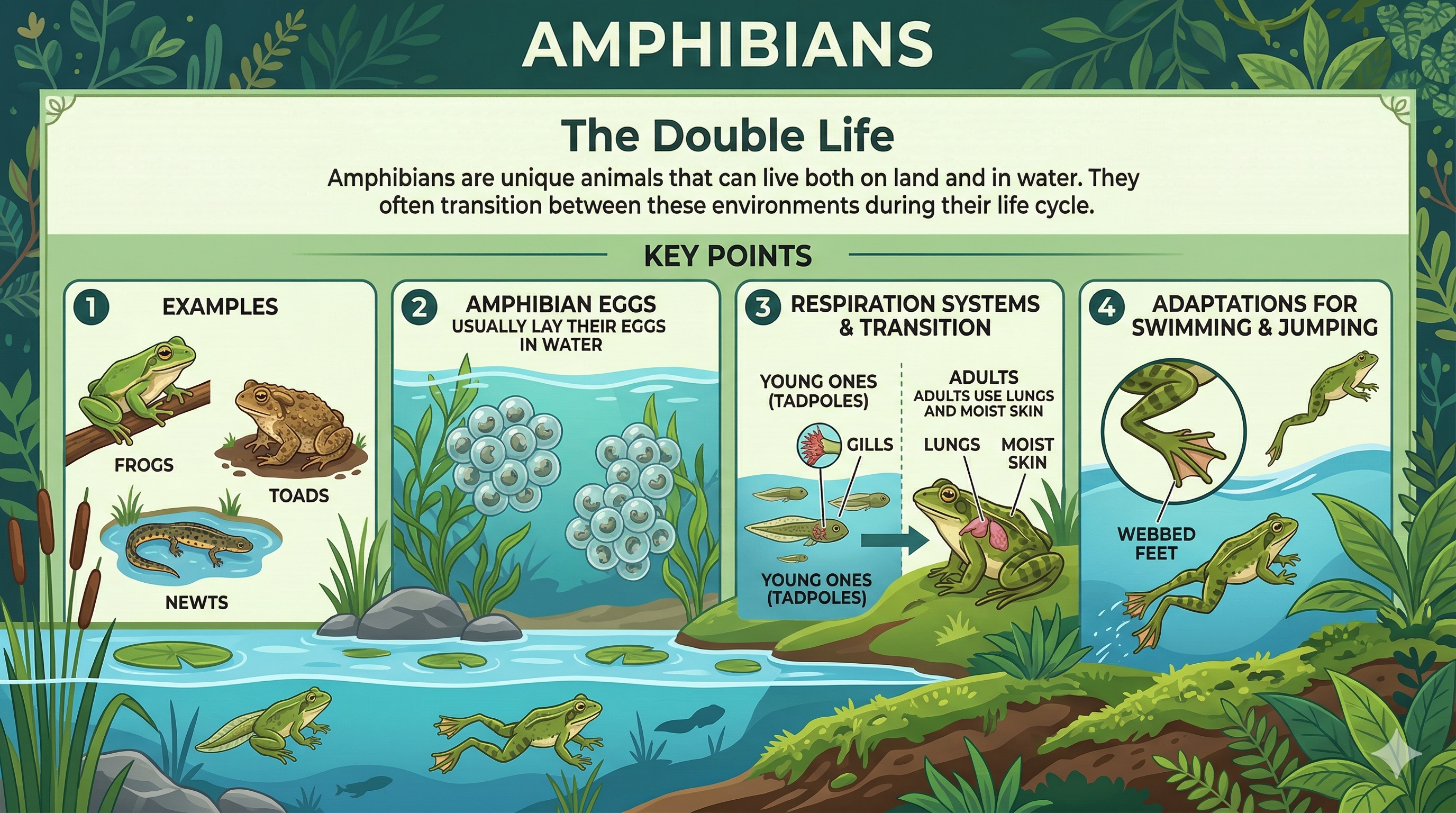
Amphibians
The Double Life
Amphibians are unique animals that can live both on land and in water. They often transition between these environments during their life cycle.
Key Points
- Examples: Frogs, Toads, and Newts.
- Usually lay their eggs in water.
- Young ones (tadpoles) breathe with gills; adults use lungs and moist skin.
- Have webbed feet to help in swimming and jumping.
Swipe to skip‹