
Survival Strategies: Protection and Migration
Camouflage
The Art of Hiding
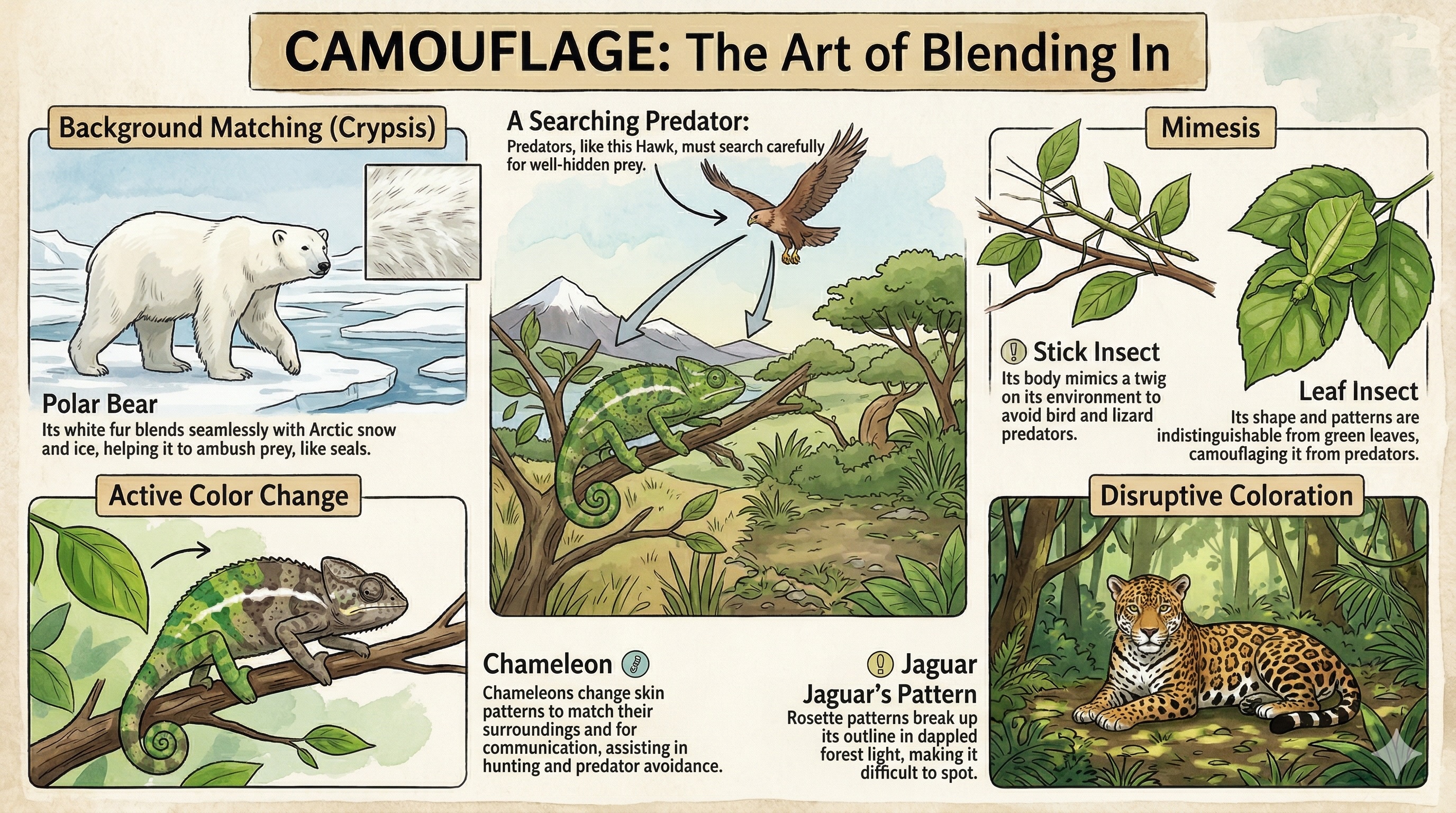
Camouflage is an adaptation that allows an animal to blend with its surroundings to avoid being seen by predators or prey.
Key Points
- Color Change: Chameleons change skin color to match the surface.
- Environment Matching: Polar bears have white fur to blend with snow.
- Shape Matching: Stick insects look like twigs; Leaf insects look like leaves.
- Stonefish: Look like rocks on the seabed to surprise prey.
Mimicry
Safe Deception
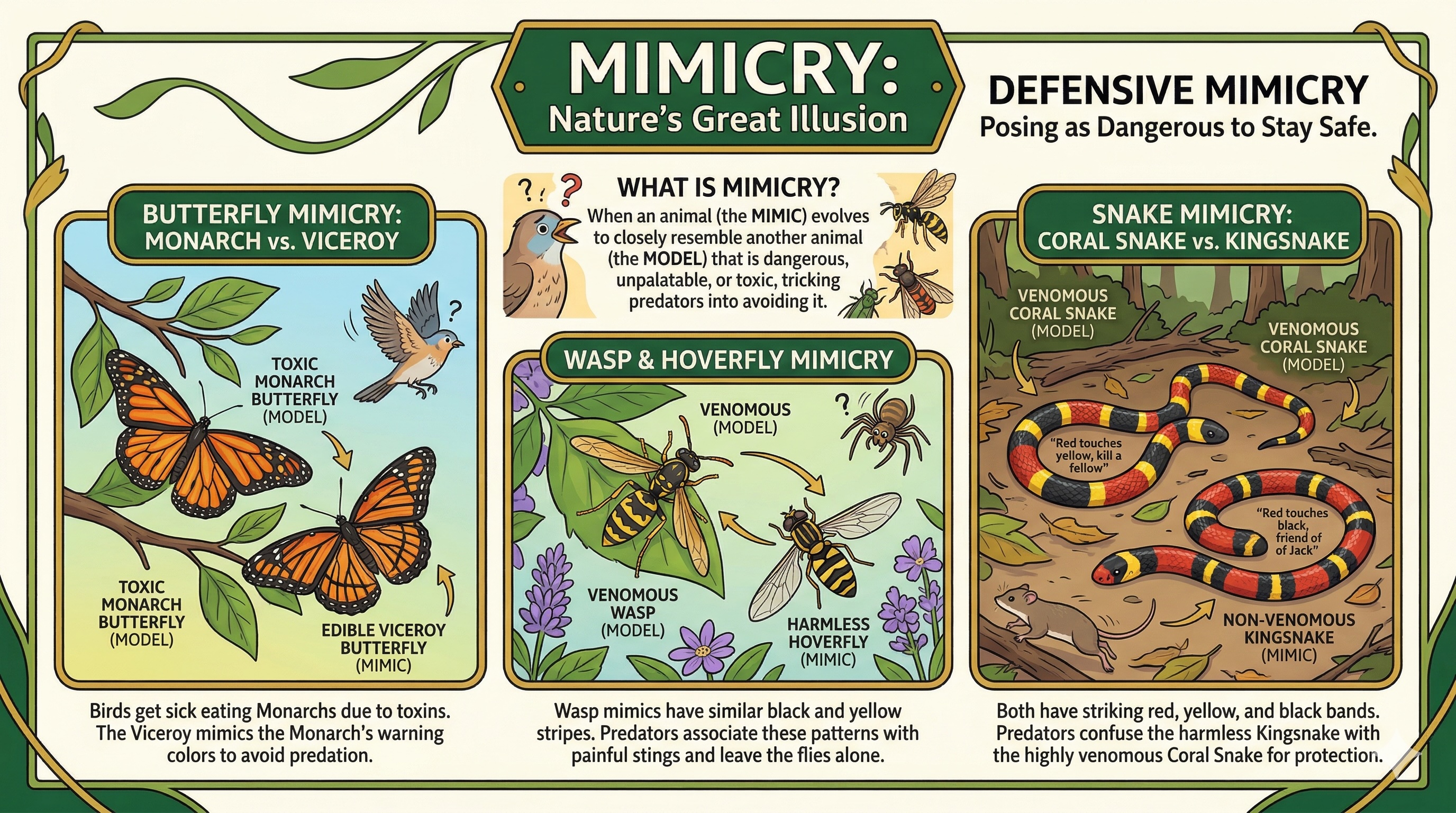
Mimicry is when an animal looks like another more dangerous or unpalatable animal to protect itself.
Key Points
- Viceroy butterflies mimic Monarch butterflies because Monarchs taste bitter to birds.
- Helps defenseless animals trick predators into staying away.
- Can also be used to lure prey closer.
- It is an evolutionary strategy for survival without physical weapons.
Migration
The Seasonal Journey
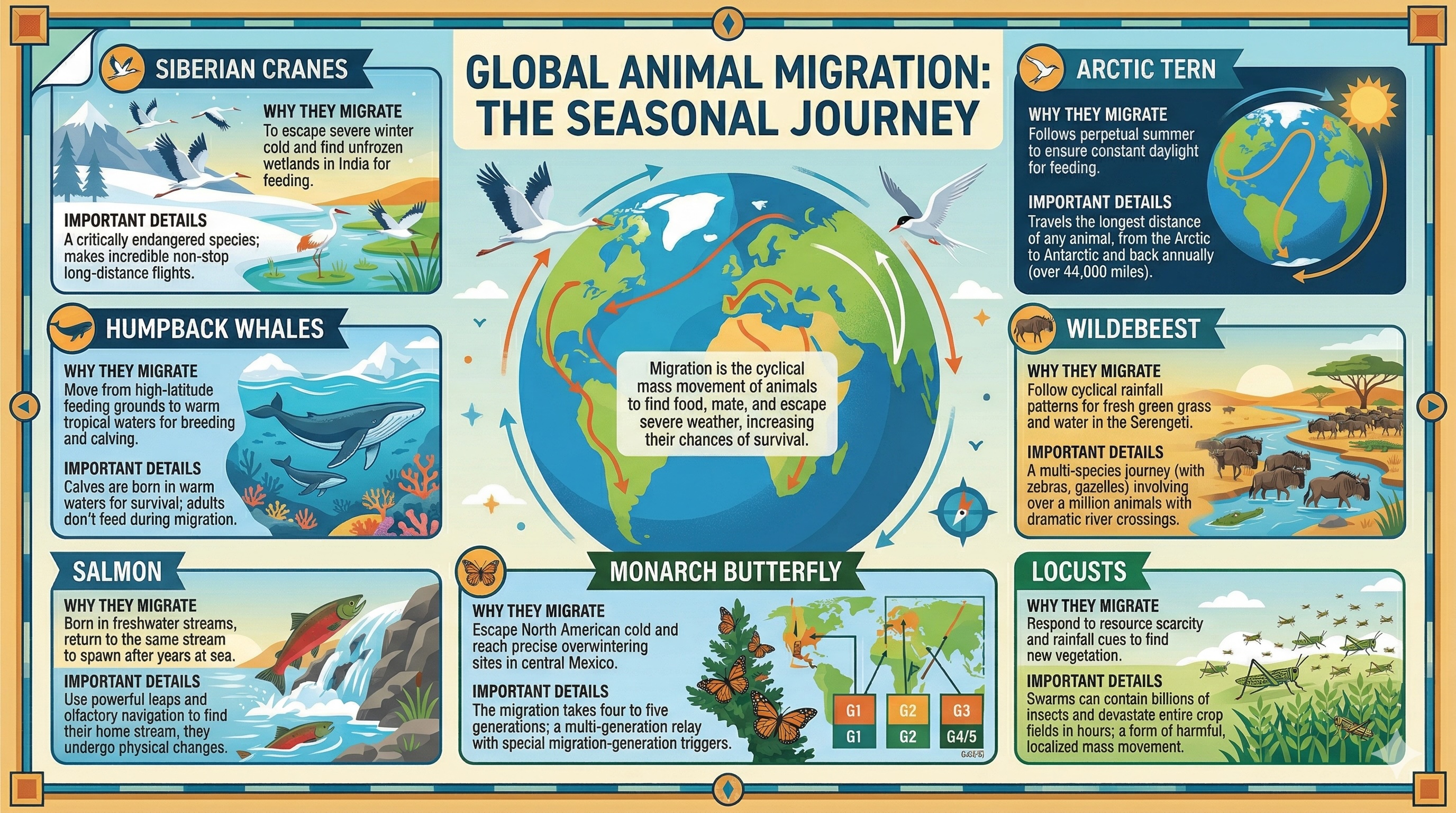
Migration is the mass movement of animals from one place to another to escape cold, find food, or reach safer breeding grounds.
Key Points
- Siberian Cranes: Fly from Siberia to India during the winter.
- Arctic Tern: Travels the longest distance, from Arctic to Antarctic.
- Locusts: Harmful migratory insects that travel in large swarms to find crops.
- Monarch Butterflies: Migrate from Canada to Mexico in winter.
Olympiad Fact
The Arctic Tern travels approximately 70,000 km in its annual round trip!
Swipe to skip‹