
Locomotion and Movement
Movement on Land
Walking and Crawling
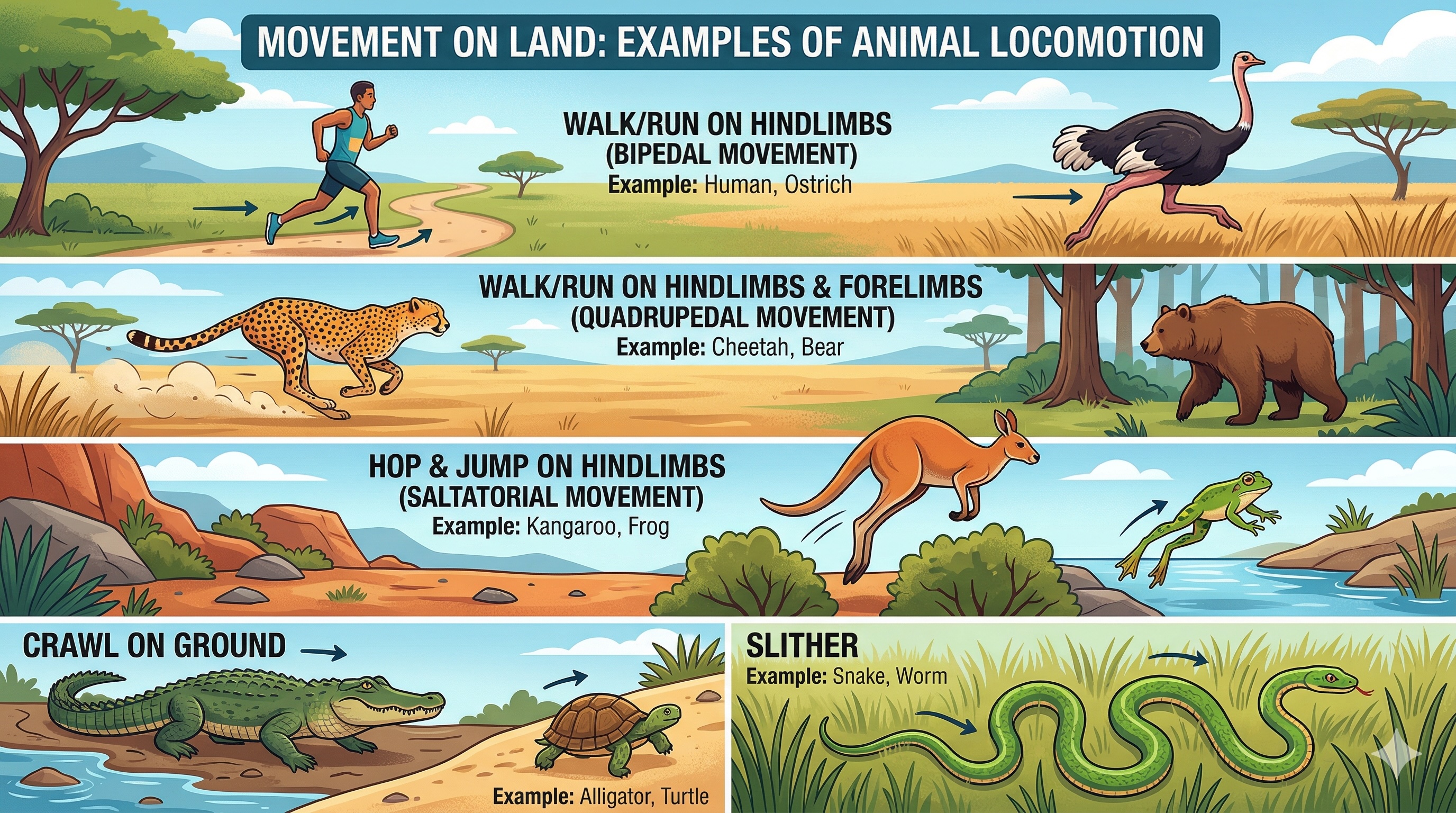
Land animals use limbs (legs) or body muscles to move across different terrains.
Key Points
- Limbs: Mammals, amphibians, and reptiles usually have four limbs (forelimbs and hindlimbs).
- Humans use only their hindlimbs (legs) for walking upright.
- Cheetahs use all four limbs for extreme speeds.
- Snakes: Lack legs; use scales and powerful muscles to crawl in a zigzag motion.
Movement in Water
Swimming Efficiency
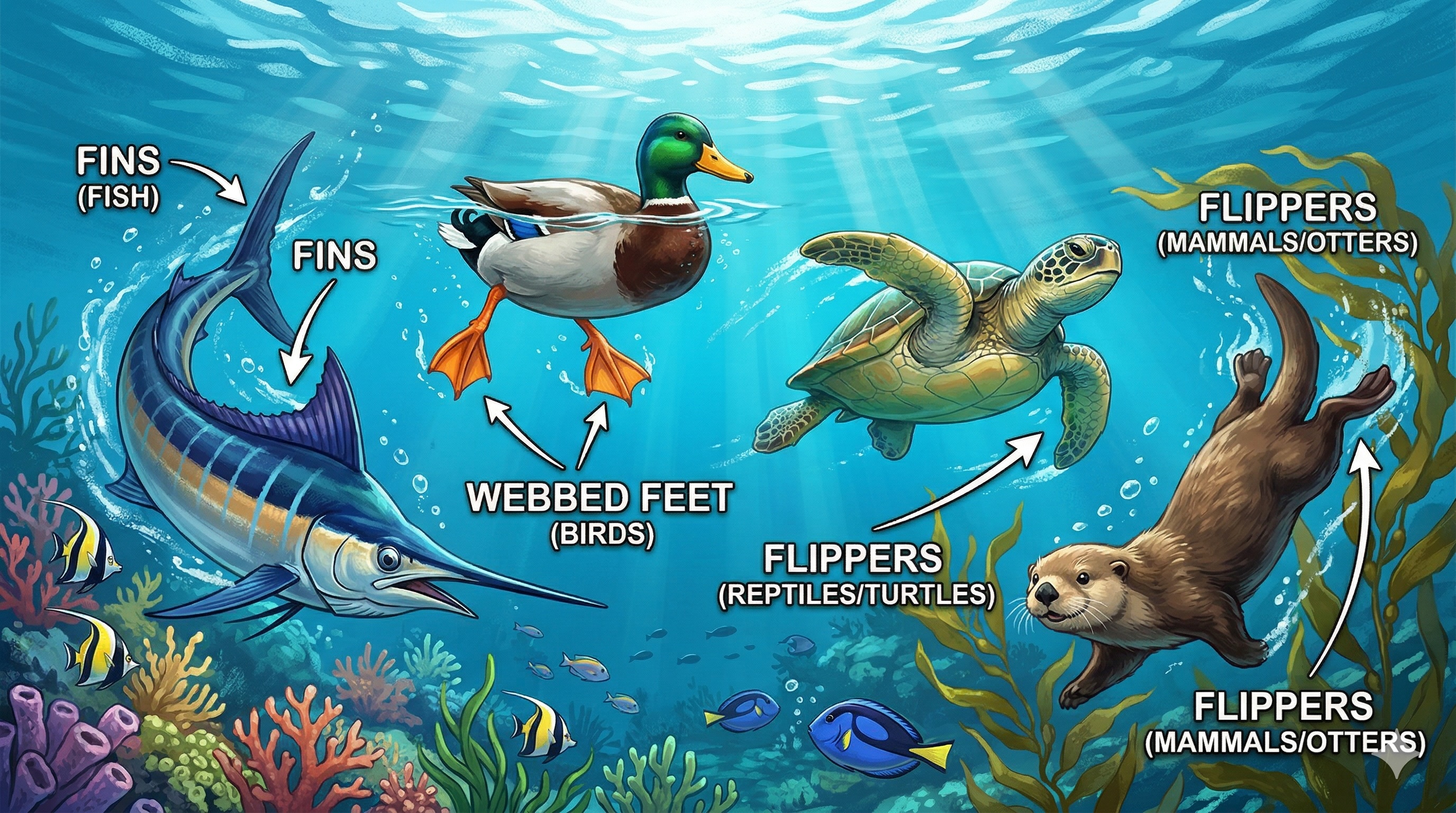
Water-dwelling animals have bodies shaped for swimming and parts that act like oars or paddles.
Key Points
- Fins: Fish have fins to help them move, balance, and change direction.
- Flippers: Turtles and penguins have limb-like flippers for swimming.
- Webbed Feet: Frogs and ducks use their webbed toes like oars in water.
- Tail: The tail fin provides the main push for fish.
Movement in Air
Achieving Flight
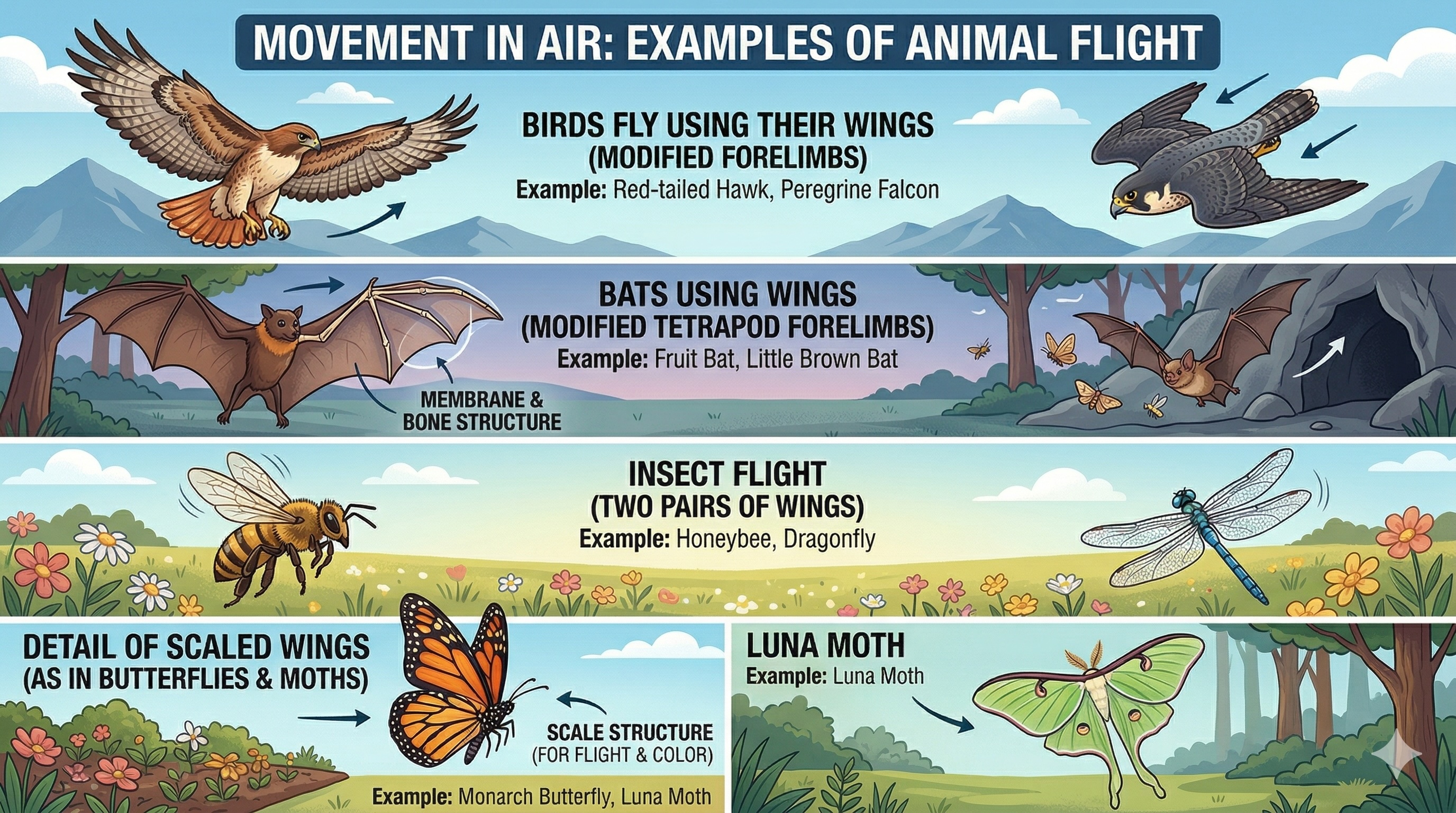
Flying animals have lightweight bodies and structures that generate lift in the air.
Key Points
- Wings: Modified forelimbs of birds; covered with feathers.
- Hollow Bones: Birds have light, air-filled bones to reduce weight.
- Insects: Have one or two pairs of wings made of thin membranes.
- Bats: The only mammals that can fly, using skin stretched between long finger bones.
Olympiad Fact
Ostriches and Penguins are flightless birds; they have wings but use them for balance or swimming instead.
Swipe to skip‹