
Mixed Fractions and Conversions
Mixed Fractions
Wholes and parts combined.
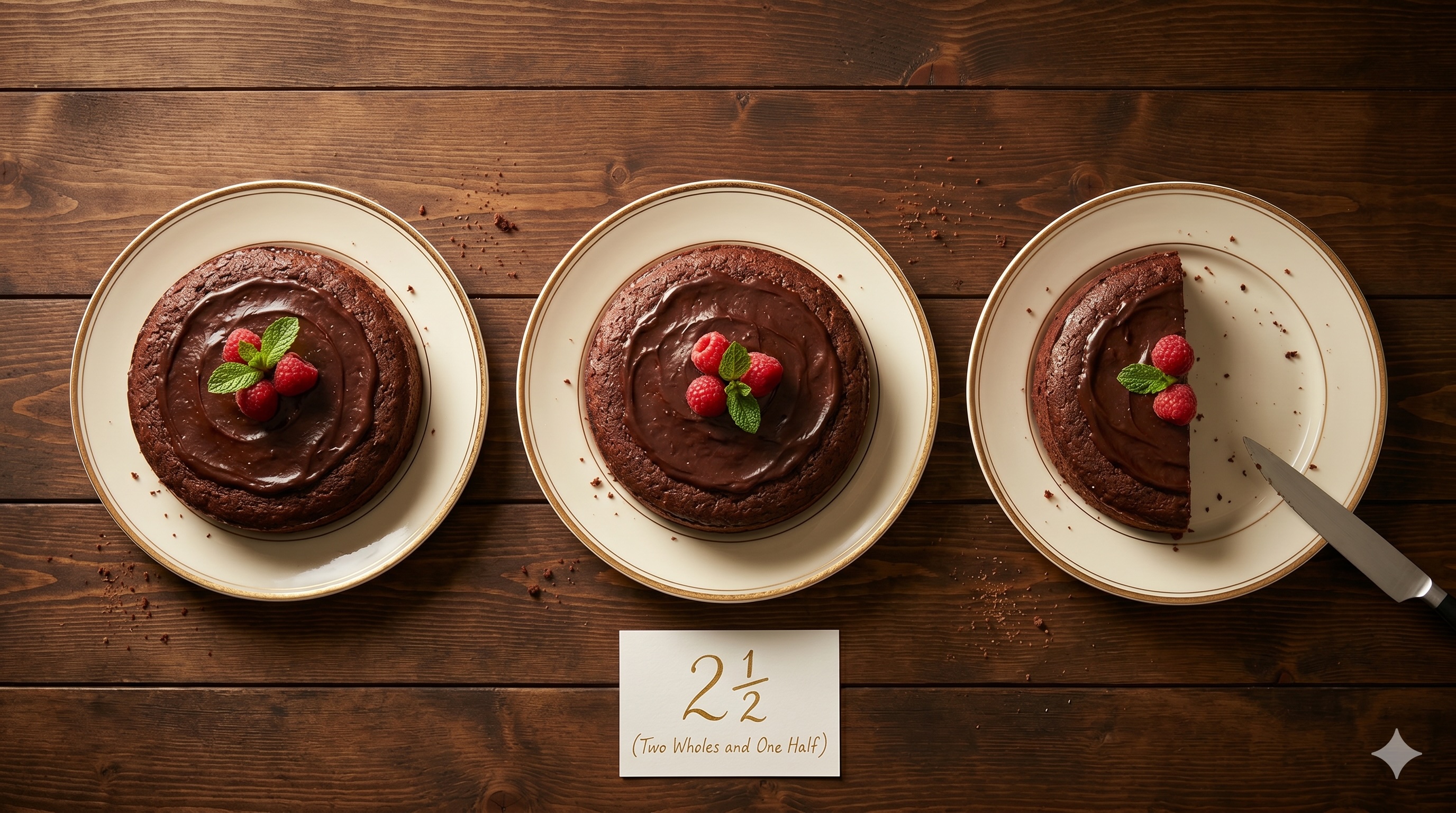
A mixed fraction is a mix of two things: a whole number and a proper fraction. For example, means two whole pizzas and one-half of another pizza.
Key Points
- It is just a shorter way of writing an addition problem: really means .
- The fraction part must always be a proper fraction (top number smaller than bottom).
- The total amount is always greater than .
Olympiad Fact
Mixed numbers help us estimate quantities quickly. is clearly between 3 and 4, whereas requires mental division to visualize its magnitude.
Mixed to Improper
The conversion formula.
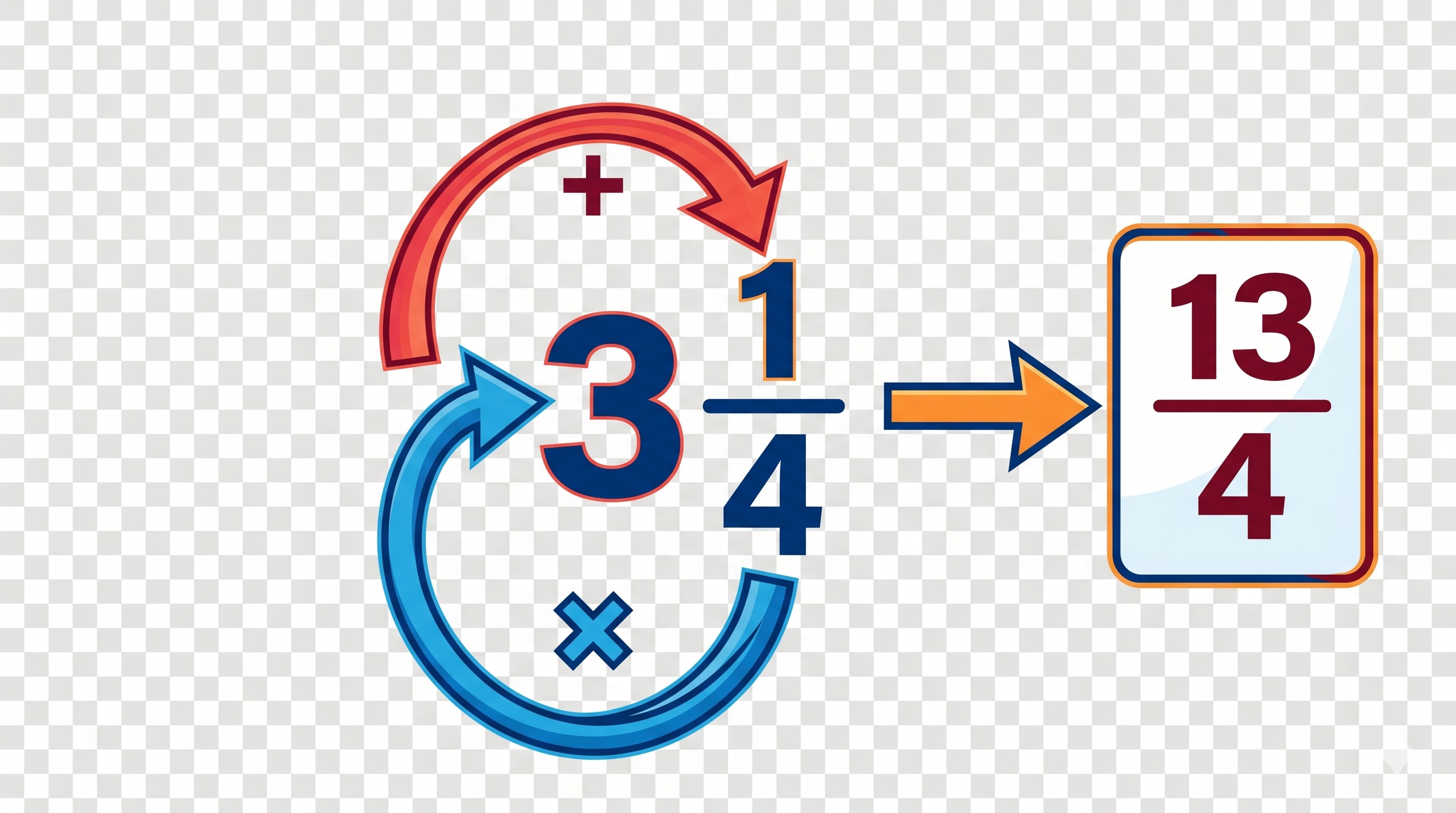
To change a mixed fraction into an improper fraction, you need to turn your whole pieces into smaller fractional slices.
Key Points
- Start by looking at the large whole number on the left.
- Multiply this whole number by the bottom number (denominator) to chop the wholes into slices.
- Add the top number (numerator) to that answer to include your extra slices.
- Write this final total on top, and keep the original bottom number exactly the same!
Olympiad Fact
Remember the 'MAD' method: Multiply the denominator by the whole, Add the numerator, and keep the Denominator the same. Always start from the bottom to ensure the correct order of operations.
Improper to Mixed
Dividing for wholes.
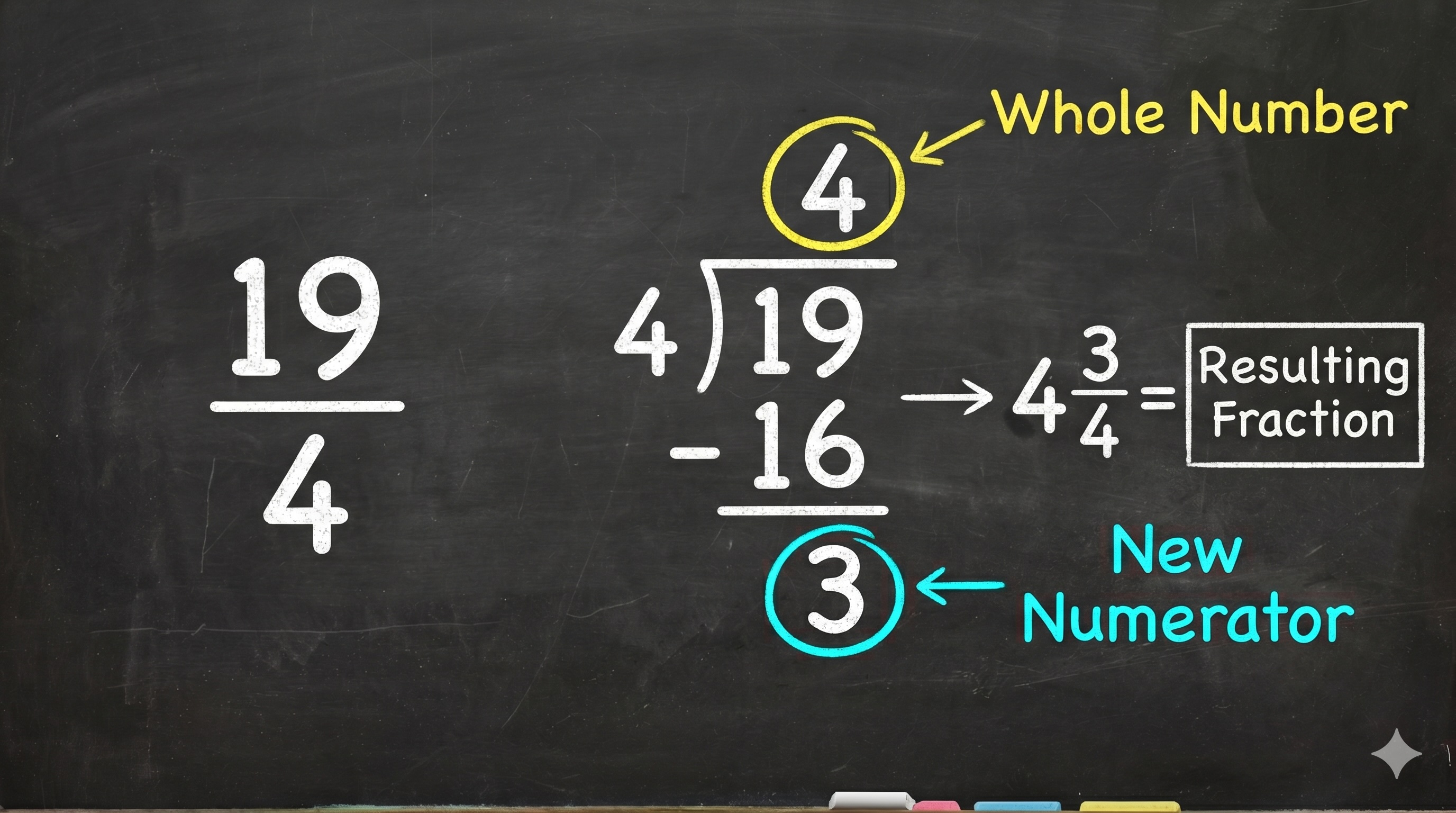
To change an improper fraction back into a mixed fraction, you are grouping slices together to see how many whole objects you can make.
Key Points
- Treat the fraction bar just like a division sign.
- Divide the top number by the bottom number to see how many 'wholes' you can make.
- The whole number answer you get becomes the large number on the left.
- The remainder (what is left over) becomes your new top number, and the bottom number stays exactly the same.
Olympiad Fact
The remainder is the most critical part of this conversion. It represents the leftover fractional piece that couldn't form another complete whole.
Swipe to skip‹