
Comparison of Fractions
Comparing Like Fractions
Focus on the numerator.
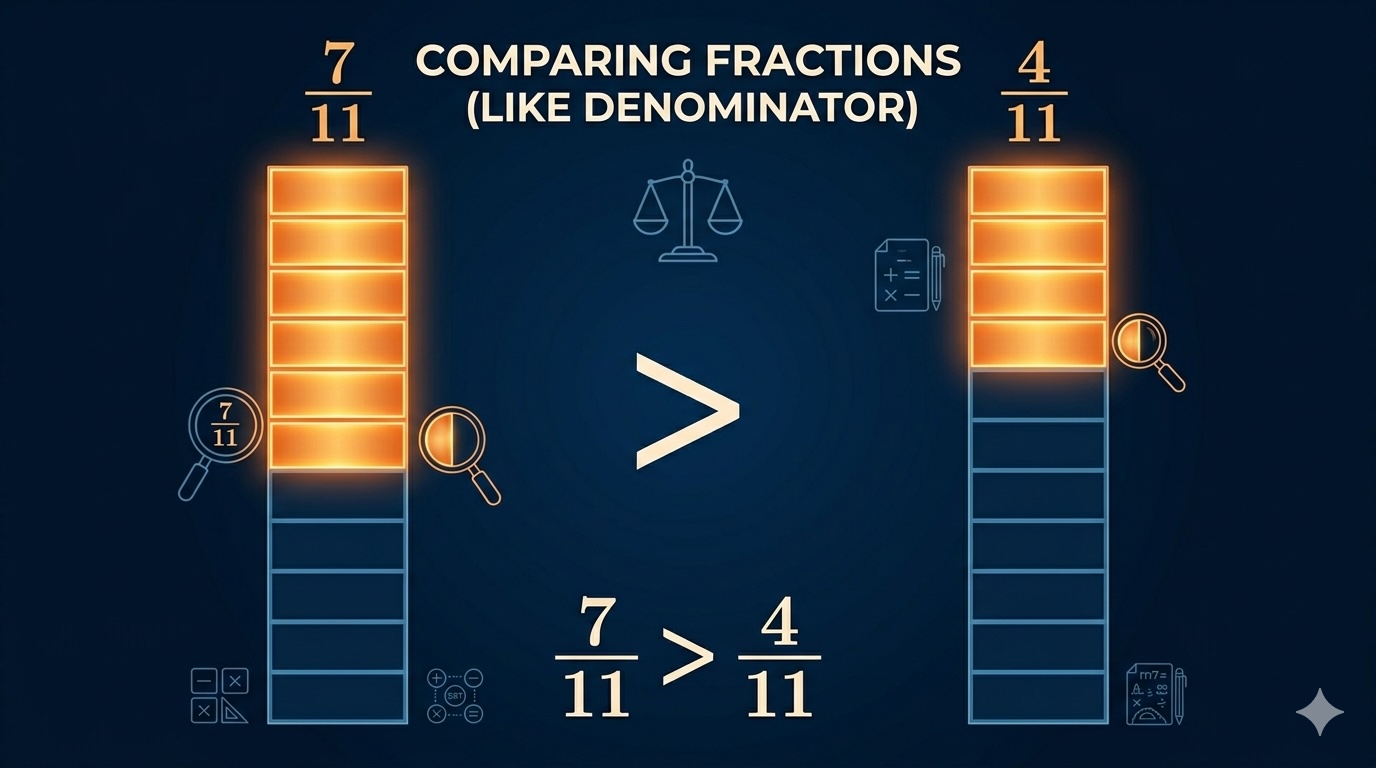
When fractions share the same bottom number, comparing them is incredibly easy. Just look at the top numbers!
Key Points
- The bottom number tells you the slice size is identical.
- So, the fraction with the bigger top number wins, because it has more slices.
- For example, of a pizza is definitely more than of the same pizza.
Olympiad Fact
Like fractions behave identically to integers. Because their unit of measurement is identical, you only need to compare the quantity of parts.
Same Numerator, Different Denominator
The denominator's inverse rule.
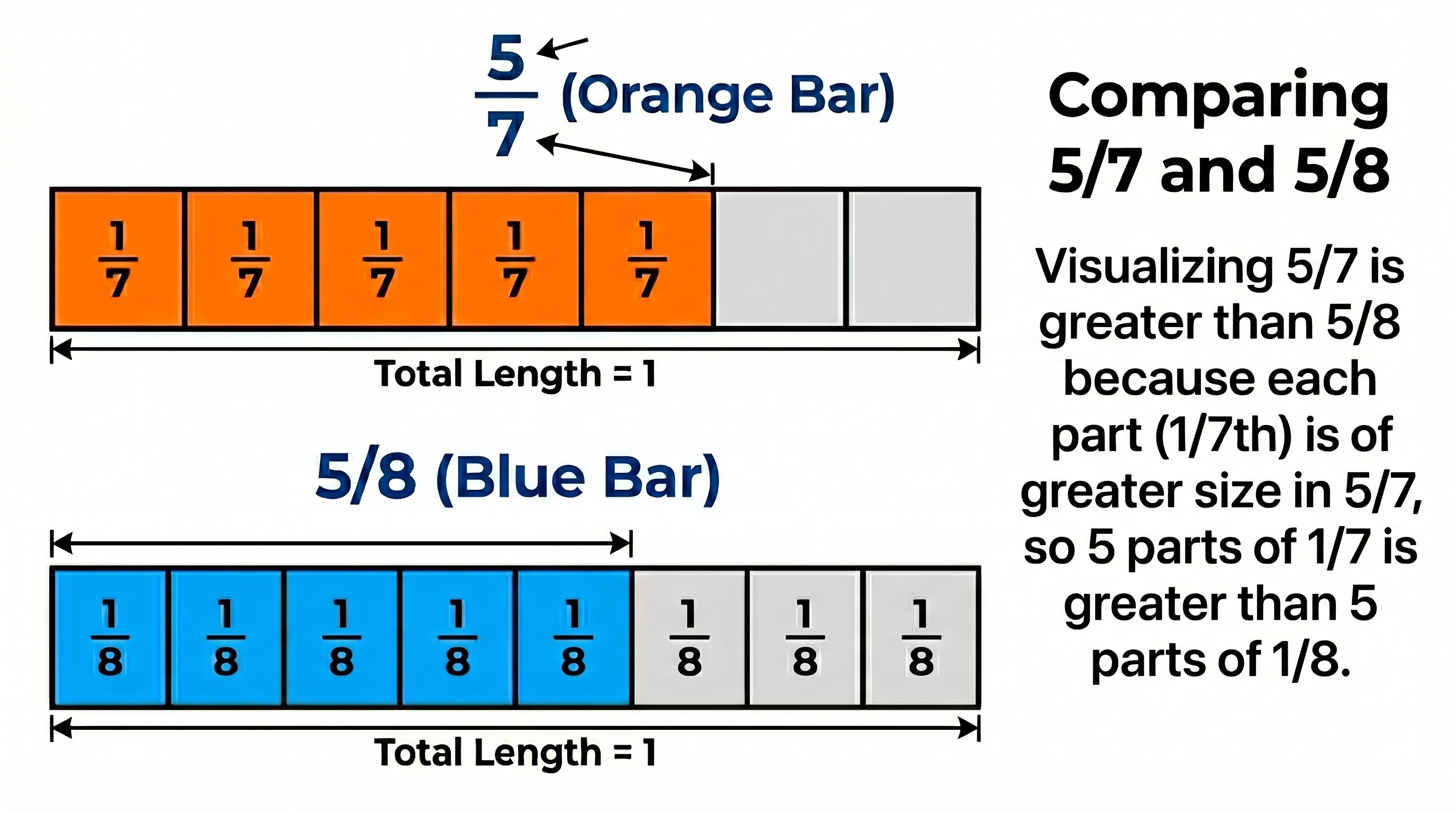
If two fractions have the same top number, the rule flips! The fraction with the smaller bottom number is actually the bigger fraction.
Key Points
- A smaller bottom number means the whole was cut into fewer pieces. This makes each piece large.
- A bigger bottom number means the whole was cut into many tiny slivers.
- So, sharing pizzas among friends () gives you more food than sharing pizzas among friends ().
Olympiad Fact
This is called an inverse proportion: the size of each part is inversely proportional to the total number of parts the whole is divided into.
Comparing Unlike Fractions
Using the LCM method.
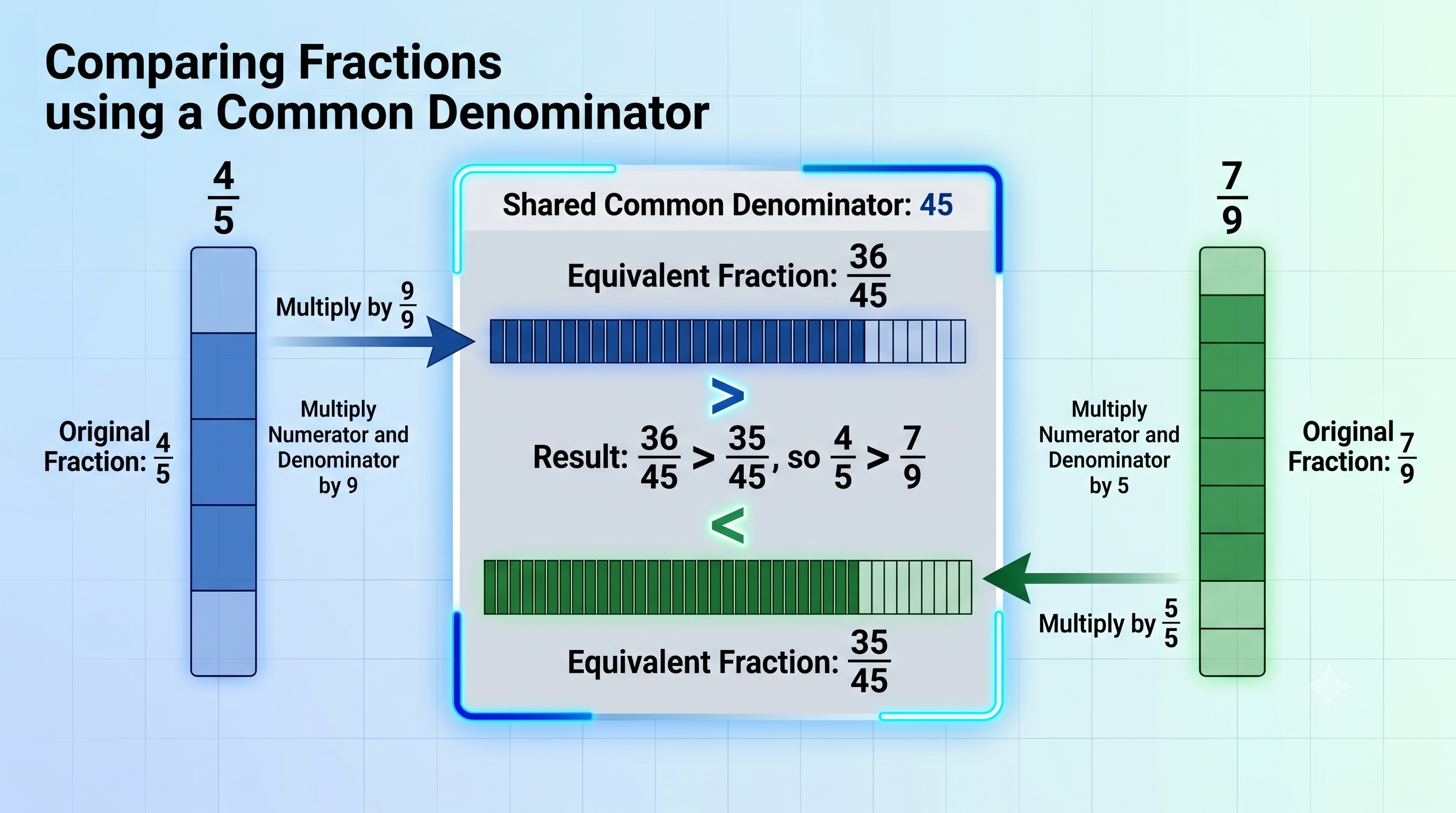
If both the top and bottom numbers are different, you cannot compare them by just looking. You have to make the bottom numbers match first.
Key Points
- First, find the Least Common Multiple (LCM) of the two bottom numbers.
- This LCM will become your new matching denominator for both fractions.
- Figure out what number you need to multiply the old bottom number by to reach this new LCM.
- Multiply both the top and bottom numbers of the fraction by that exact same amount.
- Once the bottom numbers match, simply compare the new top numbers! The bigger top number is the bigger fraction.
Olympiad Fact
The most rigorous way to compare fractions is to convert them to a common denominator using the LCM, which ensures all pieces are of an identical size.
Swipe to skip‹