
Types of Fractions
Proper Fractions
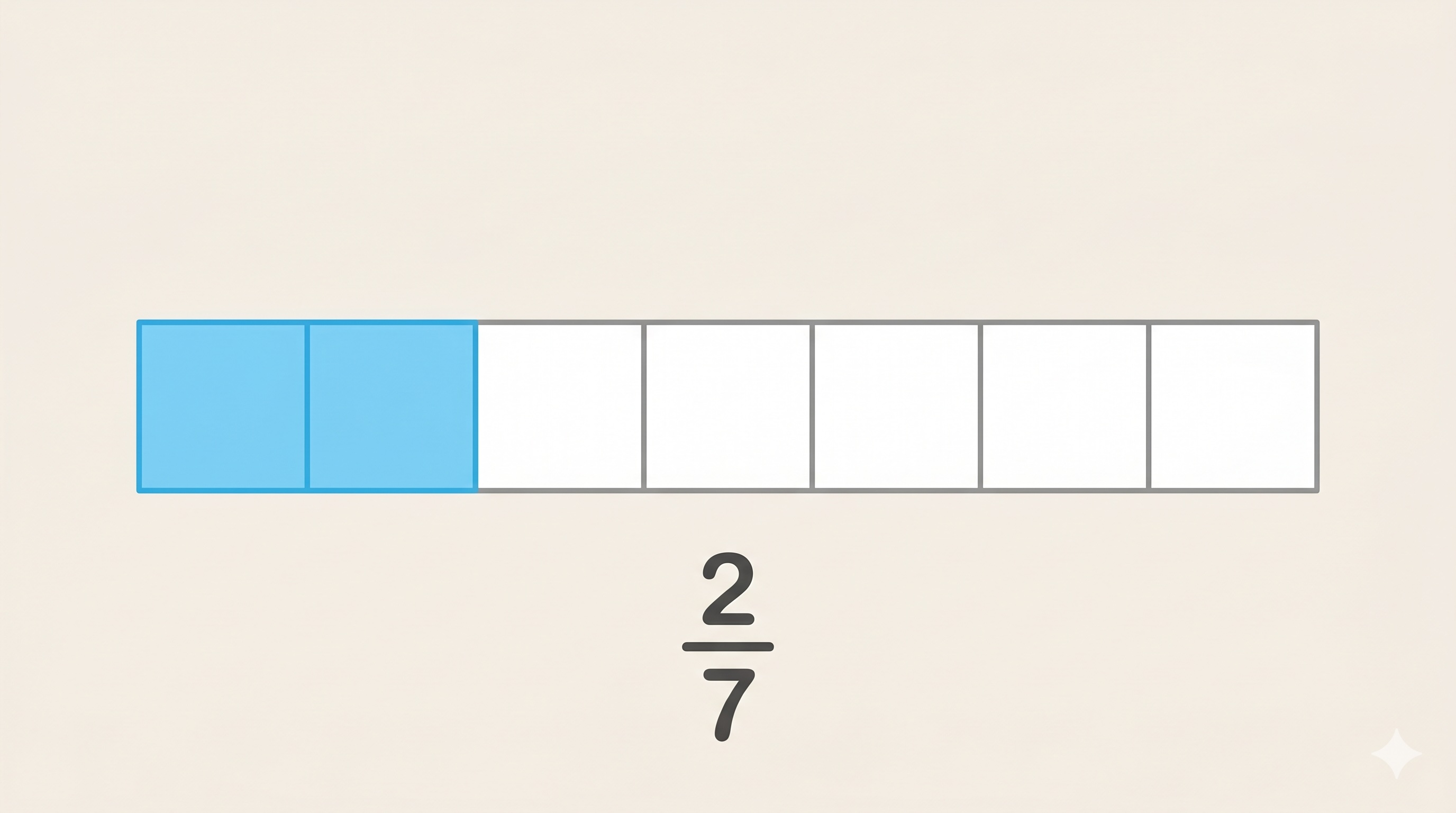
Less than the whole.
Key Points
- It always represents an amount that is less than one whole.
- If you look at a number line, proper fractions always sit between and .
- It means you haven't collected enough pieces to make a full object yet.
Olympiad Fact
Think of a proper fraction as 'top-light'. Since the denominator is larger, it acts as a sturdy base keeping the fraction safely between and .
Improper Fractions
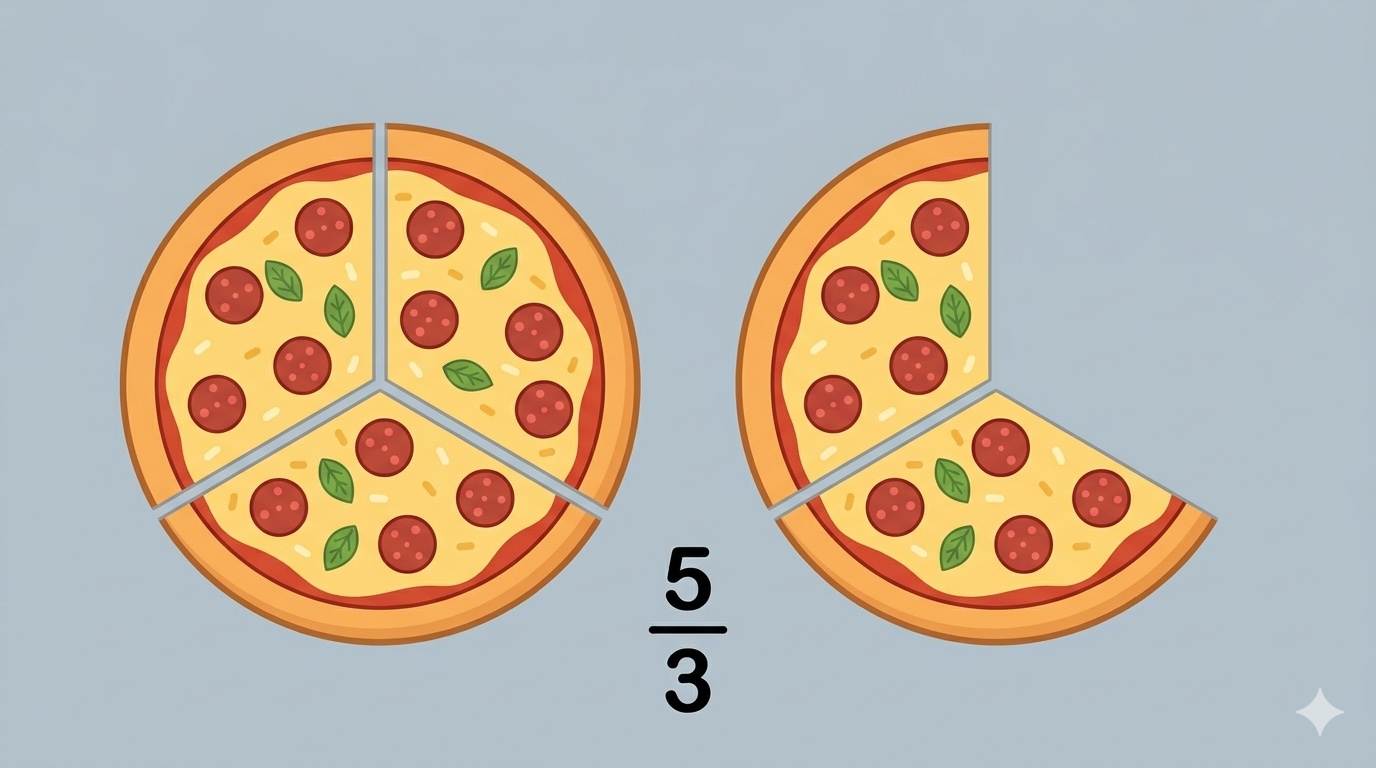
Equal to or greater than one.
Key Points
- Because the top number is bigger, you actually have more than one whole object.
- If the top and bottom numbers are the exact same (like ), it equals exactly whole.
- On a number line, these fractions sit exactly at or further to the right.
Olympiad Fact
Every whole number can be written as an improper fraction . This conversion makes it mathematically simple to add or multiply whole numbers with fractions.
Unit Fractions
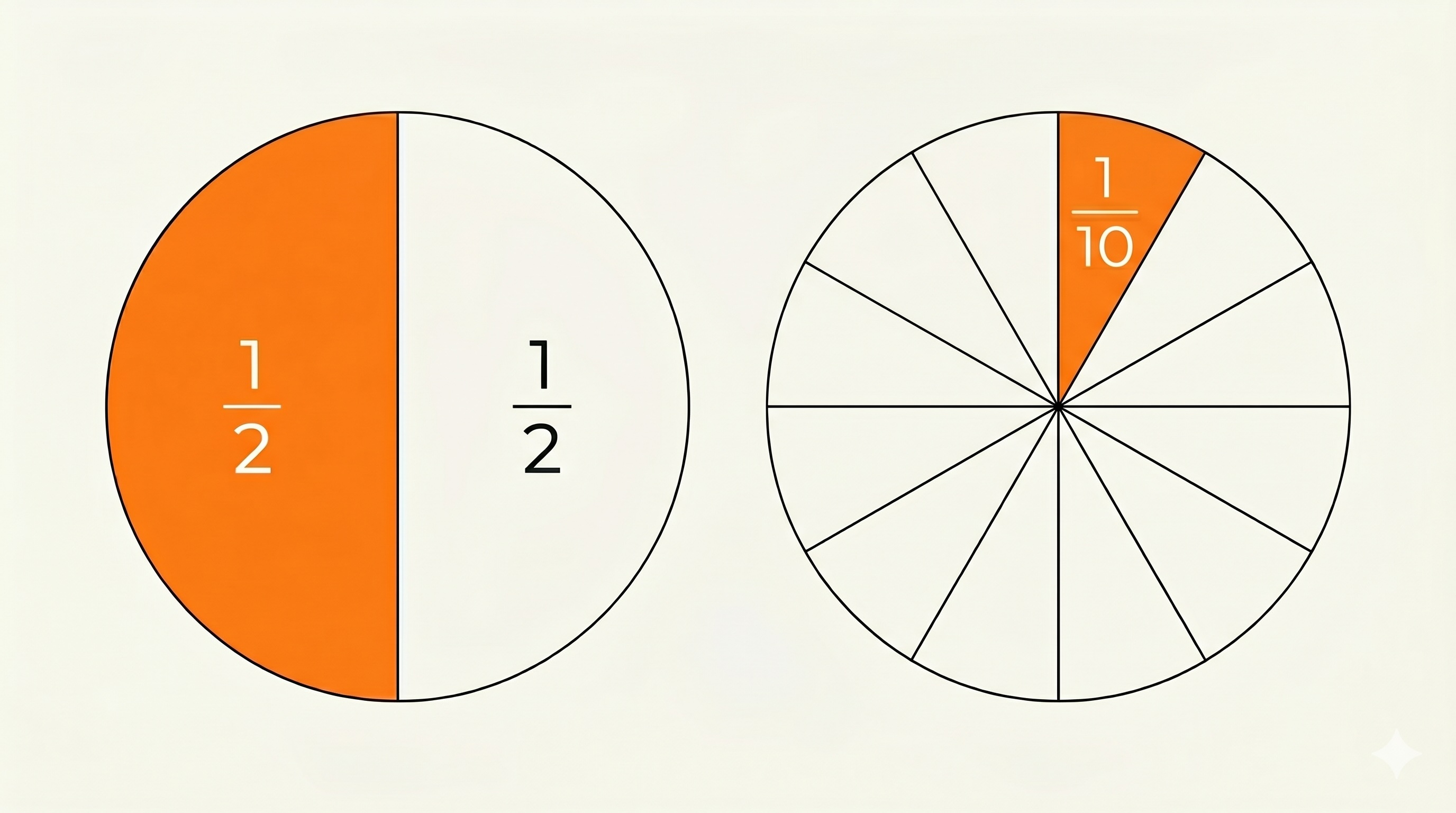
One single part.
Key Points
- The top number is always .
- The bigger the bottom number gets, the smaller the piece actually is. Sharing a pizza with people gives you a smaller slice than sharing with .
- Every other fraction is just a group of unit fractions added together! For instance, is just three s.
Olympiad Fact
For unit fractions, the relationship is inverse: as the denominator grows, the value of the fraction shrinks. is significantly larger than .
Like Fractions
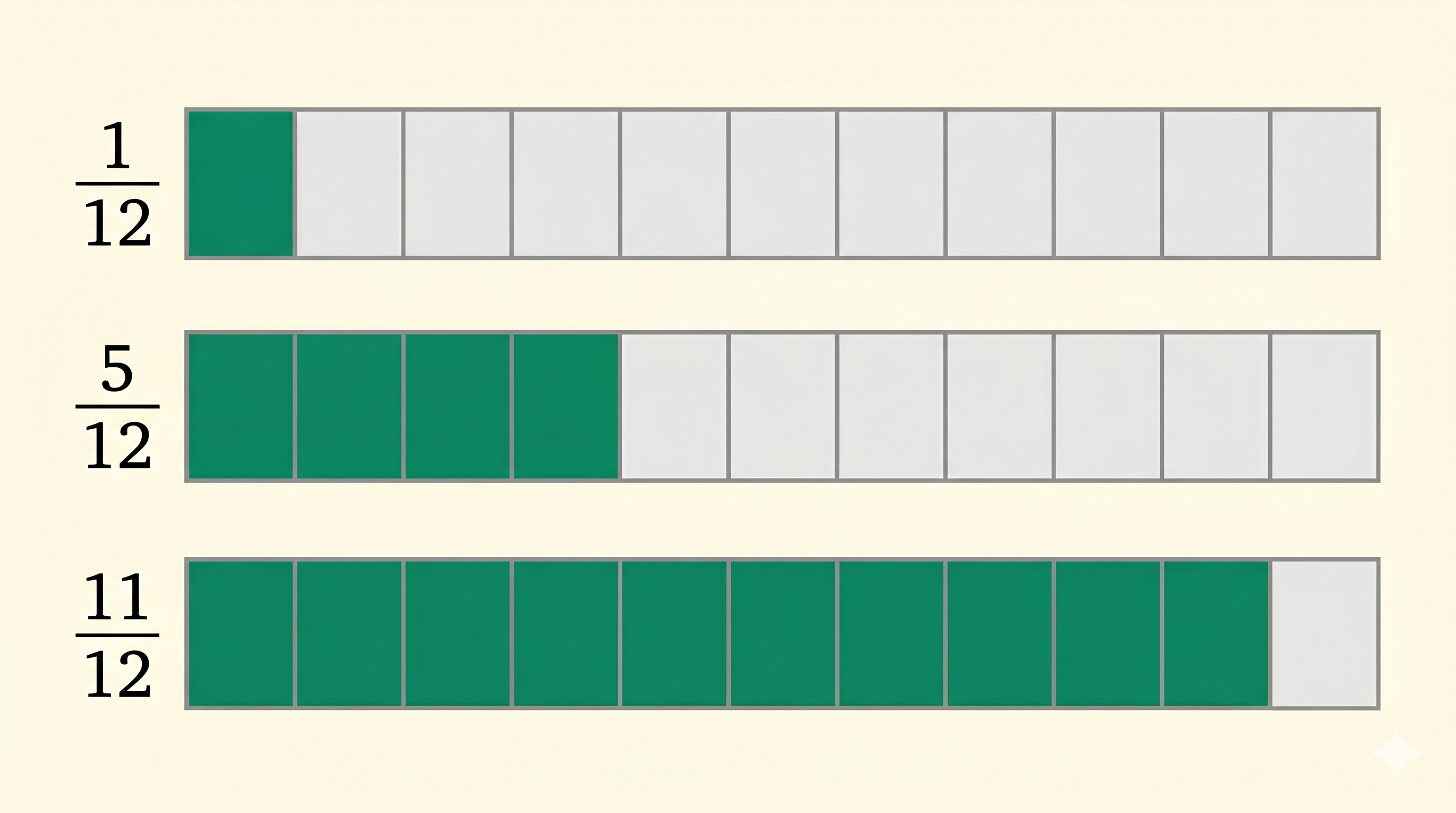
Shared denominators.
Key Points
- Examples are , , and . Notice how they all end in 'sevenths'.
- Because the piece sizes are identical, you can easily compare them just by looking at the top numbers.
- You can add or subtract them directly without doing any extra math steps.
Olympiad Fact
Think of the denominator as a 'unit label' (like centimeters or inches). You can only add or subtract quantities if they carry the same unit label!
Unlike Fractions
Different denominators.
Key Points
- You cannot add or subtract them directly because the pieces are different sizes, like comparing apples and oranges.
- To do any math with them, you first have to make their bottom numbers match perfectly.
- You do this by finding the Least Common Multiple (LCM) of the two bottom numbers.
- This LCM will act as your new shared bottom number so the piece sizes are finally identical.
Olympiad Fact
Always look for the LCM (Least Common Multiple) for your common denominator. While multiplying the denominators together works, it often creates needlessly large numbers.