
Night Sky Watching
Preparation for Stargazing
Timing and Location.
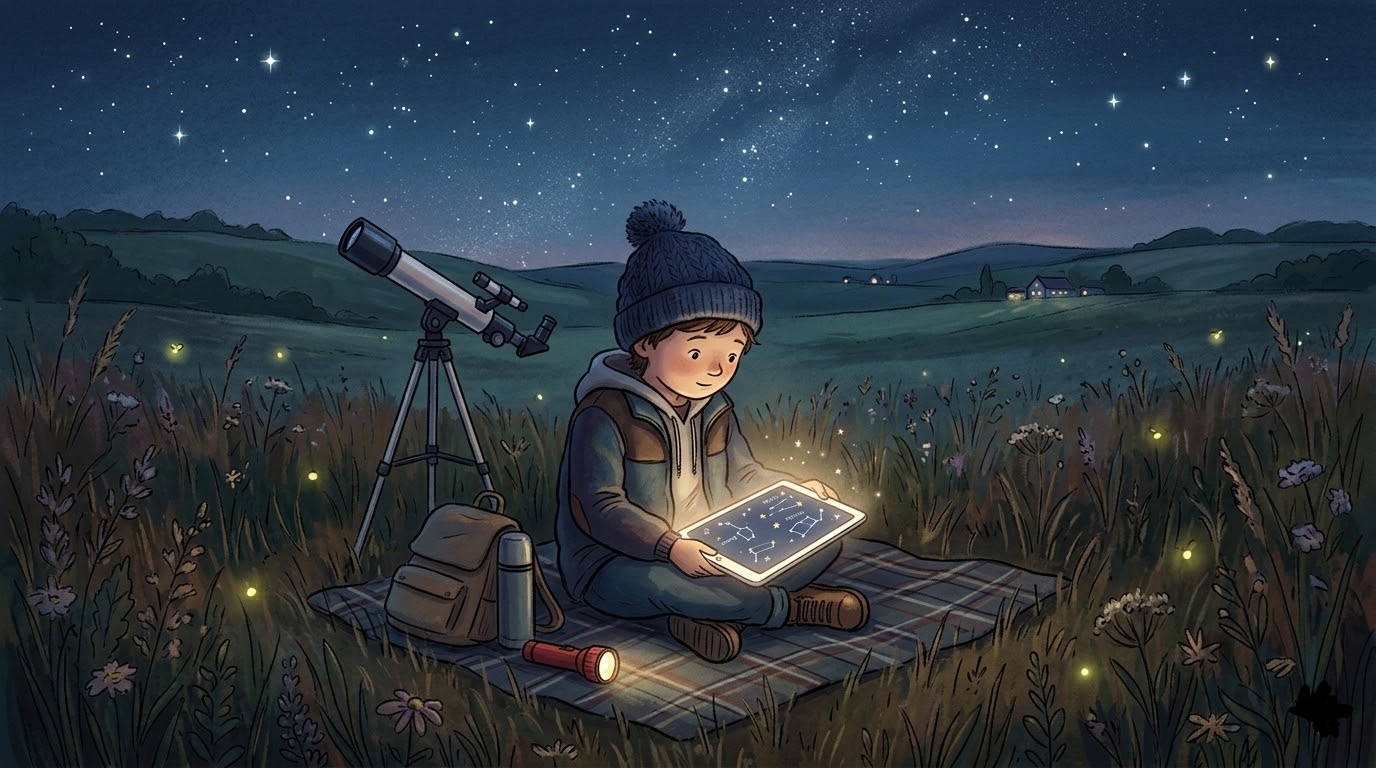
To watch the night sky effectively, choose a clear, cloudless, and moonless night in a dark open area far away from tall buildings, trees, and city lights.
Key Points
- Best on New Moon nights when moonlight doesn't hide faint stars.
- Use star charts or sky-map apps to identify constellations.
- Use a dim red flashlight so your night vision isn't ruined.
- Stars twinkle in the night sky, while planets shine steadily.
Olympiad Fact
It takes roughly 20 to 30 minutes for human eyes to fully adjust to the dark and see faint stars.
Light Pollution
Washing Out the Universe.
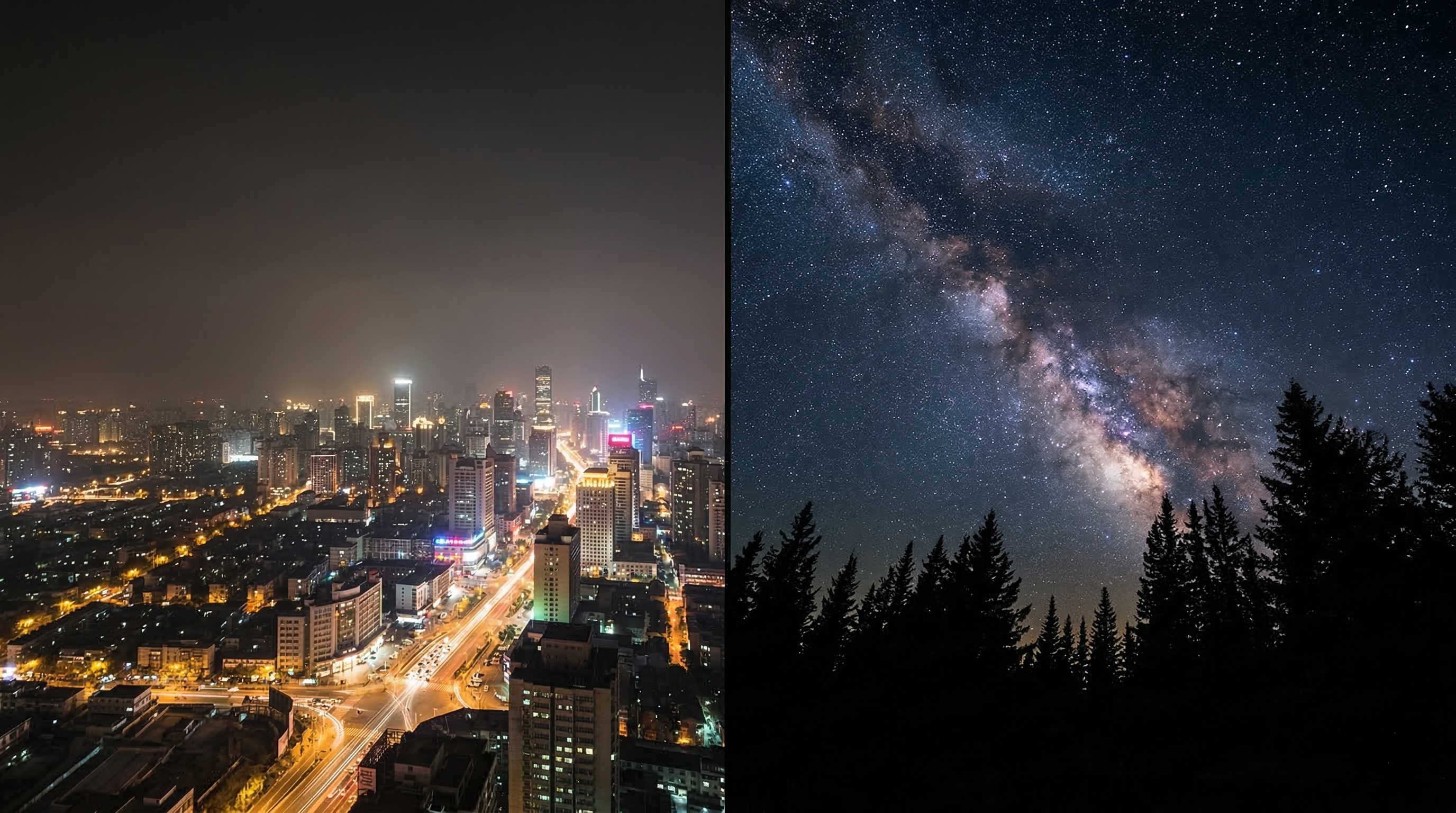
Light pollution is unwanted or excessive artificial outdoor light that brightens the night sky. It washes out starlight and hides faint stars, nebulae, and galaxies from our view.
Key Points
- Caused by unshielded streetlights, billboards, and floodlights.
- Creates a bright urban 'skyglow' that hides the Milky Way.
- Disrupts nocturnal animals, migrating birds, and human sleep.
- India's first Dark Sky Reserve is located in Hanle, Ladakh.
Olympiad Fact
Astronomers use the 9-level 'Bortle Scale' to measure the darkness and quality of the night sky.
Types of Pollution
Glare, Trespass, and Clutter.
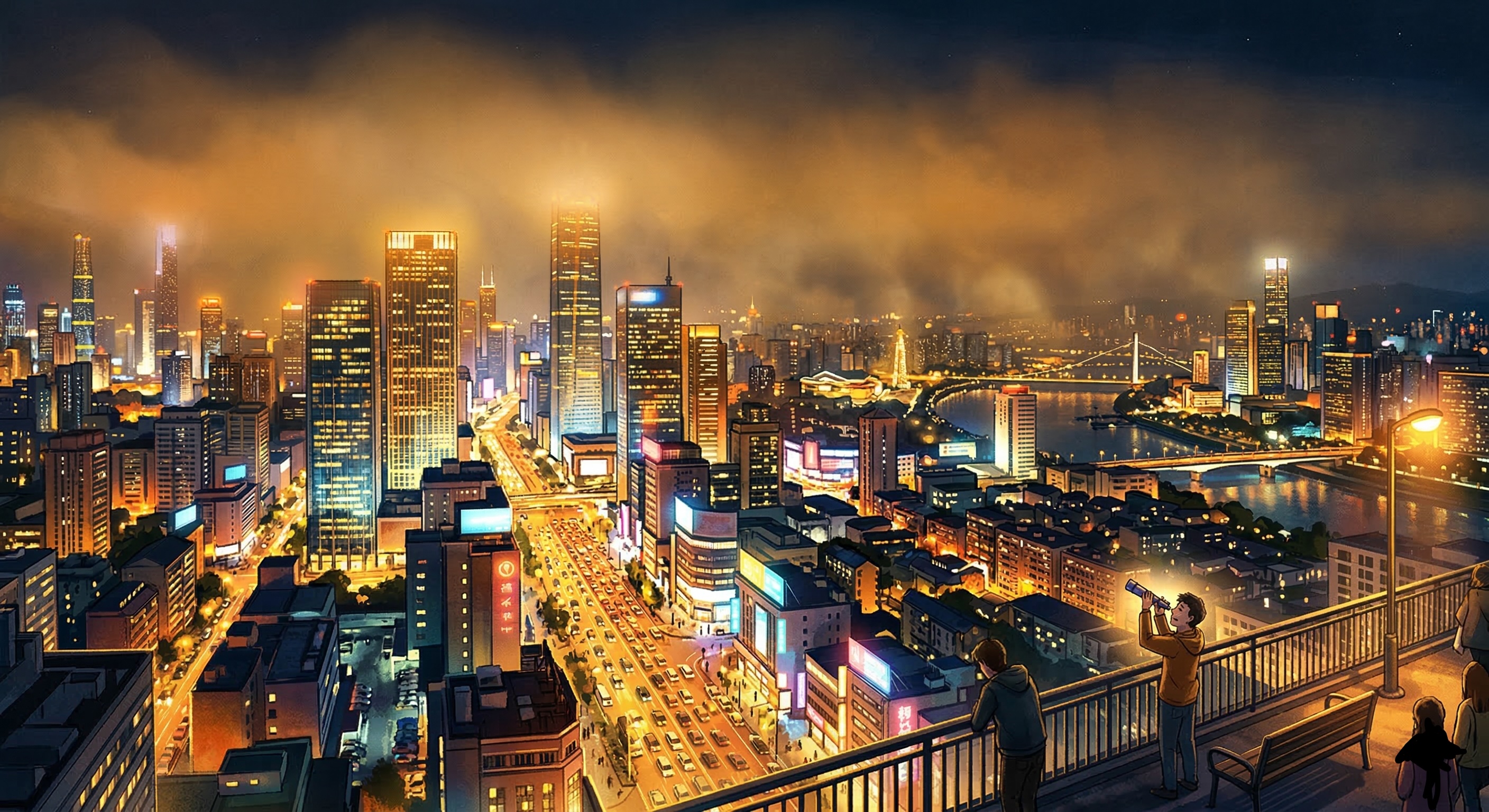
Light pollution takes four main forms: Glare, Light Trespass, Light Clutter, and Skyglow. Each form wastes electricity and blocks our view of the night sky.
Key Points
- Glare: Blinding brightness that hurts eyes and visibility.
- Light Trespass: Unwanted outdoor light entering windows.
- Light Clutter: Confusing, bright clusters of city lights.
- Skyglow: Bright haze over cities that blocks out starlight.
Olympiad Fact
Skyglow is caused by upward artificial light reflecting off dust and moisture particles suspended in the atmosphere.
Swipe to skip‹