
Shapes of Magnets
The Bar Magnet
Rectangular and reliable.
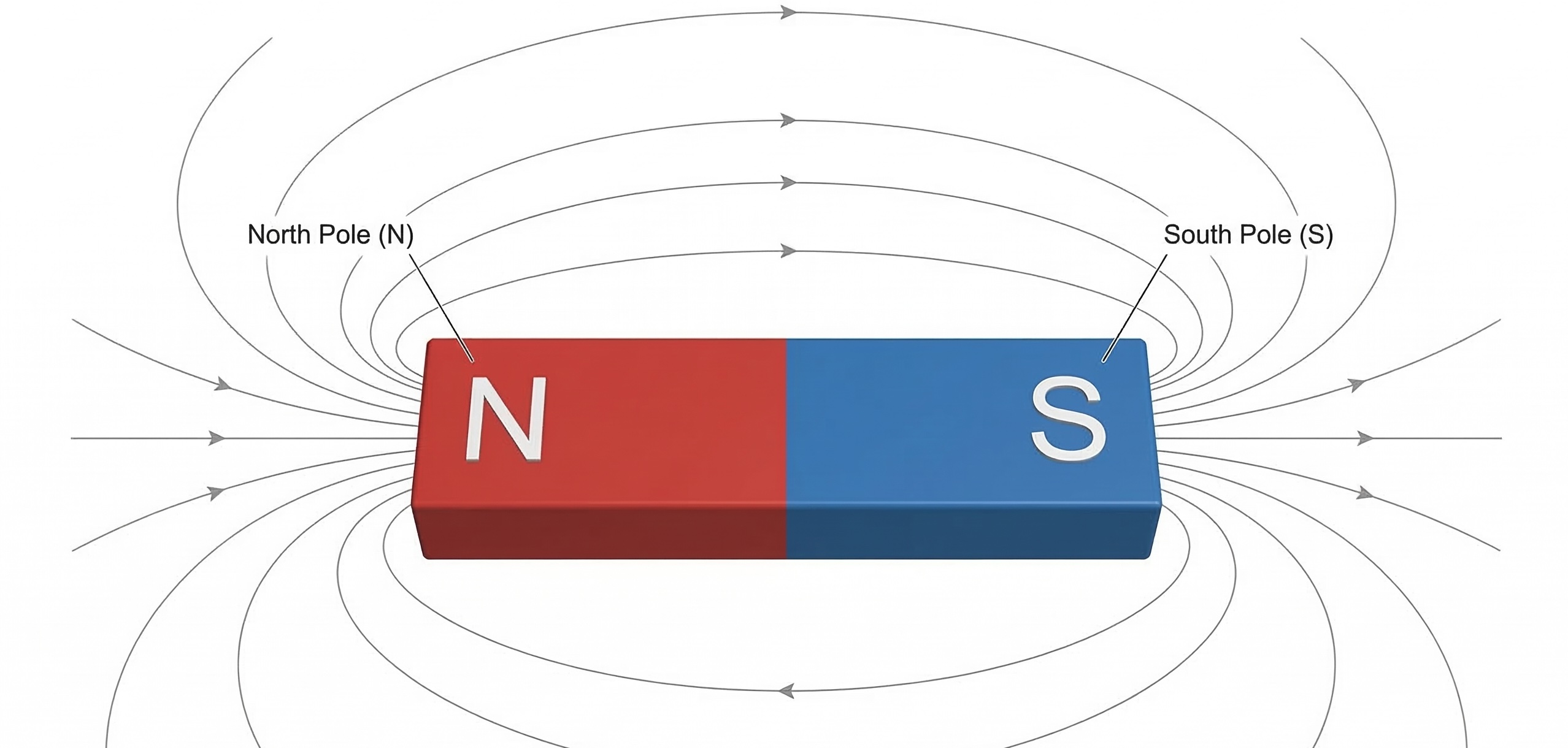
A bar magnet is a straight, rectangular block magnet with poles at opposite ends. It is the most common magnet used in school labs to study magnetism.
Key Points
- Has a straight, uniform rectangular shape.
- North and South poles sit at the two opposite flat ends.
- Often painted half red (North) and half blue (South) in labs.
- Used in classroom experiments to trace magnetic field lines.
Olympiad Fact
Outside a bar magnet, invisible magnetic field lines always travel in curved loops from the North pole to the South pole.
The Horseshoe Magnet
U-shaped for strength.
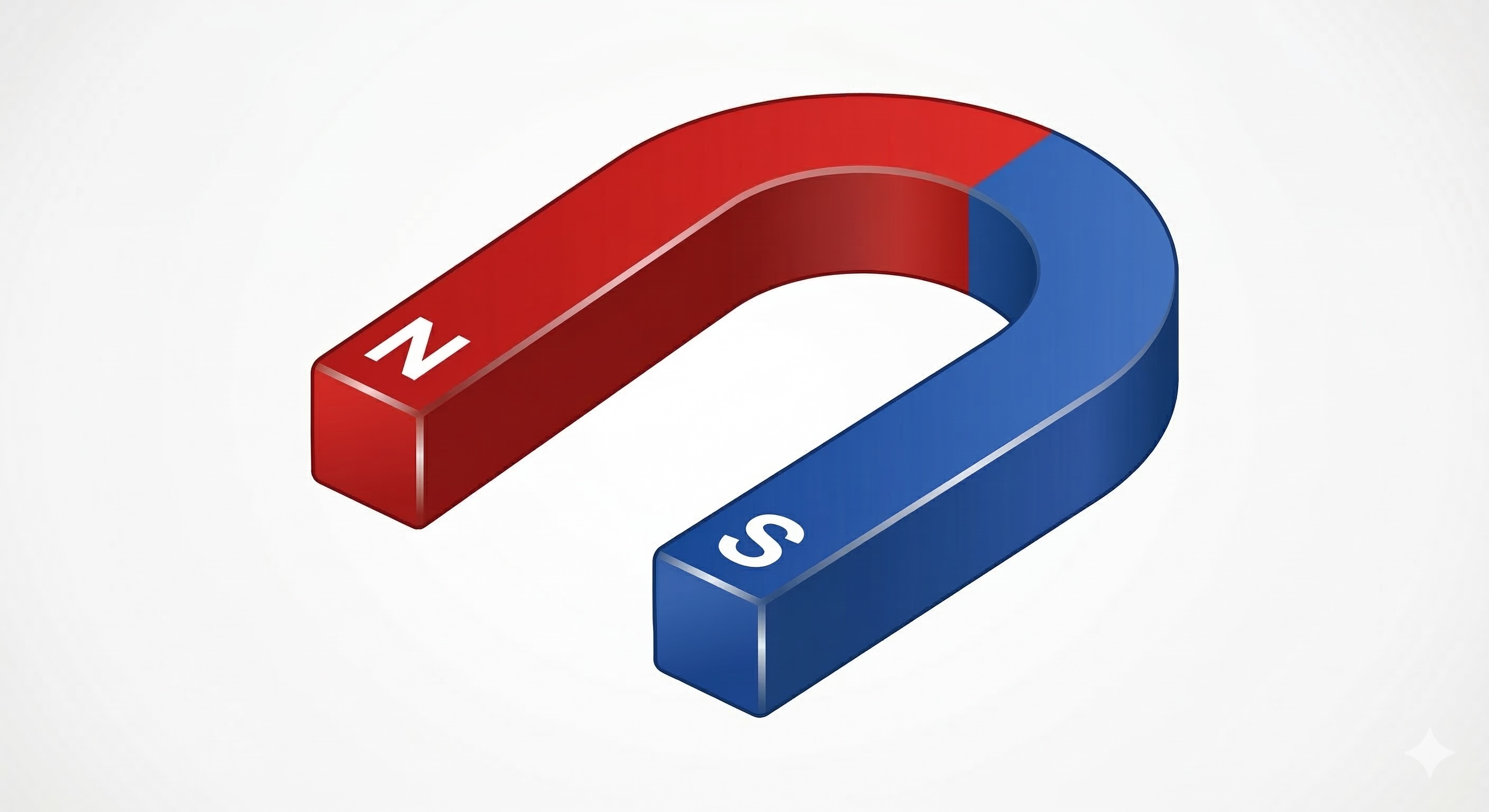
A horseshoe magnet is a bar magnet bent into a 'U' shape. Bringing the North and South poles close together combines their pull for extra lifting strength.
Key Points
- Bent into a U-shape resembling a horse's shoe.
- Both North and South poles point in the same direction.
- Concentrates magnetic force into the small gap between the poles.
- Lifts much heavier iron loads than a straight bar magnet.
Olympiad Fact
A horseshoe magnet is stronger at lifting than a bar magnet of the same size because both poles pull on the iron object at the same time!
Cylindrical and Ring Magnets
Round and robust.
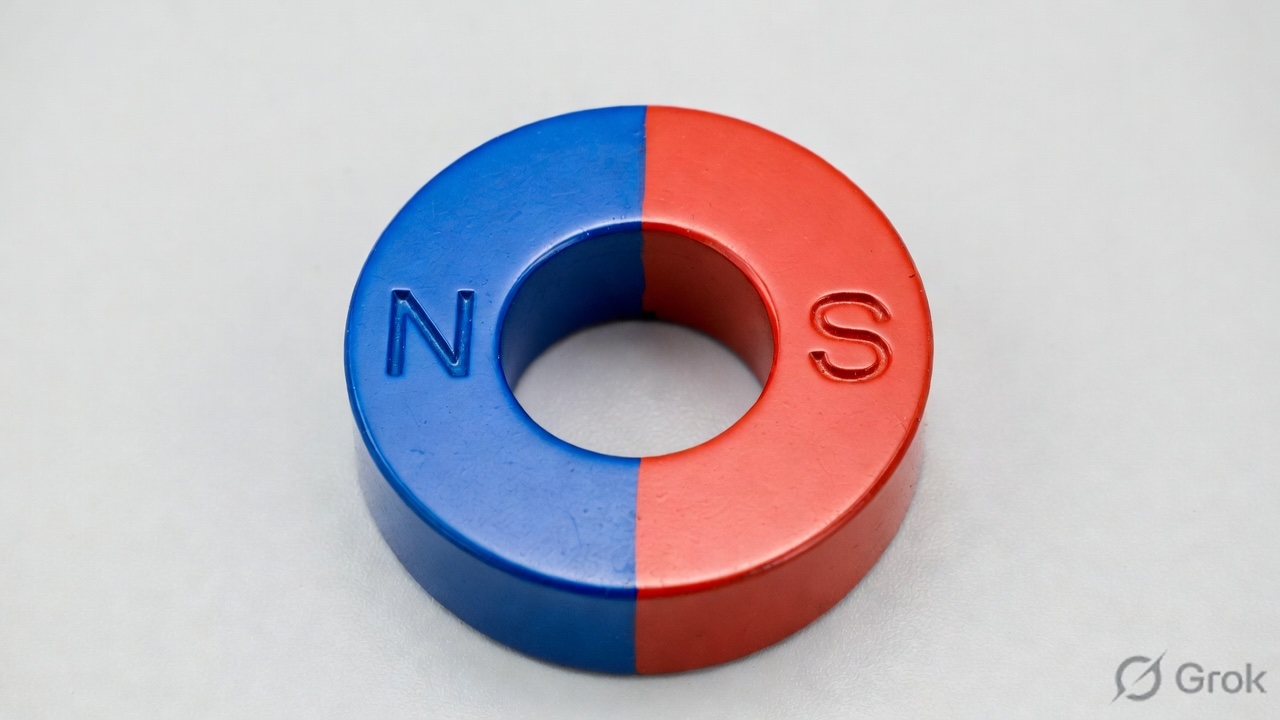
Magnets are also made as solid round rods (cylindrical) or flat circles with a central hole (ring). These shapes fit neatly inside speakers and electric motors.
Key Points
- Cylindrical magnet: A solid round rod with poles at its flat ends.
- Ring magnet: A flat disc with a hole in the middle like a washer.
- Poles of a ring magnet usually sit on its top and bottom flat faces.
- Widely used inside audio speakers, headphones, and motors.
Olympiad Fact
If you stack ring magnets on a wooden peg with like poles facing each other, the top rings float in mid-air due to magnetic repulsion!
Ball-Ended Magnets
Spheres on a stick.
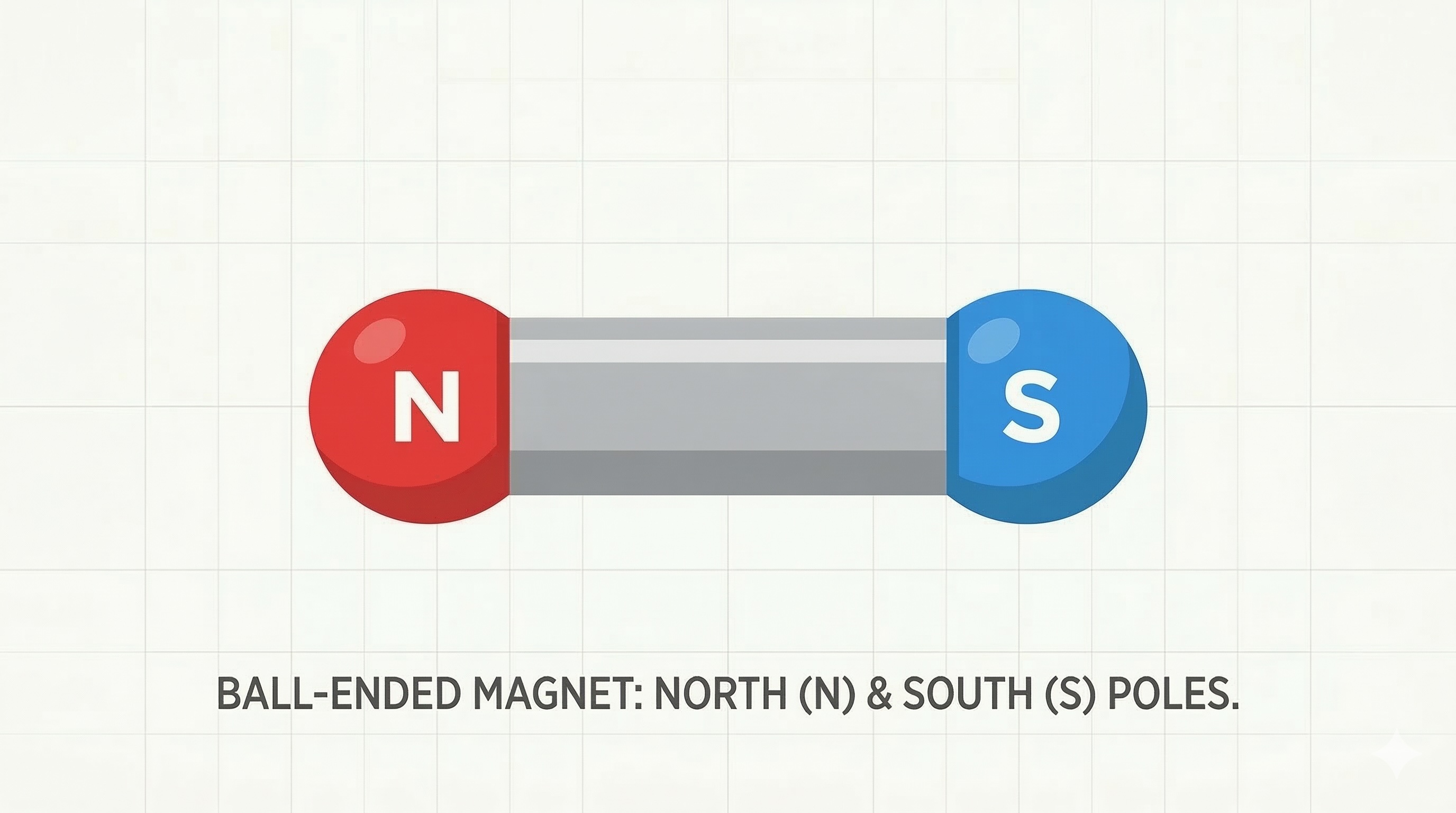
A ball-ended magnet consists of a thin metal rod with magnetic spheres at each end, shaped like a dumbbell. It focuses magnetic pull into the two round ends.
Key Points
- Shaped like a tiny dumbbell with a ball at each end.
- One sphere acts as the North pole and the other as the South pole.
- Concentrates magnetic attraction tightly into the two round tips.
- Used in school science labs to show where poles are located.
Olympiad Fact
Ball-ended magnets are specially designed for physics demonstrations because their spherical tips act almost like exact 'point' poles.
Swipe to skip‹