
Milky Way
Our Home Galaxy
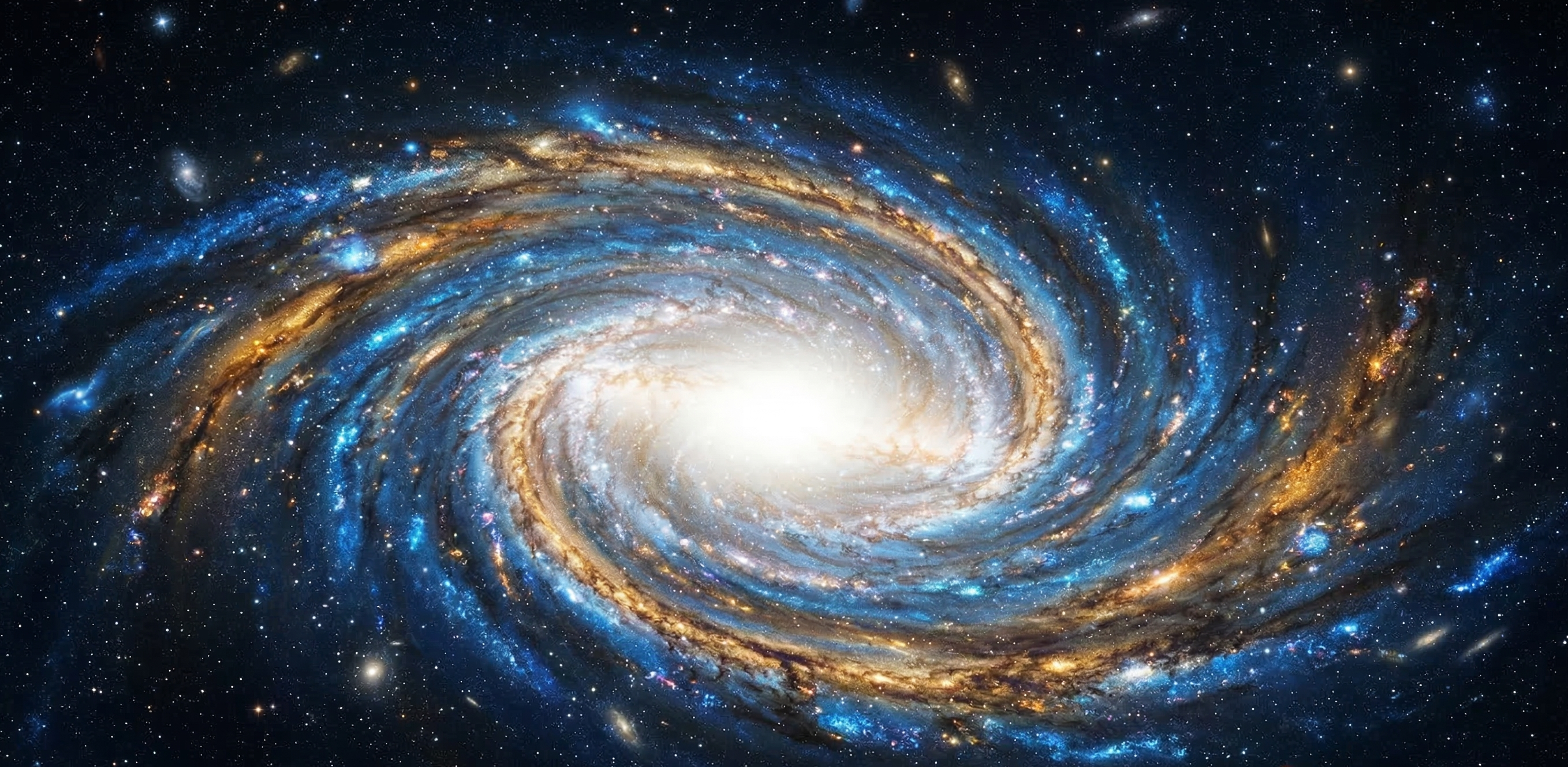
The Akasha Ganga.
The Milky Way is a massive barred spiral galaxy containing billions of stars, gas, and dust held together by gravity. On a dark night, it appears as a faint milky band across the sky.
Key Points
- Indian name: Akasha Ganga (meaning the celestial river of light).
- Spans 100,000 light-years across with 100 to 400 billion stars.
- Our Solar System lies inside the Orion spiral arm.
- Andromeda is the closest large spiral galaxy to the Milky Way.
Olympiad Fact
It takes our Solar System about 230 million years (one 'Galactic Year') to complete a single orbit around the center of the Milky Way!
The Galactic Center
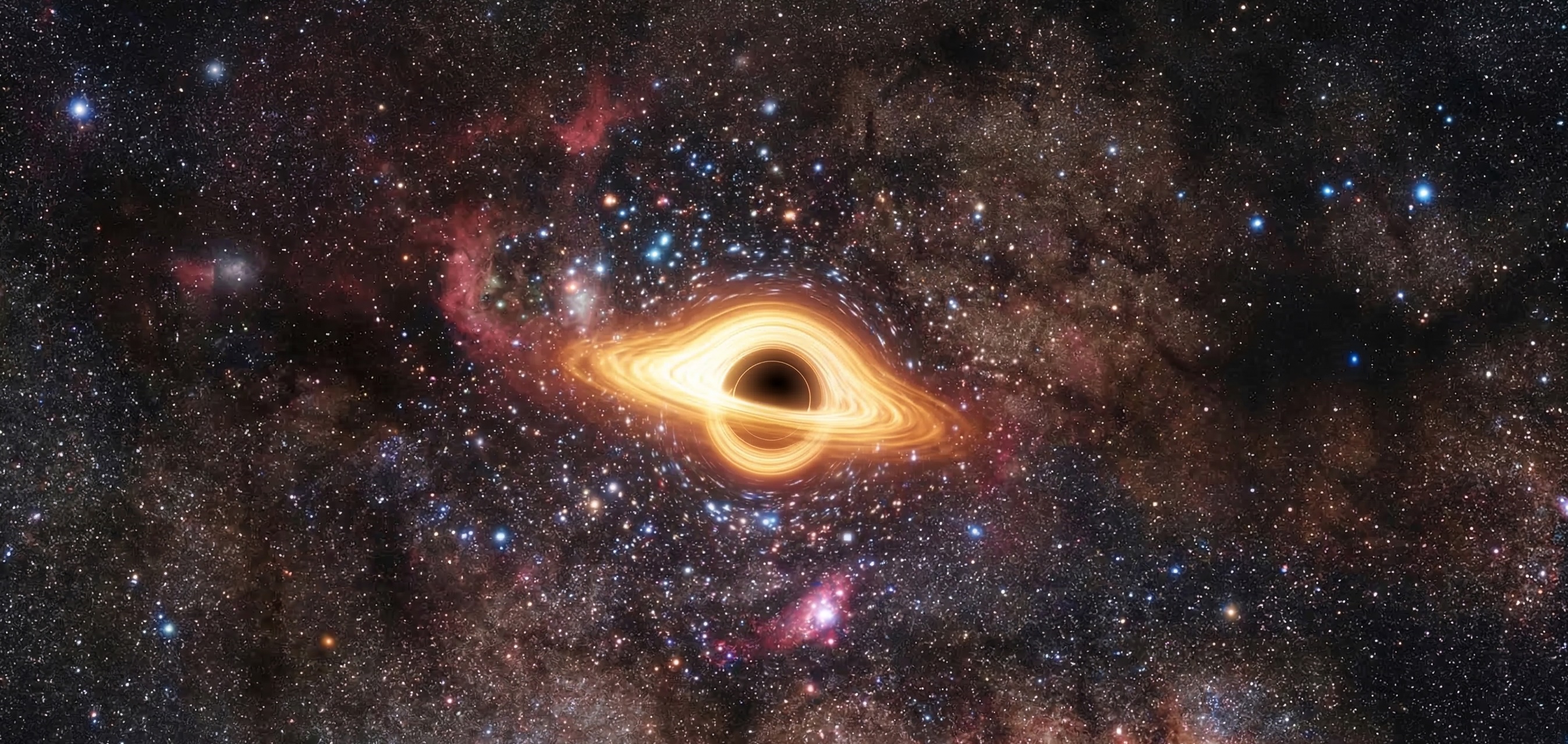
The Heart of the Spiral.
At the very center of the Milky Way lies a glowing bulge of stars surrounding a supermassive black hole. The entire galaxy, including our Solar System, orbits around this central point.
Key Points
- Houses a supermassive black hole named Sagittarius A*.
- The most crowded region of stars in our entire galaxy.
- Located 26,000 light-years away toward Sagittarius.
- Thick space dust hides the center from regular telescopes.
Olympiad Fact
The supermassive black hole Sagittarius A* has a mass about 4 million times that of our Sun.
Dark Matter Halo
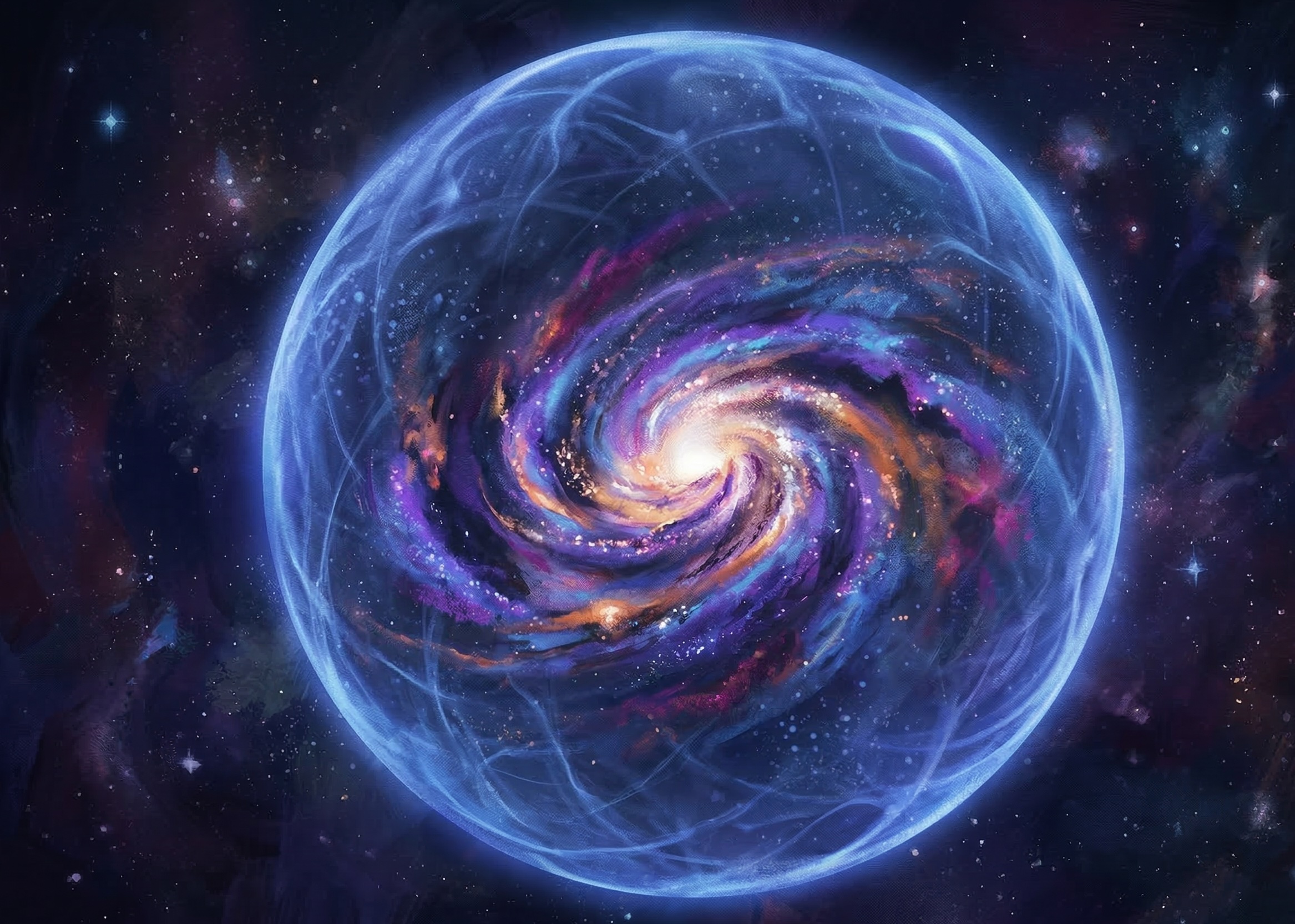
The Invisible Glue.
The Milky Way is surrounded by a vast, invisible sphere of 'dark matter'. It makes up nearly 90% of the galaxy's mass and provides the extra gravity needed to hold fast-moving stars together.
Key Points
- Invisible to telescopes because it emits no light or heat.
- Acts as gravitational glue holding spinning stars together.
- Forms a giant sphere extending far beyond the spiral arms.
- Detected only by its gravitational pull on visible stars.
Olympiad Fact
Dark matter is called 'dark' because it does not interact with electromagnetic radiation (light) at all.
Swipe to skip‹