
Constellations
Recognizable Patterns
Connect-the-dots in the Sky.
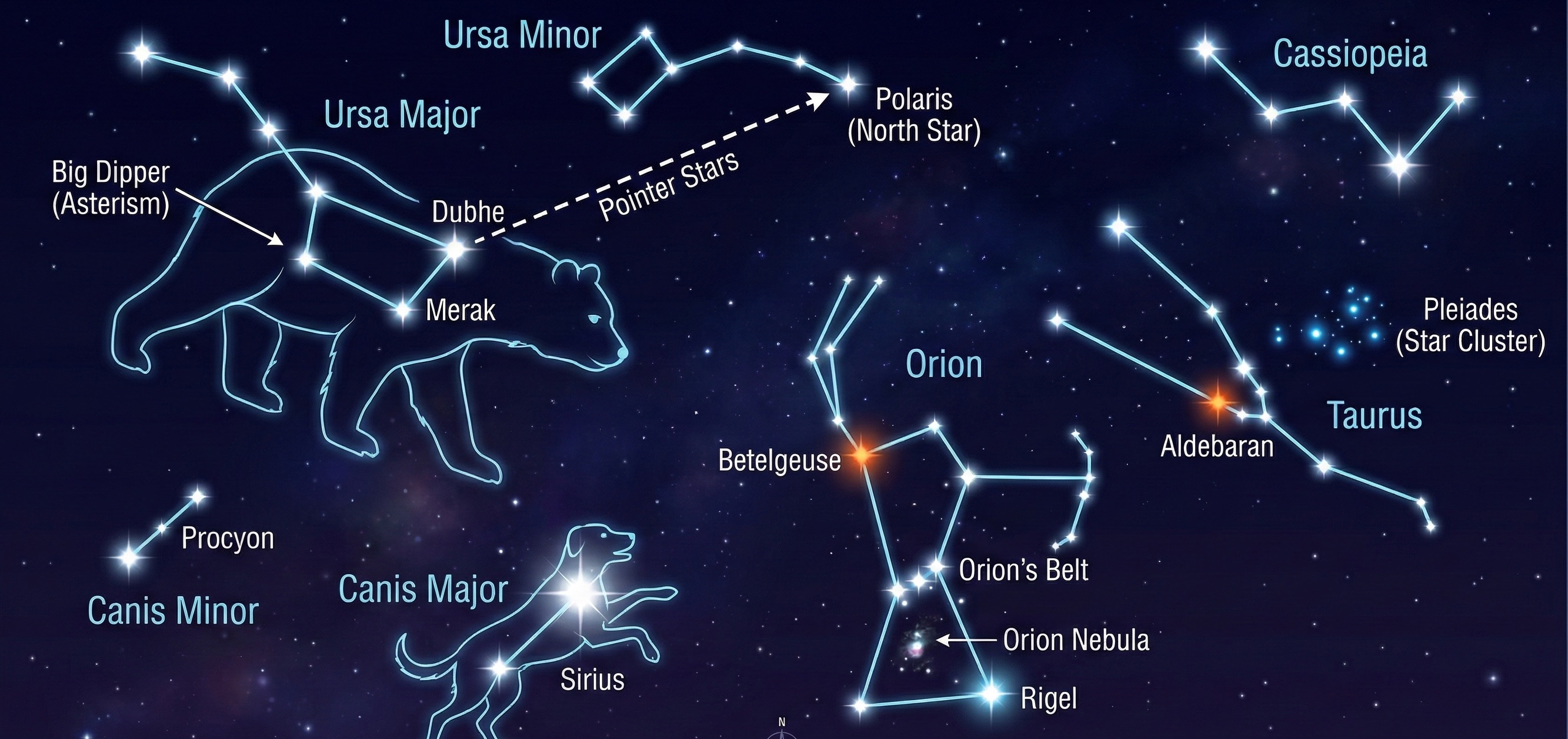
Key Points
- The IAU officially recognizes 88 constellations in the sky.
- Helped ancient sailors and travelers navigate at night.
- Stars in a pattern lie at very different distances from Earth.
- Different constellations appear in different seasons of the year.
Olympiad Fact
An asterism is a smaller, recognizable star pattern within a larger constellation, like the Big Dipper inside Ursa Major.
Ursa Major: The Great Bear
The Saptarishi Ladle.
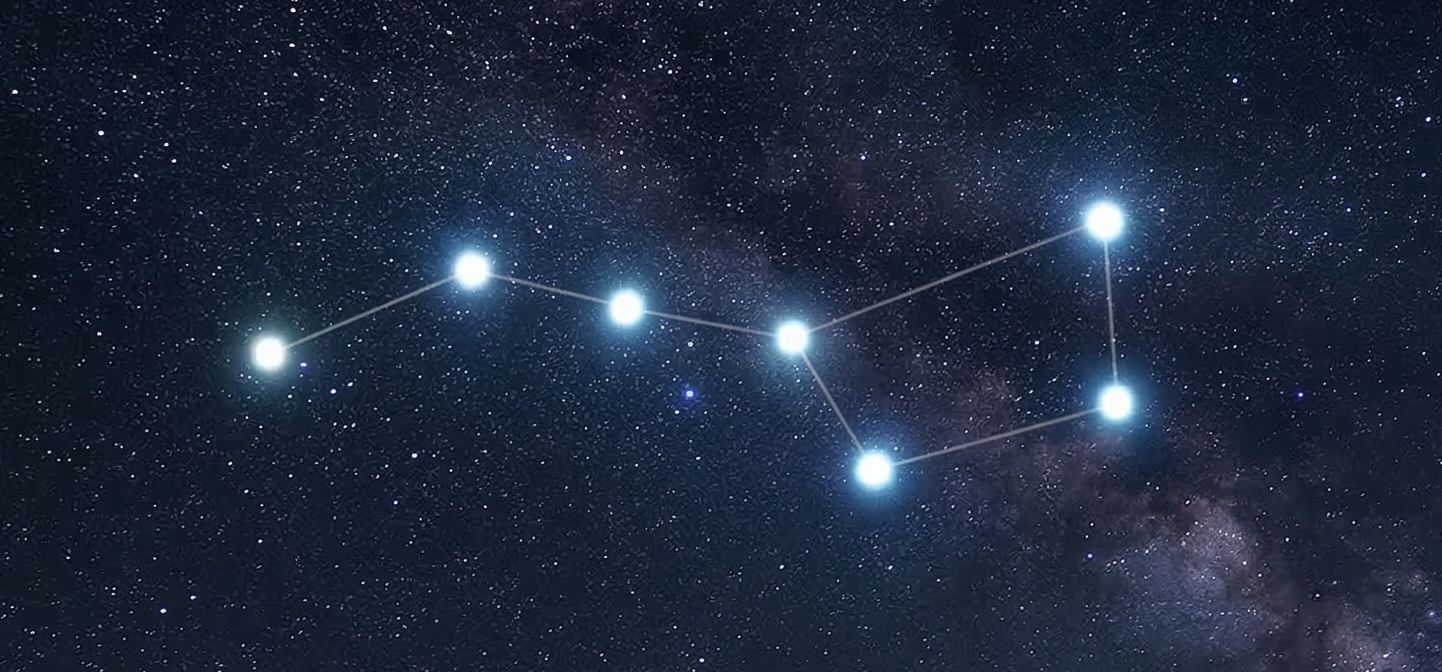
Key Points
- Indian name: Saptarishi (representing the seven sacred sages).
- Seven bright stars form a bowl (4) and a long handle (3).
- Best observed during summer nights in the Northern Hemisphere.
- Two front bowl stars act as 'Pointers' leading to the Pole Star.
Olympiad Fact
In Indian astronomy, the seven stars of Saptarishi are named after seven revered Vedic sages: Kratu, Pulaha, Pulastya, Atri, Angiras, Vashistha, and Marichi.
Polaris: The North Star
The Fixed Guide.
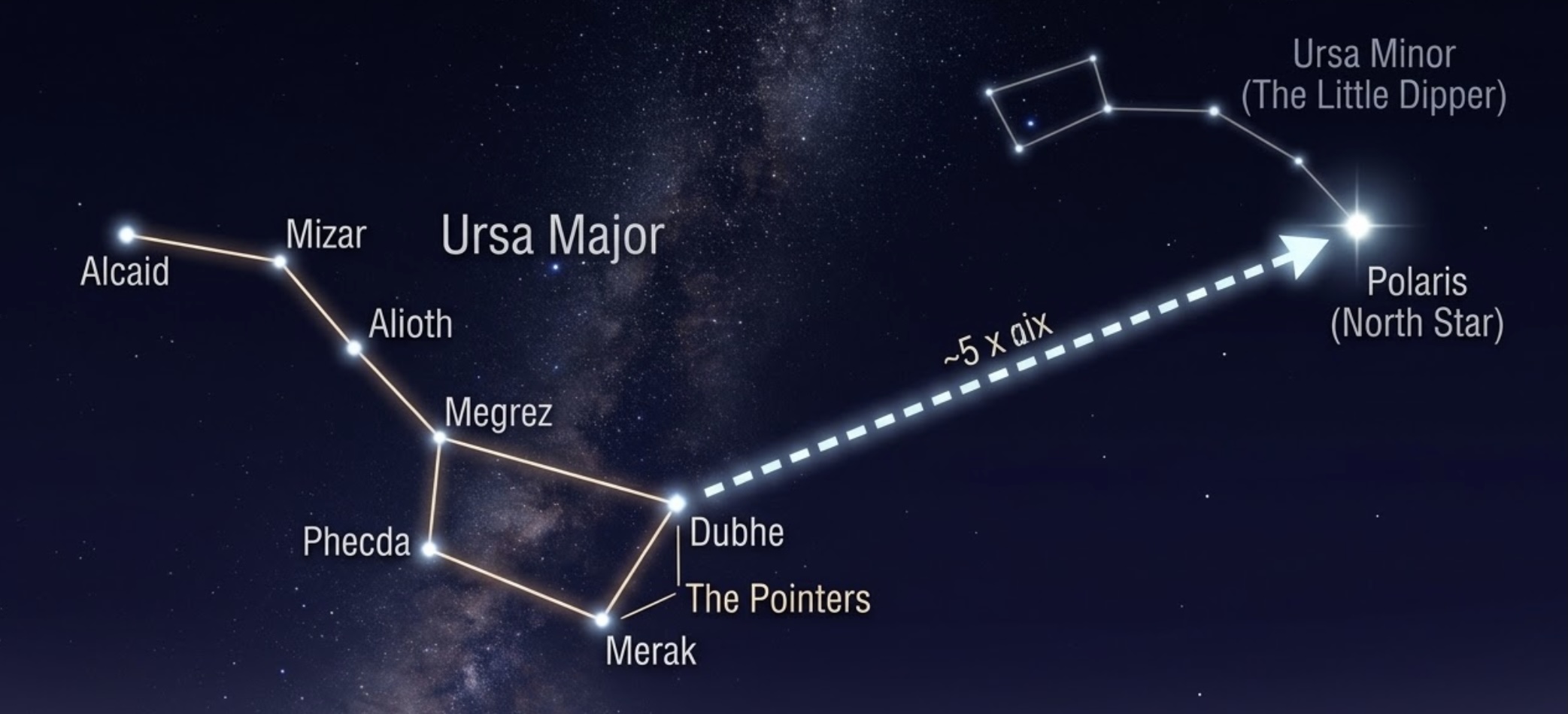
Key Points
- Indian name: Dhruva Tara (meaning the fixed or immovable star).
- Always marks the true North direction in the Northern Hemisphere.
- Located at the very tip of the handle of Ursa Minor.
- Not visible from the Southern Hemisphere due to Earth's curve.
Olympiad Fact
Because Earth's axis wobbles slowly over thousands of years, Polaris hasn't always been the North Star!
Ursa Minor: The Little Bear
The Little Dipper.
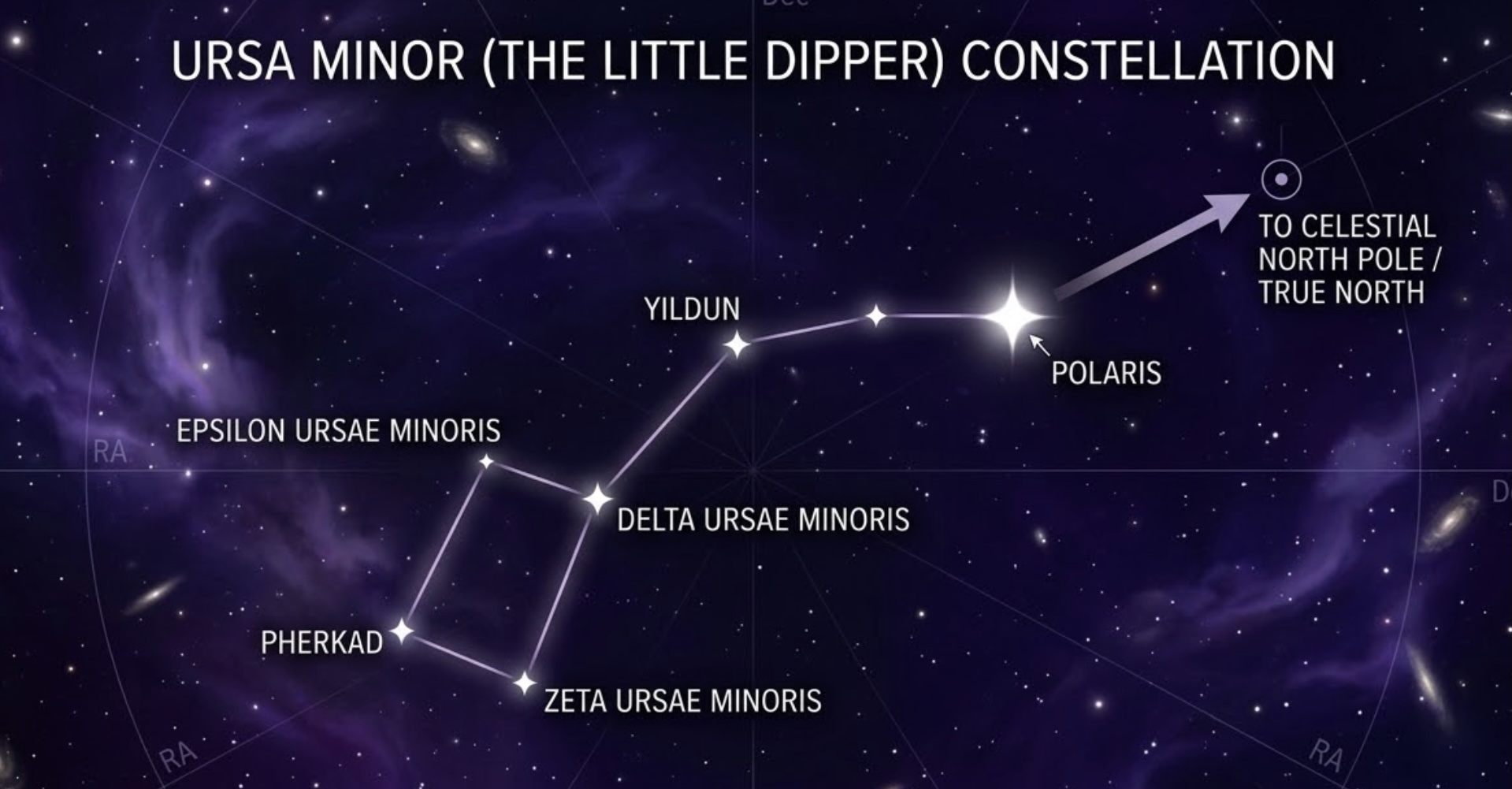
Key Points
- Indian name: Laghu Saptarishi (also called the Little Dipper).
- Seven main stars form the shape of a small ladle or spoon.
- Its handle bends the opposite way to the Big Dipper's handle.
- Its stars are much fainter than Ursa Major's stars.
Olympiad Fact
Ancient sailors called Polaris in Ursa Minor the 'Lodestar', meaning the star that leads the way.
Orion the Hunter
The Winter Giant.
Key Points
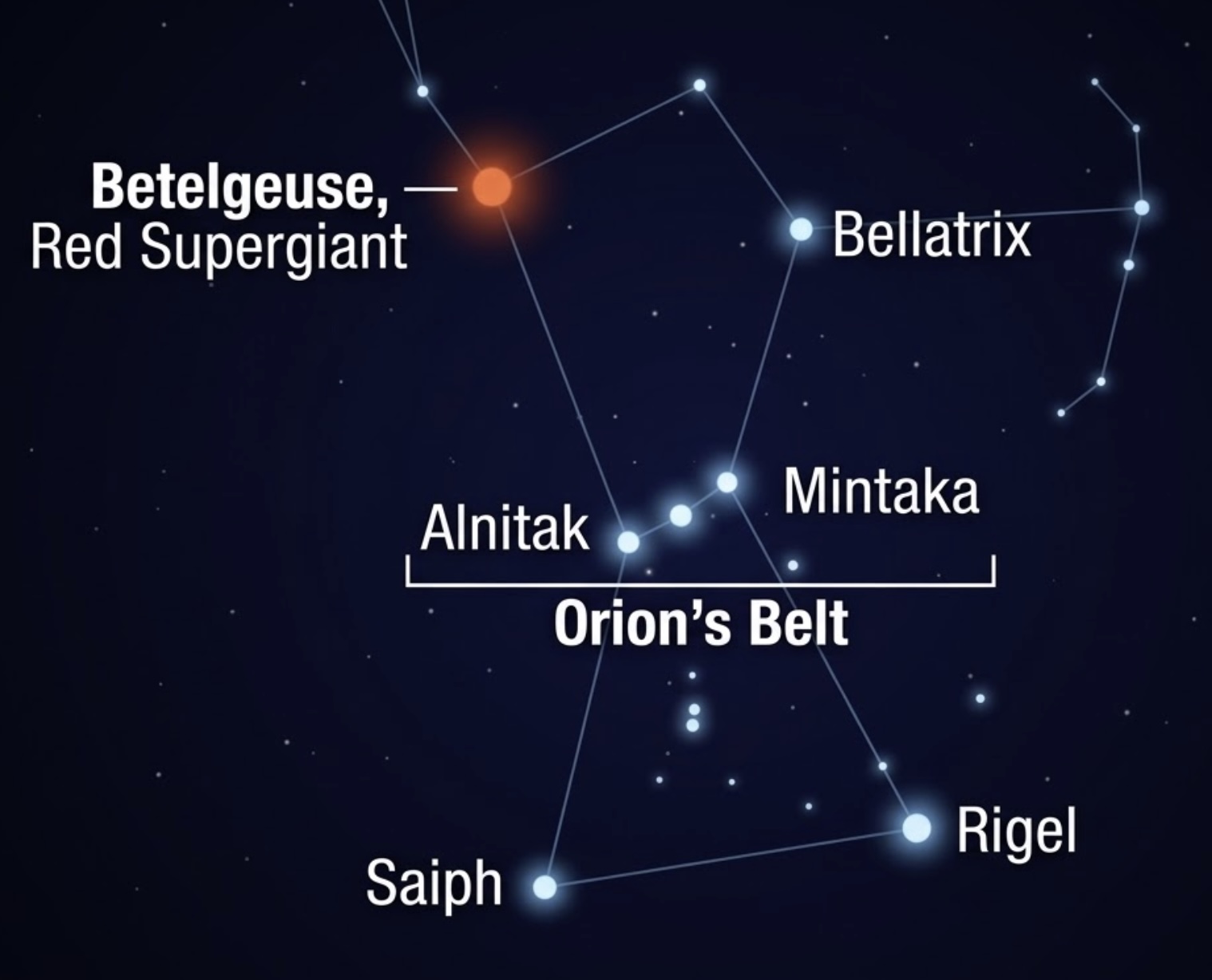
- Indian name: Mriga (representing a celestial deer).
- Seven or eight bright stars form a clear hourglass shape.
- Betelgeuse (Ardra) is a reddish giant star at the shoulder.
- Rigel is a hot, blue-white giant star at the hunter's foot.
Olympiad Fact
Extending a straight line through the three belt stars toward the east leads directly to Sirius, the brightest star in the night sky.
Taurus the Bull
Eye of the Bull.
Key Points
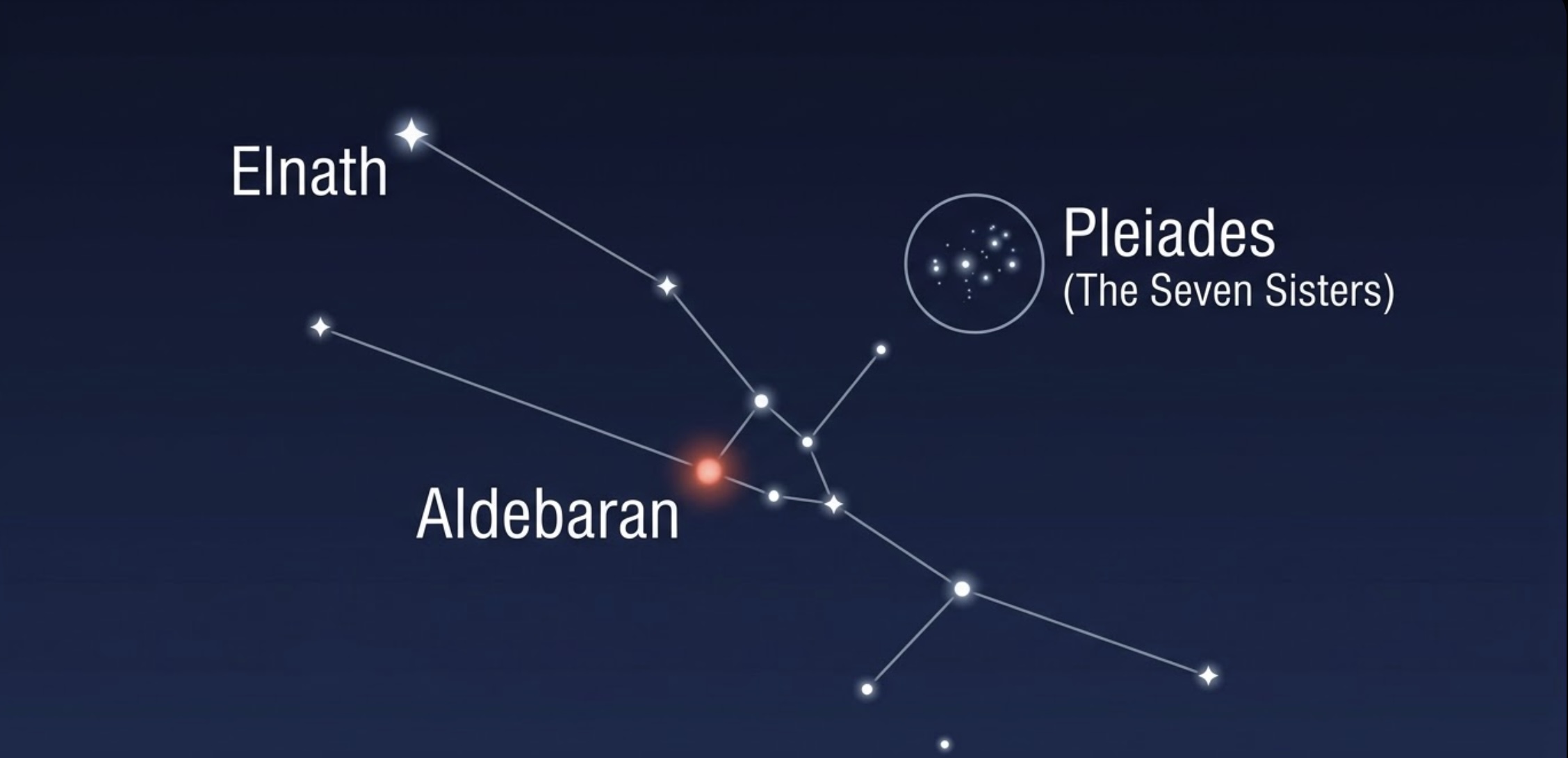
- Indian name: Vrishabha (meaning the Bull).
- Aldebaran (Rohini) is an orange-red star forming the bull's eye.
- Houses the Pleiades (Krittika), a cluster of seven bright stars.
- Found by following the line of Orion's Belt upward and right.
Olympiad Fact
Taurus is the only constellation crossed simultaneously by the galactic equator, the celestial equator, and the ecliptic.
Sirius: The Dog Star
Brightest of All.
Key Points
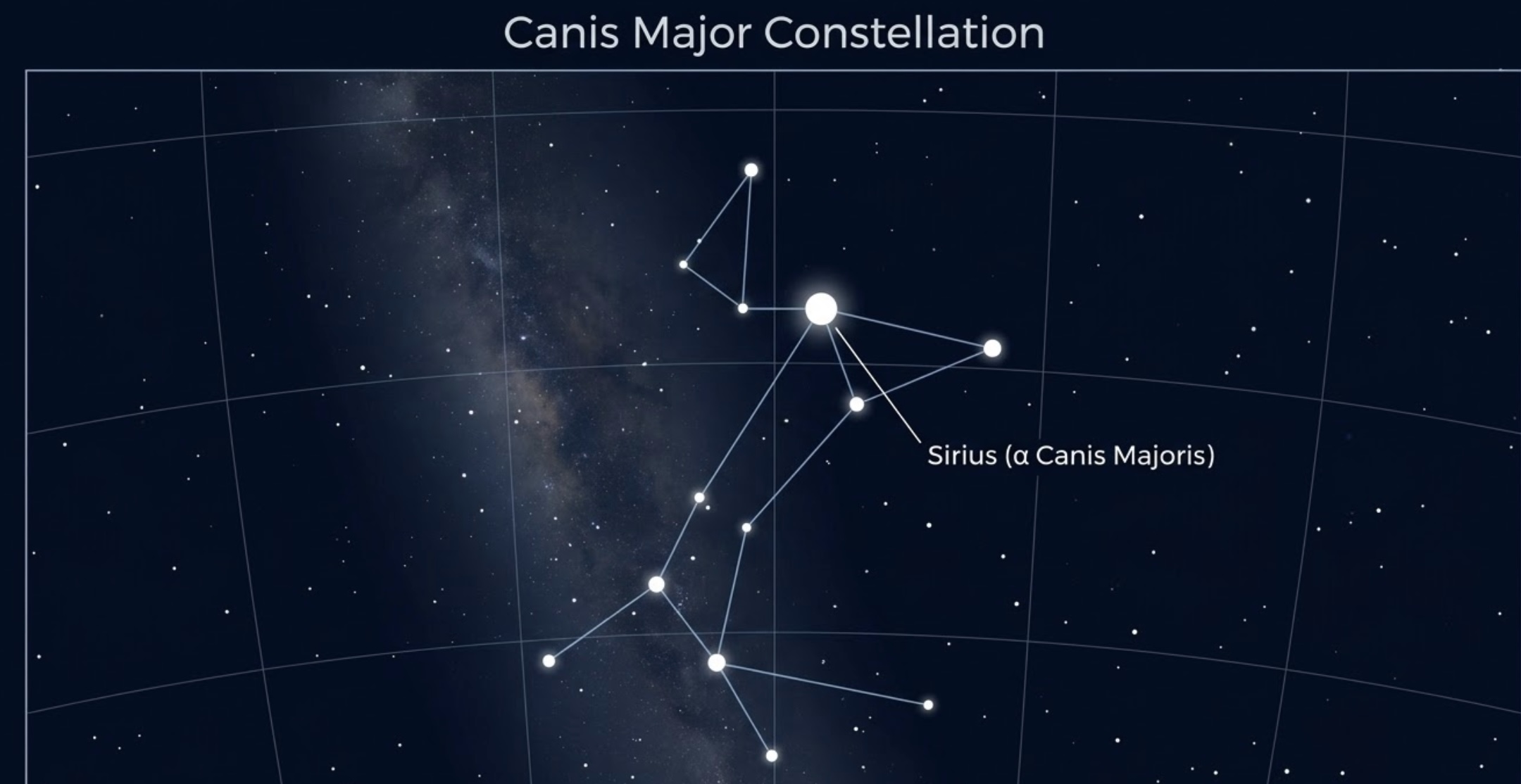
- Indian name: Lubdhaka (meaning the Hunter).
- Shines with a dazzling blue-white glow in the winter sky.
- Easy to spot by following Orion's Belt downward and left.
- Looks very bright because it is only 8.6 light-years away.
Olympiad Fact
Sirius is almost twice as bright as Canopus, the second-brightest star in the night sky.
Cassiopeia the Queen
The Cosmic 'W'.
Key Points
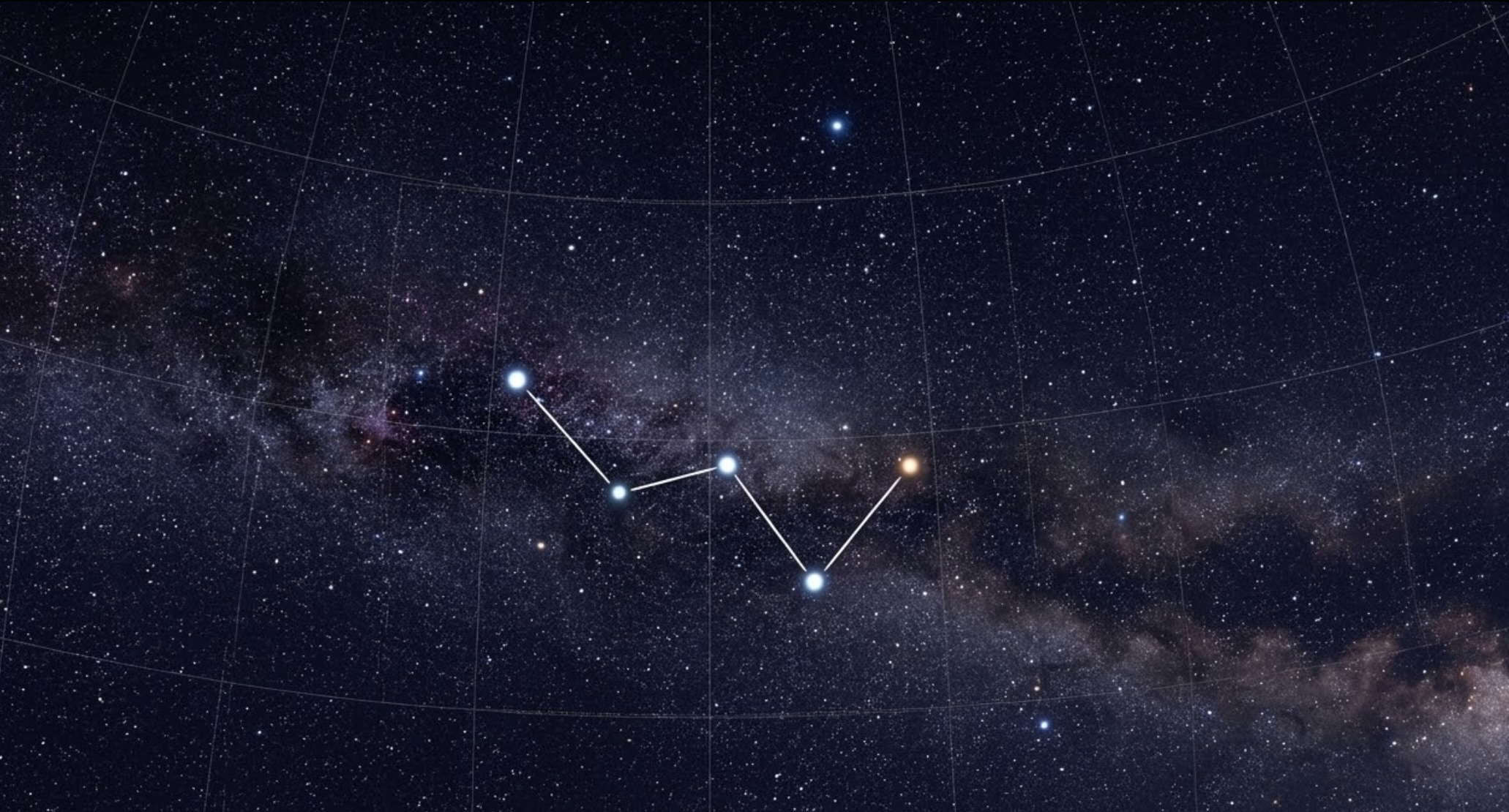
- Indian name: Sharmishtha.
- Best observed during autumn and winter evenings in the North.
- Sits on the opposite side of Polaris from the Big Dipper.
- Helps navigators find the Pole Star when Ursa Major sits low.
Olympiad Fact
Cassiopeia is a circumpolar constellation, meaning it circles the Pole Star and never sets below the horizon in mid-northern latitudes.