
Magnetic and Non-Magnetic Materials
Magnetic Materials
Feeling the attraction.
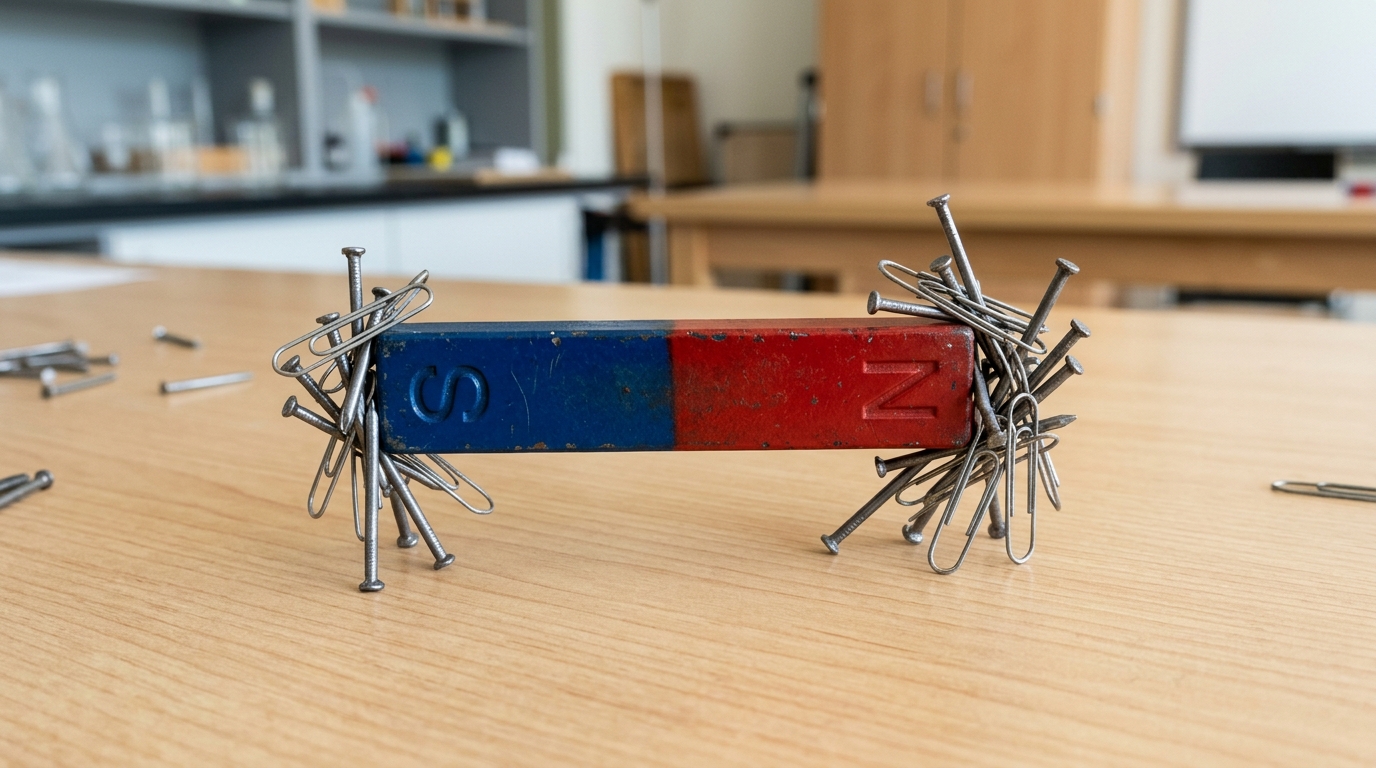
Materials that are attracted toward a magnet are called magnetic materials. These substances can also be magnetized to become magnets themselves.
Key Points
- Three main magnetic metals: Iron, Nickel, and Cobalt.
- Steel (an alloy of iron and carbon) is also strongly magnetic.
- Alnico (Aluminum + Nickel + Cobalt + Iron) makes strong magnets.
- Can be turned into artificial magnets by stroking or electricity.
Olympiad Fact
Strongly magnetic substances like iron, nickel, and cobalt are scientifically classified as 'ferromagnetic materials'.
Non-Magnetic Materials
Unaffected by magnets.
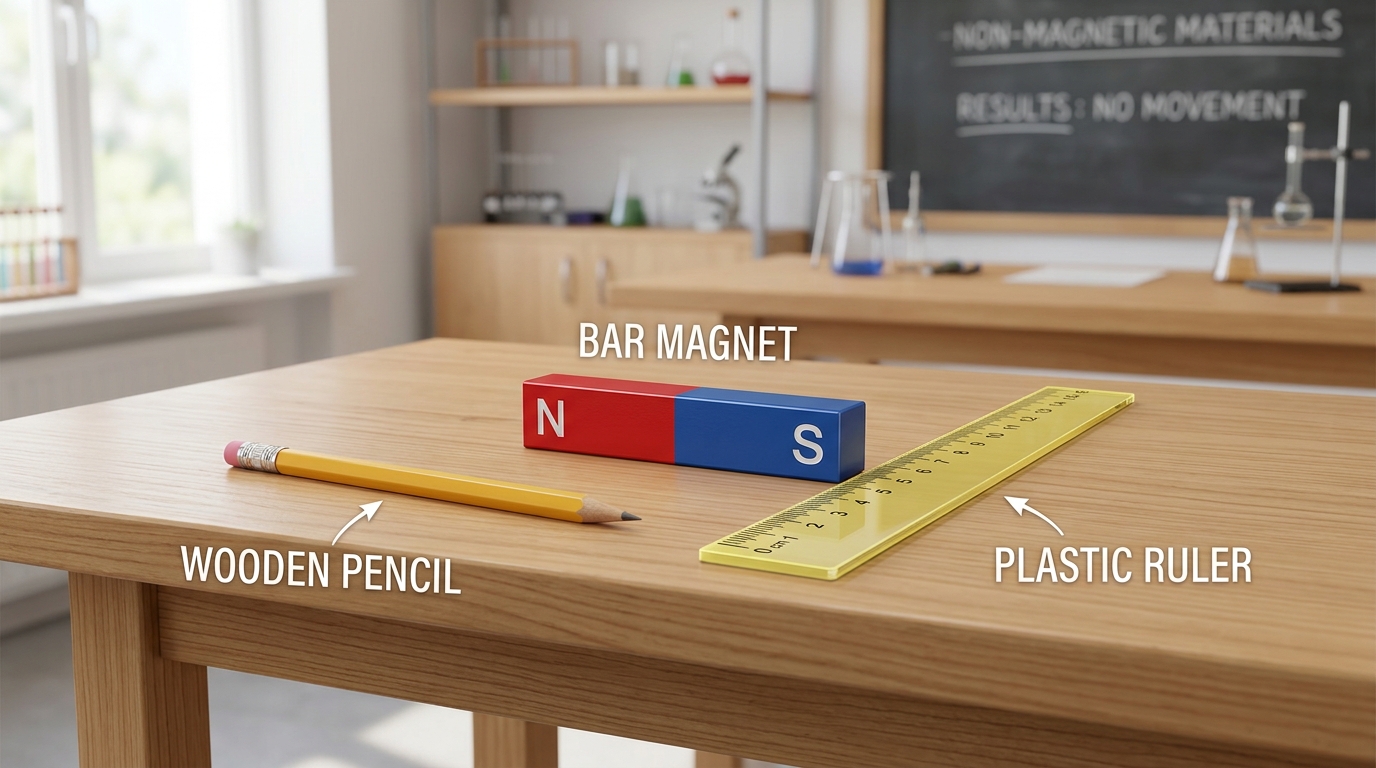
Materials that are not attracted to a magnet are called non-magnetic materials. Most everyday objects around us belong to this group.
Key Points
- Common examples: Wood, plastic, glass, rubber, paper, and cloth.
- Many metals are non-magnetic: Aluminum, Copper, Gold, and Silver.
- Alloys like brass and bronze are also non-magnetic.
- Magnetic force can pass right through non-magnetic materials.
Olympiad Fact
Aluminum and brass are used to make compass casings because non-magnetic metals do not interfere with the compass needle.
Testing Materials for Magnetism
Is it a magnet or just metal?
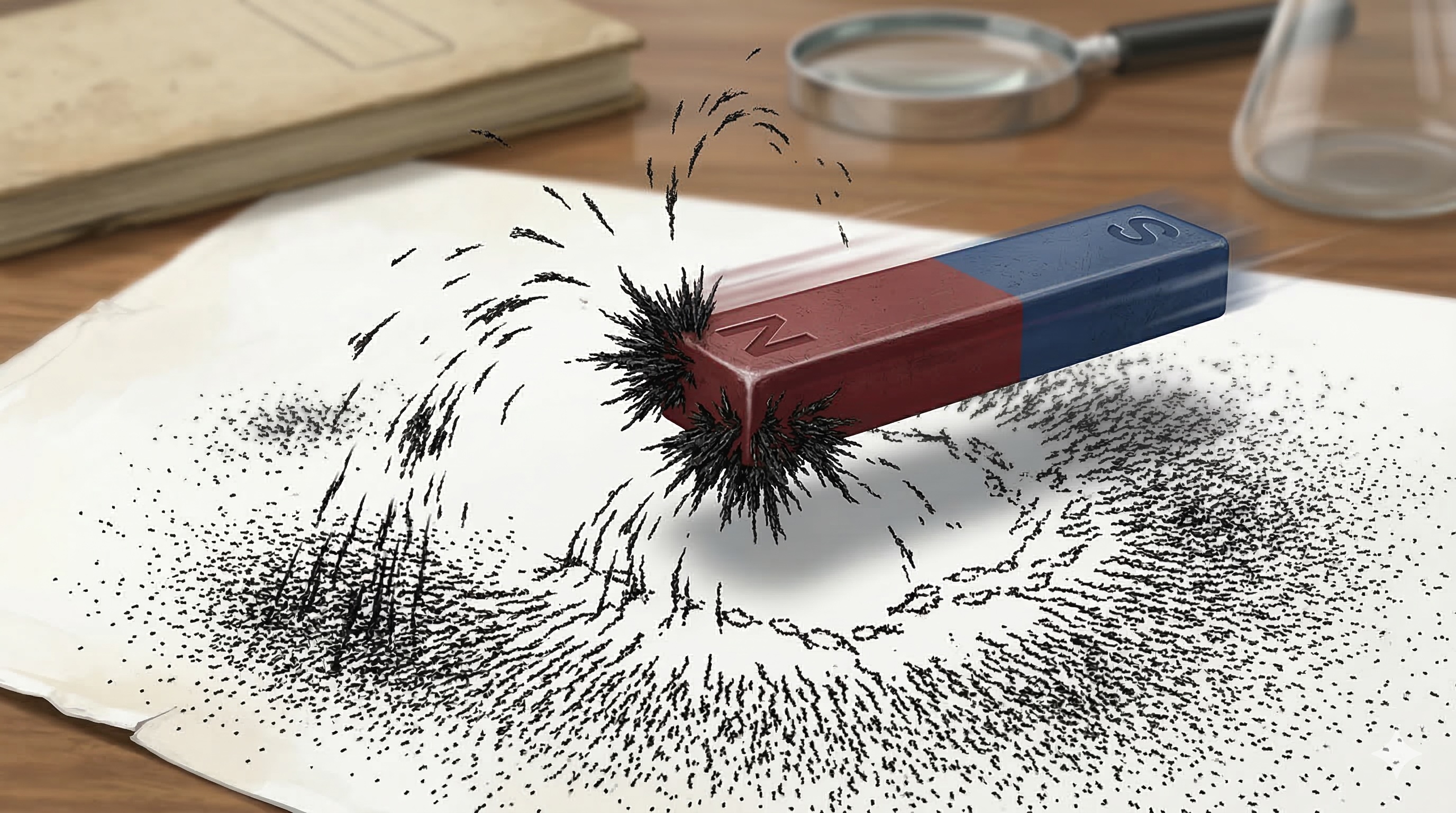
To test an unknown object, bring both poles of a magnet near it. Non-magnetic items show no reaction, magnetic metals attract both poles, and magnets repel a like pole.
Key Points
- No reaction to either pole means the object is non-magnetic.
- Attraction to both poles means it is an unmagnetized magnetic metal.
- Repulsion from one pole proves the object is a magnet itself.
- Used in recycling plants to separate iron scrap from trash.
Olympiad Fact
Magnets are installed in commercial flour mills to trap tiny stray iron particles from grain before grinding.
Swipe to skip‹