
Properties of Operations
Commutative Property
Order Does Not Matter
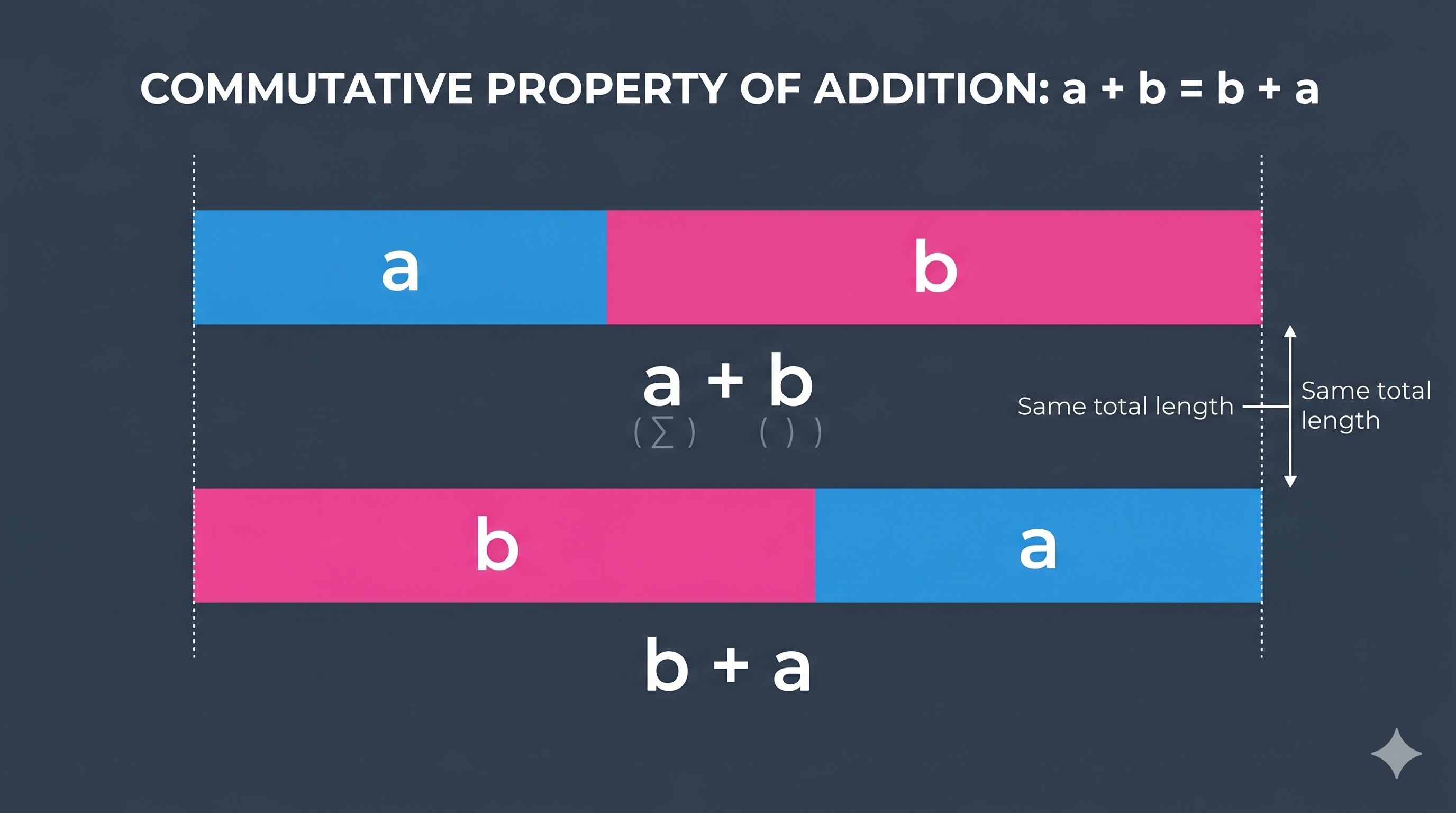
Key Points
- The Commutative Property of Addition is written as .
- The Commutative Property of Multiplication is written as .
- Example: and .
- This property does not apply to subtraction or division.
Olympiad Fact
In competitive math, we use the commutative property to reorder messy sequences so that compatible numbers (like and ) sit next to each other for easy mental addition.
Associative Property
Grouping Does Not Matter
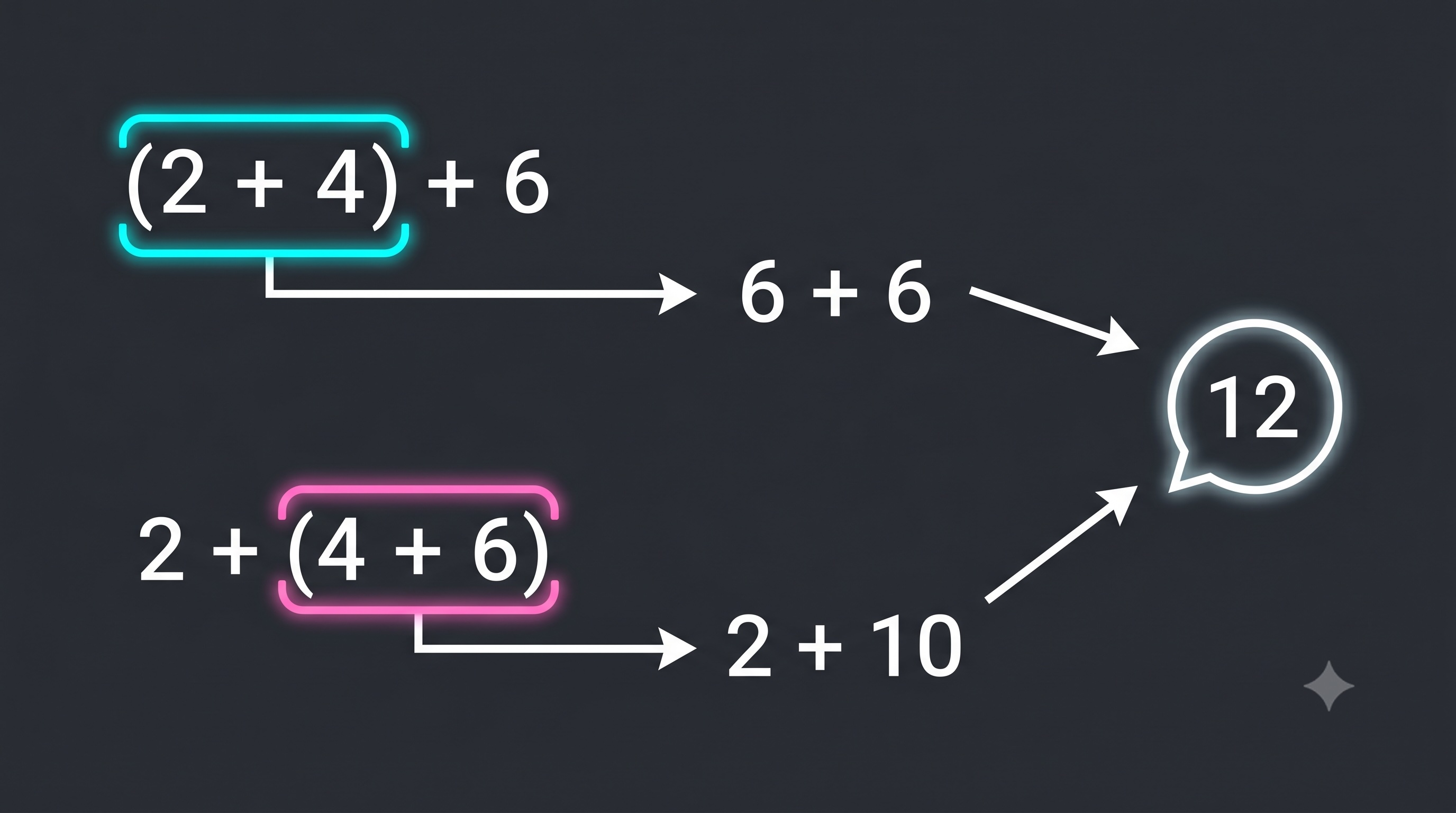
Key Points
- The Associative Property of Addition is .
- The Associative Property of Multiplication is .
- Grouping does not change the final mathematical sum or product.
- This property lets you group numbers in the most convenient way to calculate faster.
Olympiad Fact
When adding a long list of numbers, use the associative property to group pairs that add up to multiples of (like grouping and first).
The Distributive Property
Multiplication Over Sums
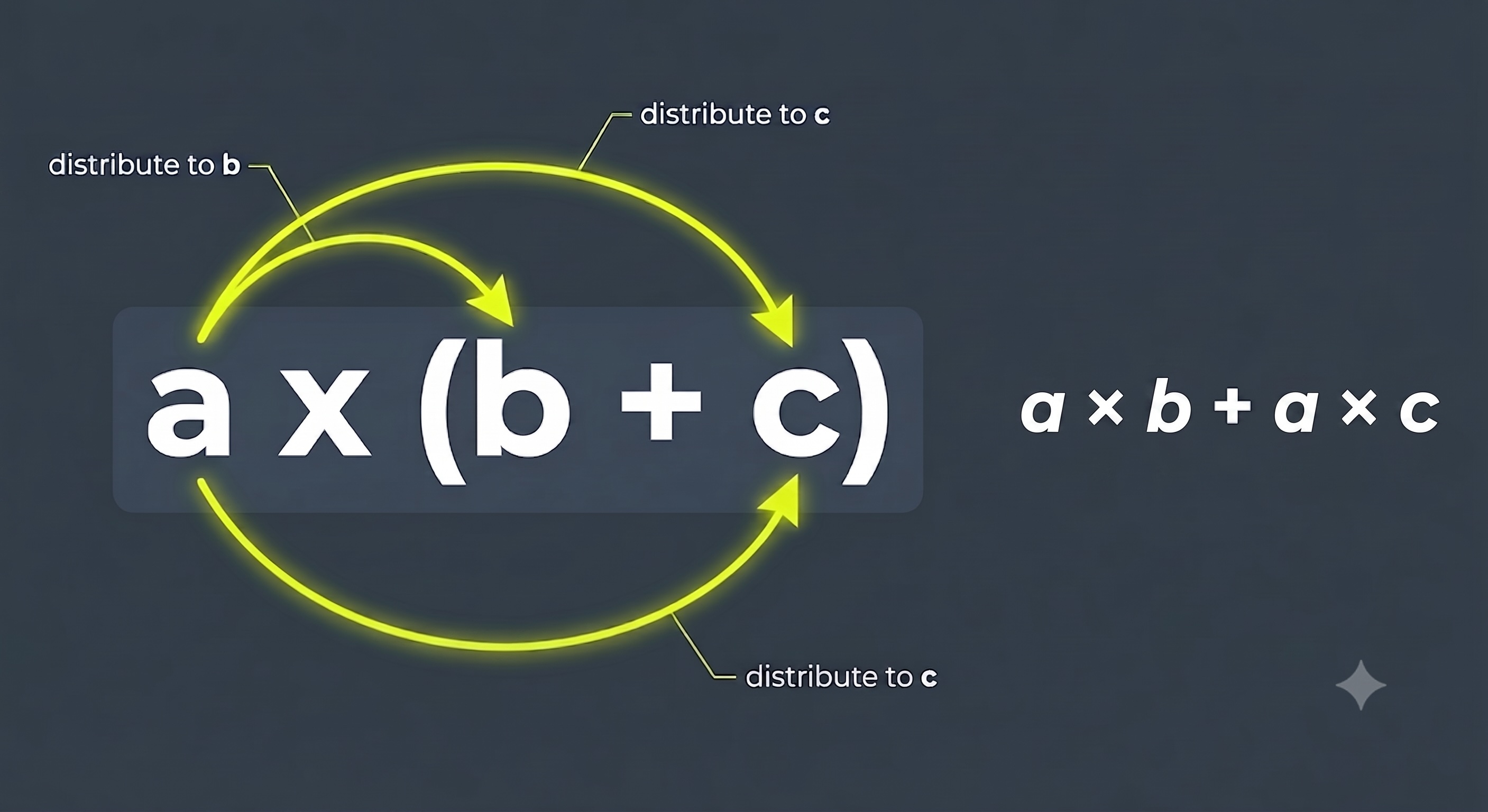
Key Points
- Distribution over addition: .
- Distribution over subtraction: .
- Example: is equal to .
- This property is essential for breaking down complex calculations.
Olympiad Fact
The distributive property is the mathematical bridge that allows us to factor out common terms in algebraic equations.
Reverse Distributivity (Factoring Out)
Grouping Common Multipliers
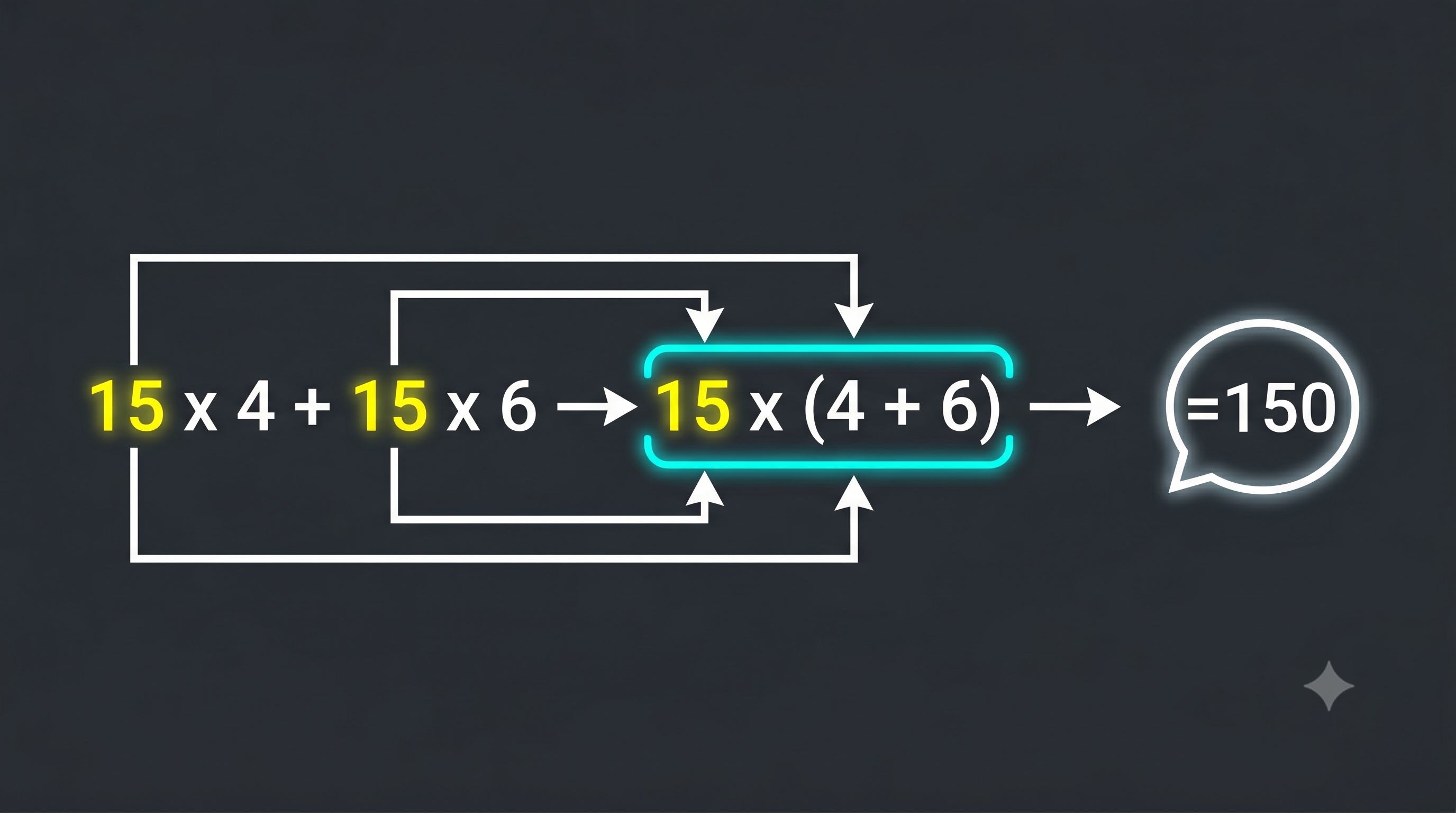
Key Points
- Factoring out is the exact reverse of the distributive property.
- Formula: .
- Example: is simplified by pulling out the common factor .
- This transforms the expression into .
Olympiad Fact
Olympiad problems often present massive, scary-looking expressions; factoring out common terms is the secret to solving them in seconds.
Fast Calculations
Mental Math Shortcuts
Key Points
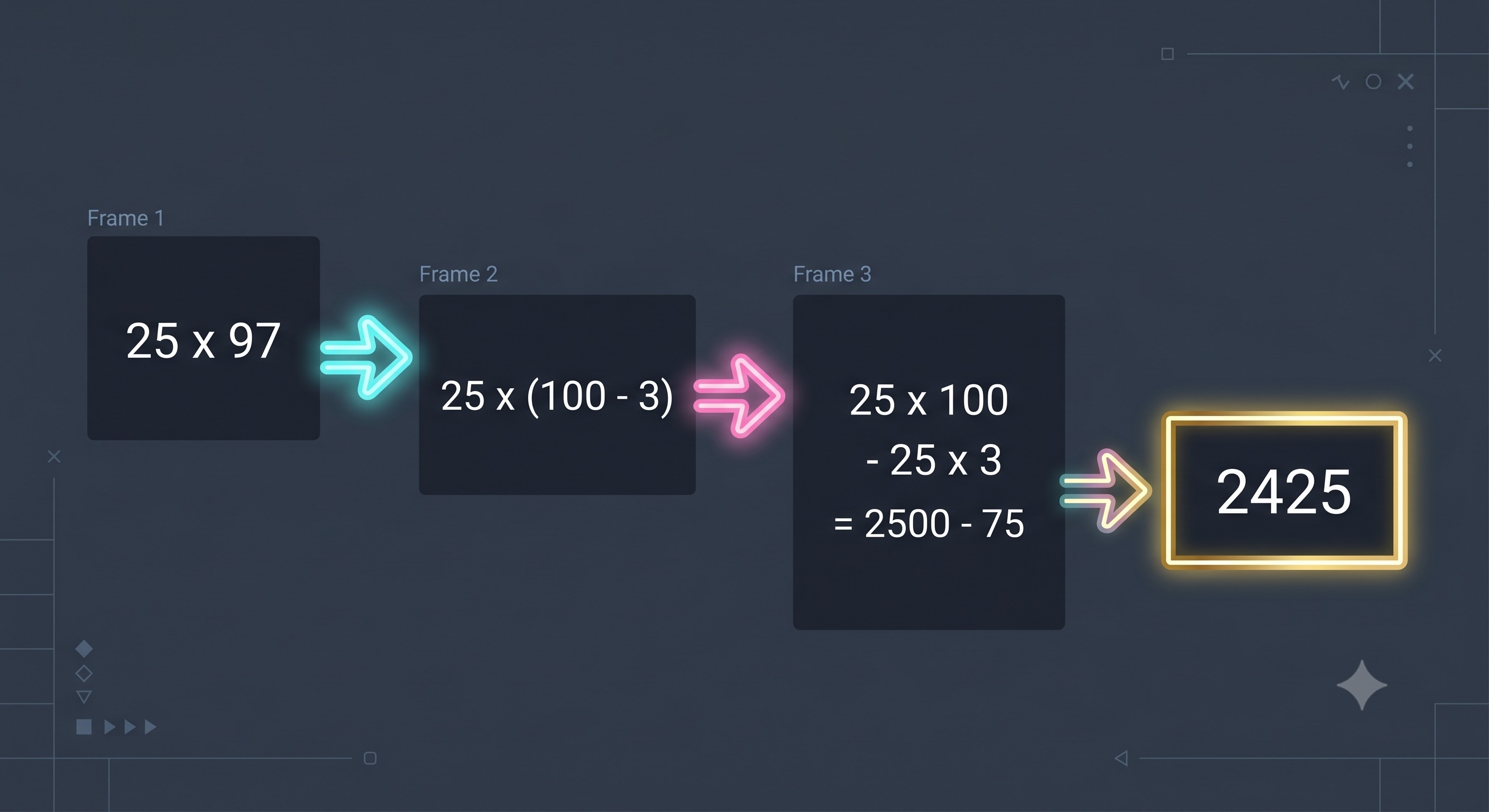
- Use the distributive property to perform complex mental math.
- Rewrite difficult multipliers close to a base-10 number.
- Example: To multiply , rewrite as .
- Distribute: .
Olympiad Fact
Using distribution to round numbers to the nearest base-10 makes solving large multiplication questions fast, accurate, and completely mental.