
Order of Operations and Parentheses
Complex Expressions
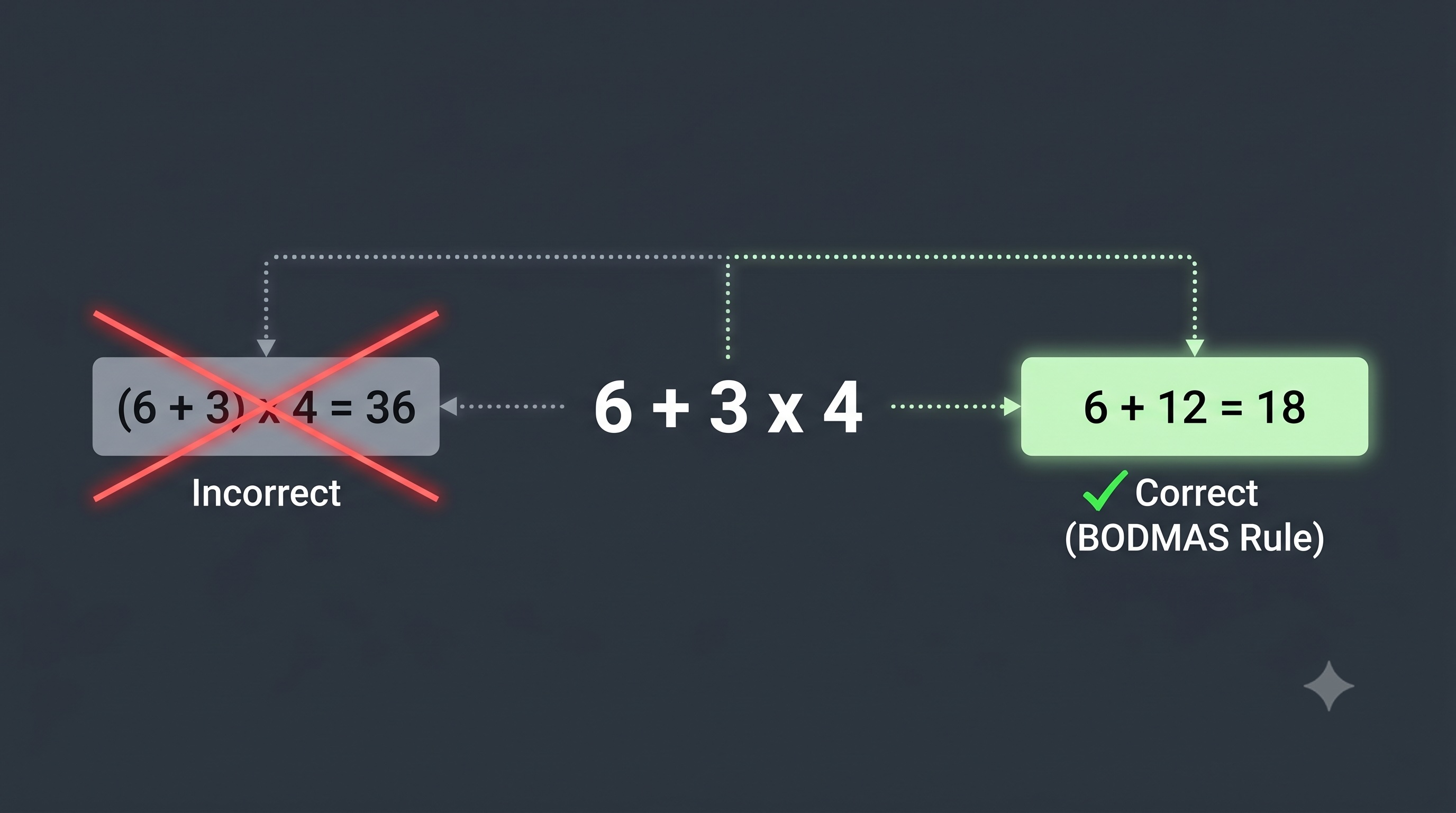
Multiple Operations, One Puzzle
Key Points
- Complex expressions combine multiple operations in one statement.
- They contain mixtures of , , , or .
- Solving them without rules leads to wrong, conflicting answers.
- Example: is not solved by adding first.
Olympiad Fact
A complex expression without operations rules is mathematically ambiguous; order-of-operation laws are the grammar of arithmetic.
The BODMAS Rule
The Order of Operations
Key Points
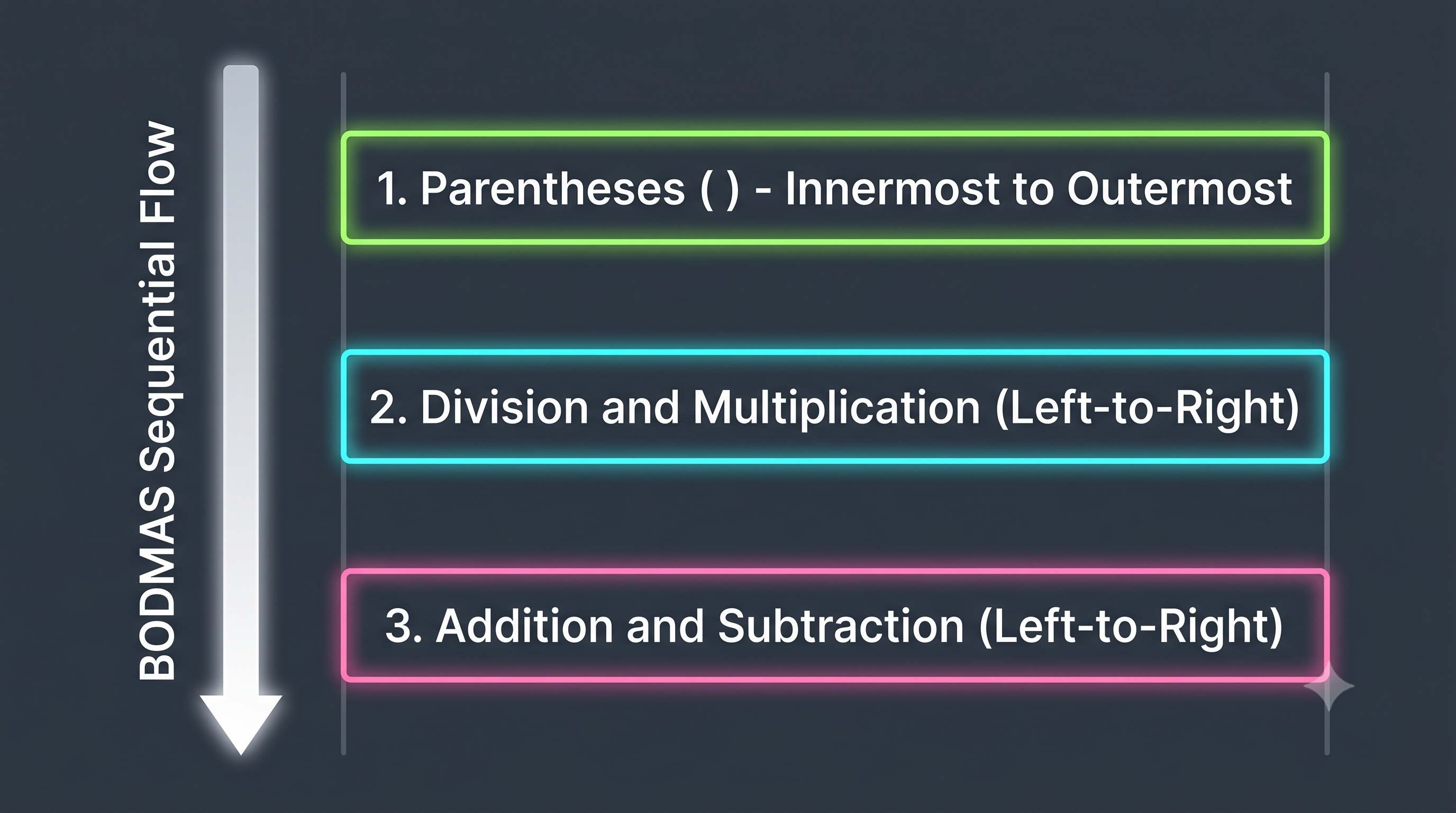
- BODMAS dictates the exact, step-by-step order for evaluating operations.
- First, evaluate parentheses , solving from the innermost set to the outermost set if nested.
- Second, resolve 'Of' operations (which behave as direct multiplication) after parentheses are cleared.
- Third, execute division () and multiplication () in order from left to right, then addition and subtraction.
Olympiad Fact
Division and Multiplication hold equal priority, as do Addition and Subtraction. If they appear next to each other, you must solve them in order from left to right!
The Role of Parentheses
Prioritizing Operations
Key Points
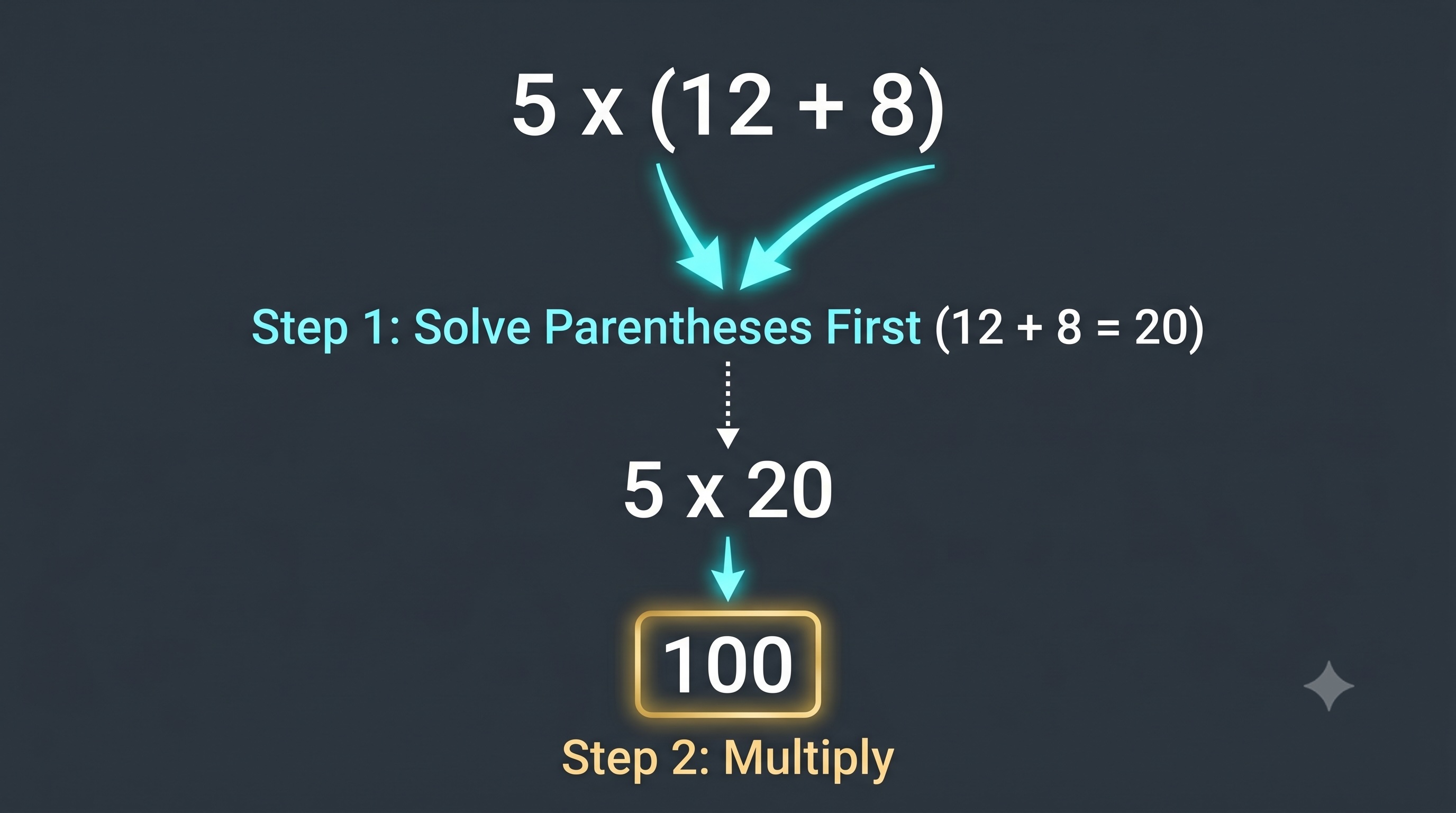
- Parentheses are the primary grouping symbols used to override standard priorities.
- If parentheses are nested, always evaluate the innermost set of parentheses first.
- Example: In , the addition must be solved first to obtain .
- After resolving the parentheses, complete the outer operation: .
Olympiad Fact
In complex Olympiad problems, brackets are strategically placed to group terms that cancel each other out, helping you avoid long, messy calculations.
Evaluating Multiplicative Terms First
Solving Terms Before Sums
Key Points
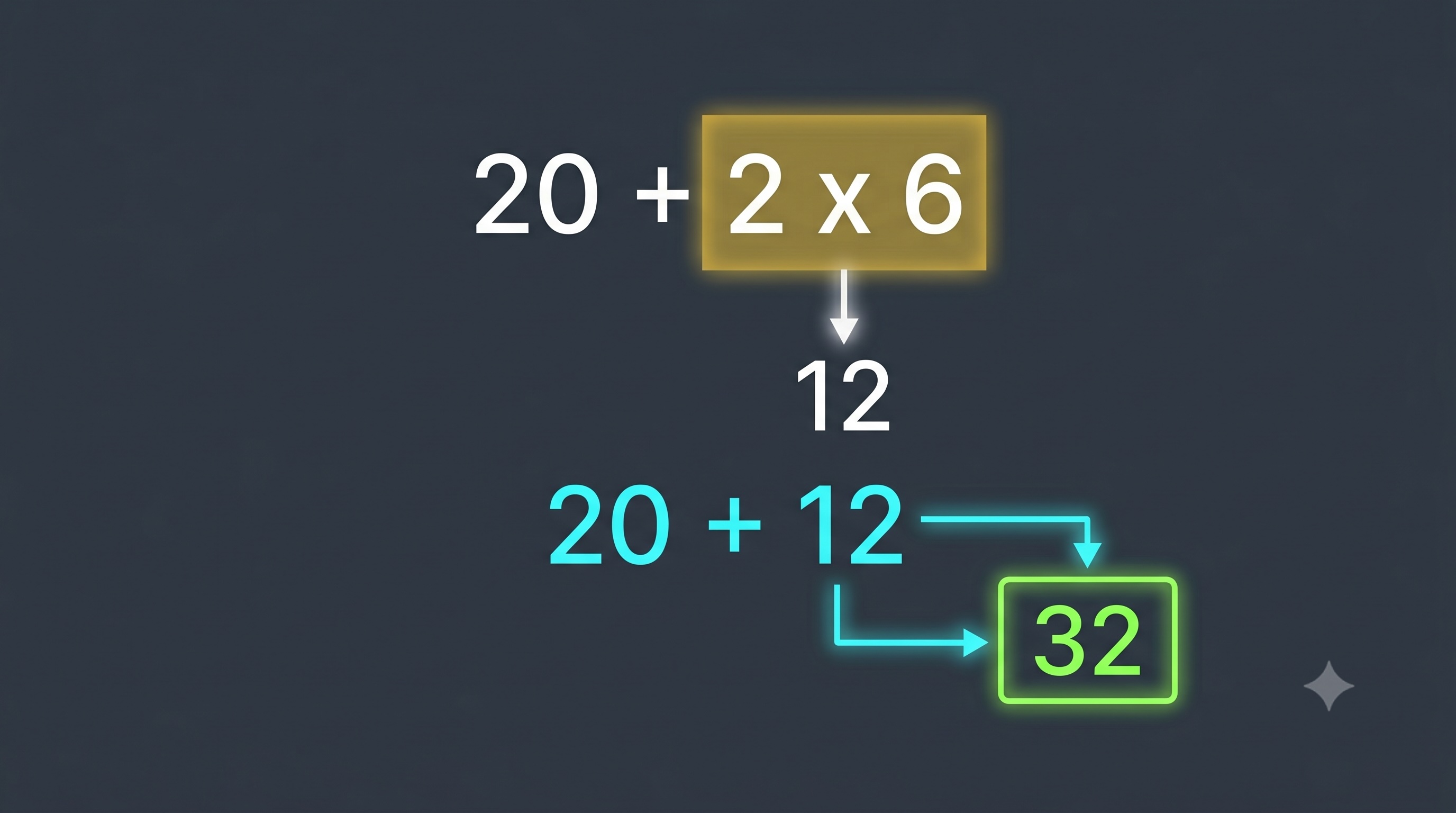
- Multiplicative operations bind numbers together tightly as single terms.
- Never perform addition before adjacent multiplication unless parentheses dictate it.
- Example: In , do not add first.
- First solve the term , then finish the addition: .
Olympiad Fact
This rule explains why calculators and computers are programmed to automatically execute multiplication and division before addition and subtraction.
Translating Words to Expressions
Modeling Real-World Phrases
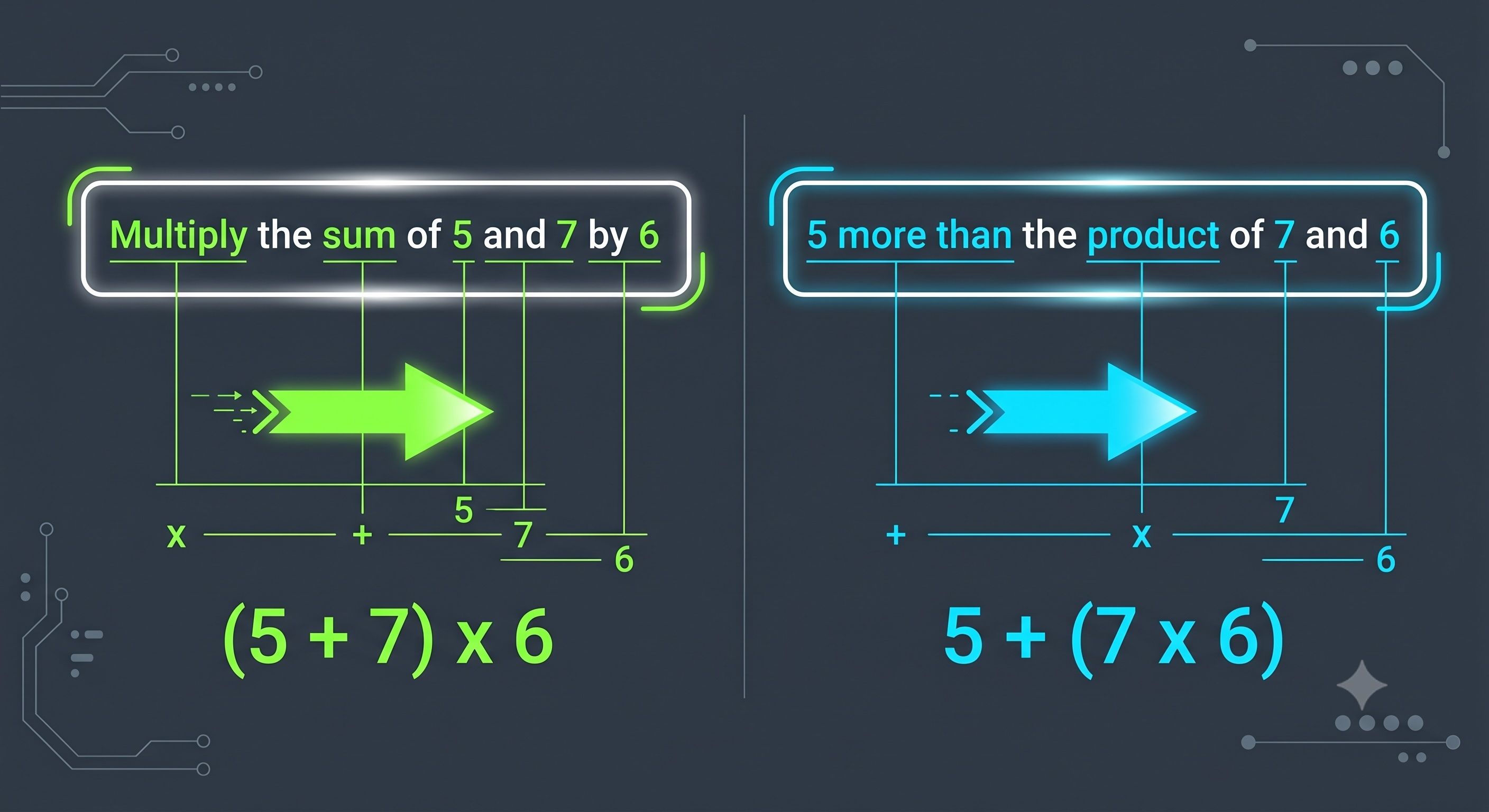
Key Points
- Words tell us the required order of operations.
- Phrases like 'sum of' or 'difference of' often need parentheses.
- Example: 'Multiply the sum of 5 and 7 by 6' translates to .
- Without parentheses, incorrectly does multiplication first.
Olympiad Fact
'5 more than the product of 7 and 6' translates to . No parentheses are needed here because multiplication naturally happens first under BODMAS.