
Parentheses Removal and Changing Terms
Removing Parentheses: Positive Precursor
The Unchanged Pass-Through
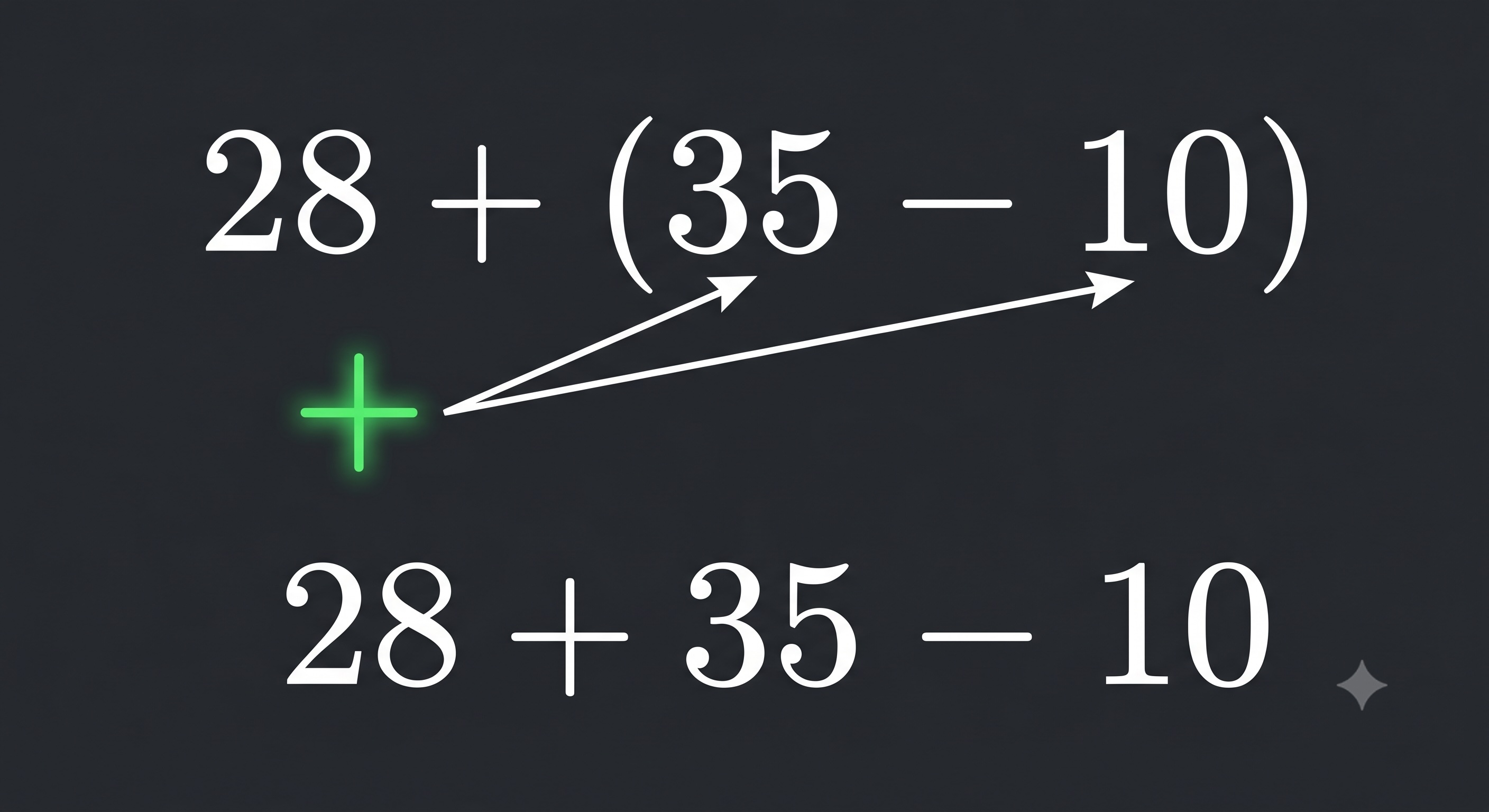
When simplifying an expression, we can remove parentheses directly if they are preceded by a positive sign (). The signs of all the terms inside the parentheses remain completely unchanged.
Key Points
- Parentheses can be removed directly if preceded by a plus sign ().
- A plus sign outside does not alter any internal signs.
- Example: simplifies directly to .
- The signs of (positive) and (negative) remain the same.
Olympiad Fact
This rule is a direct result of the identity property of multiplication: multiplying any term by preserves its original sign and value.
Removing Parentheses: Negative Precursor
The Sign Inversion Rule
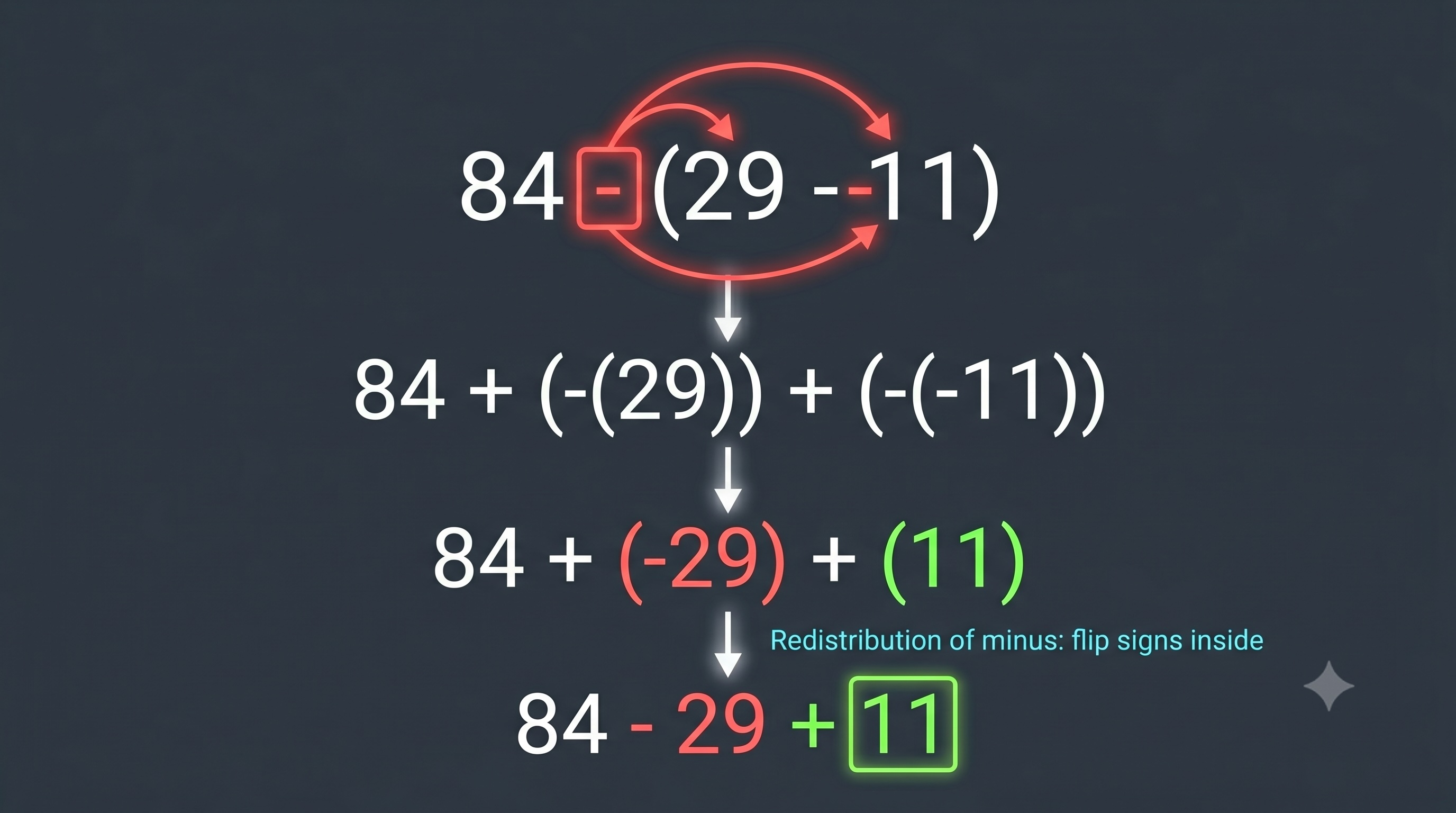
If parentheses are preceded by a negative sign (), removing them requires reversing the sign of every term inside: positive terms become negative, and negative terms become positive.
Key Points
- A minus sign () outside parentheses acts as an inverter.
- Removing the parentheses requires reversing the sign of every internal term.
- Example: simplifies to .
- The positive becomes , and the negative becomes .
Olympiad Fact
This inversion happens because a negative sign outside a bracket represents multiplying each term inside by .
Effect of Changing Terms
Symmetrical Value Shifts
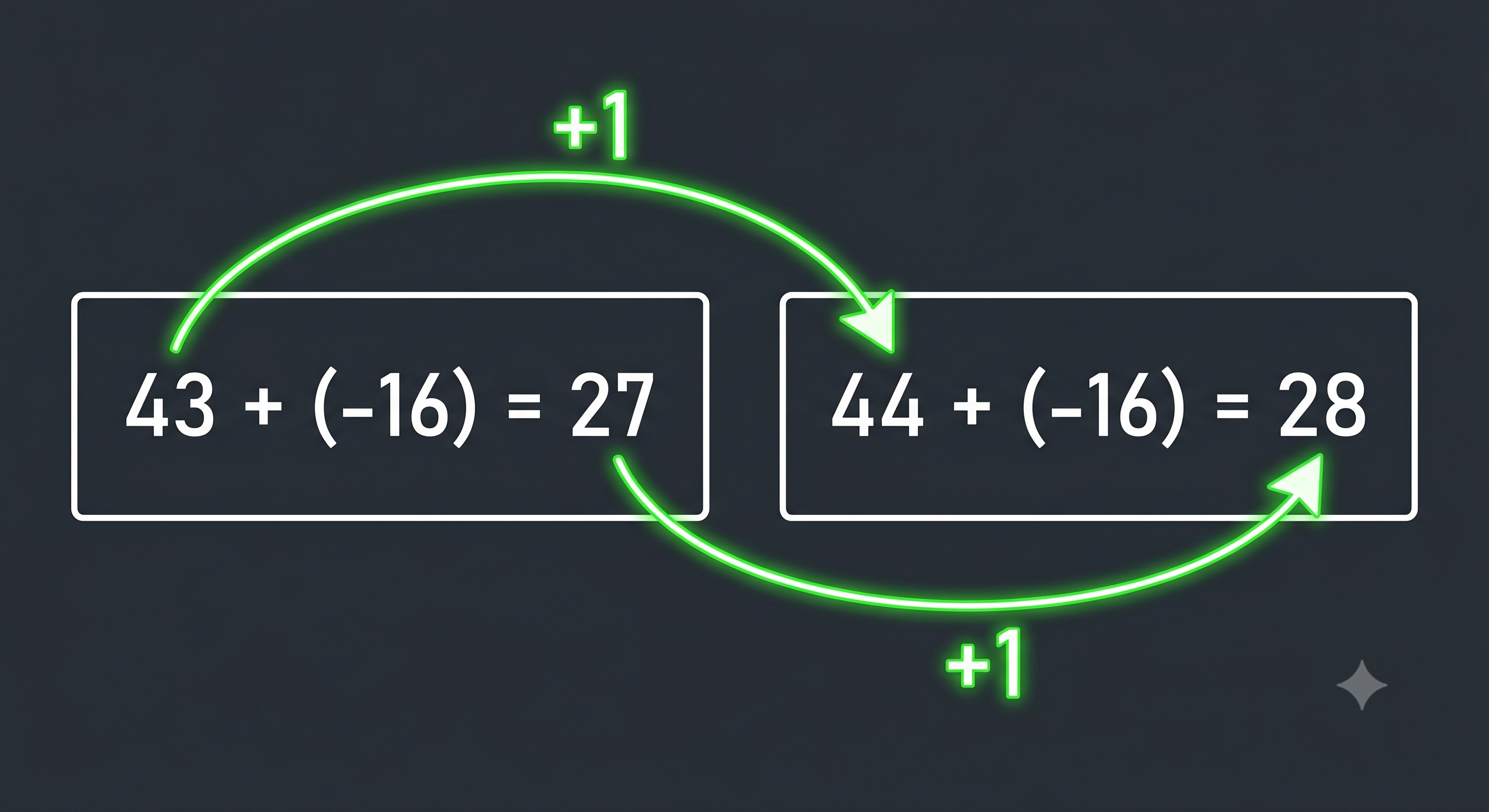
The overall value of an arithmetic expression is directly tied to the values of its individual terms. Any increase or decrease in a term produces a matching change in the final value.
Key Points
- The value of an expression depends on the size of its individual terms.
- Increasing any term increases the final value by that same amount.
- Decreasing any term decreases the final value by that same amount.
- Example: If , increasing by to increases the sum to .
Olympiad Fact
This direct relationship allows you to solve adjacent comparison questions instantly without recalculating the entire expression from scratch.
Swipe to skip‹