
Heterotrophic Nutrition in Plants
Parasitic Plants
The Biological Thieves
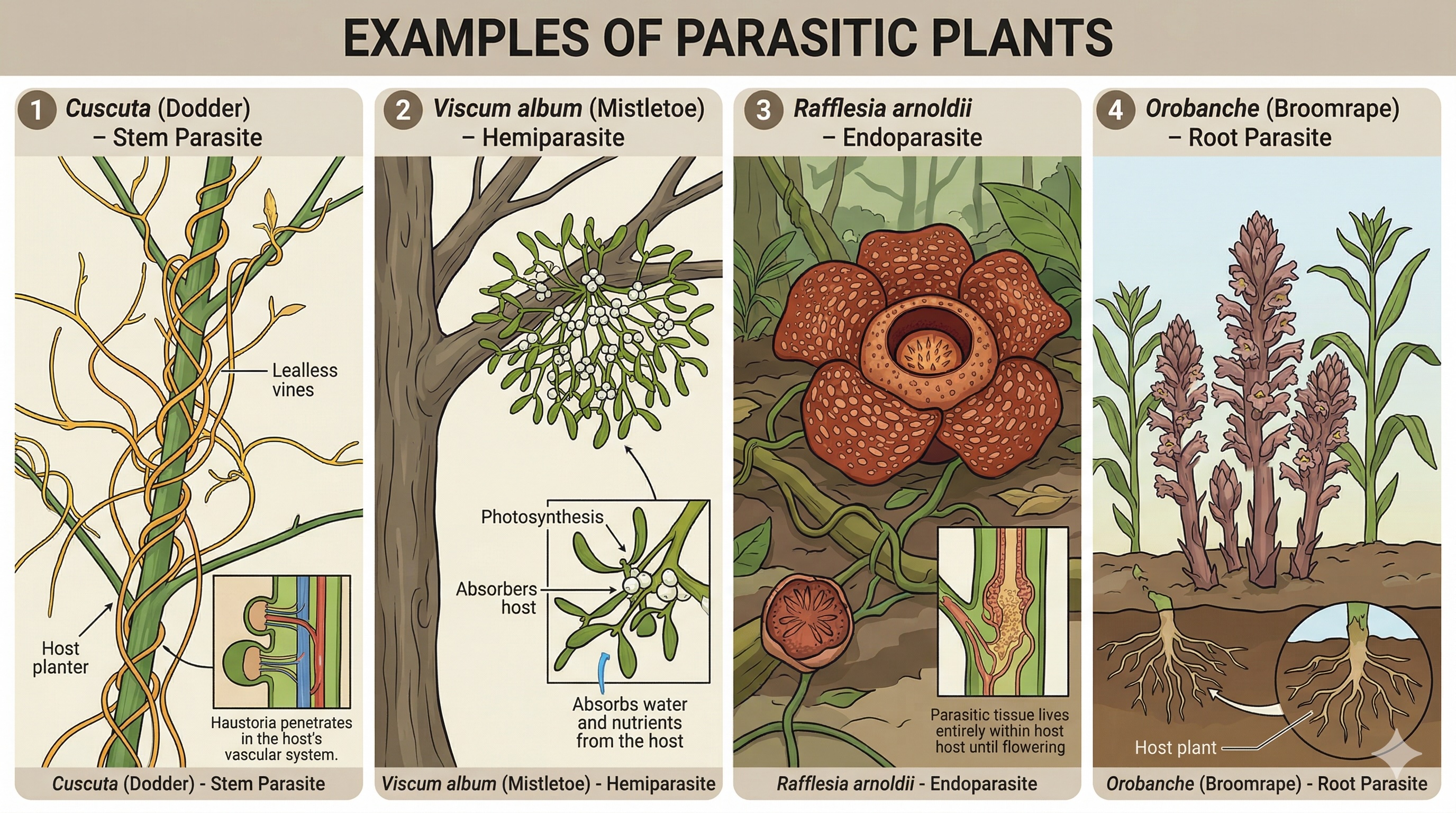
Parasites derive nutrition directly from a host plant using modified roots called haustoria. They are categorized based on how much they rely on the host.
Key Points
- Total Parasite: No chlorophyll; fully dependent (e.g., Cuscuta).
- Partial Parasite: Green leaves; only takes water (e.g., Mistletoe).
- Haustoria: Penetrate host tissue to reach the sap.
- The host plant is weakened over time.
Insectivorous Plants
The Nitrogen Hunters
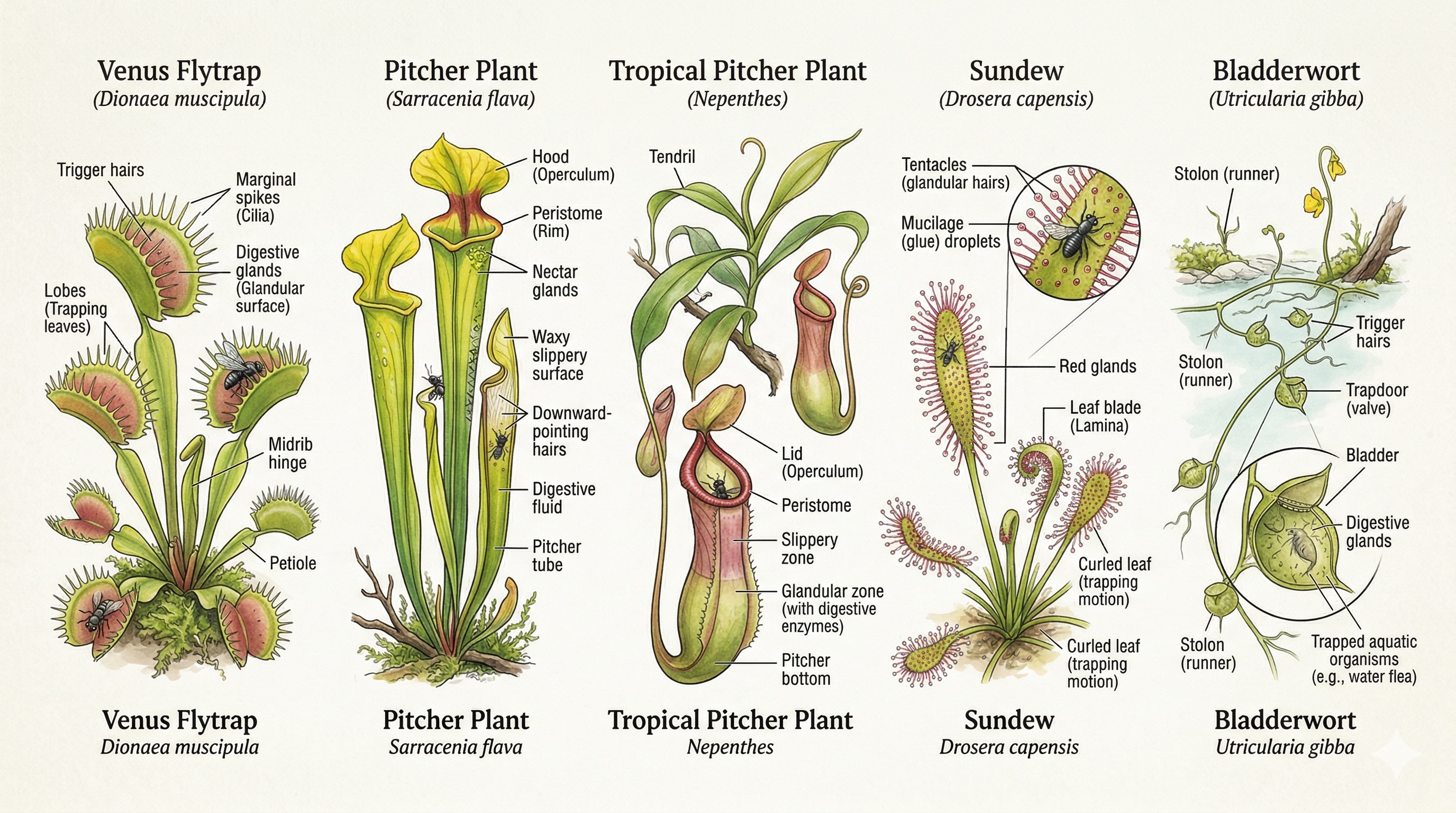
These green plants live in nitrogen-poor soil. While they photosynthesize, they capture and digest insects to fulfill their nitrogen requirements.
Key Points
- Pitcher Plant: Leaves modified into jugs with lids.
- Venus Flytrap: Leaves snap shut when trigger hairs are touched.
- Digestive Juices: Secreted inside the trap to break down prey.
- They are unique examples of partial heterotrophy.
Olympiad Fact
Insectivorous plants are also known as 'carnivorous plants'.
Swipe to skip‹