
Bases and Alkalis
Nature of Bases
Bitter and Soapy
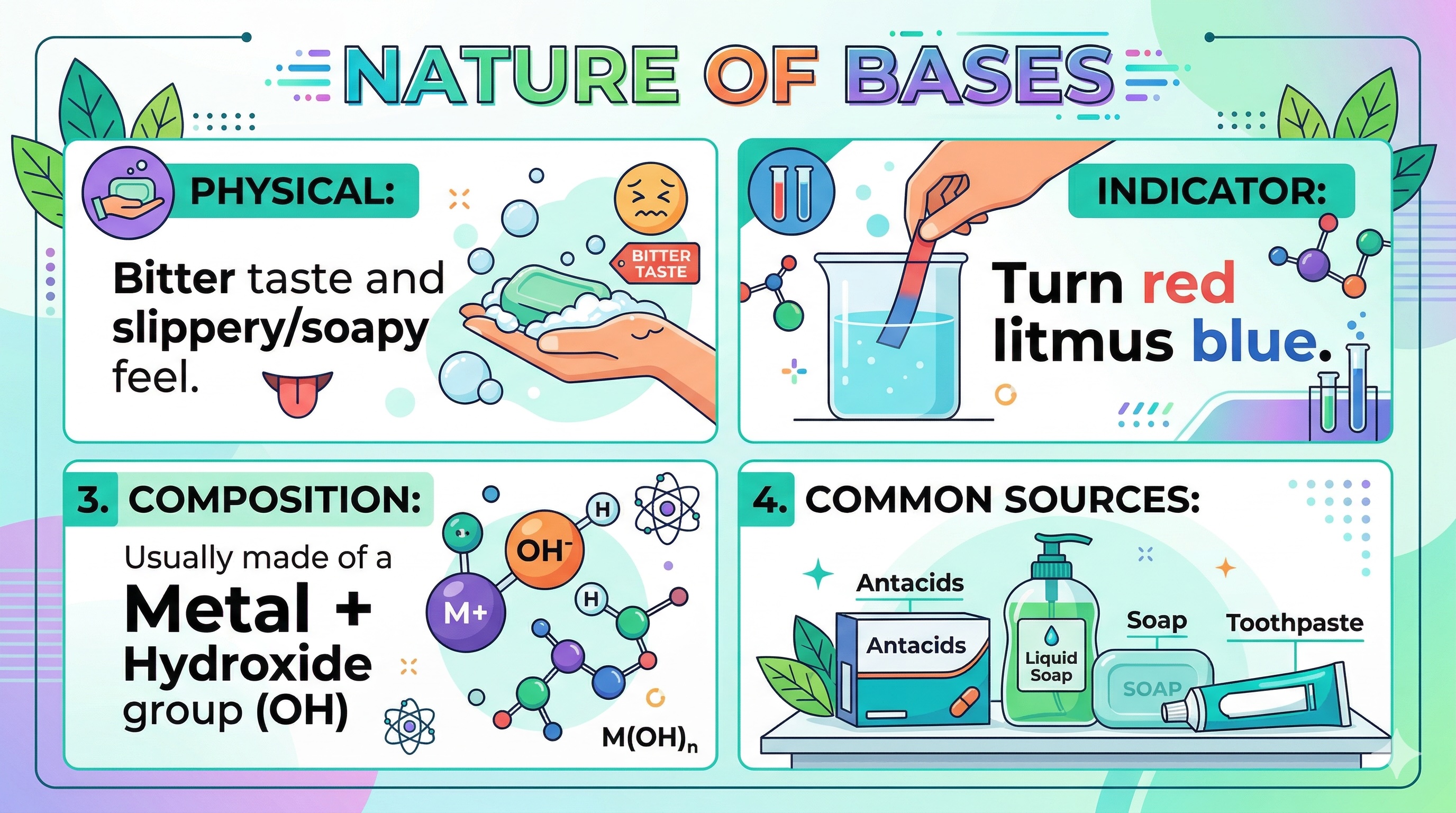
Bases are metallic oxides or hydroxides that feel soapy to touch and taste bitter. Unlike acids, bases almost always contain a metal atom.
Key Points
- Physical: Bitter taste and slippery/soapy feel.
- Indicator: Turn red litmus blue.
- Composition: Usually made of a Metal + Hydroxide group ().
- Common sources: Antacids, soap, and toothpaste.
Olympiad Fact
Ammonium hydroxide () is a unique base as it contains no metal atom.
The Hydroxide Ion ()
The Identity of a Base
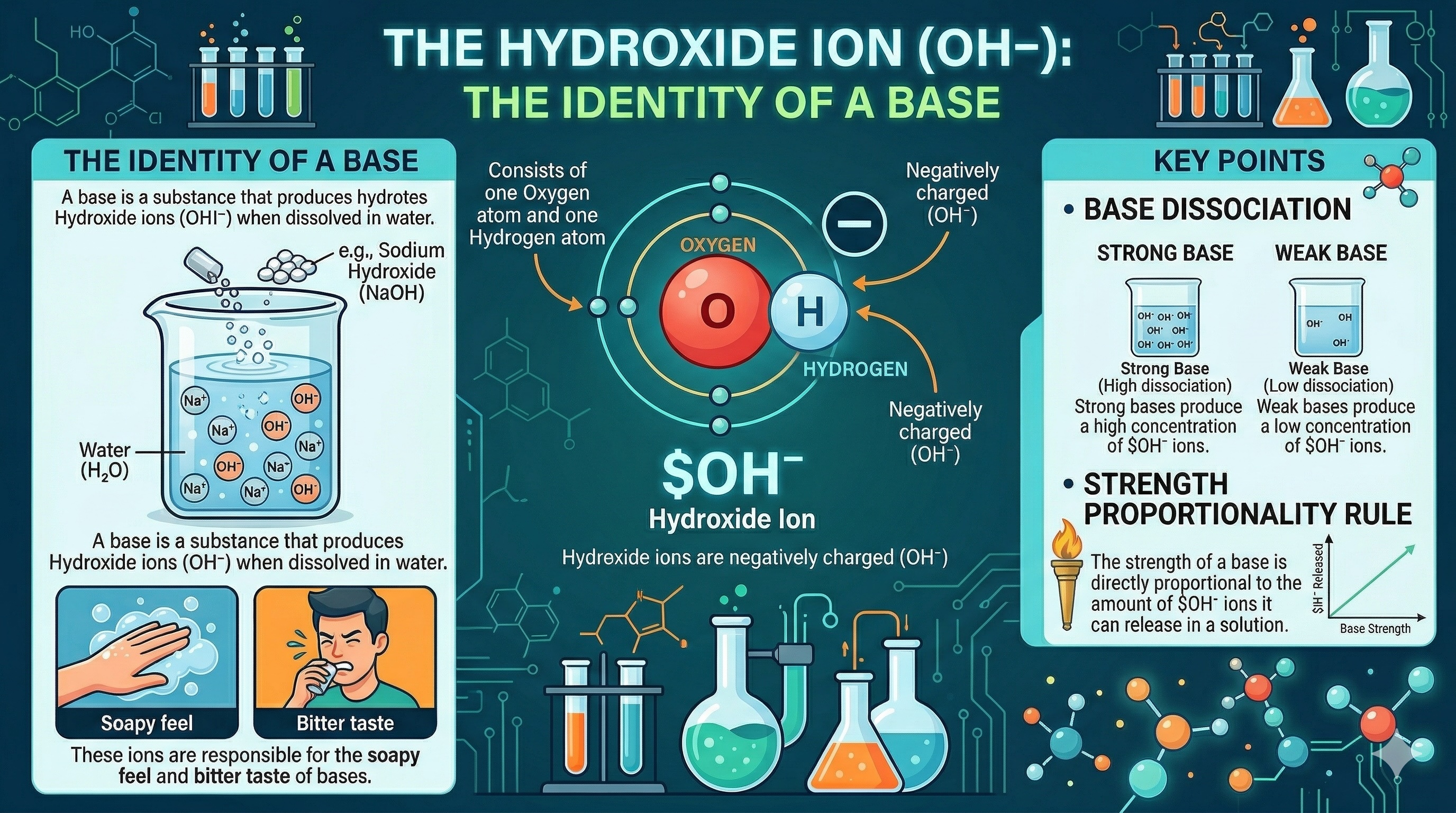
A base is a substance that produces Hydroxide ions () when dissolved in water. These ions are responsible for the soapy feel and bitter taste of bases.
Key Points
- Hydroxide ions are negatively charged ().
- They consist of one Oxygen atom and one Hydrogen atom.
- In neutralisation, ions from a base combine with ions from an acid to form water ().
- Strong bases produce a high concentration of ions.
Olympiad Fact
The strength of a base is directly proportional to the amount of ions it can release in a solution.
Alkalis: Soluble Power
Soluble Bases
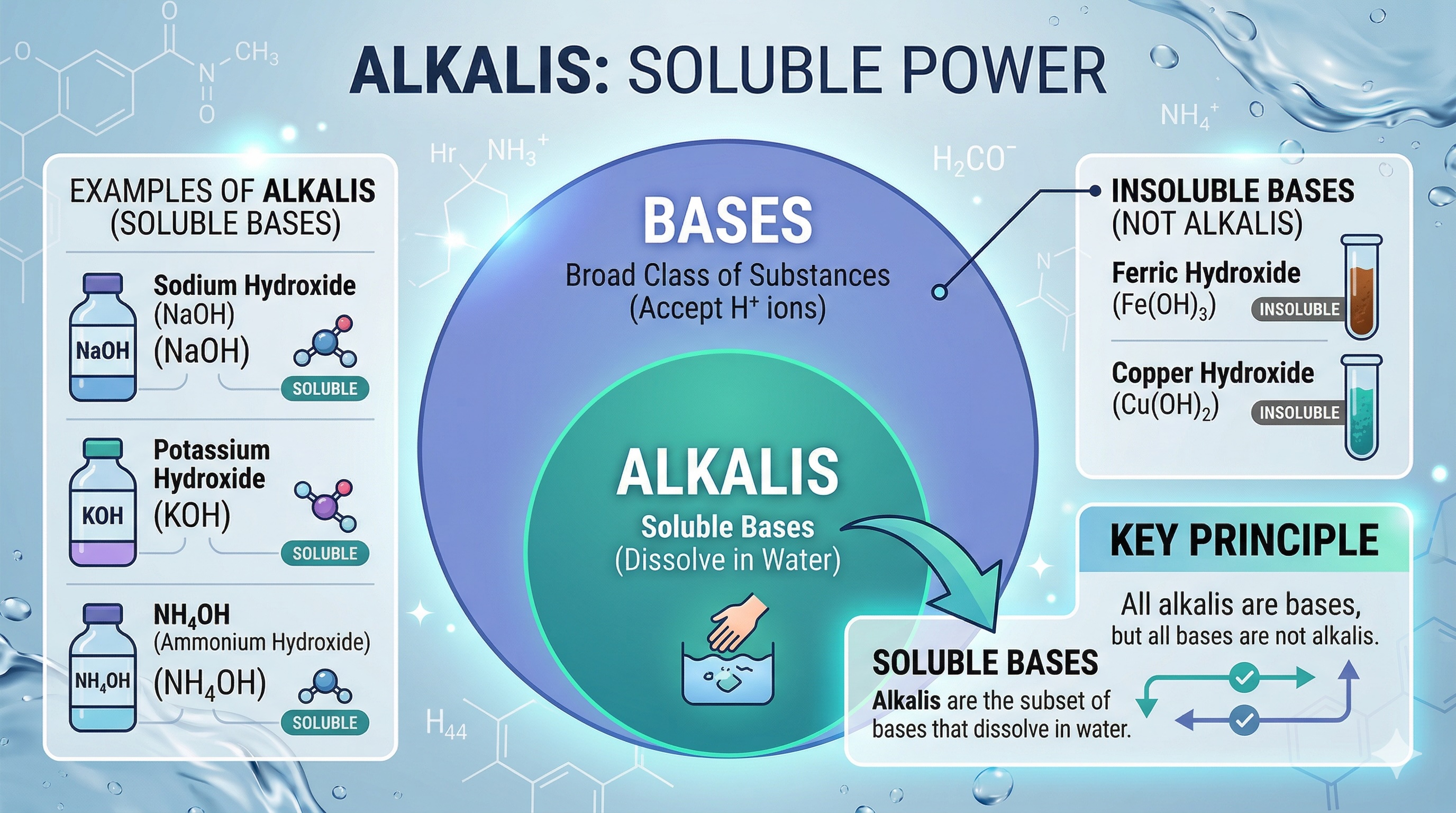
Alkalis are the subset of bases that dissolve in water.
Key Points
- Examples: Sodium hydroxide (), Potassium hydroxide (), .
- Insoluble bases: Ferric hydroxide, Copper hydroxide.
- Key Principle: All alkalis are bases, but all bases are not alkalis.
Preparation of Bases
How Bases are Formed
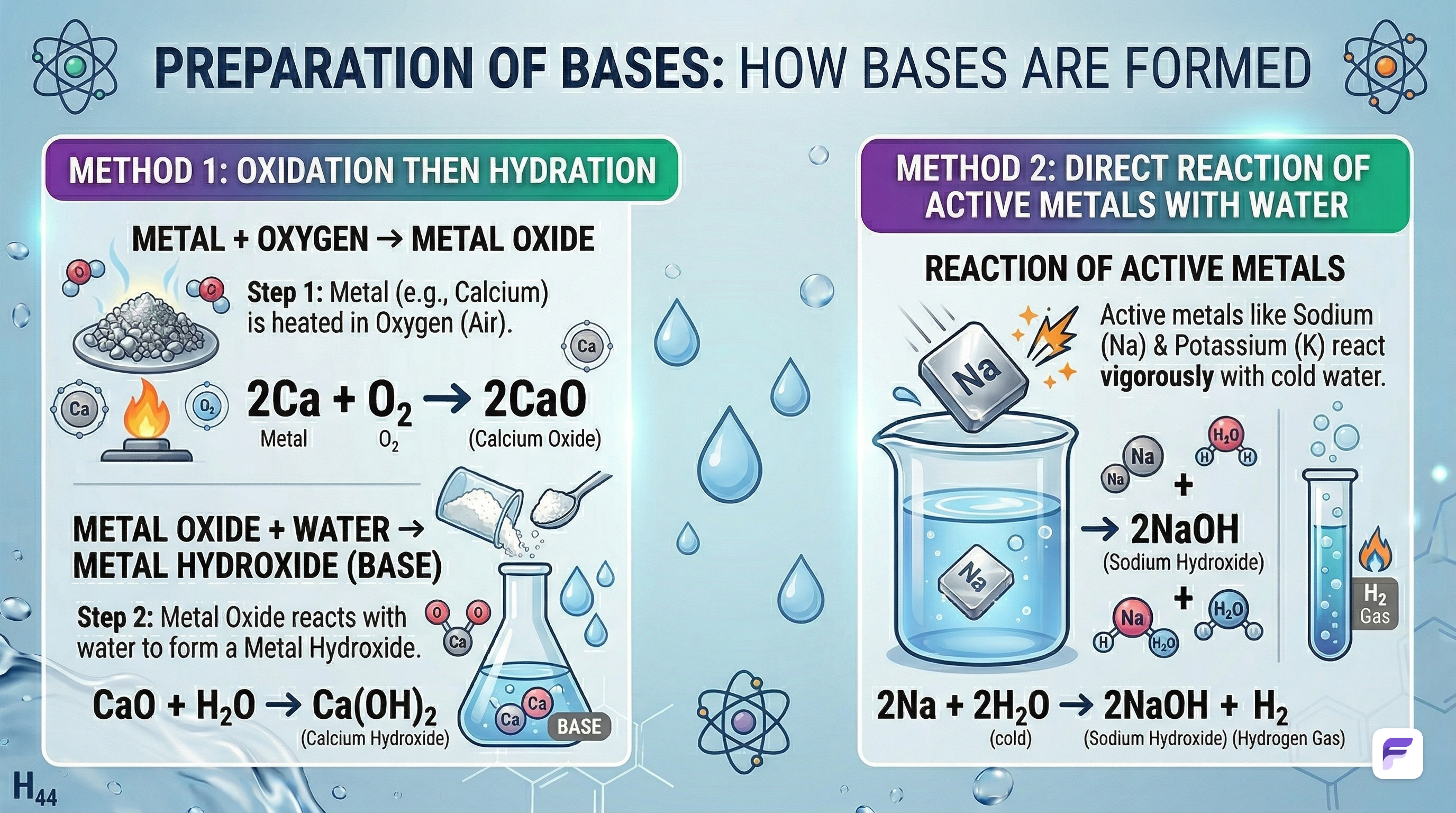
Bases are prepared from metals through oxidation or direct reaction with water.
Key Points
- Metal + Oxygen Metal Oxide.
- Metal Oxide + Water Metal Hydroxide.
- Active metals (Sodium/Potassium) react with cold water to form hydroxides.
Uses of Bases
Industrial & Domestic Utility
Bases have wide industrial and household applications, ranging from paper manufacturing to medicine.
Key Points
- Sodium Hydroxide: Used for making soaps, detergents, and paper.
- Calcium Hydroxide: Used for white-washing, mortar, and softening hard water.
- Magnesium Hydroxide: Key ingredient in antacids and antiperspirants.
Olympiad Fact
Oxides of iron, cobalt, and chromium are bases used to make colored glasses.
Common Bases
Common vs. Chemical Names
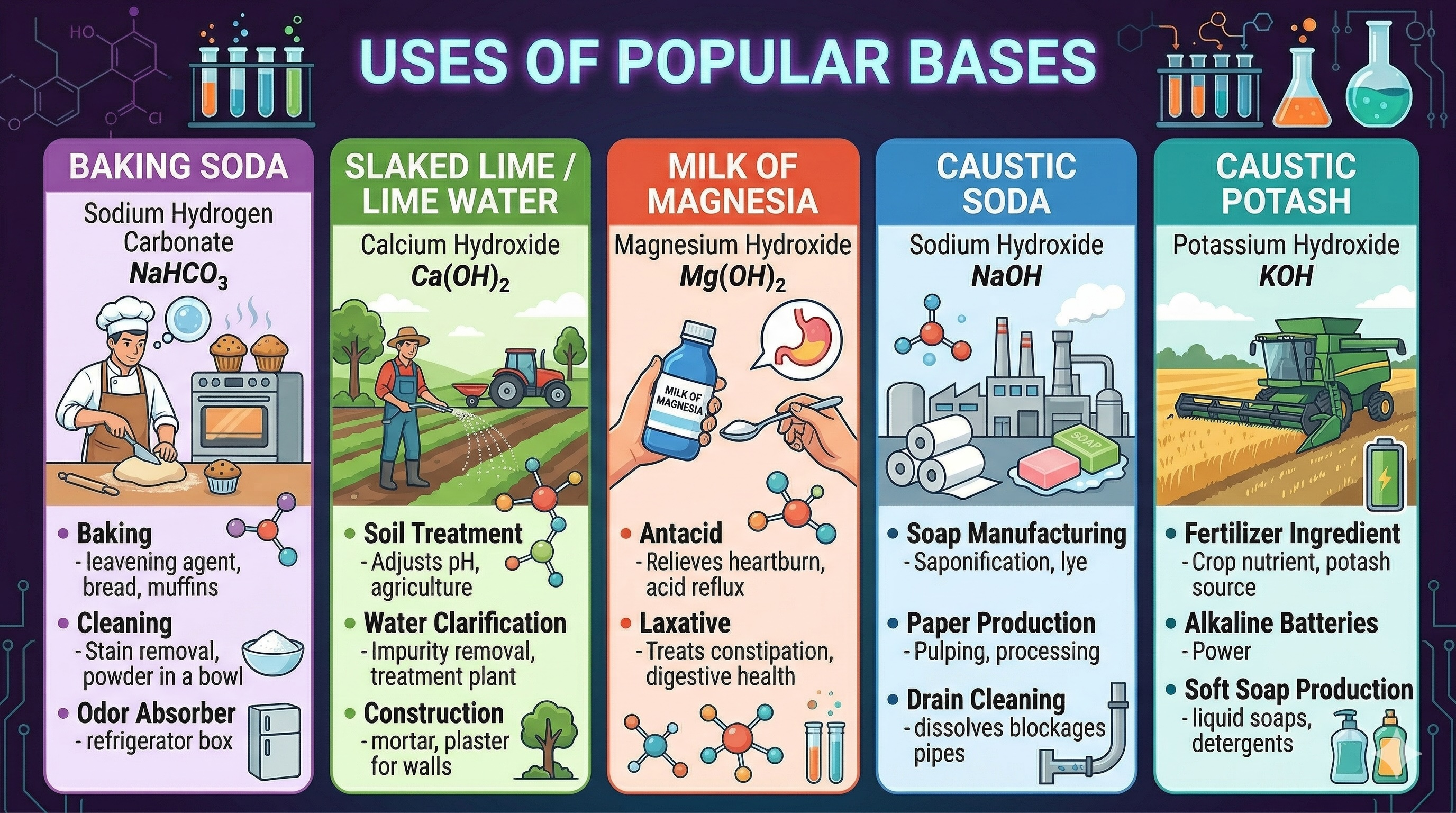
Common vs. Chemical Names for Bases
Key Points
- Baking Soda: Sodium Hydrogen Carbonate.
- Slaked Lime / Lime Water: Calcium Hydroxide.
- Milk of Magnesia: Magnesium Hydroxide.
- Caustic Soda: Sodium Hydroxide.
- Caustic Potash: Potassium Hydroxide.
Swipe to skip‹