
Understanding Salts
What is a Salt?
The Two-Part Compound
Salts are the products of neutralisation, composed of a metallic and non-metallic part.
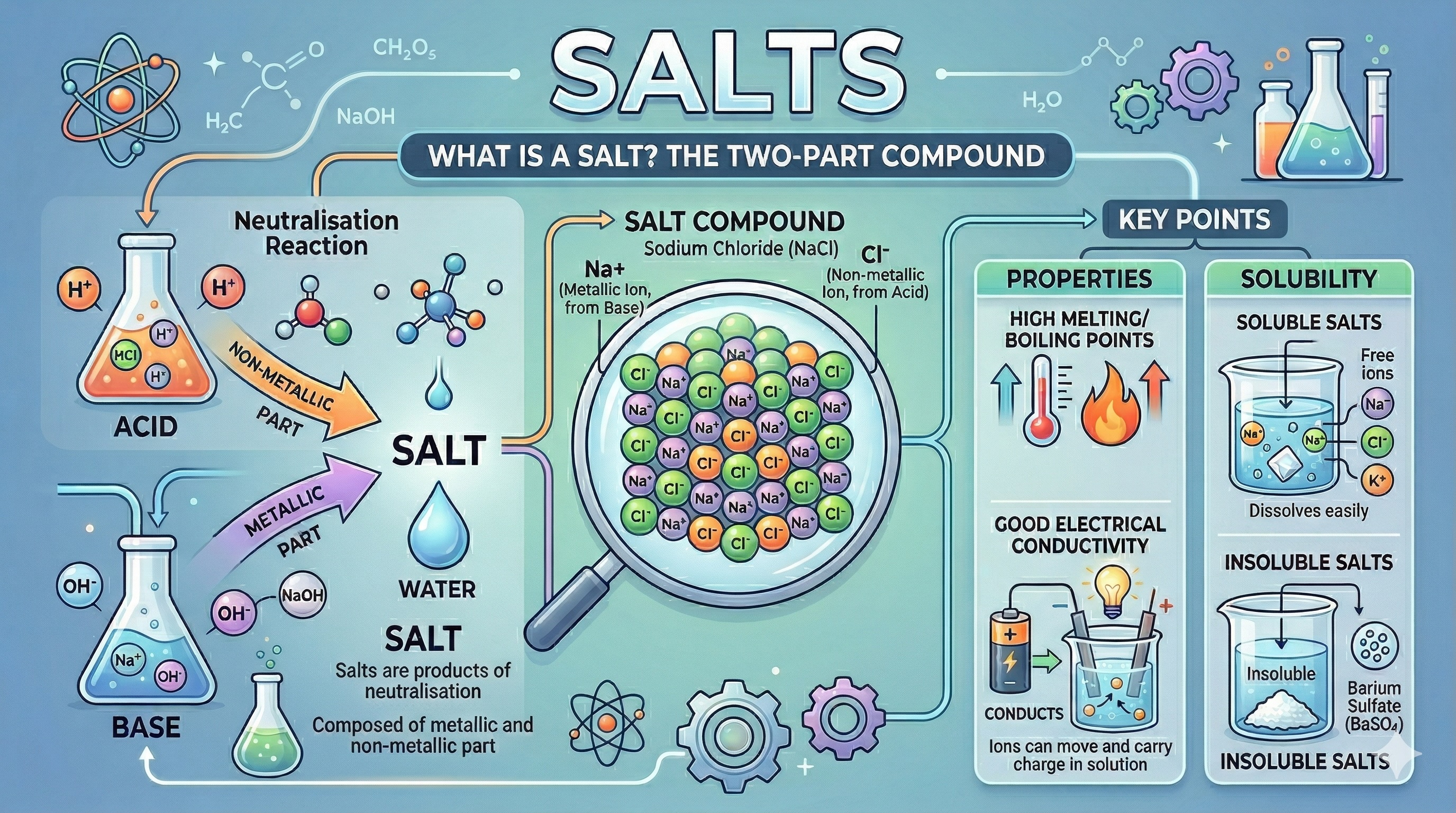
Key Points
- Metallic Part: Comes from the base.
- Non-metallic Part: Comes from the acid.
- Properties: High melting/boiling points and good electrical conductivity.
- Solubility: Some salts dissolve easily; others are insoluble.
Salt Preparation Methods
Three Ways to Salt
Salts can be prepared in the laboratory using three main chemical routes.
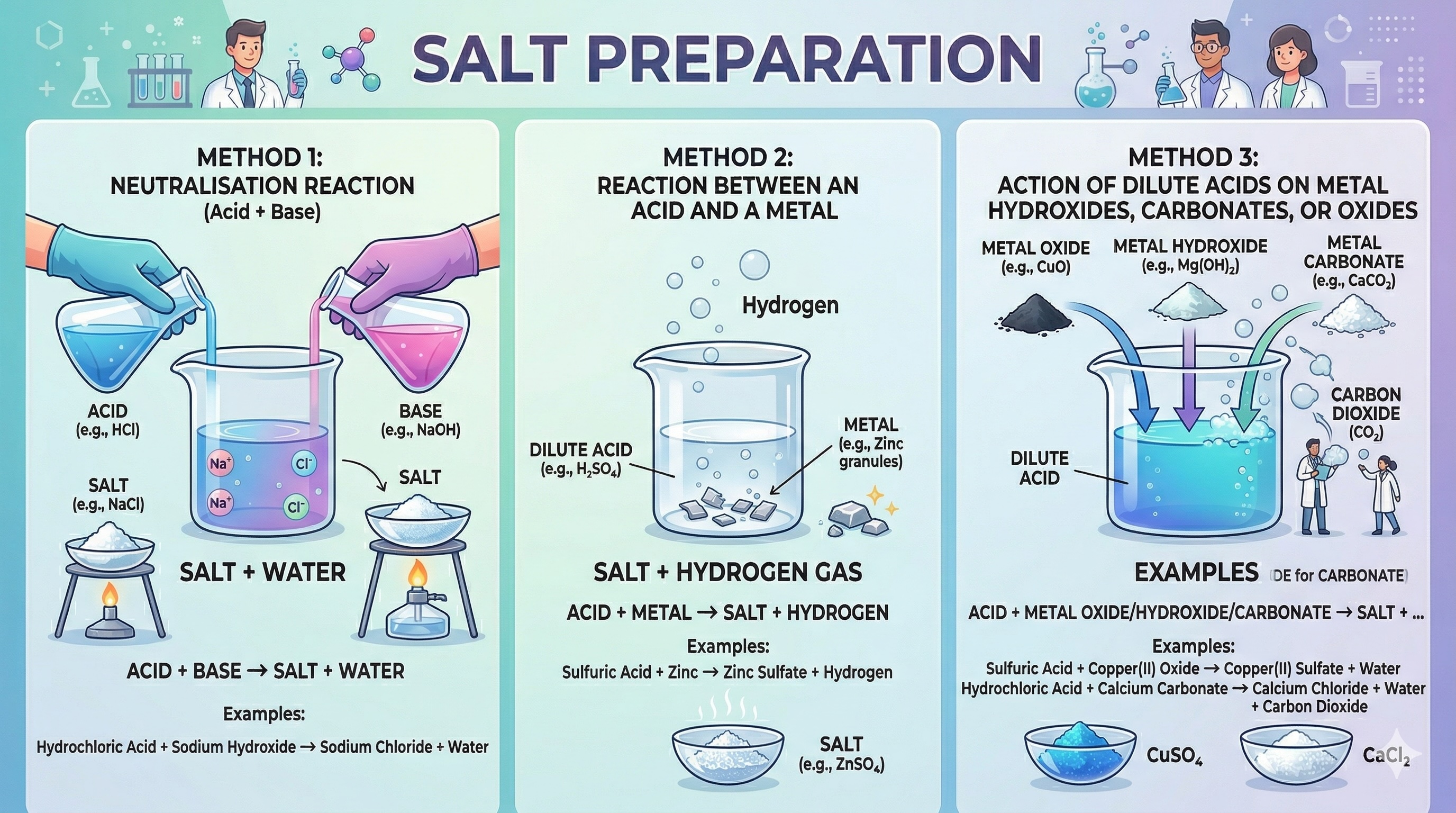
Key Points
- Method 1: Neutralisation reaction (Acid + Base).
- Method 2: Reaction between an acid and a metal.
- Method 3: Action of dilute acids on metal hydroxides, carbonates, or oxides.
Types of Salts
Normal, Acidic, and Basic
Salts can retain acidic or basic properties depending on the replacement of ions.
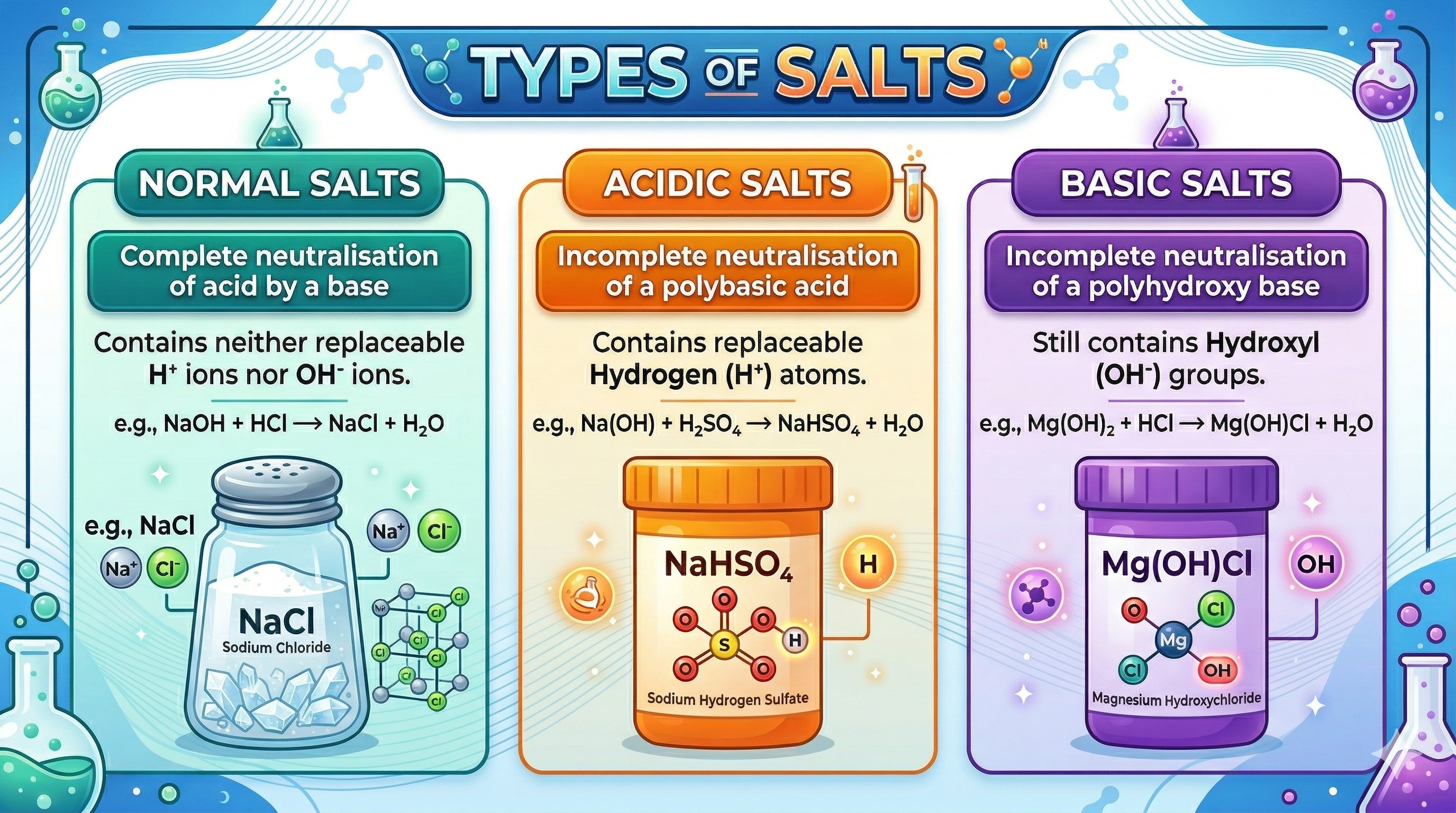
Key Points
- Normal Salts: Complete neutralisation (e.g., ).
- Acidic Salts: Incomplete neutralisation of acid (contains 'H' atom).
- Basic Salts: Incomplete neutralisation of base (contains 'OH' group).
Olympiad Fact
Strong Acid + Weak Base results in an Acidic Salt solution.
Hydrated Salts
Water of Crystallisation
Many crystalline salts have a fixed number of water molecules attached to them.
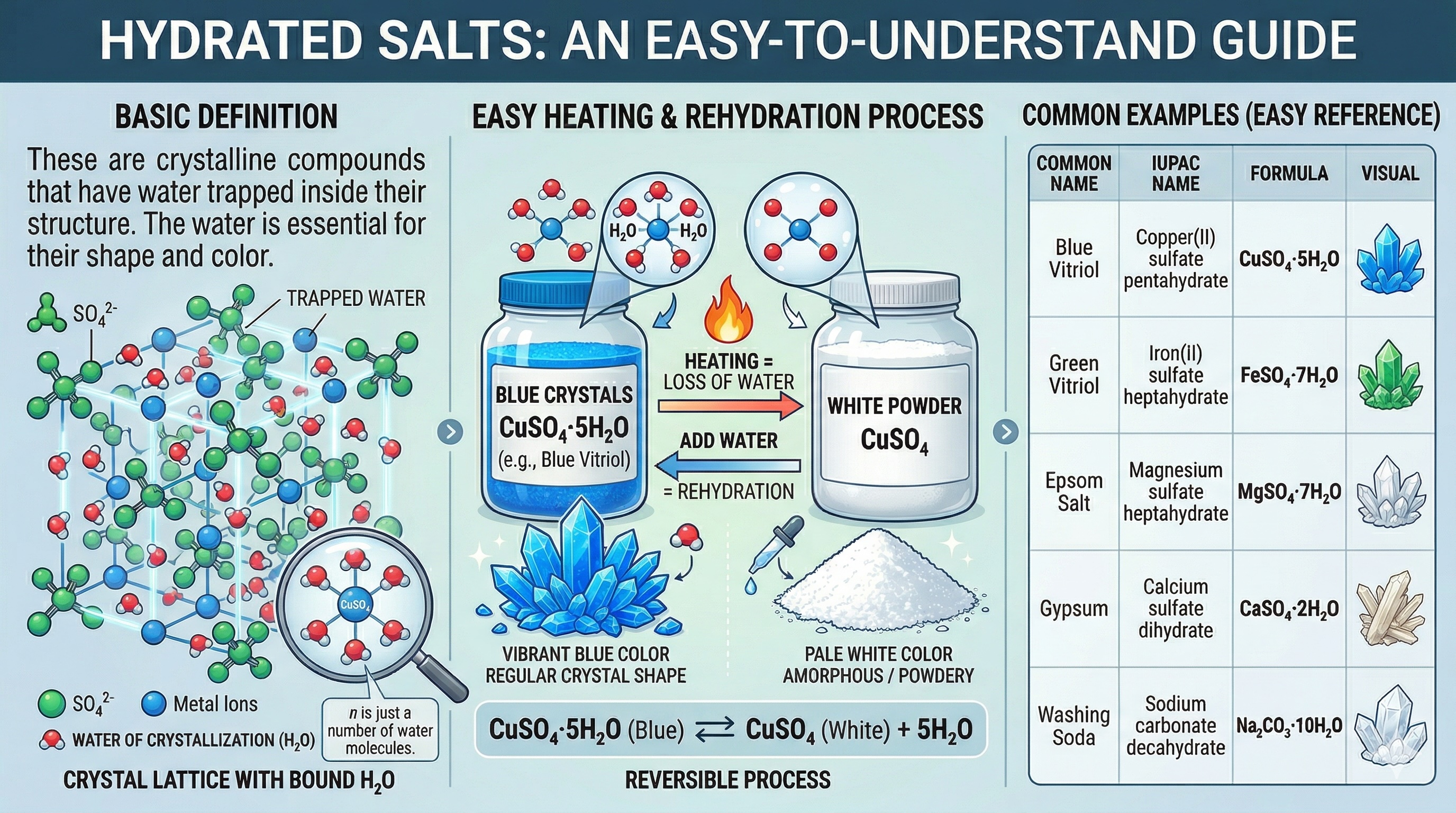
Key Points
- Hydrated Salts: e.g., Blue Vitriol ().
- Crystallisation: The water molecules maintain the crystal shape and color.
- Anhydrous: Salts that have lost their water of crystallisation through heating.
Olympiad Fact
Deliquescent salts (like sodium nitrate) absorb moisture from the air and become wet.
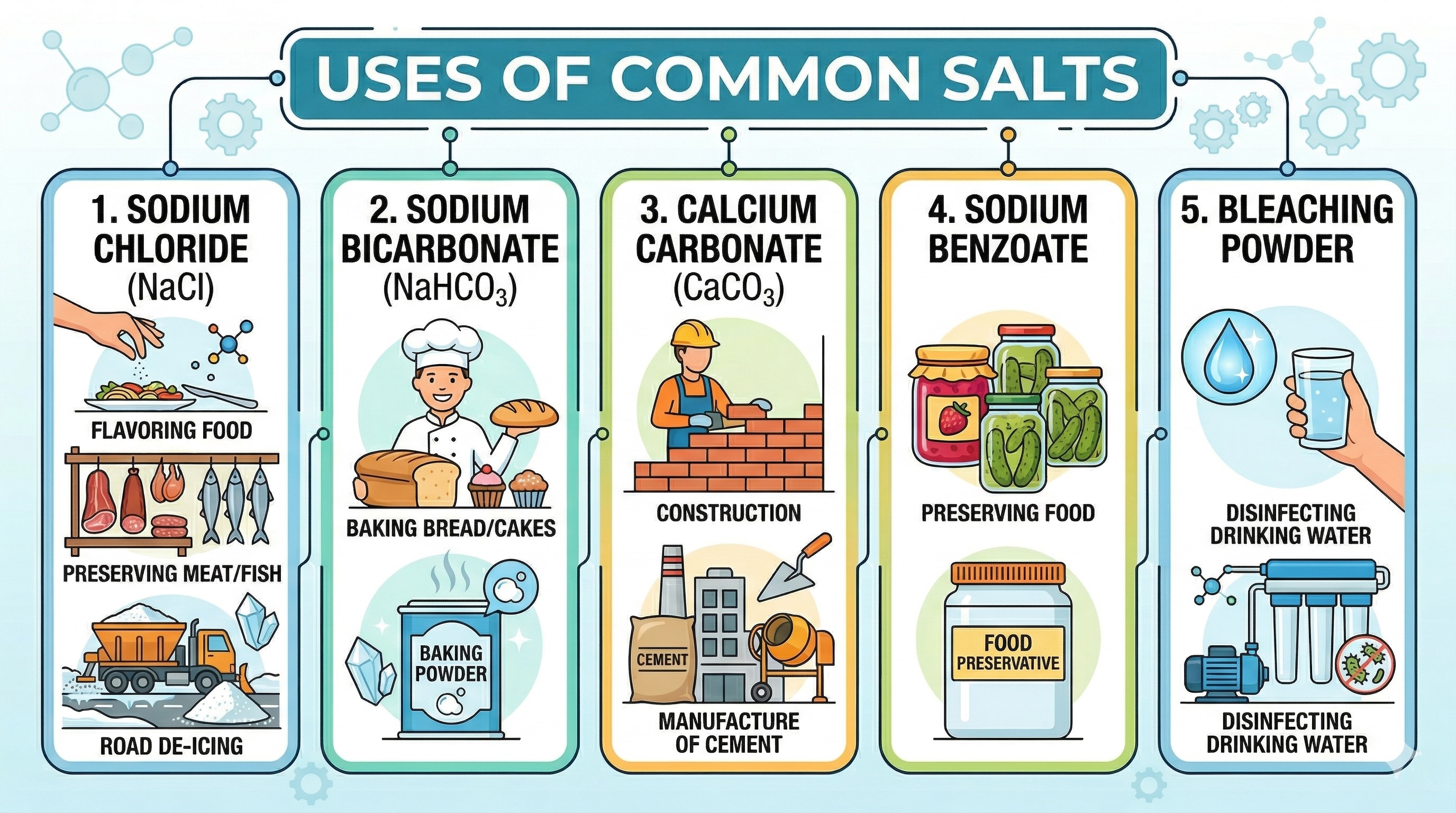
Uses of Common Salts
Beyond the Kitchen
Different salts play diverse roles in our lives, from baking and food preservation to building construction and medicine.
Key Points
- Sodium Chloride: Used for flavoring food, preserving meat/fish, and making washing soda.
- Sodium Bicarbonate: Essential for baking (bread/cakes) and as a component of baking powder.
- Calcium Carbonate: Used in construction and for the manufacture of cement.
- Sodium Benzoate: A critical chemical used for preserving food.
- Bleaching Powder: Used for disinfecting drinking water.
Olympiad Fact
Plaster of Paris, chemically known as Calcium Sulphate, is used to immobilize broken bones while they heal.
Swipe to skip‹