
Neutralisation Reaction
The Chemical Handshake
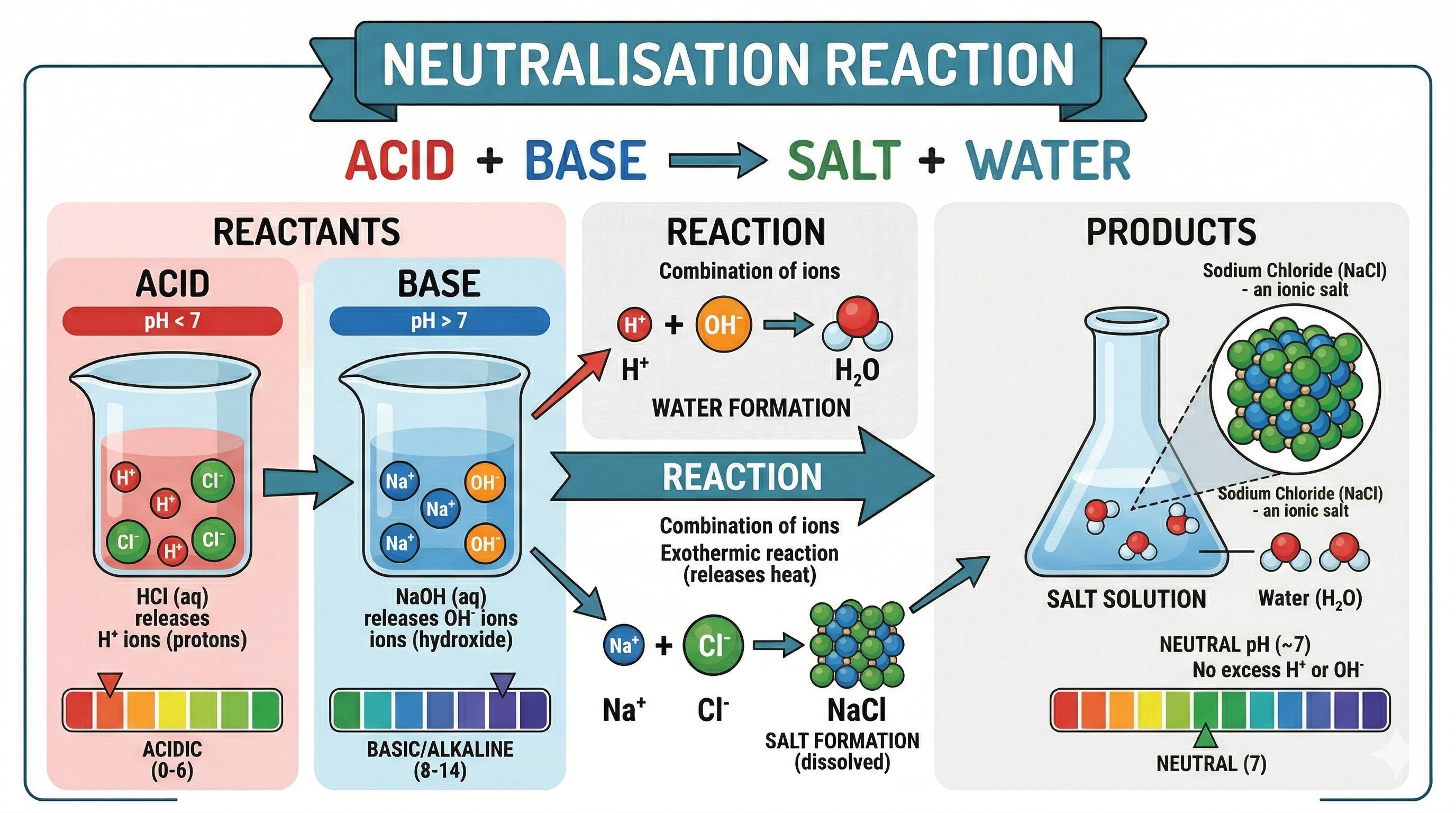
Acid + Base = Salt + Water
Neutralisation is the reaction where an acid and a base cancel each other out, forming salt and water.
Key Points
- Equation: .
- Exothermic: The reaction always releases heat.
- New Substances: Salt and water are formed, which can be neutral.
- Test: A neutralised solution does not change litmus color.
Agriculture & Indigestion
Balancing pH in Life
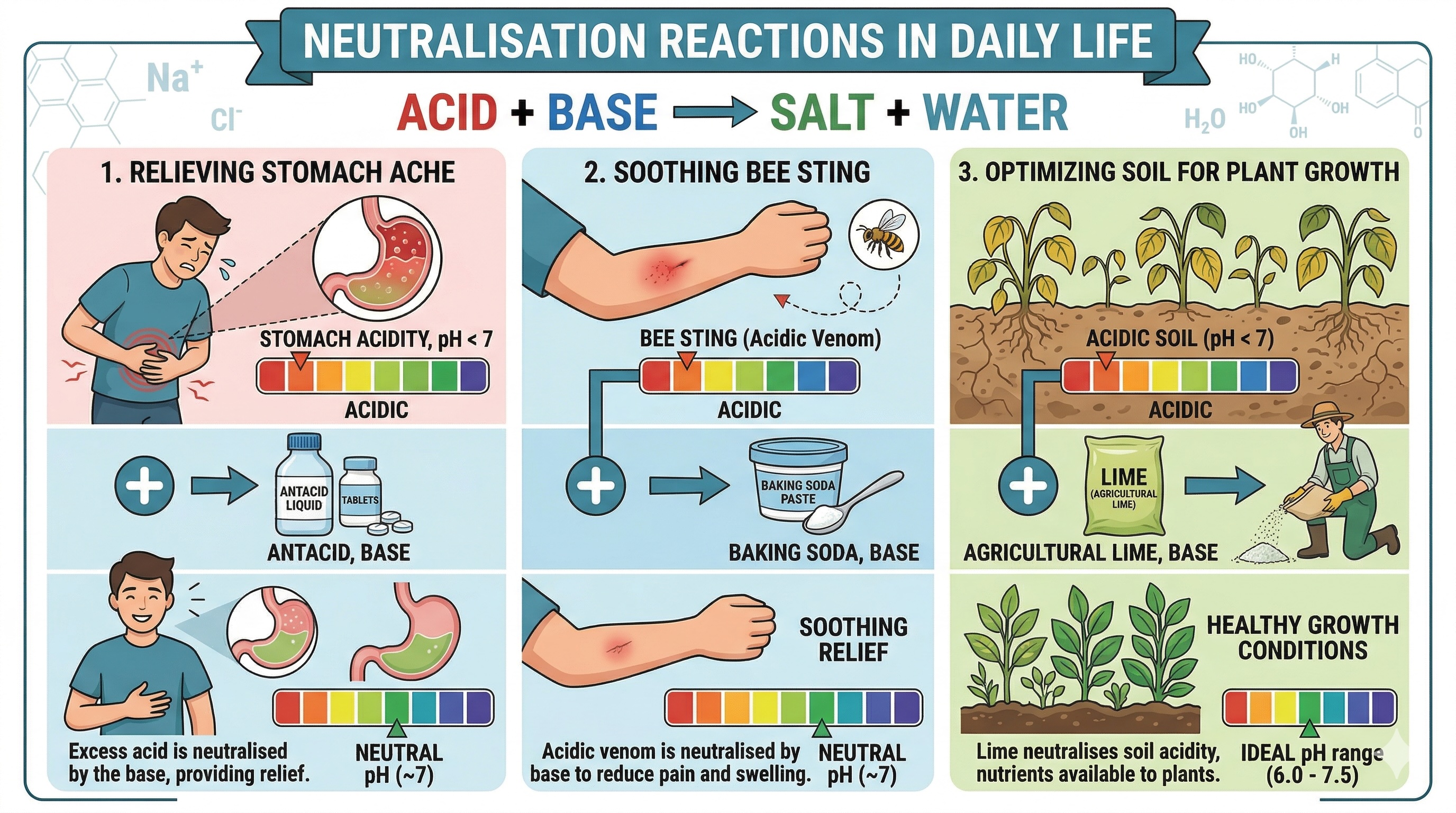
We use neutralisation to correct chemical imbalances in the farm and the stomach.
Key Points
- Indigestion: Antacids (base) like Milk of Magnesia neutralise excess in the stomach.
- Acidic Soil: Excessive fertilizers make soil acidic; treat with Slaked Lime (base).
- Basic Soil: Treat with organic matter which releases acids on decomposition.
Remedy for Stings
Acidic vs. Alkaline Stings
Stings inject chemicals into the skin. Treating them depends on identifying the chemical nature of the poison.
Key Points
- Bee/Ant Sting: Injects Formic acid. Neutralise with Baking Soda or Calamine.
- Wasp Sting: Injects an alkali. Neutralise with Vinegar (acid).
- Calamine: Contains Zinc Carbonate, a mild base that soothes the skin.
Industrial Waste Treatment
Safeguarding Rivers
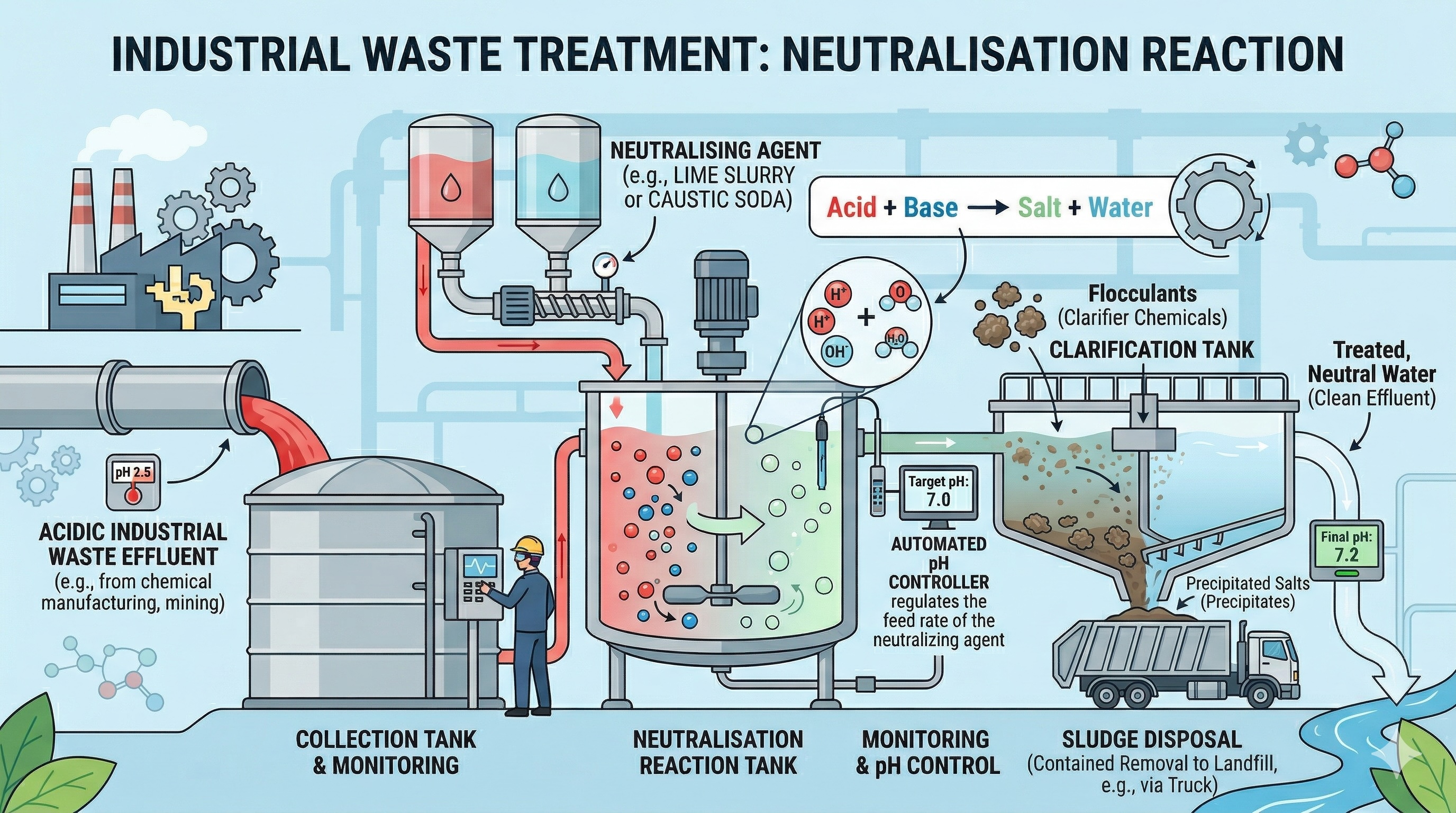
Factory wastes are often highly acidic and can harm aquatic life if not treated properly.
Key Points
- Factory Waste: Contains hazardous acids.
- Treatment: Wastes are treated with basic substances before release.
- Sewage: Excess acids are neutralised to make the waste harmless to fish.
Cleaning & Personal Care
Household Neutralisation
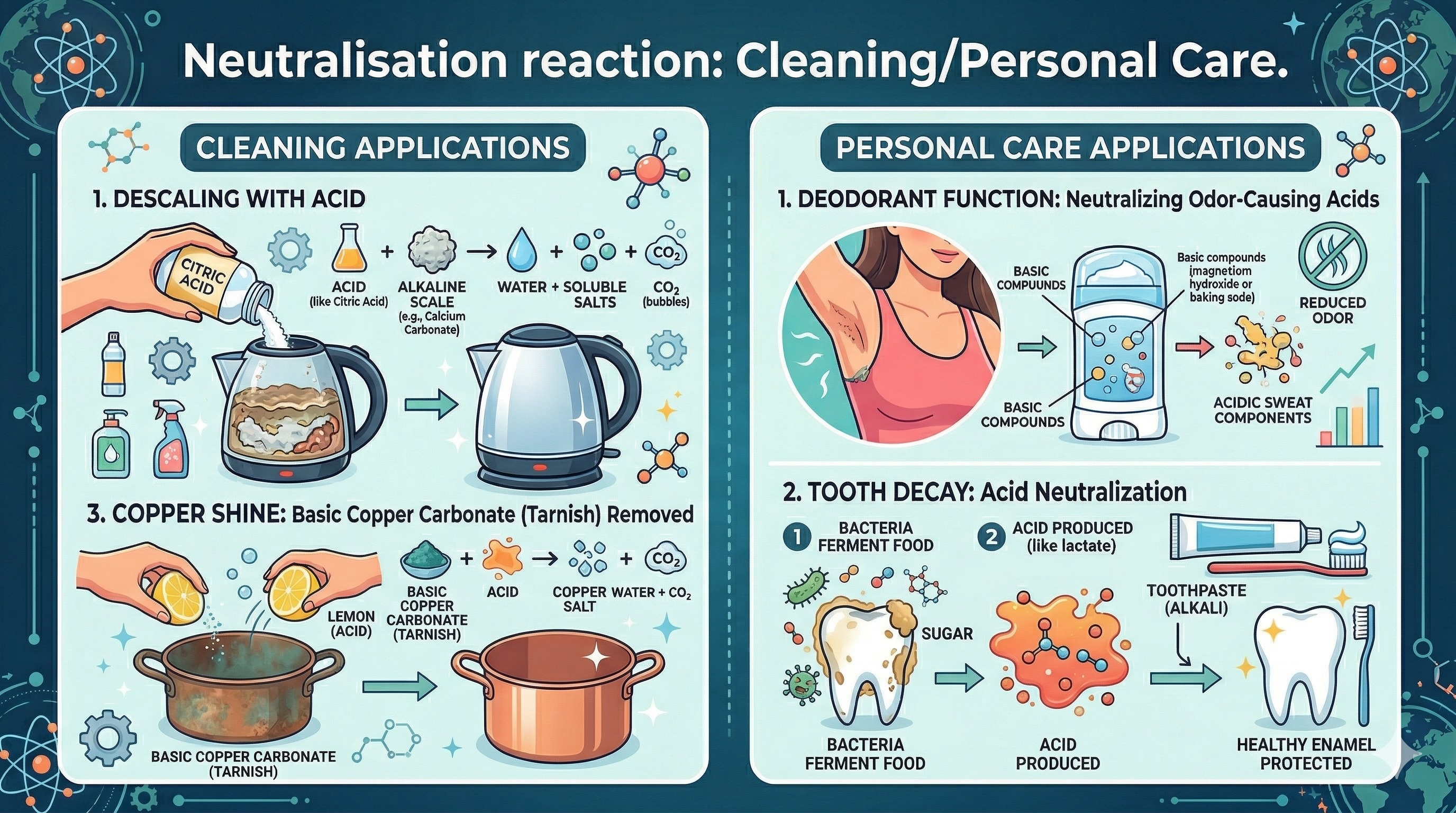
Tooth decay and tarnished copper can be solved using the logic of neutralisation.
Key Points
- Tooth Decay: Bacteria ferment food to produce acid; Toothpaste (alkali) neutralises it.
- Copper Shine: basic copper carbonate (tarnish) is removed by rubbing lemon (acid).
- Neutralisation restores the original properties of the surface.
Swipe to skip‹