
Photosynthesis: The Autotrophic Process
The Food Factory
Converting Sunlight into Energy
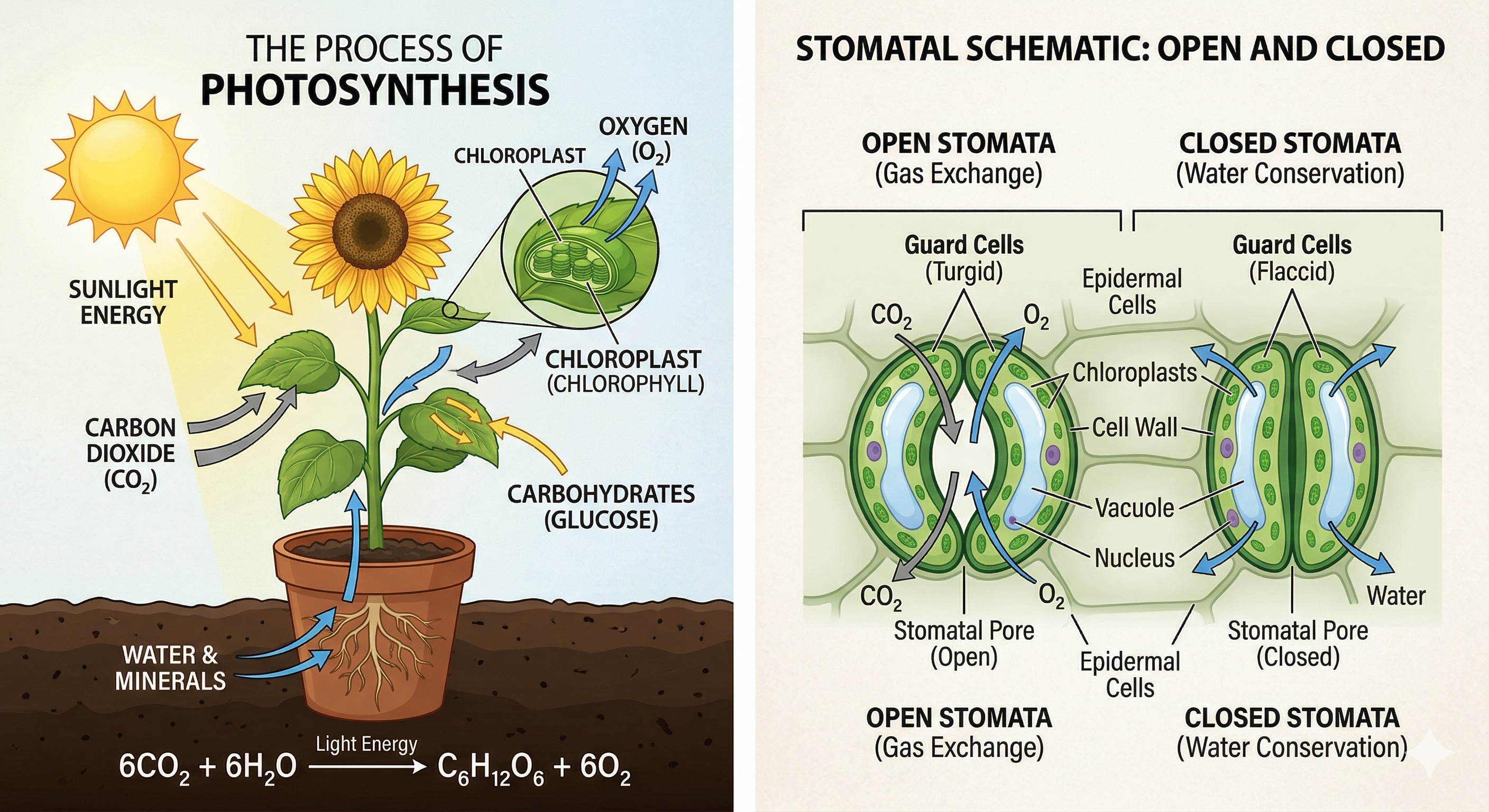
Photosynthesis is the process by which green plants manufacture their own food (glucose) from carbon dioxide and water using sunlight and chlorophyll.
Key Points
- Chemical Equation: .
- Chlorophyll traps solar energy and converts it to chemical energy.
- The leaves are the primary site, known as 'kitchens of the plant'.
- Oxygen is released as a vital by-product.
Stomata and Gas Exchange
The Leaf's Tiny Mouths
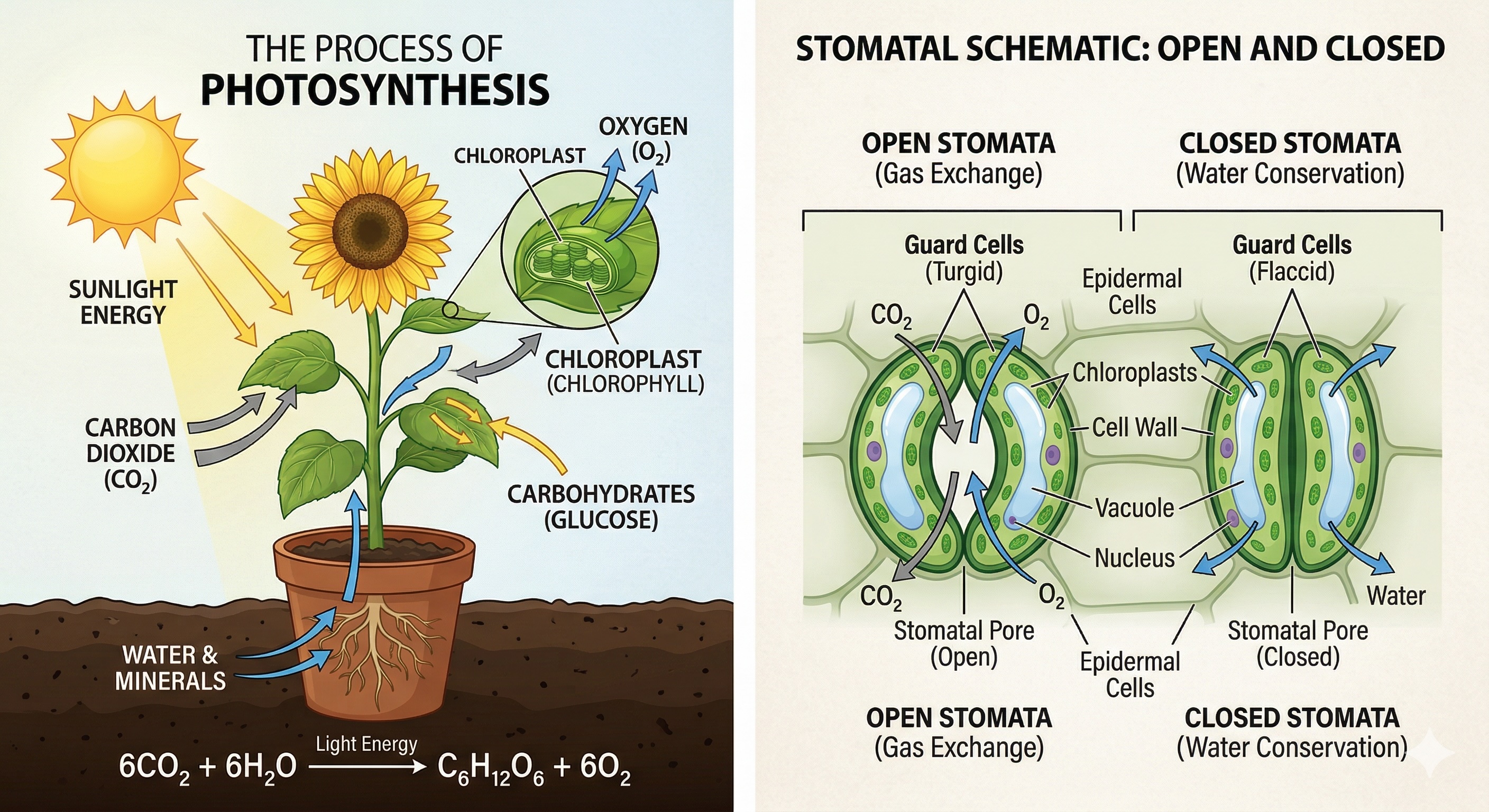
Carbon dioxide enters the leaf through tiny pores called stomata. These are located mainly on the underside of the leaf to prevent excessive water loss.
Key Points
- Each stoma is guarded by two kidney-shaped guard cells.
- Guard cells regulate the opening and closing of the pore.
- Stomata also allow the release of oxygen and water vapor.
- Gas exchange is essential for the chemical reaction to continue.
Essential Components
The Required Ingredients
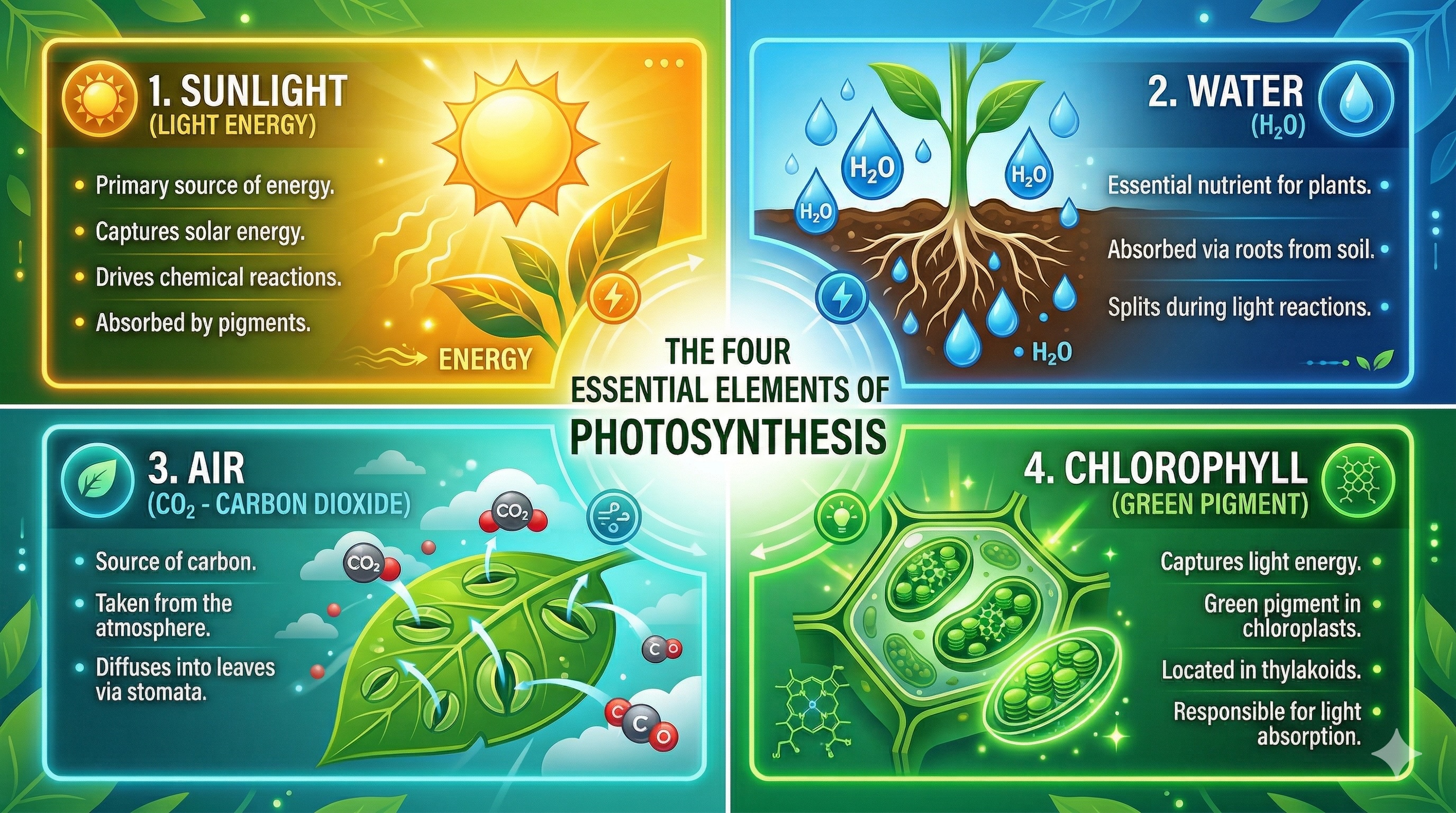
For photosynthesis to happen, four things must be present: Chlorophyll, Sunlight, Carbon Dioxide, and Water. If any are missing, the plant cannot make food.
Key Points
- Chlorophyll: The green pigment that absorbs light.
- Sunlight: The energy source that drives the reaction.
- Water: Absorbed from soil by roots and carried by xylem.
- CO2: Obtained from the surrounding air through stomata.
Olympiad Fact
Plants stored in the dark for 48 hours will use up all their starch; this is called 'destarching'.
Global Significance
Foundation of Life
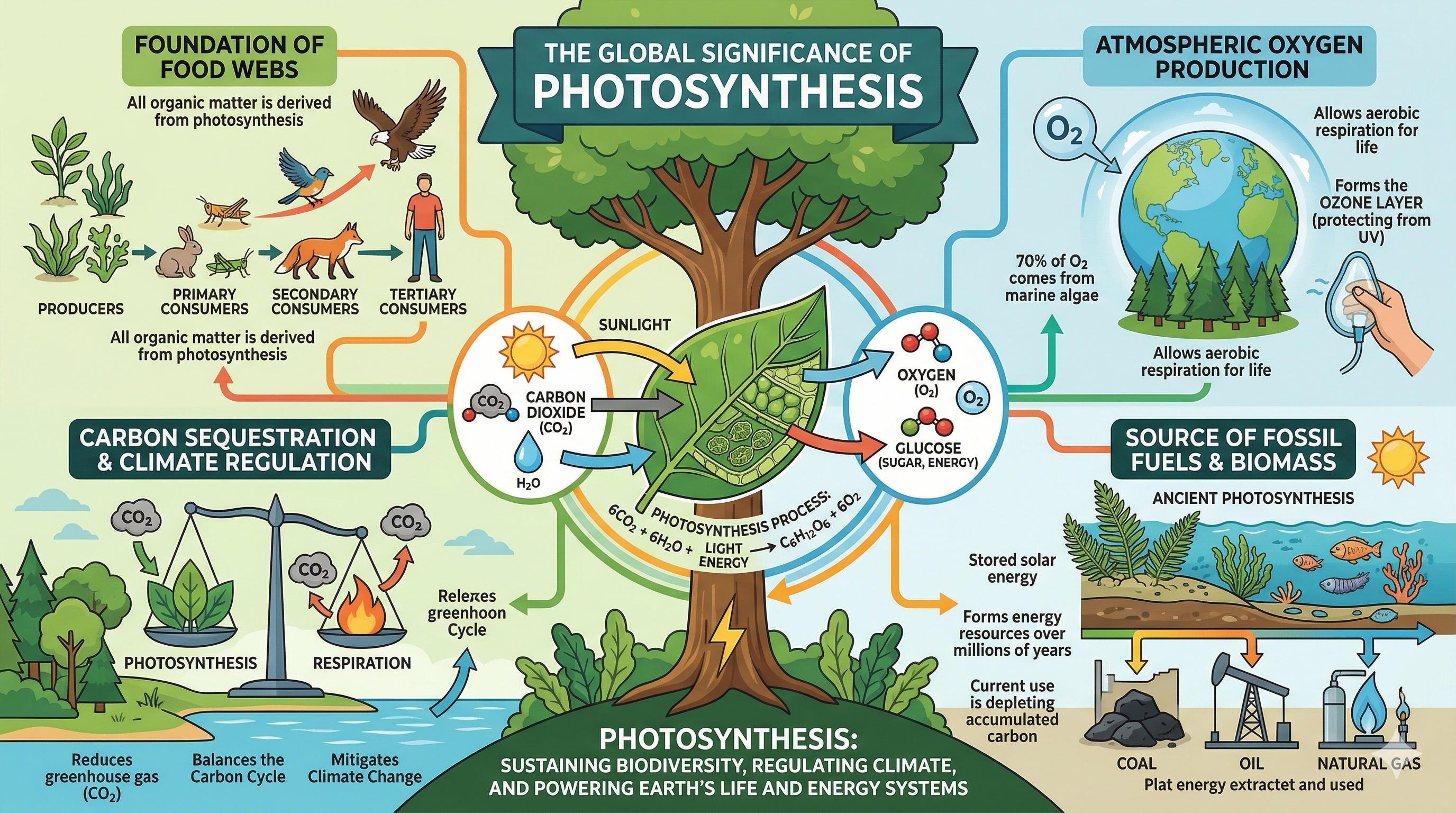
Photosynthesis is the ultimate source of food for all living things. It also maintains the balance between oxygen and carbon dioxide in the atmosphere.
Key Points
- Provides oxygen for respiration of all animals.
- Converts solar energy into a form animals can eat.
- Regulates the level of , preventing excessive warming.
- All fossil fuel energy (coal/oil) originally came from ancient photosynthesis!
Swipe to skip‹