
Feeding Patterns: Multicellular Organisms
Hydra: Stinging Tentacles
The Underwater Hunter
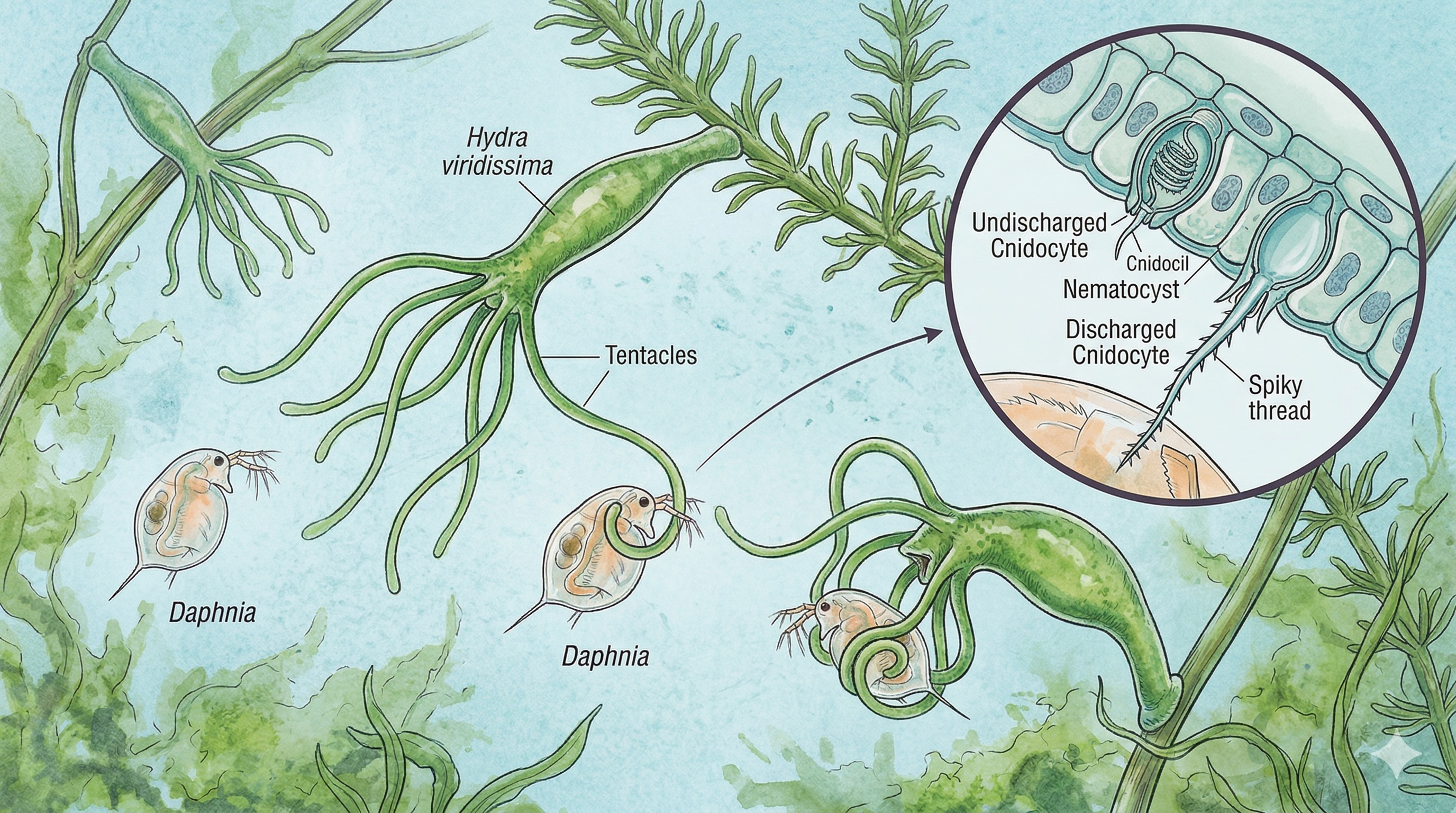
Hydra is a small multicellular aquatic animal. It has long, flexible tentacles surrounding its mouth to capture small water animals.
Key Points
- Tentacles contain 'Stinging Cells' (Cnidocytes) to paralyze prey.
- Once paralyzed, the tentacles push the prey into the mouth.
- Digestion happens in the large central body cavity.
- Both ingestion and egestion happen through the same opening.
Insects: Specialized Mouths
Sucking and Sponging
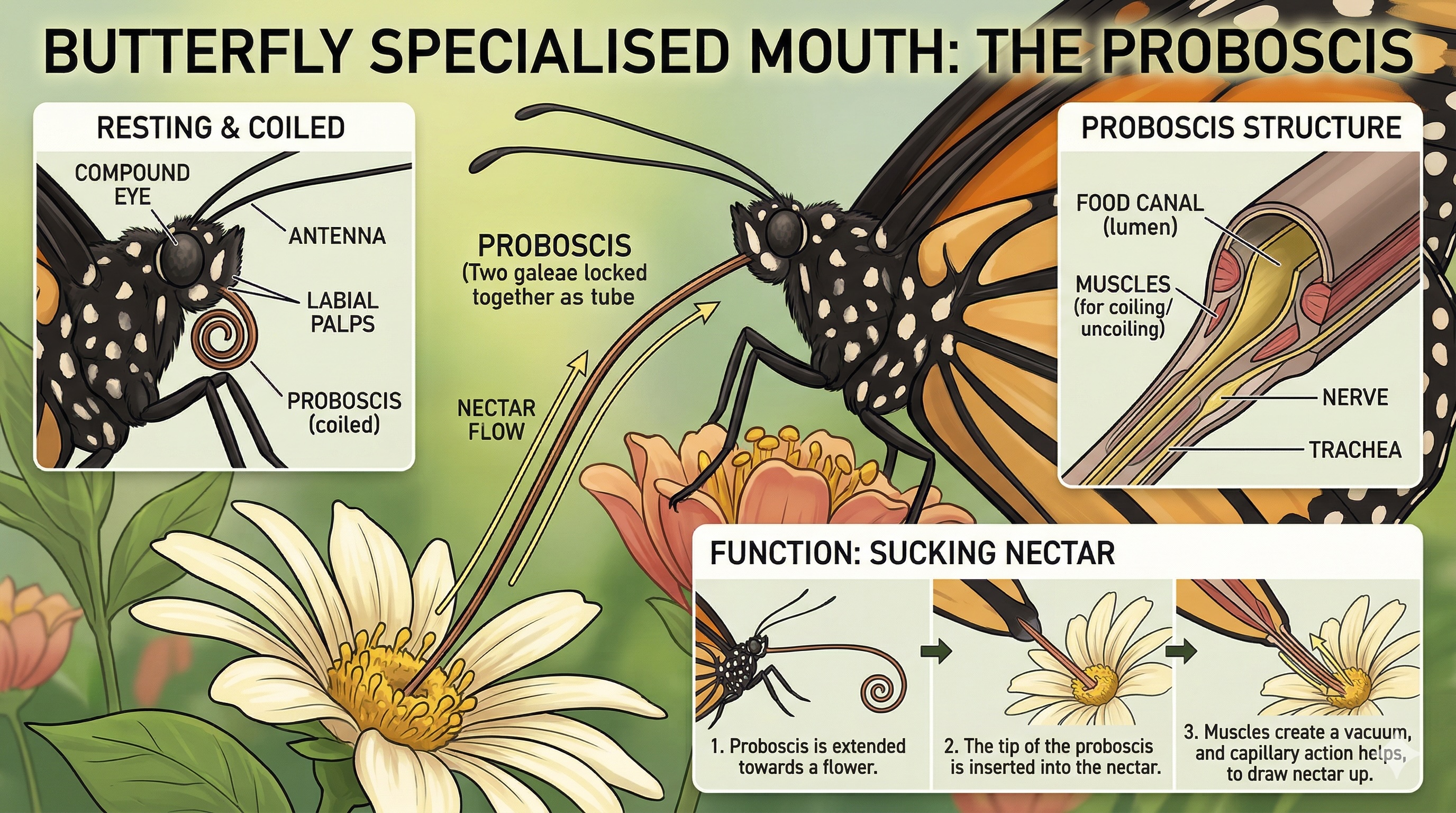
Insects have highly specialized mouthparts based on their diet. They don't chew food like mammals; they 'tube' it in.
Key Points
- Butterfly: Long coiled tube called 'Proboscis' to suck nectar.
- Mosquito: Piercing and sucking needle-like mouthparts for blood.
- Housefly: Sponging mouthparts that dissolve food with saliva first.
- The liquid diet travels directly into their digestive system.
Spider: External Digestion
The Web Weaver
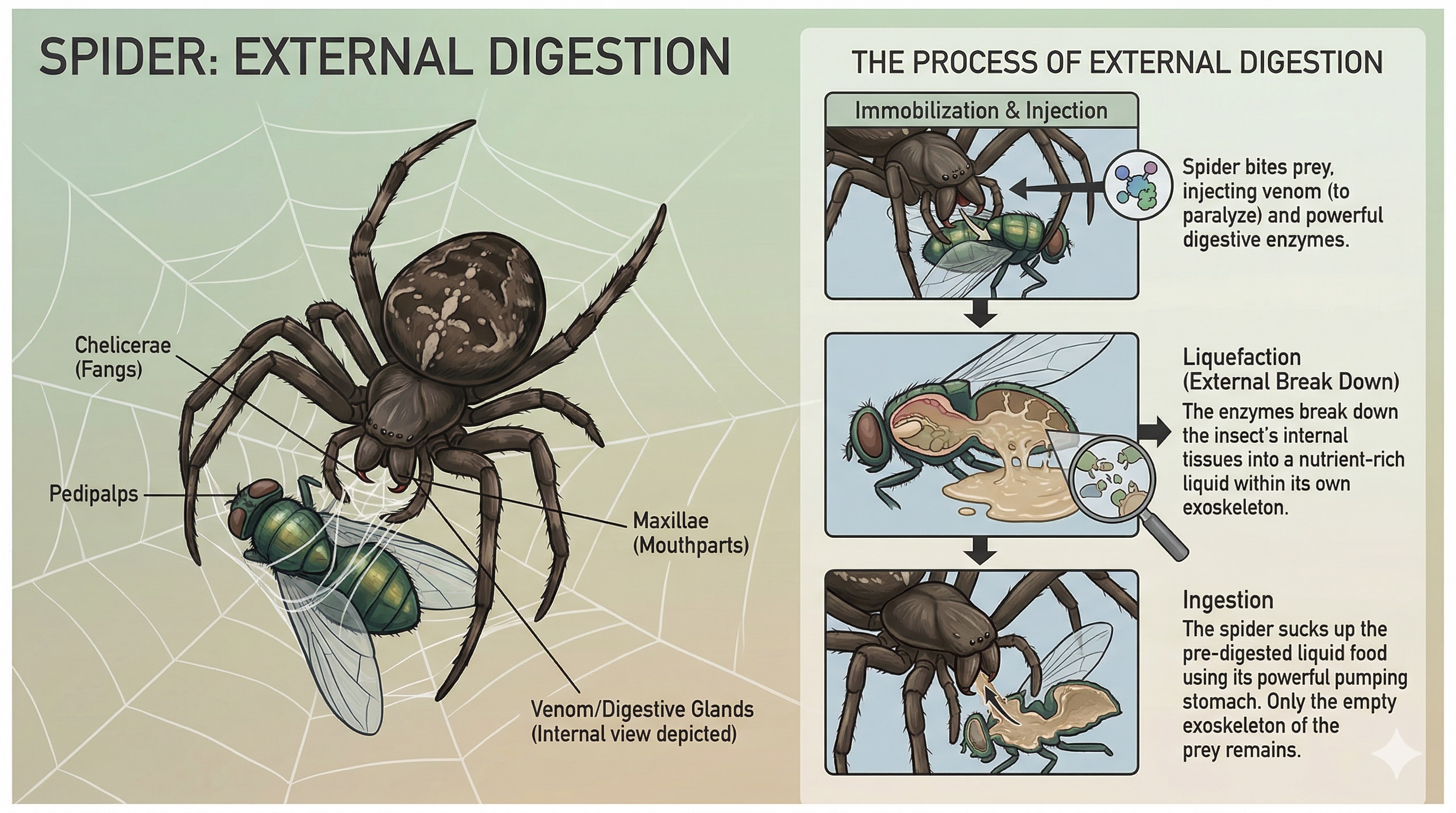
Spiders have a unique way of eating. They cannot swallow solid food, so they turn their prey into a liquid 'soup' before consuming it.
Key Points
- Spiders inject venom and digestive juices into the prey.
- The juices dissolve the soft tissues of the insect outside the spider.
- The spider then sucks up the liquid remains.
- This is known as external or partial digestion.
Frogs: Projectile Tongue
The Fast Snap
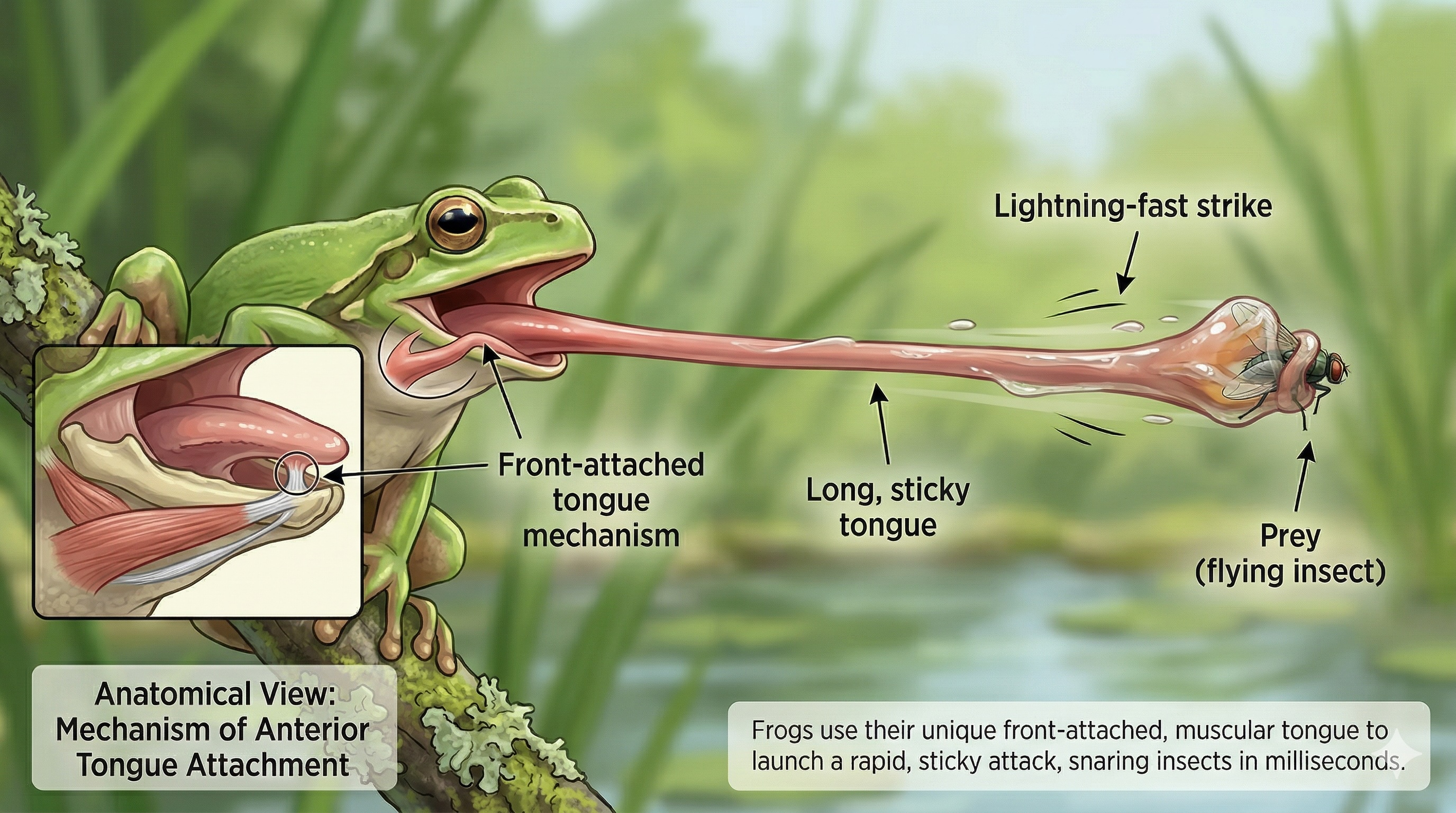
Frogs have a long, sticky tongue that is attached to the front of their mouth. This allows for a lightning-fast capture of flying insects.
Key Points
- The tongue flicks out, sticks to the insect, and pulls it back.
- The entire process takes less than a fraction of a second.
- Frogs swallow their prey whole without chewing.
- They use their eyes to help push food down their throat!
Swipe to skip‹