
The Human Digestive System
The Alimentary Canal
The Long Journey
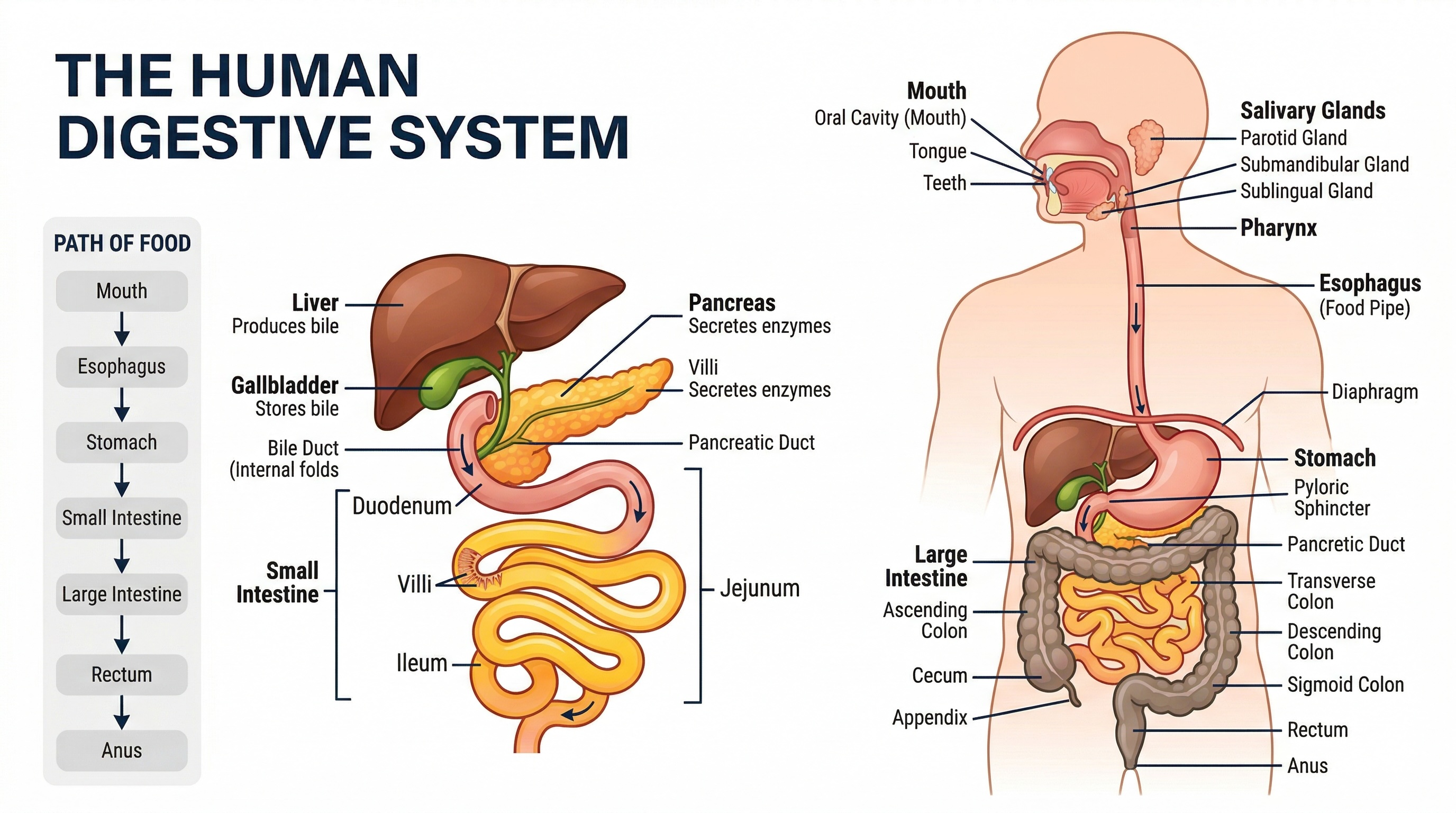
The human digestive tract is a long, coiled tube starting at the mouth and ending at the anus. It is supported by glands that secrete chemical helpers (enzymes).
Key Points
- Components: Mouth, Oesophagus, Stomach, Small & Large Intestine.
- Mastication: Chewing food to break it down mechanically.
- Peristalsis: Wave-like muscle movements that push food forward.
- The journey of food takes several hours to complete.
The Mouth and Saliva
Starting the Breakdown
In the buccal cavity, digestion begins both mechanically and chemically. Teeth break food into smaller pieces (mastication), while salivary glands secrete saliva to moisten food and begin chemical breakdown.
Key Points
- Mechanical Digestion: Teeth chew and grind food into a soft mass.
- Salivary Amylase: Enzyme that converts starch into sugars.
- Tongue: Helps mix food with saliva and assists in swallowing.
- Taste Buds: Located on the tongue to detect sweet, sour, salty, and bitter.
The Stomach
The Acidic Mixer
The stomach is a J-shaped muscular bag that churns food into a thick paste. It uses powerful chemicals to kill germs and start protein digestion.
Key Points
- Hydrochloric Acid (): Kills bacteria and makes the environment acidic.
- Gastric Juice: Contains the enzyme Pepsin to digest proteins.
- Mucus: A protective lining that prevents the stomach from digesting itself.
- Food remains here for about 2 to 4 hours.
The Liver
Body's Largest Gland
The Liver is a reddish-brown organ located on the right side of the upper abdomen. It is the largest gland in the body and performs hundreds of vital functions.
Key Points
- Bile Production: It secretes bile, which is essential for fat digestion.
- Fat Emulsification: Bile breaks down large fat globules into tiny droplets.
- Detoxification: It filters harmful substances from the blood.
- Storage: It stores vitamins and glucose for later use.
Olympiad Fact
The liver is the only organ in the human body that can regenerate itself even if 75% of it is removed.
The Gall Bladder
Bile Storage
The gall bladder is a small, green, pear-shaped sac tucked under the liver. It does not produce bile itself but acts as a holding tank.
Key Points
- Storage: Collects bile produced by the liver between meals.
- Concentration: Removes water from bile to make it more potent.
- Release: Contracts to send bile into the small intestine when food enters.
- Essential for the efficient digestion of fatty foods.
The Pancreas
Enzyme Factory
The pancreas is a leaf-like yellow gland located just behind the stomach. It is a dual-function organ that plays a vital role in both digestion and blood sugar regulation.
Key Points
- Pancreatic Juice: Secretes a powerful mix of enzymes into the small intestine.
- Digestive Action: Acts on carbohydrates, fats, and proteins simultaneously.
- Duct System: Connects to the small intestine via the common bile duct.
- Hormones: Also produces insulin to control blood glucose levels.
Small Intestine: Absorption
The Nutrient Gateway
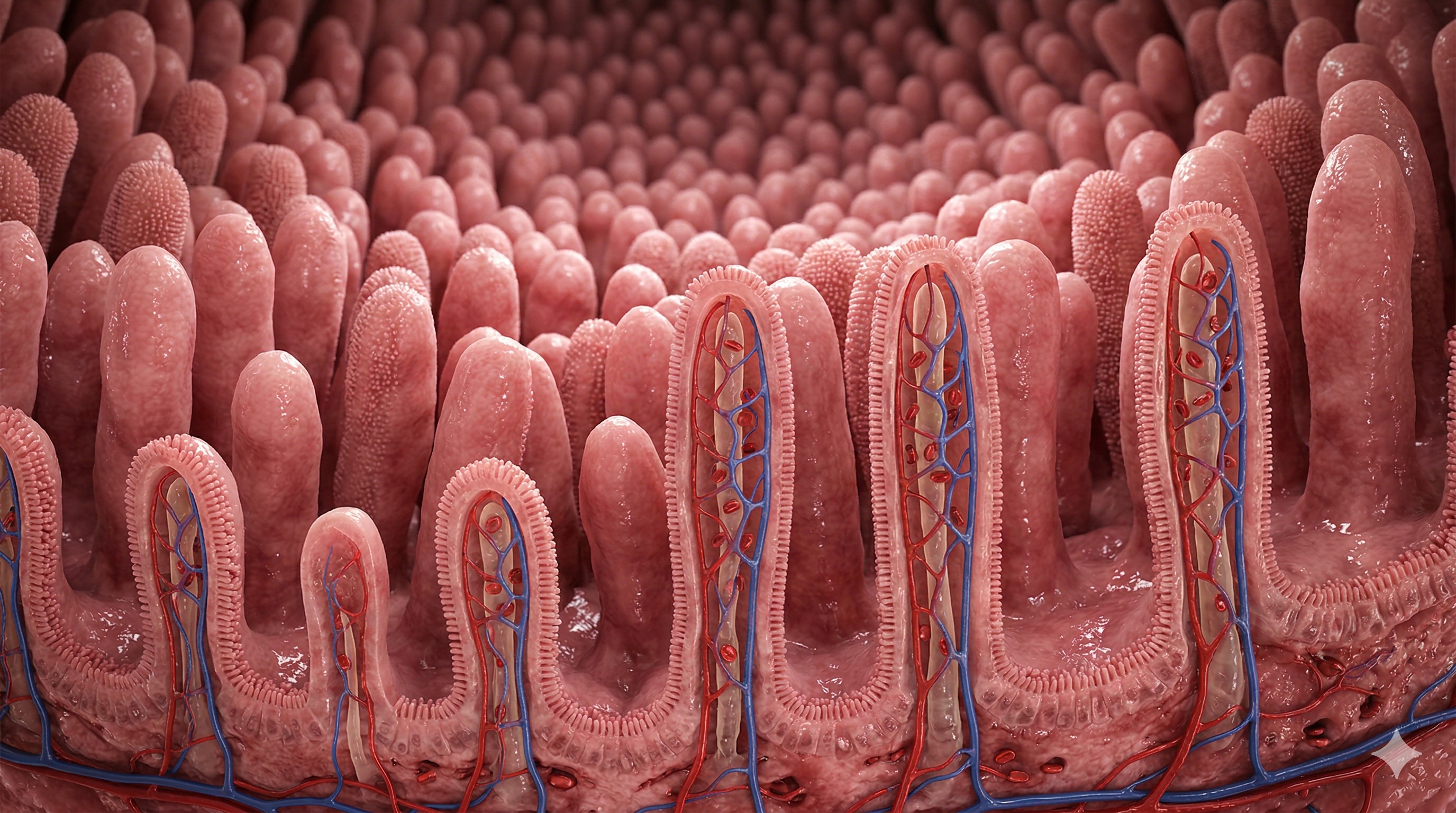
The small intestine (6-7 meters) is where digestion is completed and nutrients are absorbed. It uses finger-like projections called villi to maximize efficiency.
Key Points
- Villi: Increase surface area for rapid absorption.
- Final Products: Glucose (carbs), Amino acids (proteins), Fatty acids (fats).
- Absorption happens into the blood capillaries within each villus.
- The intestine is highly coiled to fit in the abdomen.
Olympiad Fact
If the small intestine were a smooth tube without villi, it would need to be over 100 meters long to absorb the same amount of nutrients!
Large Intestine and Egestion
Water Recovery
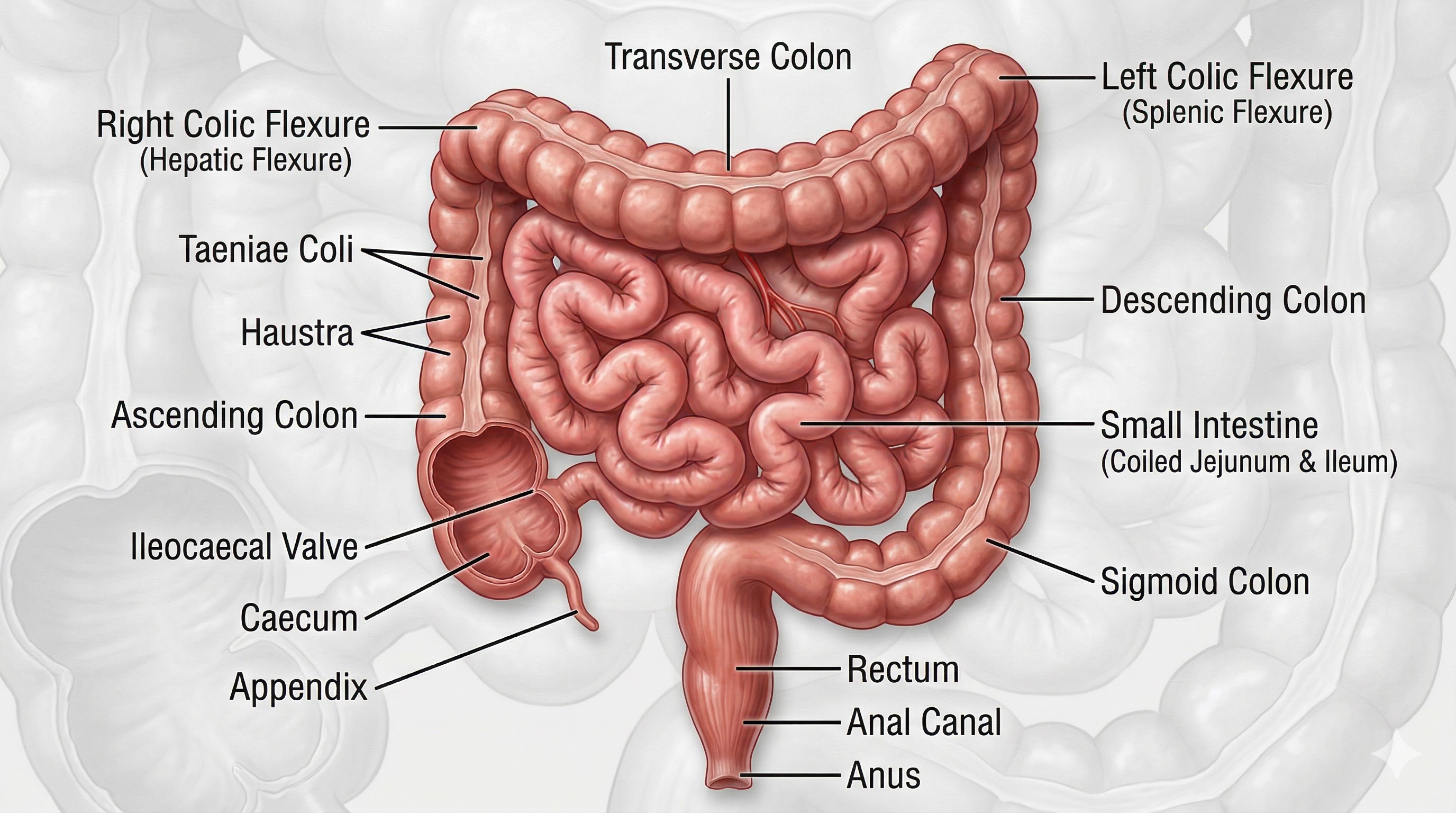
The large intestine is wider and shorter ( meters) than the small intestine. Its main function is to absorb water and salts from undigested food before eliminating it.
Key Points
- Absorption: Reclaims water and essential minerals into the body.
- Rectum: Stores the remaining semi-solid waste (faeces).
- Anus: The opening through which egestion occurs.
- Diarrhoea: A condition where water is not absorbed properly, leading to watery stools.
Swipe to skip‹