
Introduction to Nutrition
Life Processes and Energy
The Engine of Life
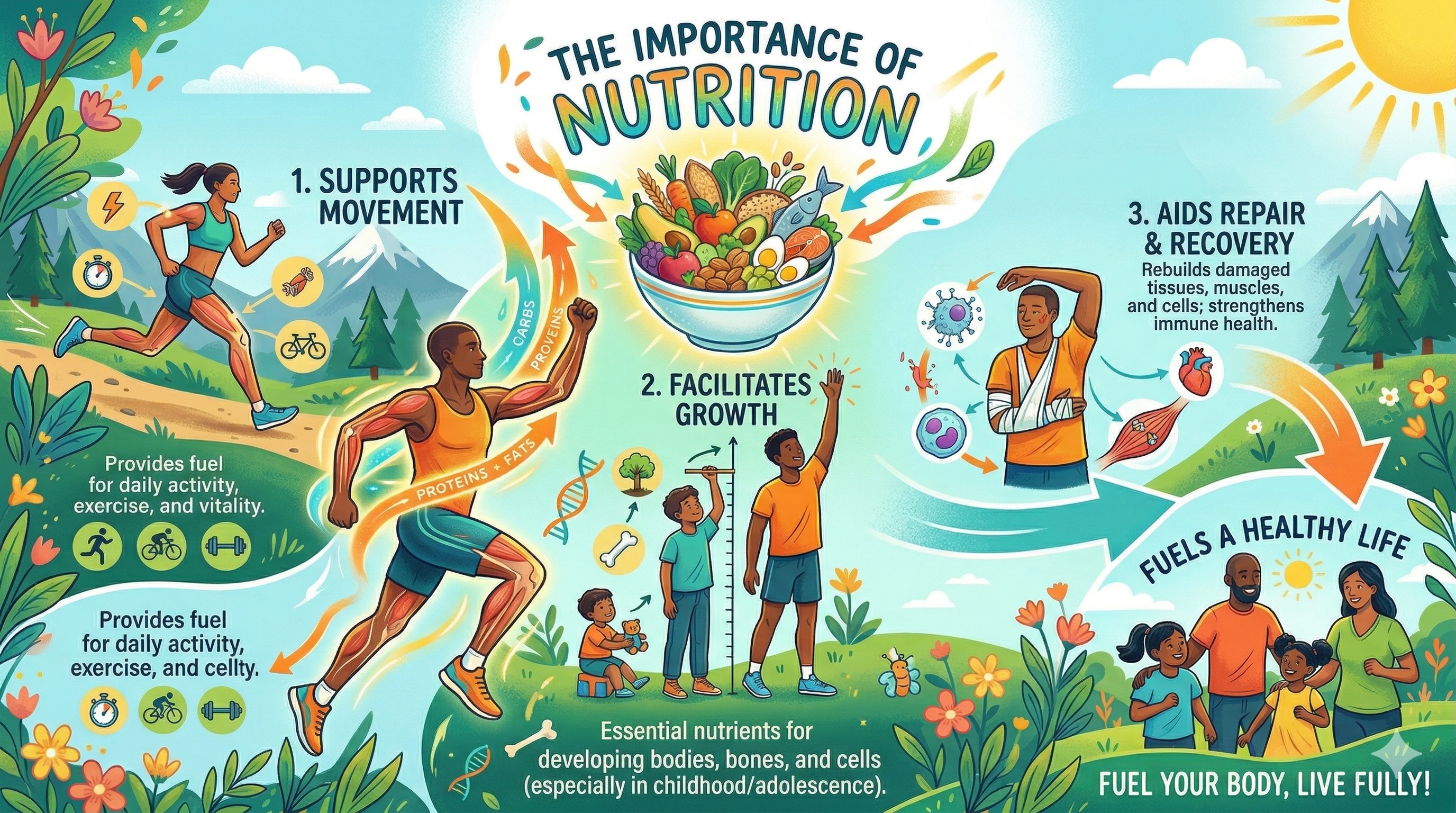
All living organisms perform basic functions like respiration, excretion, and growth to stay alive. These functions, called life processes, require a constant supply of energy.
Key Points
- Energy is needed for movement, growth, and repair.
- This energy comes from the food we eat.
- Nutrition is the starting point for all other life processes.
- Without nutrition, life processes would stop and the organism would die.
What are Nutrients?
The Building Blocks
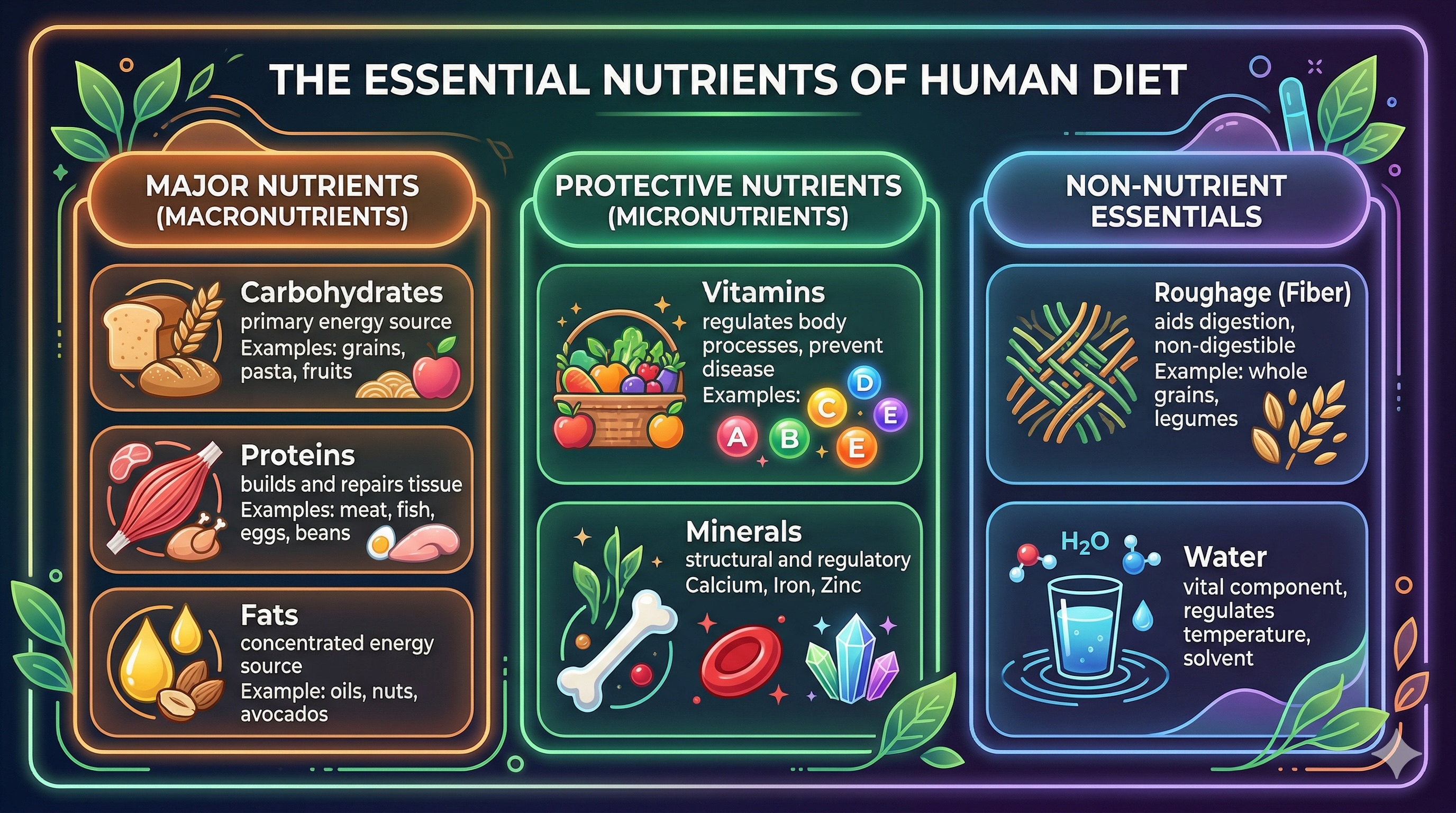
Food contains various chemical components that provide nourishment. These components are called nutrients, and each plays a specific role in keeping us healthy.
Key Points
- Major nutrients: Carbohydrates, proteins, and fats.
- Protective nutrients: Vitamins and minerals.
- Non-nutrient essentials: Roughage (fiber) and water.
- A balanced diet contains all these components in the right amounts.
Modes of Nutrition
How Organisms Get Food
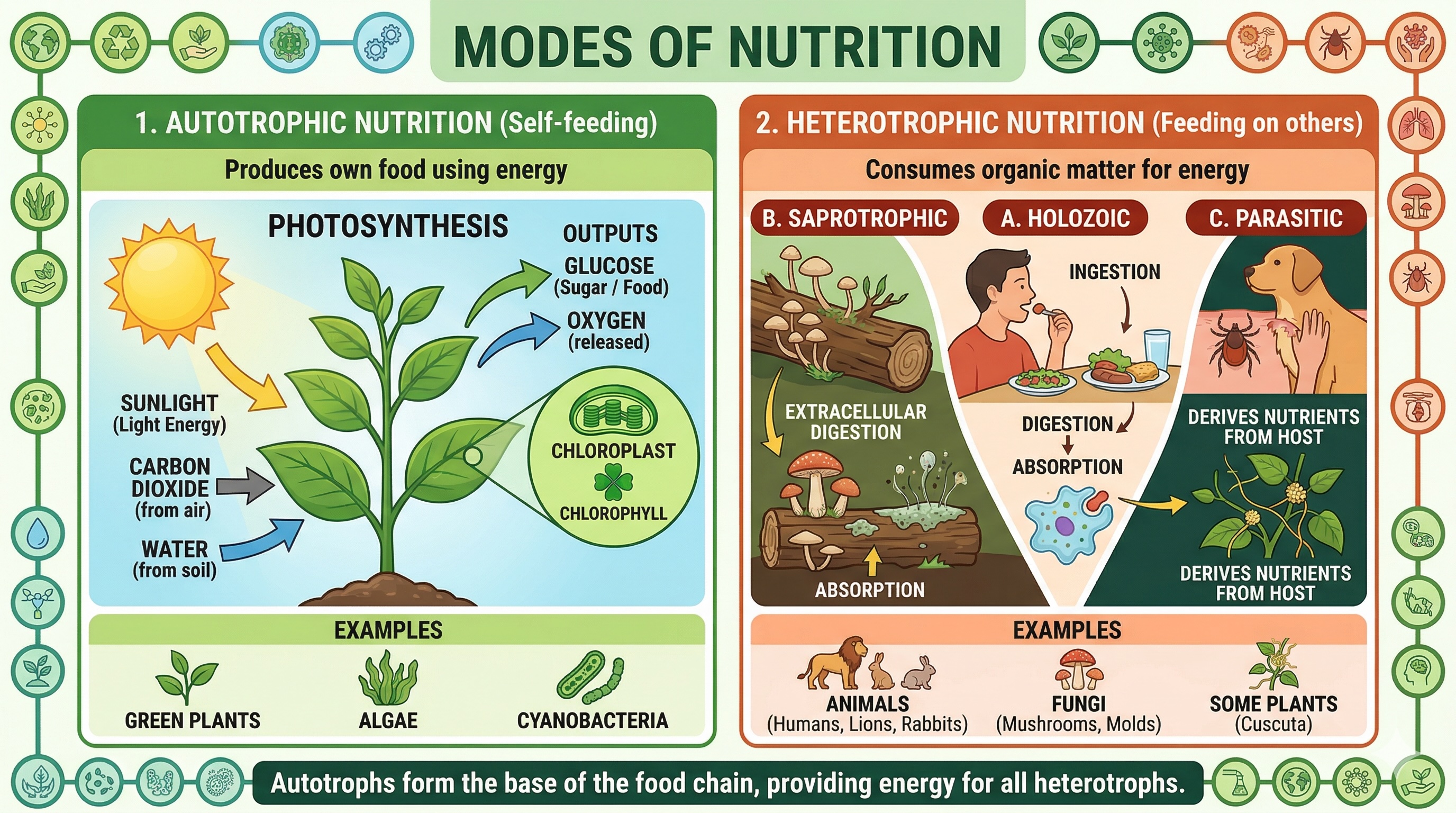
Organisms are classified based on how they obtain their nutrients. There are two primary modes: Autotrophic (self-feeding) and Heterotrophic (feeding on others).
Key Points
- Autotrophs: Produce food from simple inorganic substances (e.g., green plants).
- Heterotrophs: Depend on others for food (e.g., animals, humans).
- Producers: Another name for green plants because they make food for everyone.
- Consumers: Organisms that eat producers or other consumers.
Olympiad Fact
Some bacteria are autotrophs that use chemicals instead of sunlight to make food; this is called chemosynthesis.
Swipe to skip‹